
Get Starting Point
A guide through the most important stories of the morning, delivered Monday through Friday.
Long-term studies and clinical trials have found that adhering to the diet also has been linked to:
improved mental capacity preventing and reversing diabetes longevity reversing the symptoms and reducing the incidence of Parkinson’s and Alzheimer’s reduced inflammation reduced risk of death from heart disease and cancer preventing cancer and inhibiting tumor growth
The diet doesn’t ask us to give up anything or deprive ourselves: It’s a simple strategy that requires exercise, consuming the majority of calories from foods that are good for you, and reserving those that aren’t for special occasions.
Food should be about equal parts health and enjoyment. As people in Egypt often say when they sit down at a table, “bilhanna wi shefa,” or “with pleasure and health.”
Sizzling Rosemary Shrimp Over Polenta
Think of this recipe as the Mediterranean cousin of shrimp and grits. The savory, flash-sautéed shrimp taste great on their own as a tapa or tossed into spaghetti or linguine with olive oil and lemon zest. Serving them over polenta, a traditional staple in Italy since the sixteenth century, rounds out the meal.
Total prep and cook time: 15 minutes
Yield: 6 servings
¼ cup extra virgin olive oil
2 cloves garlic, minced
1½ pounds prawns or jumbo shrimp, peeled and deveined
2 teaspoons freshly chopped rosemary
Dash of crushed red chili flakes
½ teaspoon kosher salt
¼ teaspoon freshly ground black pepper
3 cups cooked polenta
1 Heat the olive oil in a large skillet over medium-high heat. Add the garlic and stir. Add the prawns or shrimp, rosemary, chili flakes, salt, and pepper.
2 Cook, uncovered, for about 2 minutes per side, or until the prawns or shrimp turn pink. Spoon the polenta onto a serving platter evenly, and flatten with the back of a spoon. Place the prawns or shrimp on top and serve immediately.
Per serving: 280 calories; 19 grams carbohydrate (1g fiber, 0g added sugars, 18g net carbs); 24g protein, 13g fat, 440mg sodium
Mediterranean Tradition: Known for a wide variety of health benefits, fresh and dried rosemary along with rosemary oil, tonics, and tea is used daily in the Mediterranean. It’s believed that its aroma boosts brainpower. It also possesses antiviral properties and is known to relieve pain and ease menstrual disorders, kidney stones, and digestion, as well as increase the appetite and help with gallbladder, liver, and heart problems. Rosemary oil is massaged into the scalp for stronger hair and to alleviate dandruff and skin problems.
Lemon Baked Cod With Pistachio Crust
This main dish is light and satisfying, offering a nice crunch from the pistachios. The flavor profile would also work great on other seafoods available, like salmon, trout, and tilapia.
Total prep and cook time: 30 minutes
Yield: 4 servings
3 tablespoons extra virgin olive oil
1 lemon, zest finely grated, then fruit cut into wedges
1 teaspoon Italian seasoning
¼ teaspoon salt
Freshly ground black pepper, to taste
1 pound cod or pollock fillet, cut into 4 pieces
⅓ cup roasted and salted shelled pistachios, finely chopped
1 Preheat the oven to 350 degrees. Line a baking sheet with parchment paper or a silicone baking mat.
2 In a small bowl, combine the olive oil, lemon zest, Italian seasoning, salt, and pepper.
3 Place the cod on the prepared baking sheet and spoon the seasoned oil on the fillet, rubbing it onto all sides. Dip the tops of the cod into the pistachios and press gently, forming a top crust, and place back on the pan.
4 Bake until the fish is sizzling around the edges and opaque and nearly firm in the middle, about 15 minutes. Serve with the lemon wedges.
Per serving: 220 calories; 3 grams carbohydrate (1g fiber, 0g added sugars, 2g net carbs); 19g protein; 15g fat; 489mg sodium
Suggestions and Variations: Kids may be more inclined to try simple fish fingers. Cut up one of the fillets into strips and season with salt and pepper. You can bake them on the same pan, but they may cook a little faster than the other portions.
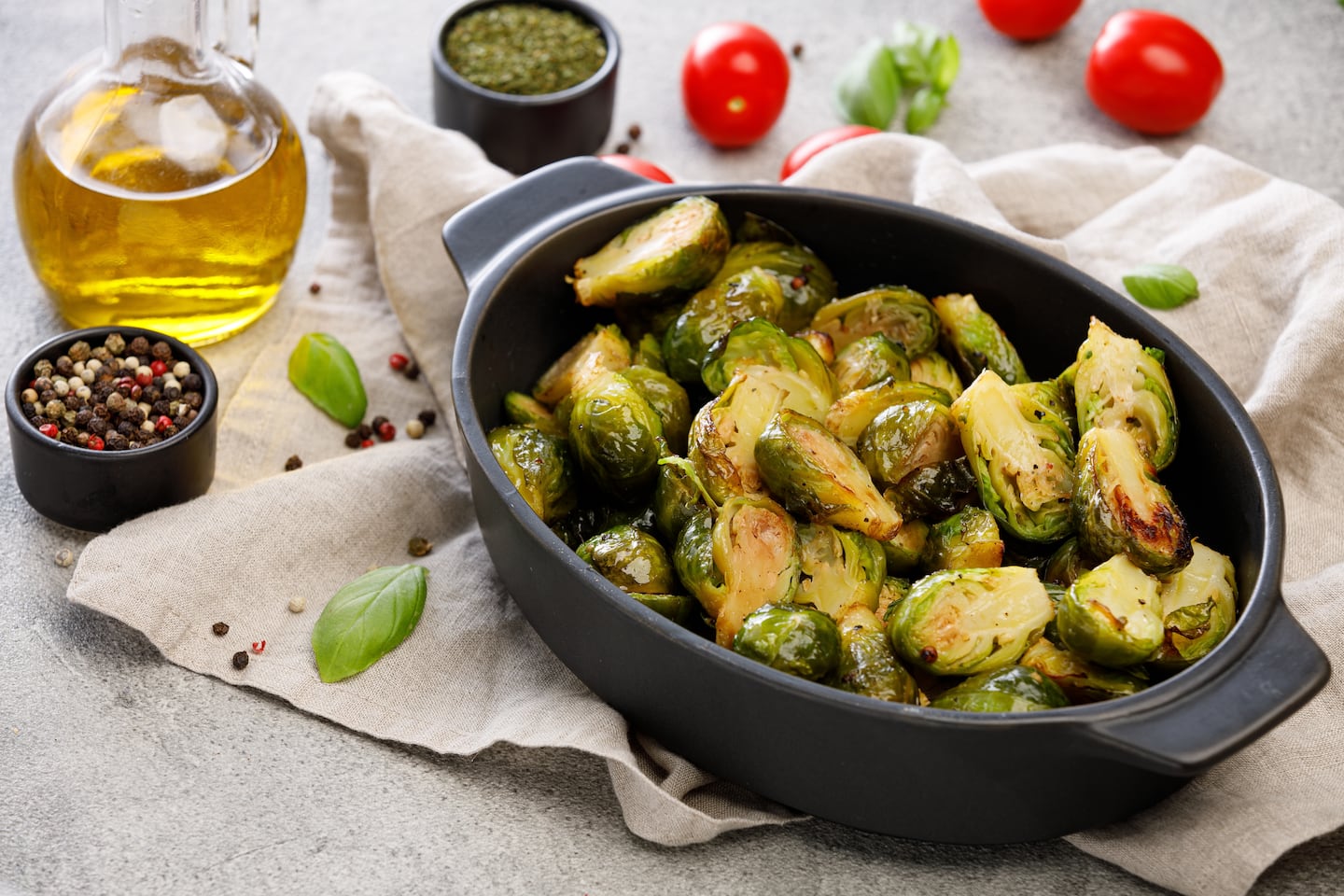 Roasted Brussels Sprouts With Herbes de ProvenceFrom The Harvard Common Press/Shutterstock
Roasted Brussels Sprouts With Herbes de Provence
If your only memories of Brussels sprouts are the boiled ones you grew up with, please allow this recipe to help you make new memories. Crispy Brussels sprouts on restaurant menus are all the rage. You can easily make them at home, too, but without the bacon fat.
Total prep and cook time: 30 minutes
Yield: 4 servings
1 pound Brussels sprouts, washed, stems cut off, outer leaves peeled if needed, then quartered
2 tablespoons extra virgin olive oil
½ teaspoon herbes de Provence (or Italian seasoning)
¼ teaspoon garlic powder
¼ teaspoon salt
Freshly ground black pepper, to taste
1 Preheat the oven to 425 degrees convection (if available). Line a baking sheet with parchment paper.
2 Place the Brussels sprouts on the prepared baking sheet and drizzle with the olive oil. Toss using tongs. Sprinkle with the herb seasoning, garlic powder, salt, and pepper.
3 Roast until some of the leaves and bottoms become browned and crispy, about 10 minutes. Remove from the oven and stir. Roast some more until tender and most of the sprouts’ outer leaves are browned and crispy.
Per serving: 98 calories; 8 grams carbohydrate (3g fiber, 0g added sugars, 5g net carbs); 3g protein; 7g fat; 167mg sodium
Recipe Note: You can buy Brussels sprouts while they’re still on the stalk, which you can find at farmers markets and some grocery stores. Look for nice and green, plump (not browned) outer leaves.
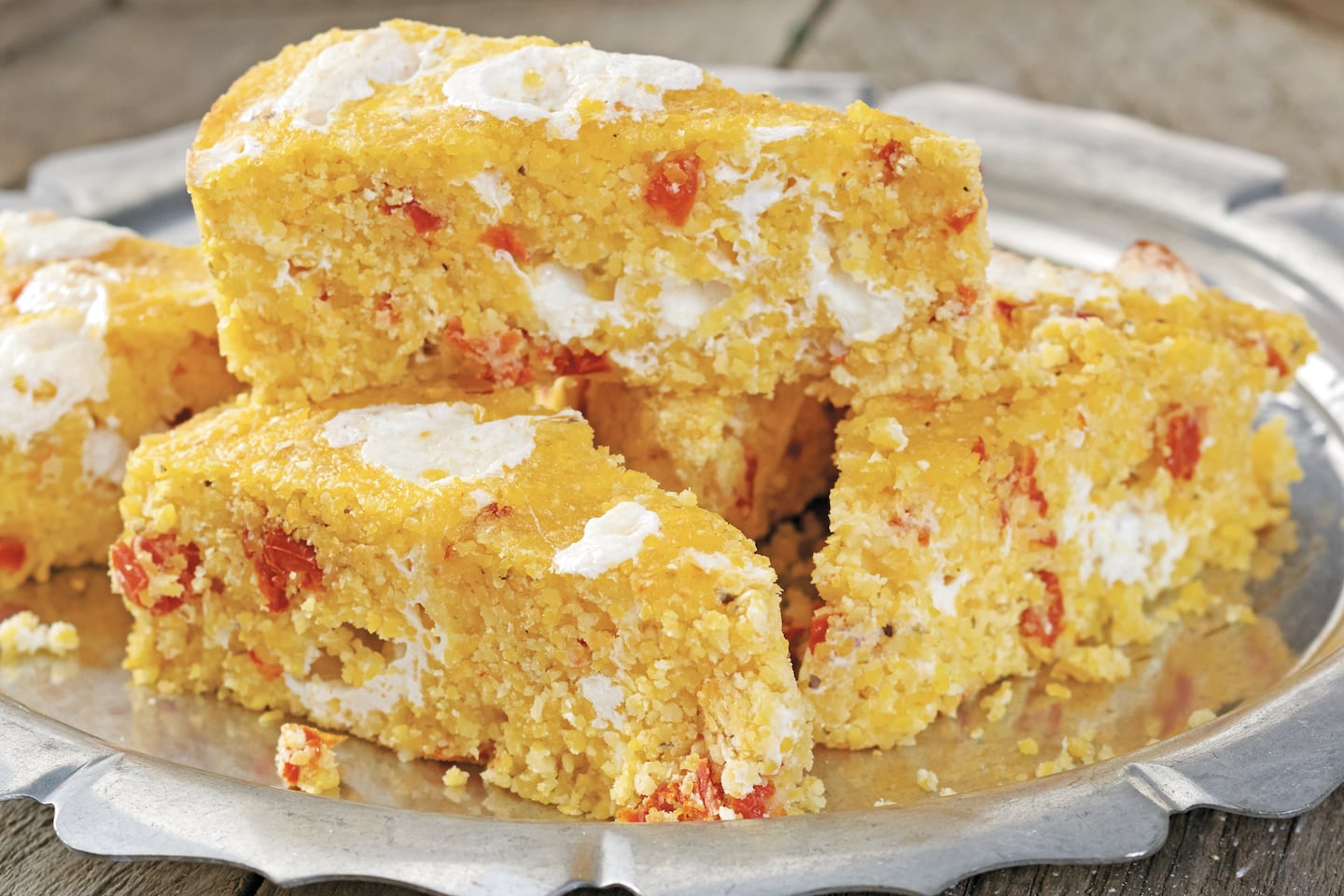 Mediterranean CornbreadFrom The Harvard Common Press
Mediterranean-Style Cornbread
This Italian-inspired version is an updated interpretation of traditional recipes from the northern Italian regions of Veneto, Lombardia, and Friuli. Introduced by the Ottomans in the 900s, corn flour was called granoturco, or “Turkish grains” in Italian, and became extremely popular with the Jewish community in Venice. Soon thereafter, it became a poor man’s staple throughout Italy.
Total prep and cook time: 1 hour
Yield: 12 servings
2 teaspoons extra virgin olive oil, divided
2½ cups stone-ground 100 percent whole-grain, medium-grind cornmeal
½ tablespoon unrefined sea salt or salt
2 teaspoons baking powder
1 teaspoon sugar
2 cups boiling water
¼ cup chopped sun-dried tomatoes
4 ounces fresh mozzarella cheese, shredded by hand into large pieces
1 Preheat the oven to 350 degrees.
2 Grease an 8-inch round cake pan with 1 teaspoon olive oil.
3 Combine the cornmeal, salt, remaining 1 teaspoon olive oil, baking powder, and sugar in a large bowl. Add the boiling water and stir to mix until all of the water is incorporated in the mixture.
4 Stir in the sun-dried tomatoes and mozzarella. Pour the cornmeal mixture into the prepared pan. Wet your hands and press down to smooth the top.
5 Bake for 10 minutes and then cover the pan with aluminum foil and bake for 20 to 30 minutes, or until golden and firm on top. Allow to cool slightly and serve warm, or allow to cool and wrap in plastic wrap.
Per serving: 150 calories; 27 grams carbohydrate (3g fiber, 0g added sugars, 23g net carbs); 4g protein; 3.5g fat; 410mg sodium
Mediterranean Tradition: While many Americans find the words healthful bread to be an oxymoron, this isn’t the case in the Mediterranean region. There, fresh breads made with high-quality grains are enjoyed daily and are a backbone to the diet. Simple, quick breads such as this one can be whipped up in minutes and provide a heartier alternative to store-bought varieties.
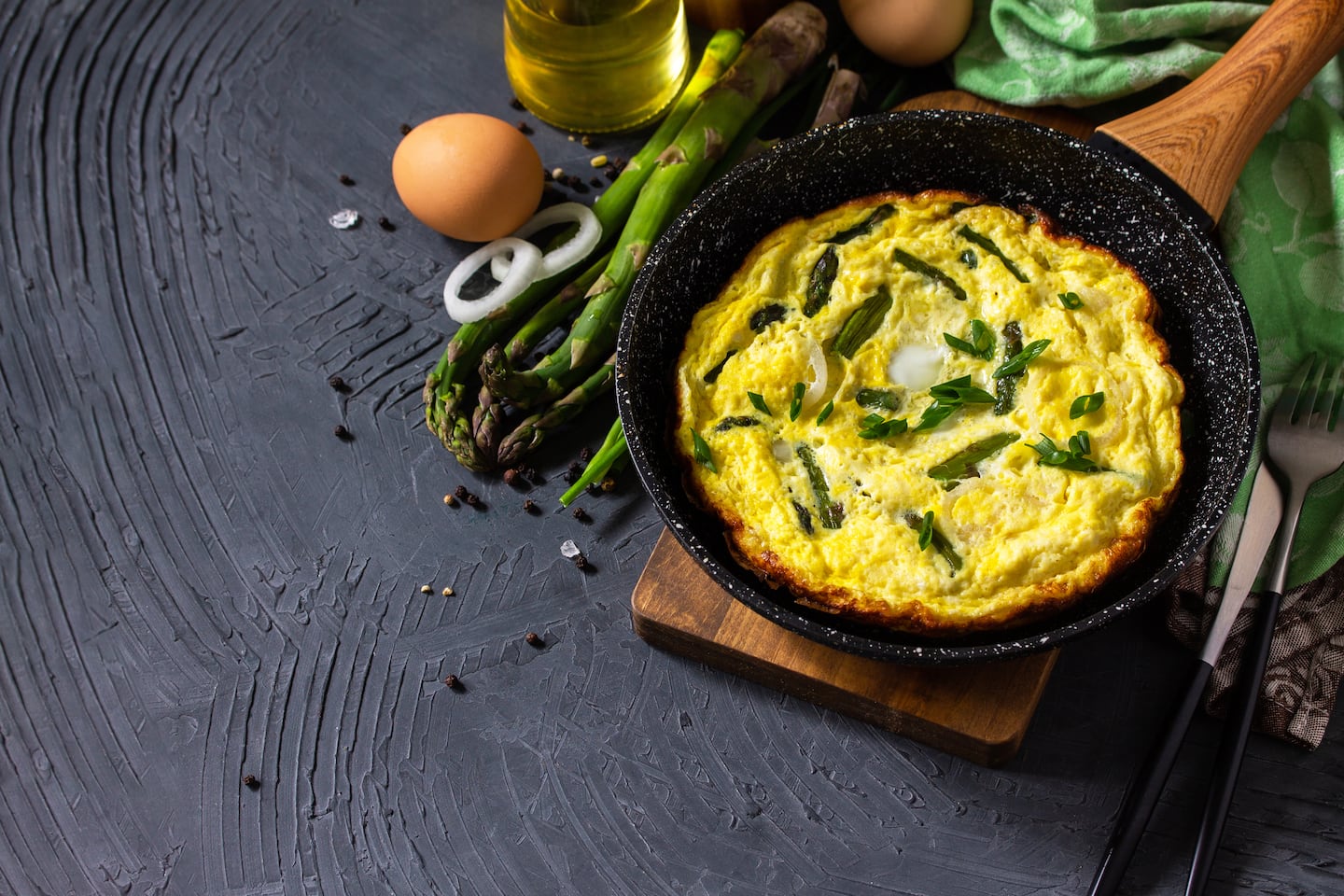 Easy Asparagus FrittataFrom The Harvard Common Press/Shutterstock
While a frittata sounds brunchy and fancy, it is seriously so easy, you’ll want to make it on the regular. From breakfast to lunch to dinner, it can be savored anytime during the day. It’s also a wonderful way to use up any vegetable bits — leftovers or raw — you have in the fridge.
Total prep and cook time: 30 minutes
Yield: 6 servings, 1 slice each
6 large eggs
¼ cup milk
¼ cup grated Parmesan cheese
¼ + ⅛ teaspoon salt
Freshly ground black pepper, to taste
½ bunch asparagus
1 tablespoon extra virgin olive oil
½ cup diced red onion
1. Whisk the eggs, milk, Parmesan, salt, and pepper in a bowl. Break off the woody bottom third or fourth from the asparagus and discard. Slice the stalks of the asparagus into small pieces, reserving the top 1 to 2 inches of the tips.
2. Heat a medium sauté pan, about 10 inches, over medium heat. Add the oil. When the oil is shimmering, add the onions and asparagus. Sauté until the onions are translucent. Pour in the eggs. Cover and cook over medium-low heat for about 10 minutes.
Per serving: 127 calories; 4 grams carbohydrate (1g fiber, 0g added sugars, 3g net carbs); 9g protein; 9g fat; 297mg sodium.
Suggestions and Variations: You can substitute the asparagus with other vegetables, like broccoli, zucchini, and mushrooms. If the vegetables are already cooked, you can add them in toward the end of cooking the onion. Red onion can be substituted with any type of onion, like white or yellow onion, leeks, or scallions.
This excerpt was adapted from 5-Ingredient Mediterranean Cookbook and reprinted with permission from Harvard Common Press, an imprint of The Quarto Group. Copyright 2026. Send comments to magazine@globe.com.
Dining and Cooking