
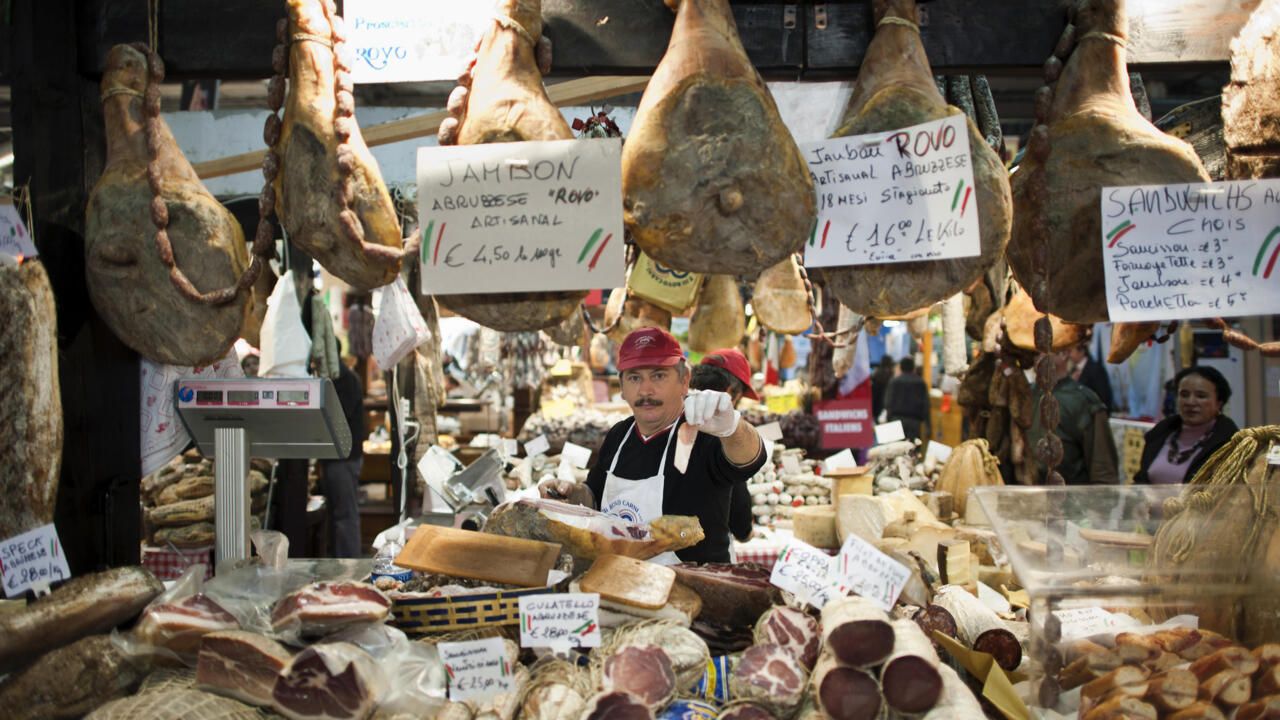
 Nitrites used to preserve charcuterie and ham may be linked to a higher risk of certain cancers or diabetes. © Fred Dufour/AFP
Common food preservatives such as nitrites and sorbates may be linked to a slightly higher risk of certain cancers or type 2 diabetes, according to two new studies coming out of an ongoing large-scale research project on the French diet.
The studies, which are based on the health data of more than 100,000 French adults, highlight risks related to specific additives, including nitrites, which are often used to cure ham, bacon and sausages.
The first study, published Wednesday in the journal BMJ, found “multiple associations between preservatives that are widely used in industrial foods and beverages on the European market… and higher incidences of overall, breast and prostate cancers”.
Notably, it found a link between high consumption of sodium nitrate and a 32 percent increased risk of prostate cancer. Potassium nitrate was associated with a higher risk of breast cancer (22 percent) and cancer overall (13 percent).
Sorbates – commonly used to preserve wine, baked goods and cheeses – were linked to a 26 percent higher risk for breast cancer and a 14 percent increase in all types of cancers.
Ham and charcuterie linked to cancer, French food watchdog warns
Public health issue
A second study, published in Nature Communications, found that higher consumption of common food preservatives was linked to a higher risk of developing type 2 diabetes.
Potassium sorbate, in particular, is associated with roughly double the risk of the disease.
“These findings may have important public health implications given the ubiquitous use of preservatives in a wide range of foods and drinks,” the study authors wrote, recommending that consumers “favour fresh and minimally processed foods and limit superfluous additives whenever possible”.
The French government has encouraged ham and deli meat producers to reduce their use of nitrites, without calling for an outright ban, and is considering how to regulate so-called ultra-processed foods.
But researchers not involved in the studies cautioned it is too early for consumers to change their eating habits.
The studies are based on data from a broader ongoing research project in which more than 170,000 French people fill out regular questionnaires about their diet. Such observational studies cannot prove cause and effect.
“Consuming products with preservatives does not mean you will immediately develop cancer,” epidemiologist Mathilde Touvier, who supervised both studies, told the AFP news agency.
“But we need to limit how much we are exposed to these products.”
(with AFP)
Dining and Cooking