
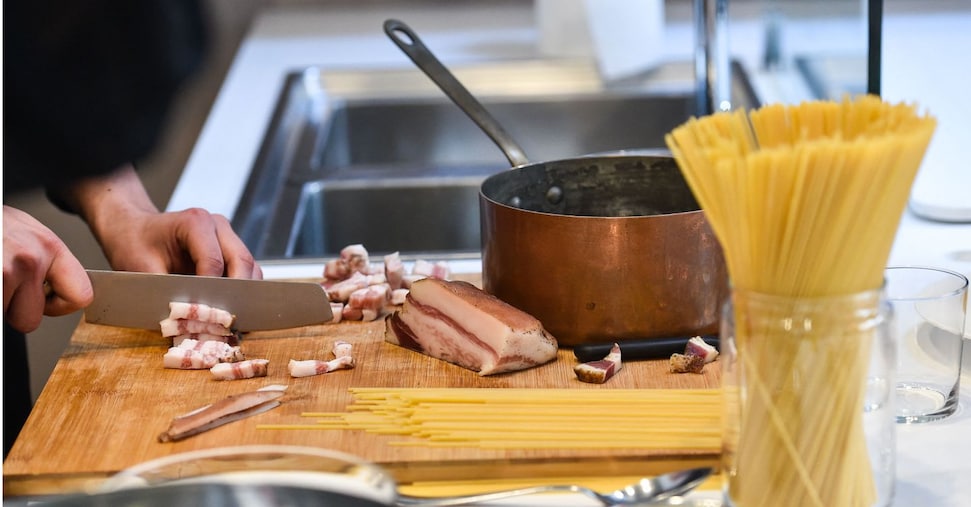
The Italian cuisine enters the intangible cultural heritage of mankind. It is the first cuisine in the world to be recognised in its entirety. It was unanimously decided by the UNESCO Intergovernmental Committee, which met in New Delhi, India. According to the decision, Italian cuisine is a “cultural and social blend of culinary traditions”, “a way of caring for oneself and others, expressing love and rediscovering one’s cultural roots, offering communities an outlet to share their history and describe the world around them”.
The news was greeted by a long applause from the hall. The Italian one was among 60 dossiers under evaluation from 56 countries. Unesco stresses that Italian cooking ‘fosters social inclusion, promoting well-being and offering a channel for lifelong intergenerational learning, strengthening ties, encouraging sharing and promoting a sense of belonging’. For Italians, cooking is ‘a community activity that emphasises intimacy with food, respect for ingredients and shared moments around the table. The practice is rooted in anti-waste recipes and the transmission of flavours, skills and memories across generations. Being a multigenerational practice, with perfectly interchangeable roles, cooking serves an inclusive function, allowing everyone to enjoy an individual, collective and continuous experience of exchange, overcoming all intercultural and intergenerational barriers’. The decision also underlines how the nomination dossier, edited by jurist Pier Luigi Petrillo, demonstrates ‘the significant efforts made by communities over the last sixty years, in particular by key representative bodies such as the magazine La Cucina Italiana, the Accademia Italiana della Cucina, and the Fondazione Casa Artusi’.
With the inscription of Italian cuisine as a UNESCO World Heritage Site, Italy conquers the world record of recognitions in the agri-food sector in proportion to the number of total recognitions obtained. Out of the 21 traditions inscribed on the List of Intangible Cultural Heritage, nine are in fact attributable to the agri-food sector: Italian cuisine, the art of Neapolitan pizza makers, transhumance, the construction of dry-stone walls in agriculture, the cultivation of the Pantelleria zibibbo vine, the Mediterranean diet, truffle hunting and quarrying, the traditional irrigation system, and the breeding of Lipizzaner horses.
Dining and Cooking