
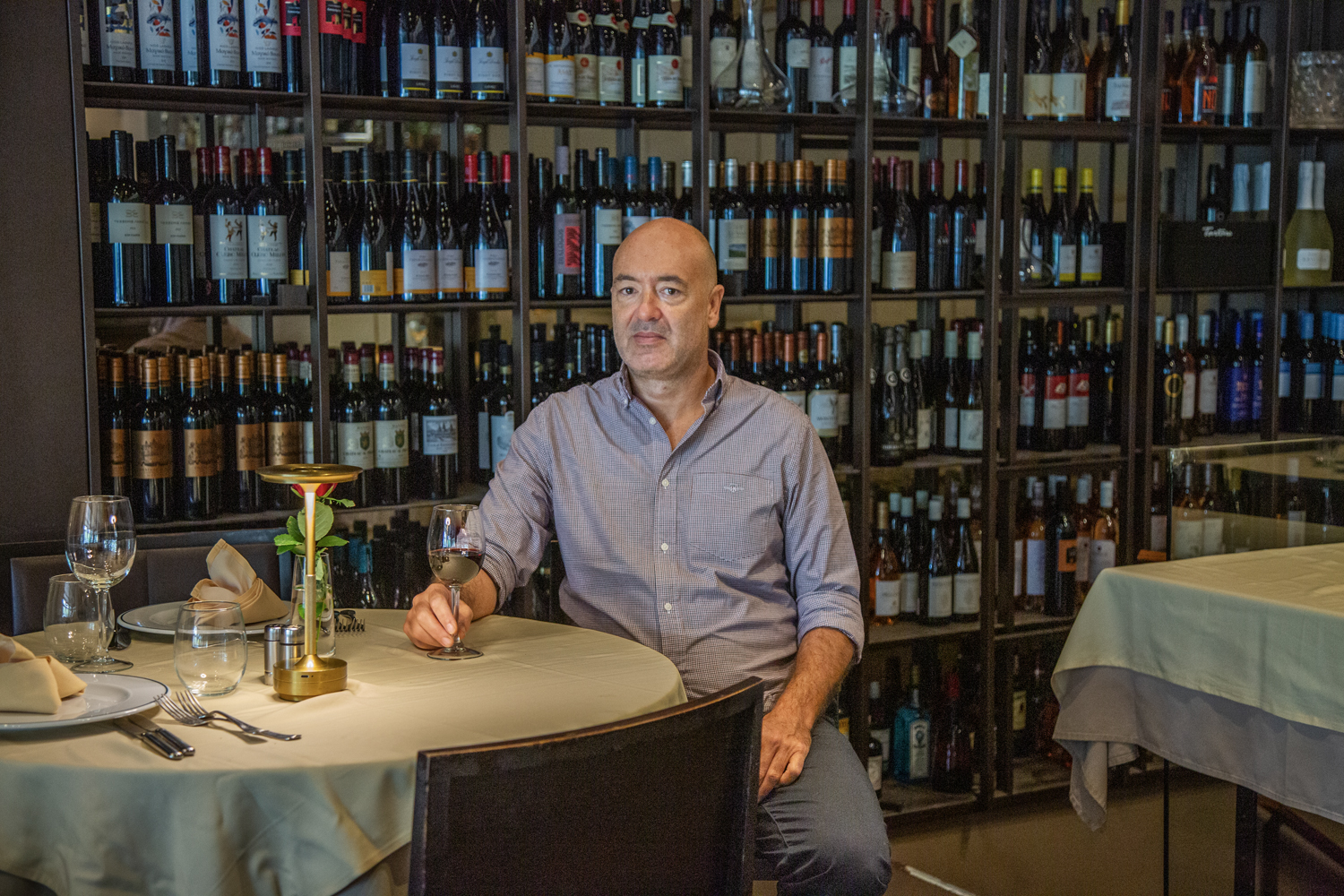
The historic Tartare in Glyfada has been feeding generations with traditional French cuisine. But what is its story, and what makes it so beloved by its regulars? A conversation with owner Odysseas Polymeris and a flavourful journey through favourite dishes.
Tartare in Glyfada is a historic restaurant. Not only as one of the oldest active French cuisine restaurants in Athens, founded in 1999, but also as one of the oldest restaurants in Glyfada, on the Athens Riviera. There, Odysseas Polymeris can proudly say that he has been feeding generations of regulars.
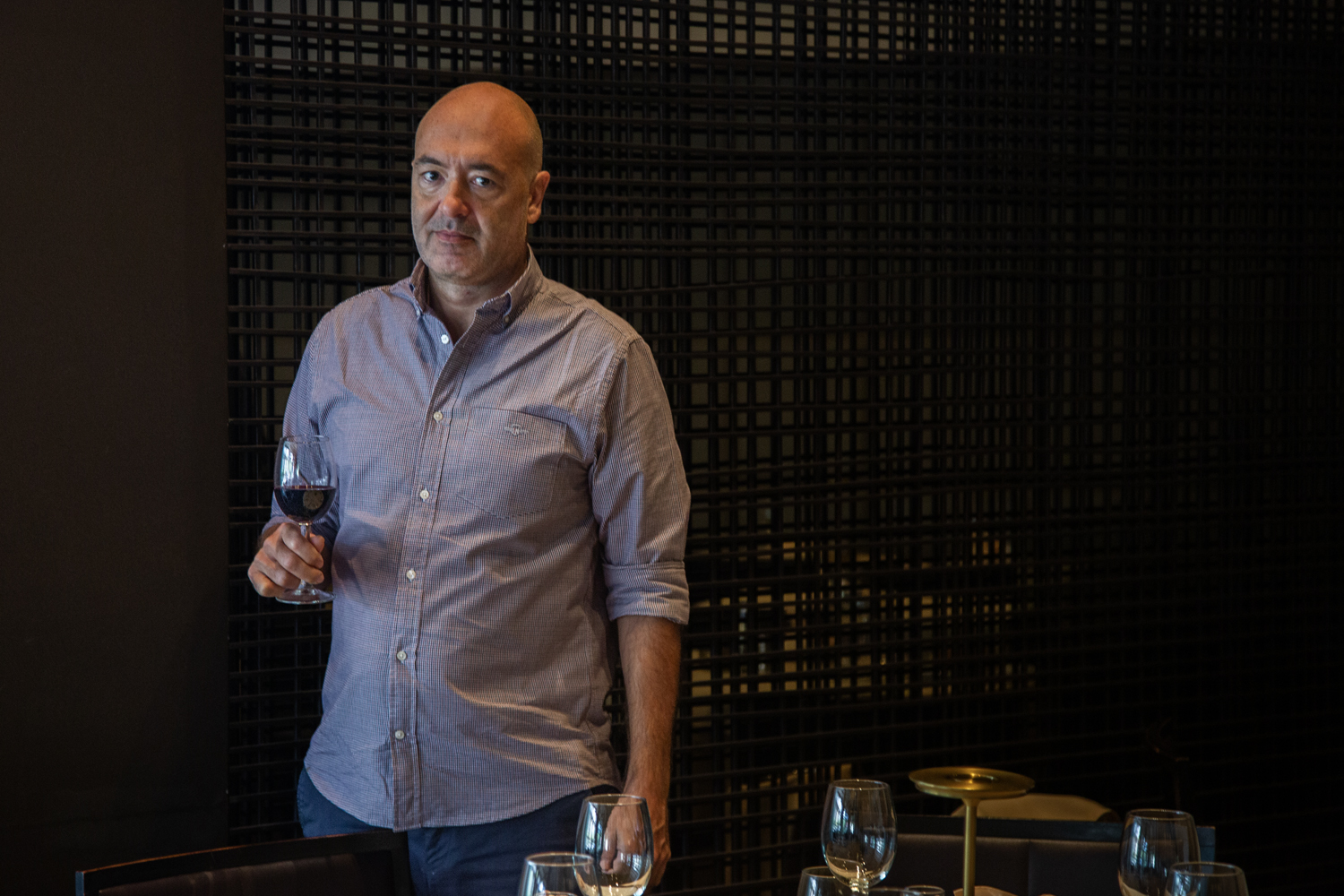
“We opened the restaurant with my father after I returned from my hospitality studies at Les Roches in Switzerland, and after I had gained the necessary work experience—my baptism by fire. He already had experience in French cuisine from ‘Spyros & Vasilis’, so it was an easy choice for us,” Odysseas recalls. “Of course, after a few years my father stepped away from the restaurant, and the responsibility remained with me. I still remember the first day, when a regular noticed his absence and asked me, ‘So who’s going to make my tartare now, you?’ It’s a responsibility.”
That sense of responsibility, however—the way he treats each guest individually, winning over new customers while honouring old ones—does not go unrewarded. Tartare has built a very loyal customer base that returns again and again, sometimes several times a week. “We even have second-generation regulars,” he continues with a smile. “Children of old customers, even 17–18 years old, coming with their friends. Tartare has become part of life in Glyfada in a family-like way. Glyfada is a village, after all.” At Tartare, it certainly feels like a neighbourhood. “It often happens that half the restaurant stands up to greet the other half. People stop by tables, the atmosphere is always warm. Over the years, we’ve become friends with many customers. But friends outside the restaurant. Here, they are customers, and customers are treated as they should be. For us, every guest is unique, whether it’s their first visit or their fifth this week,” he concludes, with a sense of duty in his voice.
The space at Tartare is classic and generally very well put together. The tables have that French urban aesthetic, with crisp white tablecloths, perfectly aligned silverware and waiters wearing the classic apron-vest that suits an old-school establishment so well. The layout leaves air between tables in the indoor dining room, allowing for a sense of privacy from one party to the next, unlike the currently enclosed semi-outdoor area, where things feel more “friendly.” The exceptionally polite waitstaff, with the proper service set-up—all with at least 15 years of experience—prepare several dishes tableside, such as the Caesar salad and the restaurant’s namesake tartare.
Before talking in detail about flavour, the sense of place matters—and that sense begins with the restaurant’s history. Tartare is not simply “from 1999,” which for Athens is not all that old, but it has kept many things exactly the same since 1999, something extremely rare in Athenian dining, which constantly chases what’s new. From the people—chefs, waiters, suppliers—to the recipes and the menu, many things have remained unchanged for 26 years. That is the Tartare experience. A steady, reliable cuisine that does not chase new flavour trends, serving Provençal cooking as it was brought to Glyfada in 1999 by two well-travelled people.
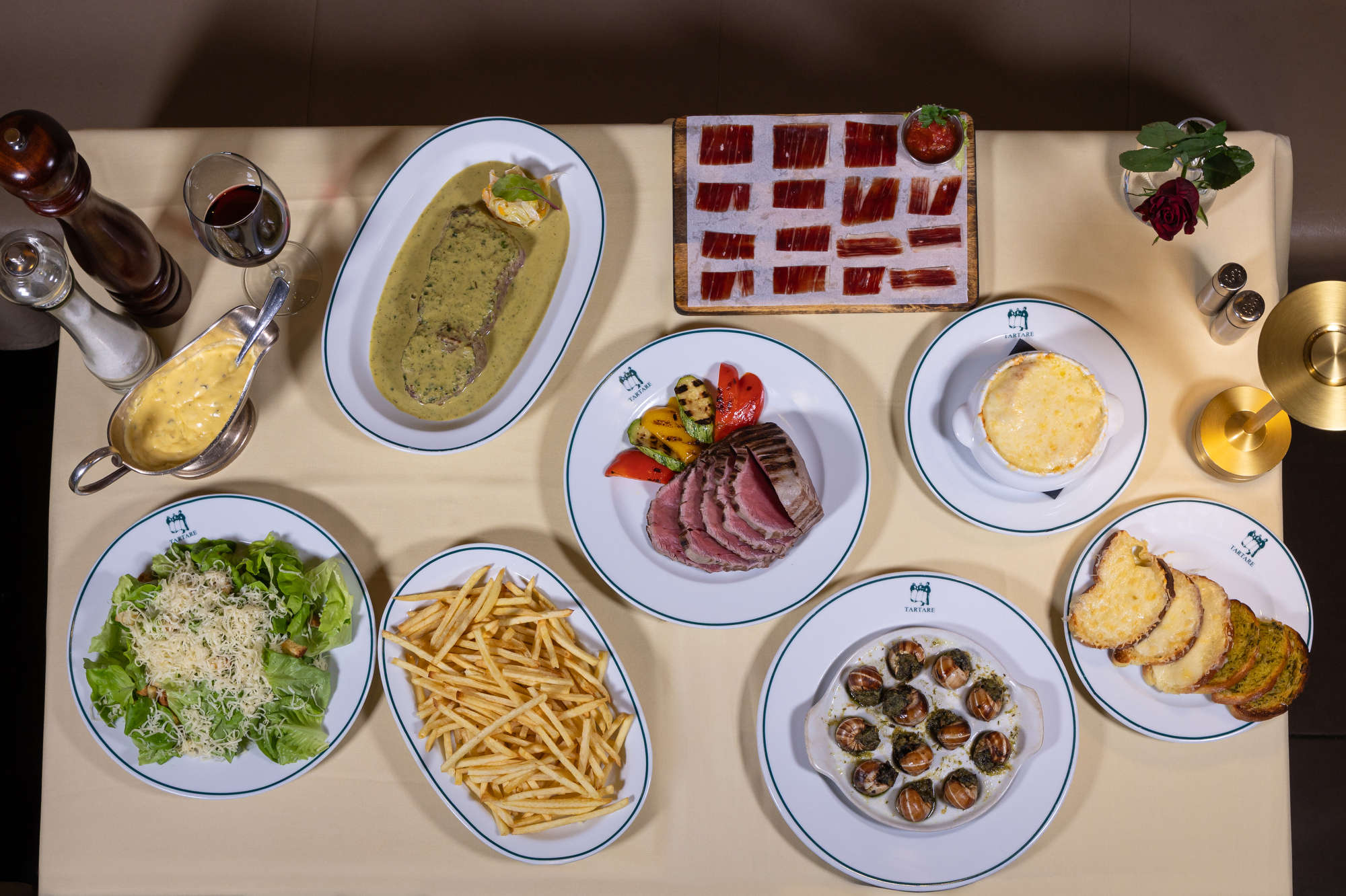
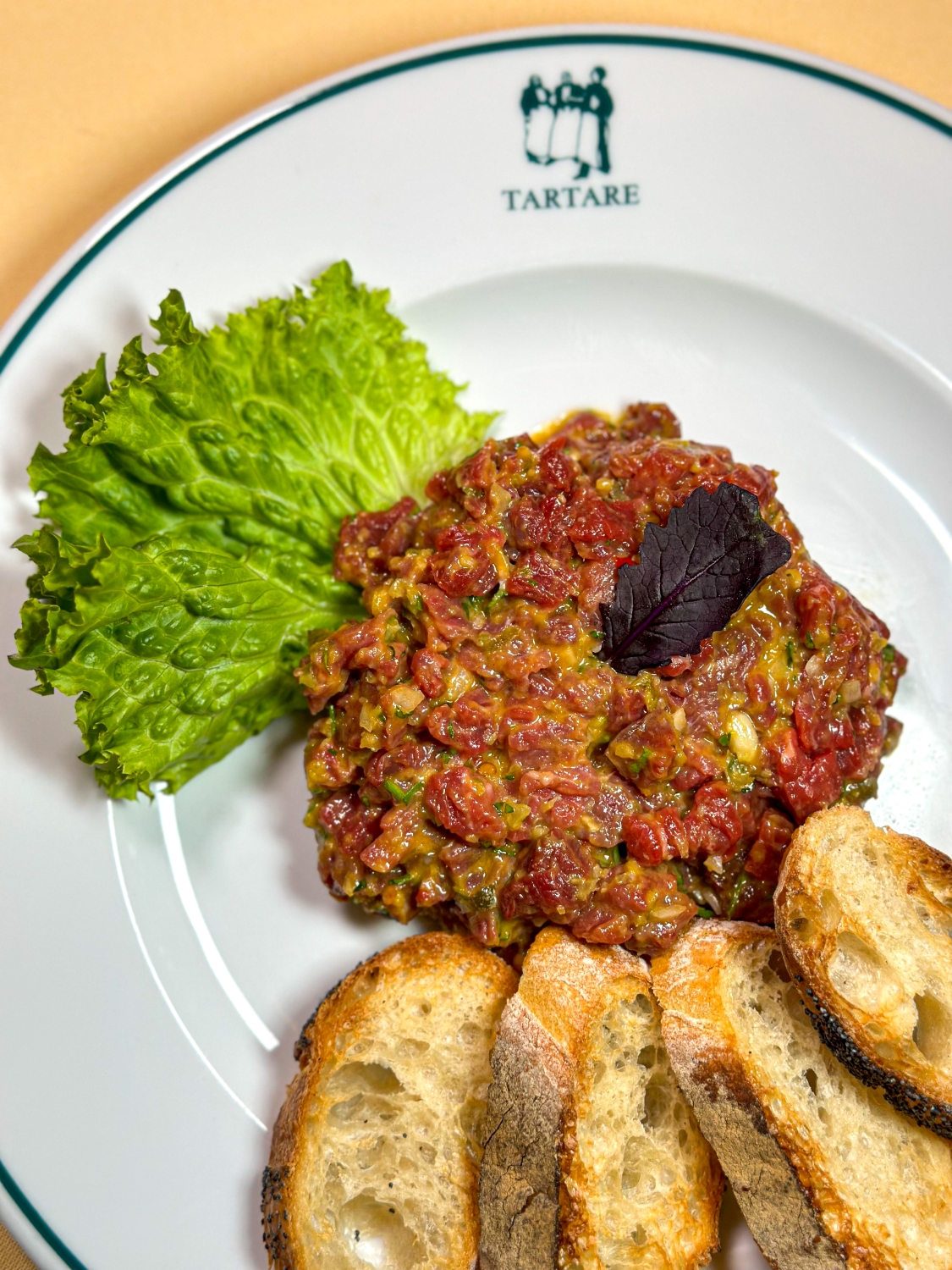
I’ll start, then, with the namesake steak tartare (€33). A generous portion, with clean flavours led by the meat and the mustard. Pickles, onion and herbs add depth to the dish, but delicately, without straying from the flavour of the central pairing. A very clean dish, rooted firmly in French technique. A tartare doesn’t need much to be delicious, and this one is exactly that.
I was also very positively impressed by the Caesar salad (€14), made properly (finally!) and served with the necessary croutons. Tender green leaves, perfectly embraced by the sharp acidity of the dressing and the subtle intensity of garlic that perfumes the fresh composition. Rustic pieces of anchovy and crunchy croutons create a pleasant sense of contrast that keeps things interesting from bite to bite. I recommend it without hesitation.
I also recommend the pâté de foie (€36), an excellent pâté served with toasted bread. The bread itself is nothing special, but the pâté more than makes up for it. Rich umami fat, aromatic and slightly sweet, it makes a perfect introduction to any of the meat mains on the menu.
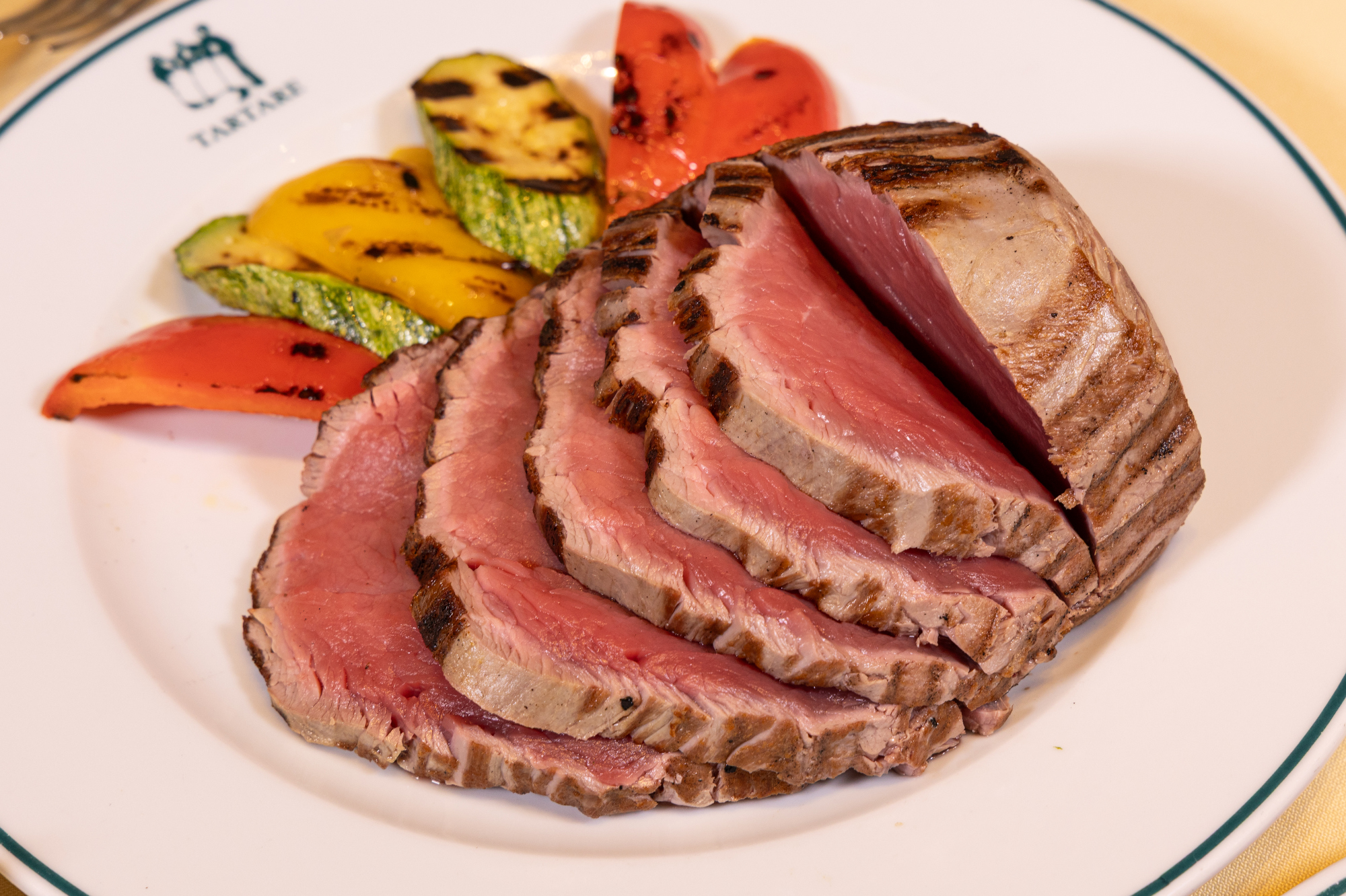
Another “secret” of Tartare is that, according to Odysseas, the recipe for the Café de Paris sauce they serve is the authentic one, passed down from a family friend chef who worked at Café de Paris in Geneva, and it contains more than 40 different ingredients. I haven’t tried the original, but I can say that this sauce was excellent. Aromatic with curry and herbs, with a hint of tarragon crossing the palate at the outset. No sense of heaviness despite the butter, and an appealing sweetness that discreetly accompanies the meat through to the finish, without sharp edges. We paired it with Châteaubriand (€90 for two). A good-quality cut, cooked perfectly—after all, the centre of the fillet needs nothing more.
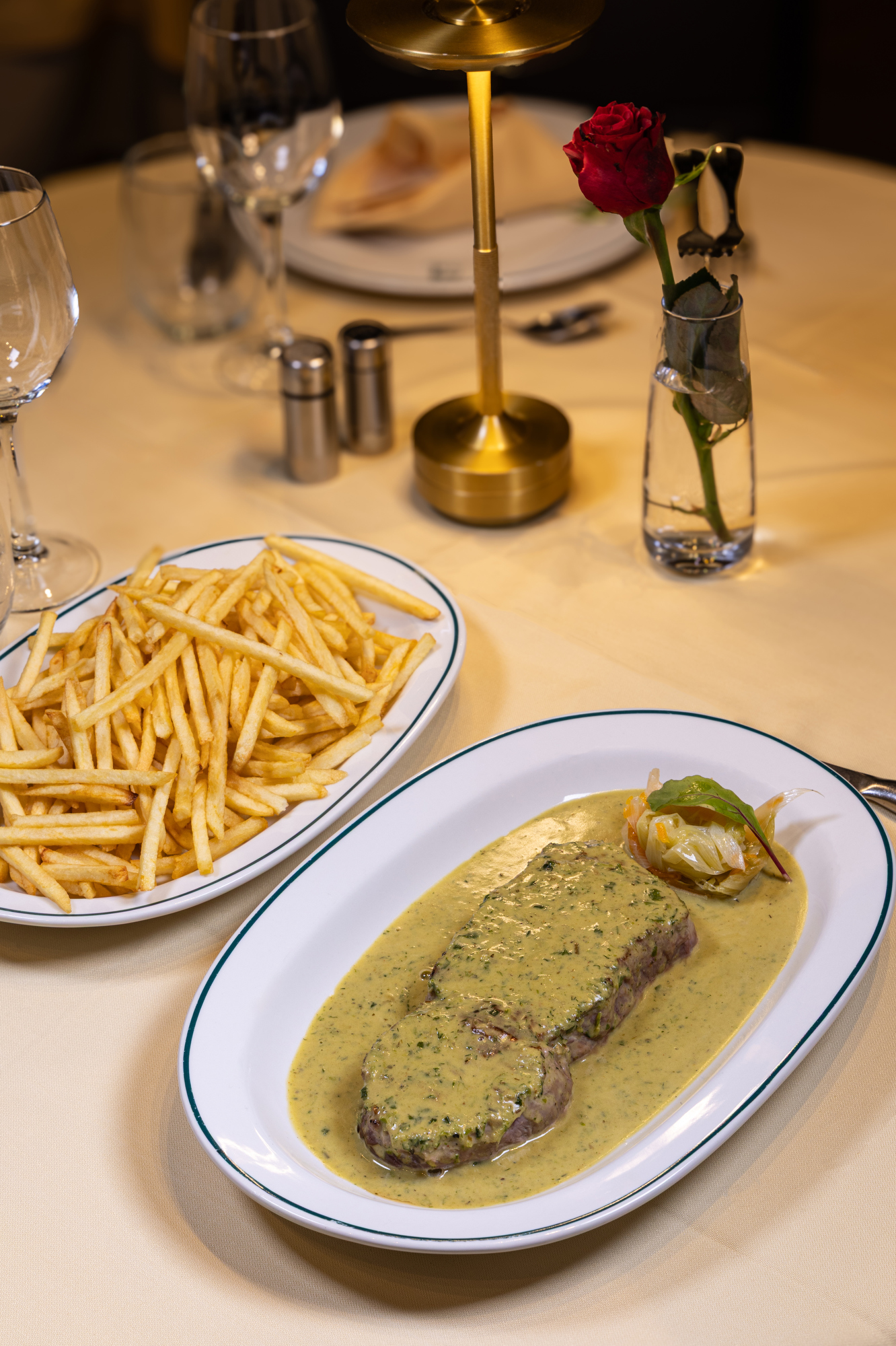
We also tried the côte de boeuf (€82/kg), from rubia gallega beef, an excellent cut from Spain. The larger piece of beef carried all its rich, meaty, fatty umami flavour, coating the tongue in a completely different way from the delicate Châteaubriand. Generous, full-bodied and with a strong personality, it’s a variety not often found in Greece, for true meat lovers.
The meal ended with the traditional chocolate soufflé—airy, flavourful, just sweet enough. A very old-fashioned ending by today’s standards, but for most of us nostalgic, and exquisitely executed, closing such a classic meal exactly as it should.
Tartare, surprisingly, impressed me the next day. Writing this piece, I didn’t think, “I’d like to go back and try the rest of the menu,” as I often might, but rather, “I’d like to go back and eat the dishes I tried again.” That’s how it has kept its regulars—and that’s how it creates new ones.
Dining and Cooking