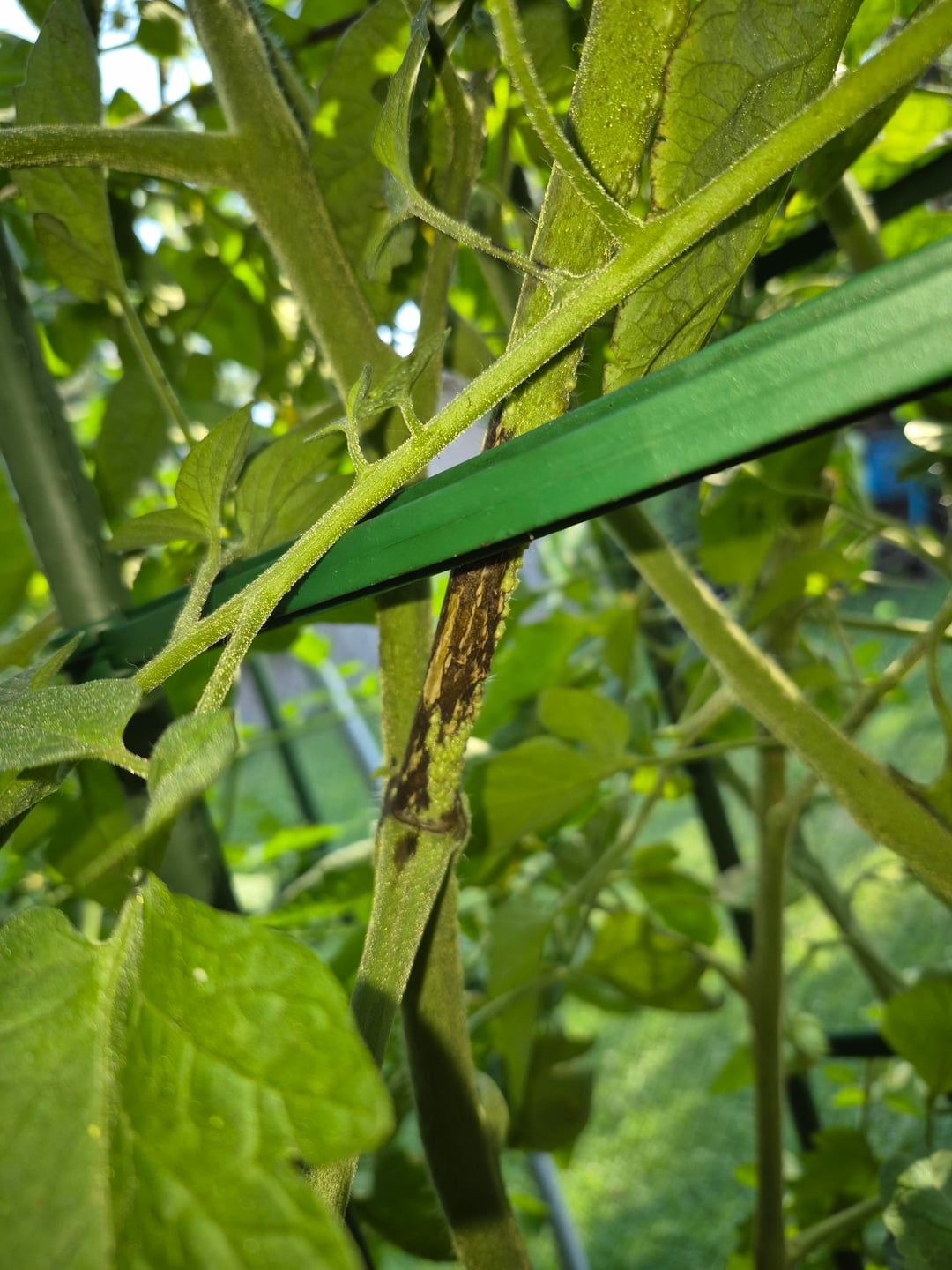
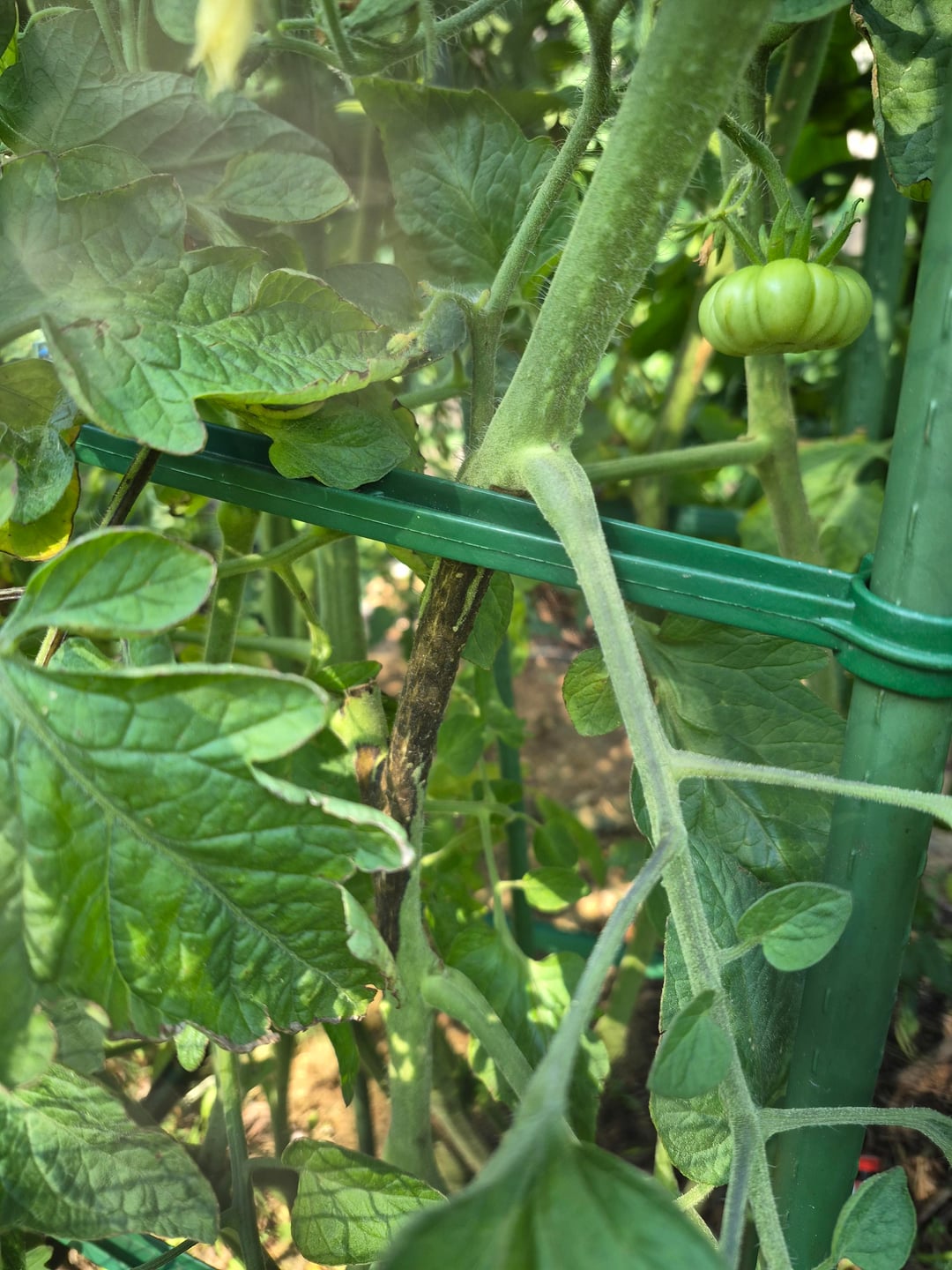
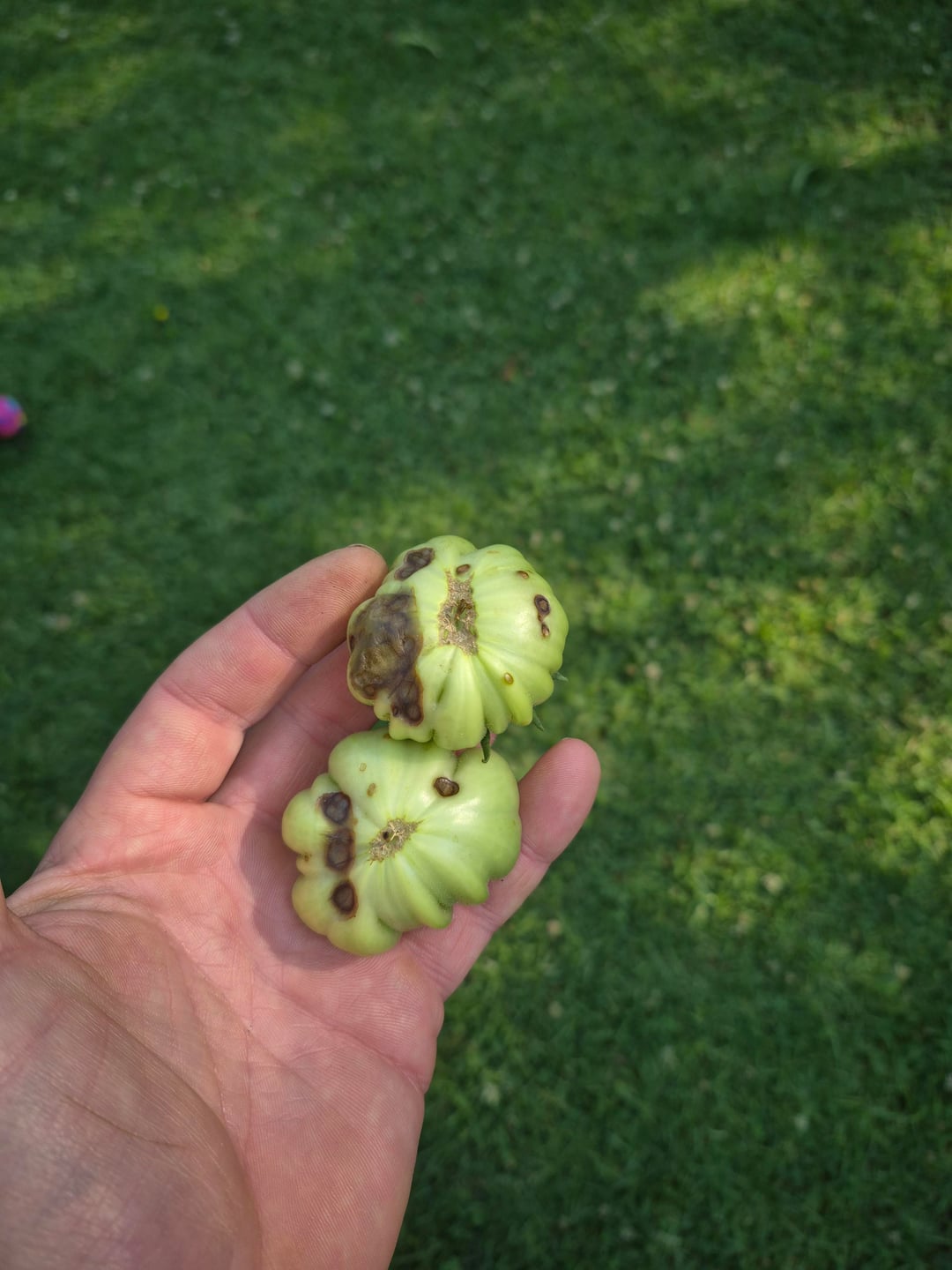
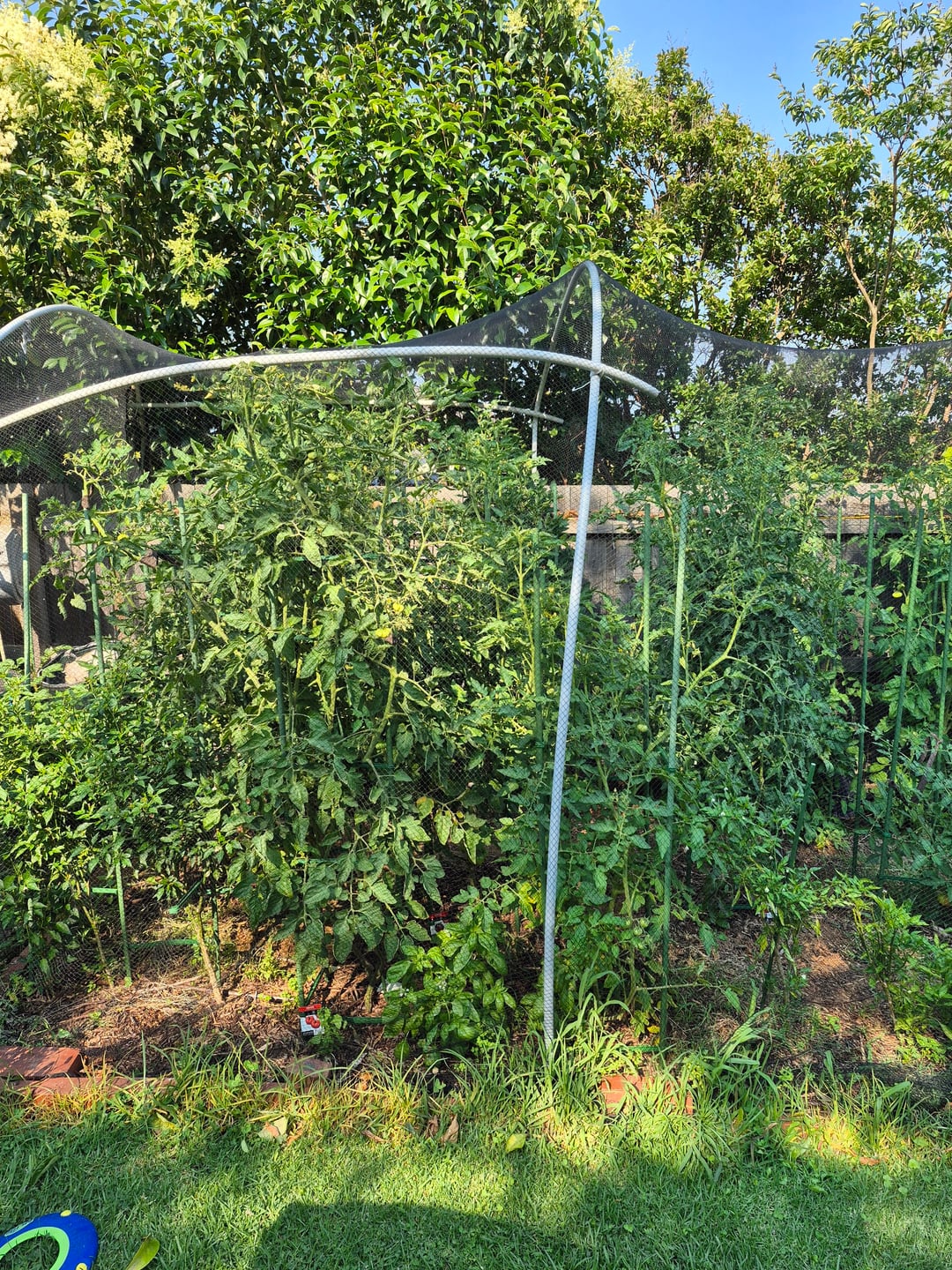
My tomatoes are generally pretty healthy, I think. But there are a couple spots on the stems of a couple plants and a small percentage of tomatoes have these blotches on them. What's going on, and how can I fix it?
by fenaira
3 Comments
Beamburner
The image displays a tomato plant showing potential signs of a fungal or bacterial issue on its stem and leaves. The dark, shriveled area on the lower stem suggests a potential infection, possibly related to issues like Fusarium wilt or crown and root rot. The yellowing and curling of some leaves may indicate early blight or other environmental stress. Such issues are often associated with high humidity, inconsistent watering, or contaminated soil. To manage potential fungal issues, experts suggest pruning affected parts with clean shears and applying a copper fungicide. Disclaimer: This information is for educational purposes only and is not a substitute for professional agricultural advice. Consult a local expert for specific diagnosis and treatment.
Several_Ad_4707
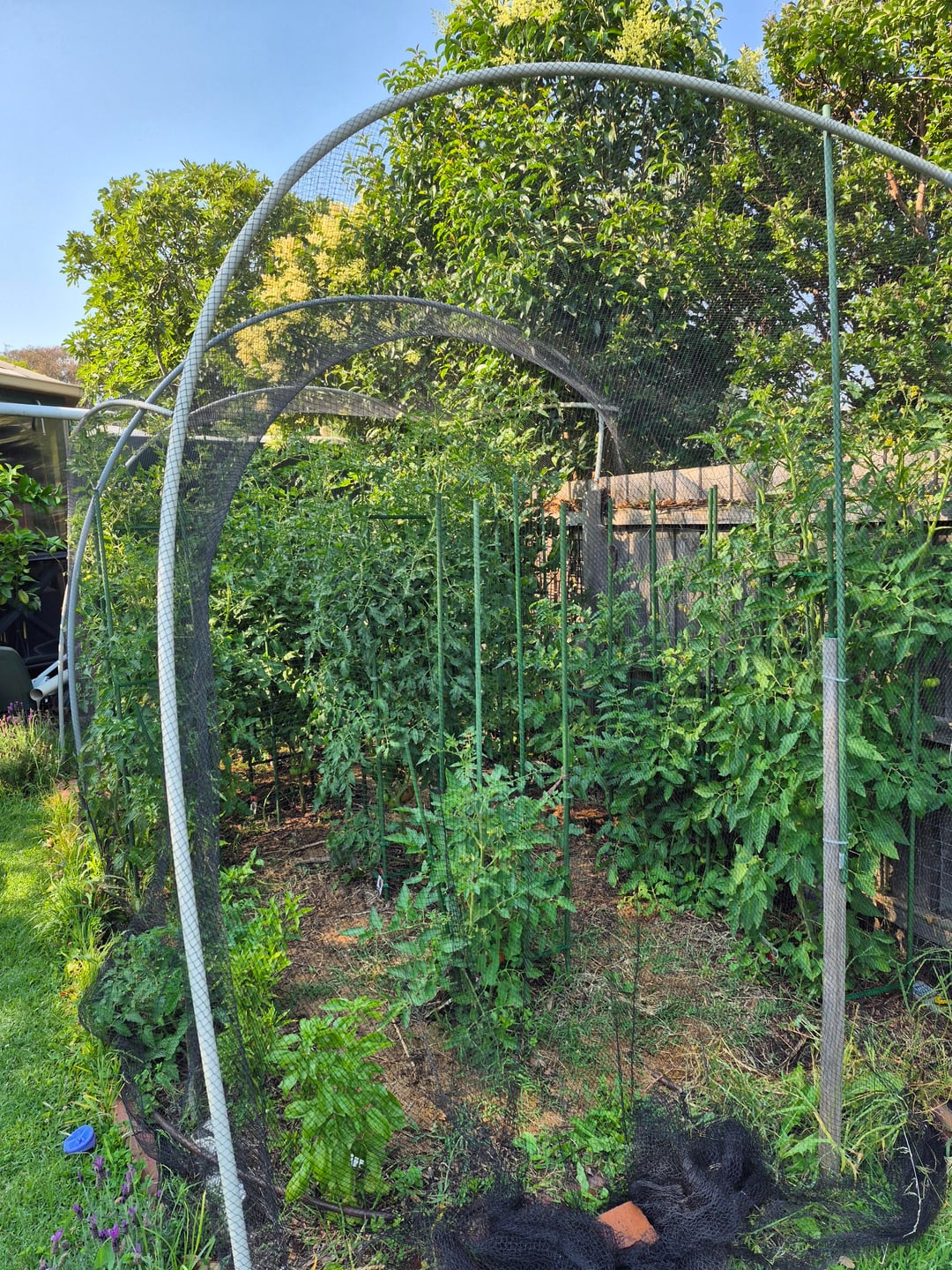
That’s a really nice setup! Do you rotate your plants to new spots? The standard is never in one place more than three years. But… I rotate mine and still get diseases. A one inch layer of compost will help slow diseases down. Also, keep the leaves off the ground. Lots of people prune the lower branches off and keep pruning throughout the season as the lower fruits ripen
little_cat_bird
I think it looks like two separate things: stem injury from rubbing against the support structures, and some blossom end rot.
For the stem injury, try to prevent the structure putting too much pressure on the stems and try to prevent excessive jostling of the plants. The damage can make that part of the plant more susceptible to disease, but not definitely.
For blossom end rot, there’s a pinned post about this common fruit defect.

3 Comments
The image displays a tomato plant showing potential signs of a fungal or bacterial issue on its stem and leaves.
The dark, shriveled area on the lower stem suggests a potential infection, possibly related to issues like Fusarium wilt or crown and root rot.
The yellowing and curling of some leaves may indicate early blight or other environmental stress.
Such issues are often associated with high humidity, inconsistent watering, or contaminated soil.
To manage potential fungal issues, experts suggest pruning affected parts with clean shears and applying a copper fungicide.
Disclaimer: This information is for educational purposes only and is not a substitute for professional agricultural advice. Consult a local expert for specific diagnosis and treatment.
That’s a really nice setup! Do you rotate your plants to new spots? The standard is never in one place more than three years. But… I rotate
mine and still get diseases. A one inch layer of compost will help slow diseases down. Also, keep the leaves off the ground. Lots of people prune the lower branches off and keep pruning throughout the season as the lower fruits ripen
I think it looks like two separate things: stem injury from rubbing against the support structures, and some blossom end rot.
For the stem injury, try to prevent the structure putting too much pressure on the stems and try to prevent excessive jostling of the plants. The damage can make that part of the plant more susceptible to disease, but not definitely.
For blossom end rot, there’s a pinned post about this common fruit defect.