

 Il Mercosur (Mercado Común del Sur) is a South American economic bloc that includes Argentina, Brazil, Paraguay and Uruguay, countries with rapidly growing agricultural production and an increasingly important role in international trade.
The EU–Mercosur agreement is the result of negotiations that began in 1999 and reached a political agreement in 2019, subsequently integrated and recalibrated in more recent years. Currently it is not yet fully in force, being subject to the completion of the ratification process and the implementation phase. Many of the measures which are being discussed do not produce immediate effects, but outline a framework that could impact the olive oil sector in the medium term.
Nonetheless, the agreement deserves attention because it introduces tools and rules that directly affect the olive oil supply chain, both in terms of international competition and market opportunities.
Potential effects of the agreement include:elimination of duties on certain imported mineral fertilizers and manures from Mercosur countries, which until now have been subject to tariffs ranging between 0 and 6,5%. For olive growing, which uses smaller quantities of chemical fertilizers than other crops, the direct impact is limited, but it can, however, help reduce costs.
The stabilization of fertilizer prices is also supported by the fact that, at the current stage, the European Carbon Border Adjustment Mechanism (CBAM) does not yet entail any direct economic costs.
This is an element that, for the moment, reduces uncertainty, although it does not represent a definitive benefit.
Olive oil from Mercosur
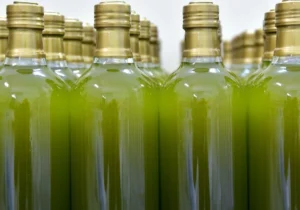 The most sensitive issue concerns olive oil, particularly that from Argentina, whose production volumes are estimated between 30.000 and 45.000 tons annually. These quantities are not large enough to challenge the European market; however, some characteristics of the South American production model deserve attention, as they feature new, super-intensive olive groves, with lower costs than the Mediterranean average. Also to be considered is the opposite seasonality, which allows release “new” oil onto the market between April and June, when European stocks tend to physiologically decrease.
In the medium term, a possible expansion of irrigated land in areas such as Mendoza and San Juan could strengthen this production capacity.
Safeguard clauses
To avoid sudden imbalances, the agreement includes more responsive safeguard clauses than in the past.
In the presence of critical signals, such as a significant drop in prices, an abnormal increase in imports, or localized difficulties in specific Member States, the European Union may suspend tariff concessions and reinstate protective measures.
It’s important to clarify that these tools don’t operate automatically; their activation requires an assessment by European institutions and constant monitoring of market data. Their effectiveness will therefore depend on the sector’s ability to promptly report any critical issues.
Opportunities for Italian oil
On the opportunity front, the elimination of tariffs on European extra virgin olive oil destined for Brazil could benefit Italian products. The Brazilian market is experiencing steady growth, especially in the quality olive oil segment, and Italy enjoys a well-established reputation there.
In this context, the recognition of European PDO and PGI products is particularly important, as it strengthens the protection of denominations and represents a fundamental tool in the fight against Italian-sounding products, a phenomenon particularly widespread in South America.
More balanced competition
Another pillar of the agreement concerns sanitary and phytosanitary standards, imported products will have to comply with criteria equivalent to European ones, with a ban on the use of unauthorized substances and traceability obligations.
For Italian manufacturers, already accustomed to operating within a strict regulatory framework, this represents a safeguard against competition based on less stringent rules.
Overall, the EU–Mercosur agreement is not neither a threat nor a miracle solution for the Italian olive and oil production chain: has potential risks but also opportunities.
The challenge will be to transform a complex regulatory framework into a development tool, without compromising on market protection, producer income, and the value of Italian olive oil.
Dining and Cooking