
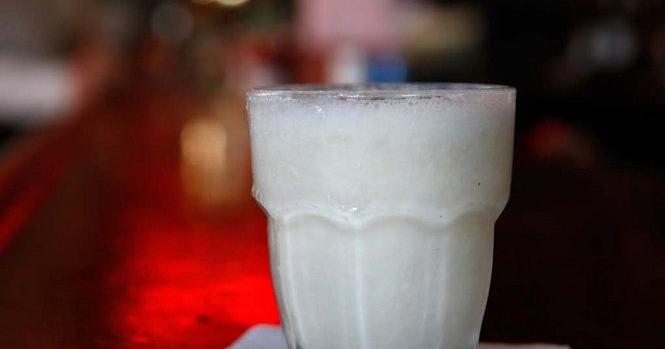
In his book “Famous New Orleans Drinks and How to Mix ’em,” first published in 1937, author Stanley Clisby Arthur makes the claim that the cocktail originated in New Orleans. He writes about Antoine Amedee Peychaud, who fled Santo Domingo in 1793 during a slave uprising, found refuge in the Crescent City.
Peychaud, an apothecary, brought with him a family recipe for a liquid tonic that would become known as bitters. He set up shop in a building that still stands in the 400 block of Royal Street in the French Quarter where he dispensed his bitters combined with cognac to remedy stomach ailments.
Arthur writes: “He poured portions into what we now know as an egg-cup, the old-fashioned double-end egg-cup. This particular piece of crockery, known to the French-speaking population as a coquetier (pronounced ko-k-tay) was, in all probability, forerunner of the present jigger — the name given the double-end metal contraption holding a jigger (1-1/2 ounces) in the big end, and a pony (1 ounce) in the little end, which we now use to measure portions for mixed drinks.”
It was Arthur’s belief that the pronunciation of the coquetier may have changed due to the “…thickened tongues of the imbibers…”
I have long told this story, believing it to be true, but lo and behold, I came upon a feature written by Amanda Fiegl on Smithsonian.com that explains that isn’t so.
Fiegel too had heard the story about Peychaud and believed it, as I did, until she attended a Smithsonian Resident Associates program on the history of cocktails. She writes: “The speakers were Phil Greene and Chris McMillian, spirits experts who helped found the Museum of the American Cocktail (now housed in the Southern Food and Beverage Museum on St. Claude Avenue) in New Orleans in 2005. Greene is actually a descendant of Peychaud, so he was a bit rueful about playing the role of debunker, but he noted the word “cocktail” appeared in an upstate New York newspaper as early as 1806, when Peychaud “would have been just a baby.”
After reading Fiegel’s piece, I promise to change my story to fit the facts.
New Orleans, however, can still be sure that the Sazerac, which uses Peychaud’s bitters, was created in here. The drink is discussed in detail in “Cooking Up a Storm: Recipes Lost and Found from The Times-Picayune” re-published in hardback in August for the 10th anniversary of Hurricane Katrina.
“Mention The Fairmont Hotel (formerly The Roosevelt, and before that The Gruenwald) to anyone of a certain age in New Orleans, or elsewhere in Louisiana for that matter, and you’ll get an earful of remembrances.
“But possibly one of the best-known stories about the grand hotel is the one about the drink, the Sazerac cocktail, and the Sazerac Bar in the hotel.
“Culinary history tells us that the Sazerac cocktail was believed to be first mixed in a French Quarter bar in Exchange Alley in 1859. (The name originated from a particular brand of imported cognac — Sazerac-de-Forge et fils — favored by the locals.)
“The Sazerac Bar was relocated to the Central Business District and in 1938 the Roosevelt created a new bar off the main lobby (called The Main Bar), but in 1949 The Roosevelt obtained the rights to use the Sazerac trademark when they opened the Sazerac Bar (and also later a restaurant) next to the hotel on Baronne Street.
“Ladies were not allowed in the Sazerac except on Mardi Gras, but in September 1949 a group of ladies stormed into the bar and have been allowed ever since.”
While sipping a sazerac, a personal favorite, at the Roosevelt a few days ago, I gave some thought to all the great times I enjoyed at this grand hotel, I also remembered other cocktails that I associate with the city.
Here then are recipes for some of my go-to drinks to enjoy during the holidays. Many call for specialty spirits, and, note that often a certain type of glassware is mentioned. And, as I always say, use quality ice: clear cracked or coarsely crushed ice.
If cocktail history fascinates you, pick up “Mixing New Orleans: Cocktails and Legends” (Philbeau Publishing 2007) by Phillip Collier. Some of these recipes adapted from Collier’s book.
The Roosevelt’s Sazerac
Makes 1 cocktail
3 dashes Herbsaint
1 lump sugar
1 tablespoon water
2 dashes Peychaud bitters
1 dash Angostura bitters
Ice cubes
1-1/4 ounces rye whiskey
Lemon juice (a squeeze)
Lemon twist for garnish
Coat a chilled Sazerac glass (an Old Fashioned glass is fine) with Herbsaint, then pour out. In a separate, 10-ounce glass, dissolve sugar in water and add bitters, ice cubes and whiskey. Stir well and strain into the Sazerac glass. Add lemon juice and garnish with lemon twist to serve.
Ramos Gin Fizz
Makes 1 cocktail
1 tablespoon powdered sugar
3 dashes lemon juice
2 dashes lime juice
1 egg white
3 dashes orange flower water
3 ounces milk or cream
1-1/4 ounces gin
Cracked ice
Combine all ingredients in mixing glass. Shake with metal shaker. Strain into a 7-ounce Ramos glass.
If you like your cocktails sweet and creamy, then this one is for you. It can even serve as a substitute for dessert.
Creamy Brandy Alexander
Makes 6 to 8 servings
1/2 gallon vanilla ice cream, slightly thawed
10 jiggers brandy
7 jiggers dark creme de cacao
1/2 cup heavy cream
Combine all ingredients in a blender and process until smooth. Serve immediately or store in freezer.
Galatoire’s Eggnog
Makes 10 small servings
5 large eggs
1-1/8 cup granulated sugar
1 cup half-and-half
1 cup heavy cream
1/8 teaspoon freshly grated nutmeg, plus some for garnish
1/2 teaspoon pure vanilla extract
1/8 cup bourbon
1/8 cup brandy
3 large egg whites
In a large, heavy-bottomed saucepan, beat together eggs and sugar. Stir in half-and-half. Cook over medium-low heat, stirring constantly, until mixture is at least 160 degrees and thick enough to coat a metal spoon. Remove from heat. Stir in cream, nutmeg, vanilla, bourbon and brandy. Cool, then cover and refrigerate until ready to serve.
Just before serving, beat egg whites in a large bowl with an electric mixer on high speed until stiff peaks form. Fold egg whites into eggnog. Serve cold in punch cups. Sprinkle with nutmeg.
Bloody Mary
Makes about 4 drinks
4 cups good quality, thick tomato juice
1 teaspoon salt
1 teaspoon black pepper
1/2 teaspoon celery salt
1 tablespoon Worcestershire sauce
8 to 10 drops of Tabasco, or to taste
2 teaspoons fresh lime juice
4 to 5 jiggers vodka
Lime wedges for garnish
In a large pitcher, combine all of ingredients and chill for at least one hour. Stir again before serving. Pour into tall glasses over chipped ice and garnish with lime.
My Milk Punch
Makes about 1 gallon
1 (4/5-quart) bottle of bourbon or brandy
3 quarts half-and-half
4 tablespoons vanilla extract
Simply syrup (recipe follows)
Grated nutmeg
Combine bourbon, half-and-half, and vanilla in a 1-gallon container. Add simple syrup to attain desired sweetness. Chill well in refrigerator. Serve in chilled glasses (not over ice) and sprinkle with nutmeg.
Simple syrup
1 cup water
1 cup sugar
Combine sugar and water in small saucepan. Boil until sugar dissolves and liquid becomes slightly thick. Cool completely before using.
Singapore Sling
Makes 1 drink
Juice of 1/2 lemon or lime
1-1/2 ounces gin
1/3 ounce simple syrup
1/2 ounce club soda
1/2 ounce cherry brandy
Slice of orange
Maraschino cherry
Fill a 12-ounce glass with crushed ice (not cubes). Squeeze juice over ice, then pour gin and simple syrup over ice. Mix well. Add club soda to almost fill glass. Float cherry brandy on top. Garnish with orange and cherry.
The late Dr. Bernard Bienvenu (a cousin of mine) introduced me to this delightful cocktail when we had drinks at the French 75 Bar at Arnaud’s many years ago. Here’s to you, Bernard.
French 75
Makes 1 drink
1-1/2 ounce Cognac
1 teaspoon fresh lemon juice
1/4 teaspoon simple syrup
Champagne as needed
Twist of lemon
Pour Cognac, lemon juice and simple syrup in a shaker filled with ice and shake only long enough to chill. Pour into a frosted Champagne glass, top with champagne and add a lemon twist. Serve immediately.
The Bun Warmer is a drink developed by one of my culinary students, Thomas Ridgely III of New Orleans.
Bun Warmer
Makes 1 drink
1/2 ounce Rum Chata
1/2 ounce Kahlua
1/2 ounce Butterscotch Schnapps
1/2 ounce Gran Gala
4 ounces coffee
Whipped cream
Cinnamon stick
Combine liquors in a coffee mug and top with coffee. If desired, garnish with whipped cream and a cinnamon stick.
My friend, Jeff Markel, the bartender at Flanagan’s in Thibodaux shared these two with me.
Peppermint Patti
Makes 1 drink
1/2 shot vanilla vodka
3/4 shot peppermint schnapps
1 shot Godiva white chocolate liqueur
Splash of half-and-half
Fresh mint, for garnish
Pour all ingredients into shaker with ice; shake well and strain into a martini glass and garnish with mint sprig.
Papa Noel’s Milk Punch
Makes 1 drink
1 shot Rougaroux Praline Rum
1/2 shot white creme de cacao
Dash of simple syrup
3 ounces half-and-half
Dash vanilla extract
2 shakes of cinnamon and nutmeg
Put all ingredients into cocktail shaker with ice, shake and strain into an ice filled cocktail glass garnish with nutmeg or cinnamon, if desired.
Dining and Cooking