
The festive season has come and gone, and all those products destined for sale at Christmas (or not all) are already beginning to gather dust on retailers’ shelves. Gift wrap, crackers, candles and holly have been transformed, in a matter of a few days, from objects of desire (or at least of commercial value, not to put too cynical an edge to this) to the slightly tawdry décor of a bygone era. Unlike, say, clothes and accessories, for which the season is important but not crucial (and you can at least alter the hemline of a dress), there’s little you can do with a tinsel-encrusted plastic reindeer once the fake Christmas tree has been packed away.
You might assume that the wine industry is largely inured from this seasonal hero-to-zero retail risk. Except perhaps for sauvignon blanc, for which — for reasons that have nothing to do with taste and everything to do with the mercenary objectives of producers wishing to sell their stock immediately — we are enjoined to let our wines acquire a little bottle age. So, if they didn’t sell in December, there’s no commercial reason to discount them in January.
A visit to your local off-licence or supermarket in January should not — in theory — yield dump-bins of discounted bargains or gondola ends of what in the UK are called Bogofs (buy one get one free). In reality this may not be the case. The cult of “dry January” has gathered a surprising number of followers in recent years. The assumed health benefits are dubious (you’ll lose weight but you may not be doing your liver any favours). However, as with all fashion-driven movements, the momentum acquires a life of its own. Retailers fearful of a dramatic decline in post-Christmas sales may gift a few bargains to consumers who prefer wine to the dry-January Kool-Aid. How else to see out the leanest of months?
But what of the other festive-season-only paraphernalia prepared especially for Christmas gifting, the wine collector’s equivalent of a stocking-filler? I had to think long and hard about what could comprise a short-shelf-life wine-related product — and initially nothing came to mind. There are many things you could give a wine enthusiast (other than a bottle of wine), but none that go off at the witching hour of the festive season.
If you have deep pockets, you might buy someone a Coravin (a wonderfully engineered device that enables you to draw wine from a sealed bottle and to preserve what remains under a blanket of inert argon gas). Properly used, it will last for years (you need to replace only the gas cylinders occasionally). The same is true of funnels, filters, decanters, glasses and corkscrews.
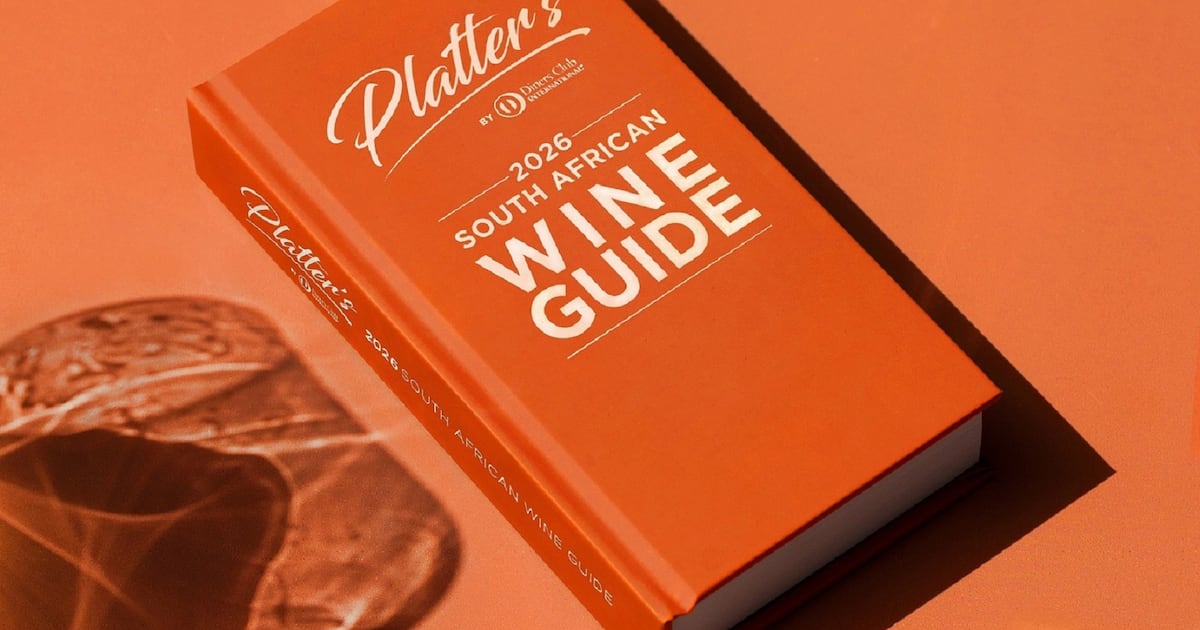
But then I remembered the one wine-related stocking-filler that used to be as much part of the South African Christmas season as beach holidays and braais — Platter’s Wine Guide. There was a time, probably 25 years ago, when the annual sales exceeded 50,000 copies. It appeared in the shops in November, dated for the next year (the 2026 edition has just been published). By mid-January (incorrectly, in my opinion) it became for booksellers the vinous equivalent of holly and tinsel.
Now it gets into stores only in late December. Clearly its publishers don’t believe that the Platter Guide 2026 becomes unsaleable on January 1. Most of the useful information it contains is imperishable — at least not within 12 months. It is the most complete compendium of South African wine info, more detailed and reliable than anything available online or in print.
It should not be bought for its ratings — not because they are untrustworthy, but because they are only broadly useful and there are other, often more current, and less anodyne, reviews. It is, to South African wine, the equivalent of the Michelin guide. No one, not even Cyril and his cronies who are insulated from our reality by their blue light brigades, should go through the year without one.
Dining and Cooking