

Summary 
Climate change is directly impacting olive farming in the Mediterranean, leading to new rainfall patterns and temperatures that are affecting European farmers. The changing climate is causing shifts in the Mediterranean region, including a move towards a dry, arid climate that will impact the agricultural sector and olive growing. Scientists are studying the impacts of climate change on olive farming and exploring solutions such as deficit irrigation strategies and identifying olive varieties that are less sensitive to heat or water stress.
Climate change has a direct, measurable impact on olive farming in the Mediterranean region. As a result, the vast majority of the world’s olive oil-producing areas have become a testing ground.
In recent years, scientists have begun to investigate how new rainfall patterns, which increasingly resemble those of subtropical environments, will affect European farmers.
We consider the Mediterranean basin to be a hotspot for climate change because it is a substantially limited strip of territory lying besides a huge water basin, where every change in climate is amplified.- Luigi Ponti, climate researcher, ENEA
Attention is also being paid to the new temperatures being experienced in traditionally hot and cool months, as well as how the habitats of olive tree pests are changing.
“We have studied the Mediterranean climate in the books, with its unique and long-established characteristics,” Luigi Ponti, a climate expert and researcher at the Italian National Agency for New Technologies, Energy and Sustainable Economic Development (ENEA), told Olive Oil Times.
See Also:Climate Change Is Transforming How Plants and Soil Interact
“But the Mediterranean climate will leave the Mediterranean region and travel north, a gradual process that has already begun and that will stretch across the century,” he added.
By analyzing the climatic data compiled by ENEA and other similar agencies, Ponti said that he and his fellow researchers began to notice how sensitive the Mediterranean basin is, even to minor changes in the local climate.
“From those models we understand how the climate is shifting and thanks to previous studies, we can say that there is a statistically significant possibility that several northern European regions will shift to the Mediterranean climate,” he said.
“The Mediterranean itself will shift toward a dry, arid climate, which has an obvious impact on the whole agricultural sector as well as olive growing,” he added. “Our data show that this shifting will likely hit even more groves in the Middle East.”
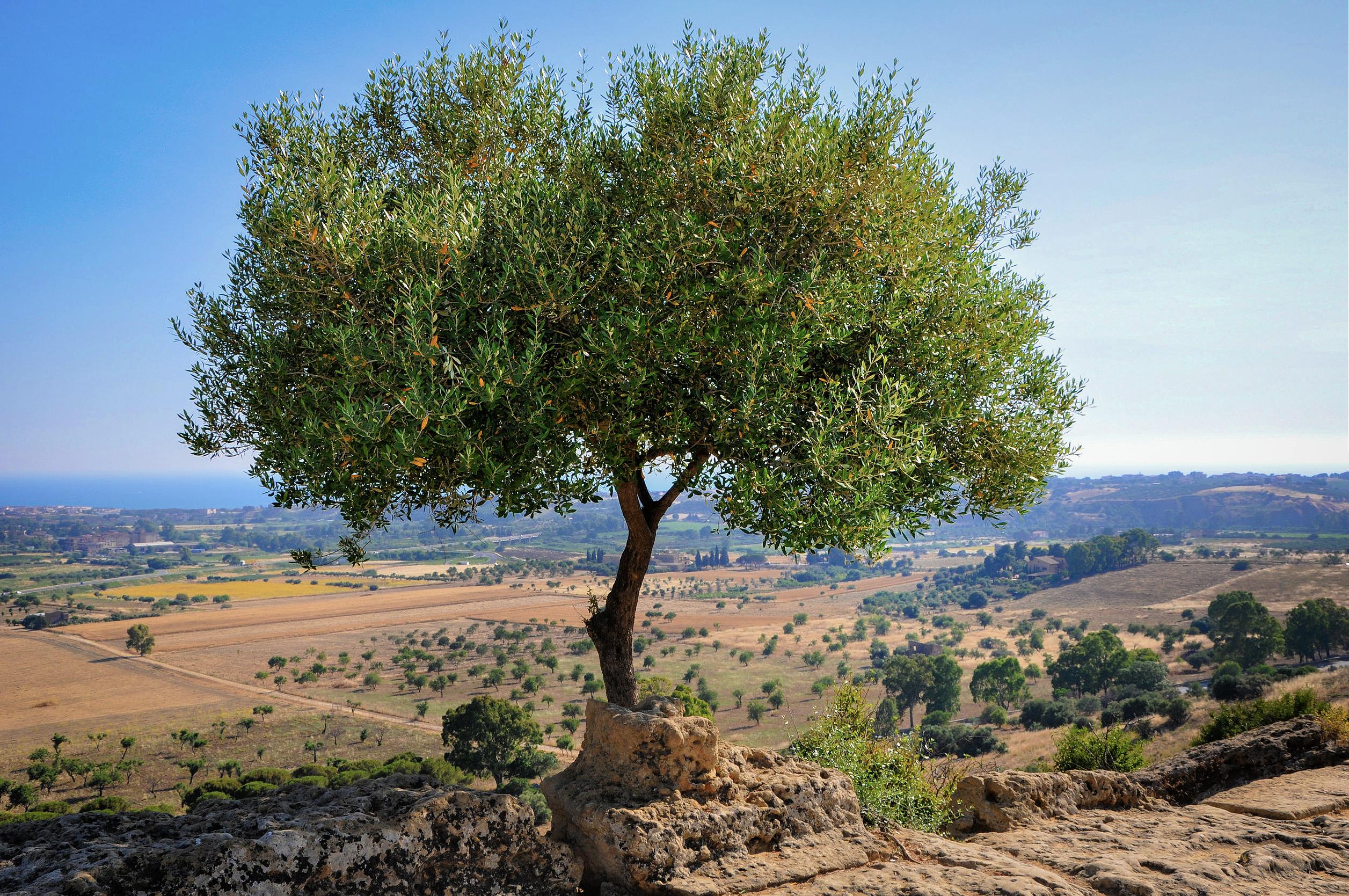
In the rolling hills of southern Spain, where olive trees stretch out as far as the eye can see, even a relatively small increase in the average temperature is being felt by olive farmers.
“In the last 50 years, the temperature has increased on average by 1 ºC (1.8 ºF) in southern Spain,” Ignacio Lorite, a researcher at the Andalusian Institute for Agricultural and Fisheries Research (IFAPA), told Olive Oil Times.
“Although limited, this increase has led to earlier flowerings in olive farms as well as more heat stress events during flowering,” he added. “This happened mostly in locations where flowering did usually occur at a later date, such as mid-May, at a time when high temperatures are common.”
According to Lorite, regions that typically experience later flowering will be increasingly exposed to late-spring heat waves, which have become more common.
“In the areas under rainfed conditions, water stress will generate severe yield losses,” he said, especially when “these water stress events coincide with the critical periods as flowering or maturity.”
While it has become increasingly evident that Europe’s climate is changing, different impacts are being felt throughout the continent. As a result, there is no single climate-related issue that will most prominently trouble olive growers.
Instead, scientists argue that certain problems will be felt more by certain regions. For instance, while scientists are recording notable changes in the rainfall patterns in most of Italy, the same connection has not been made in southern Spain.
“The effect of climate change on rainfall is not yet obvious,” Lorite said. “Although drought periods have been identified during the last years, these events have been recurrent in southern Spain for a long time. Neither has an increase of the severity or frequency of droughts been observed.”
While scientists are already taking note of changing weather and climatic patterns throughout the Mediterranean basin, predicting how these will continue to change is an even bigger challenge.
Local analyzes of olive orchard behavior under current and future weather conditions are critical components that always must be considered.- Ignacio Lorite, researcher, IFAPA
However, the experts told Olive Oil Times that a few changes can still be expected. Among these is a shift of the natural habitats for certain olive tree pests.
“Given the limited tolerability of the fruit fly to the changing temperature, it is possible that outbreaks in the southern areas [of Europe] will decrease,” Ponti said.
According to Lorite, increasing climate variability will have the greatest impact on the regions that already have fewest chill units – hours during which the ambient temperature is around (but preferably lower than) 7 ºC (45 ºF).
As the Mediterrraneran basin steadily becomes warmer throughout the year, some of its key olive growing areas may no longer receive the necessary 300 to 600 chilling units that the trees require in order to flower.
Lorite said that this may cause flowering failures and cited examples of this in the southwestern regions of Andalusia. However, he added that the vast majority of southern Spain is still receiving an adequate amount of chilling units each winter.
See Also:Native Andalusian Olive Varieties Could Be Wiped Out by 2100, Researchers Warn
While the scope of the problems presented by climate change are beginning to be better understood, all of the data collected by researchers does not necessarily translate into easy solutions.
Ponti, whose research is now focused on the European Union-backed MED-GOLD project, emphasized how sifting through all of the newly-available data and information is among the biggest challenges for scientists.
“We consider the Mediterranean basin to be a hotspot for climate change because it is a substantially limited strip of territory lying besides a huge water basin, where every change in climate is amplified,” Ponti said.
“What we are trying to do is to turn the information coming from the research into tools useful to make decisions, both for policy making and industrial organizations,” he added.
Olives, grapes and durum wheat are the three case-studies used by MED-GOLD to determine the impacts of climate change on Europe’s crops. Adapting crops to the changing climate is the focus of several other studies.
“Many difficulties have been met in finding the useful adaptation initiatives for olive orchards,” Lorite said. At the moment, he believes, “the most efficient adaptation measures are deficit irrigation strategies.”
While this approach does not fulfill the optimal water requirements for olive farming, it can help to avoid water stress during critical phases of the trees’ development, such as flowering.
Deficit irrigation can also bring relevant water savings without having a substantial impact on the final yield, Lorite said.
“For instance, with allocations lower than 1,500 cubic meters (53,000 cubic feet) per hectare (2.5 acres), satisfactory olive oil yields could still be achieved, while also obtaining high water productivity values,” he said.
“Although these results were obtained for the Andalusia region, they are valid examples for any region with a high spatial variability in the weather conditions,” he added. “Thus, local analyzes of olive orchard behavior under current and future weather conditions are critical components that always must be considered.”
Other tools such as improvements of soil and irrigation management have also provided satisfactory results, Lorite noted, still “most problems arise for the orchards under rainfed conditions, where adaptation tools are very limited.”
Other areas in which scientists are exploring possible solutions include the choice of the cultivars better suited to adapt to changes.
Lorite explained that knowledge is very limited on the subject and while conclusive results have not yet been reached, IFAPA is already coordinating several research projects designed to evaluate the varieties less sensitive to heat or water stress.
“Similarly, information about chill requirements and phenology of the different olive varieties is currently limited,” Lortite said.
Among the goals of researchers is the identification of olive varieties with earlier flowering seasons.
“Recent studies have highlighted the low variability in the flowering date of 148 olive cultivars grown in the World Olive Germplasm Bank in Córdoba,” he said.
This reduced variability could make the selection of the right varieties more challenging.
“Similarly, the selection of cultivars with higher resilience to the impacts of climate change is a long-term strategy and satisfactory results are unlikely to be achieved in the coming years,” he added.
Dining and Cooking