
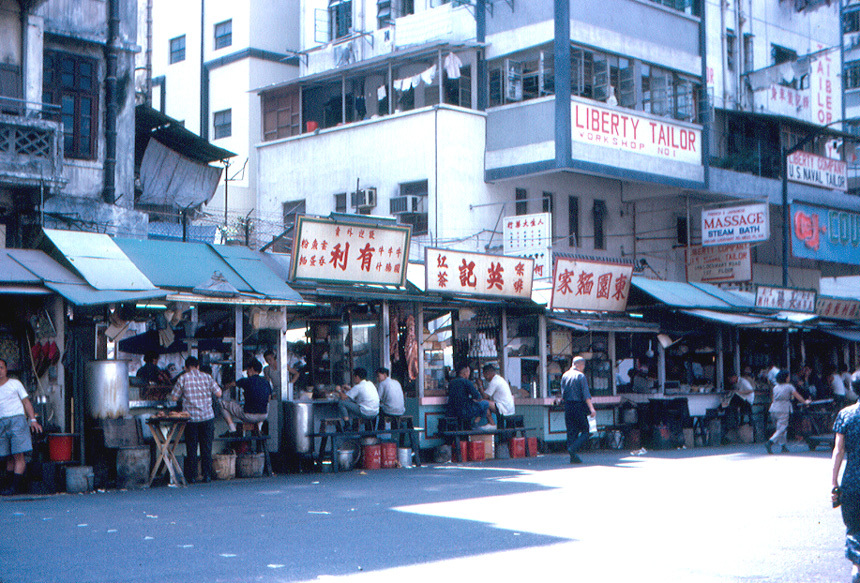
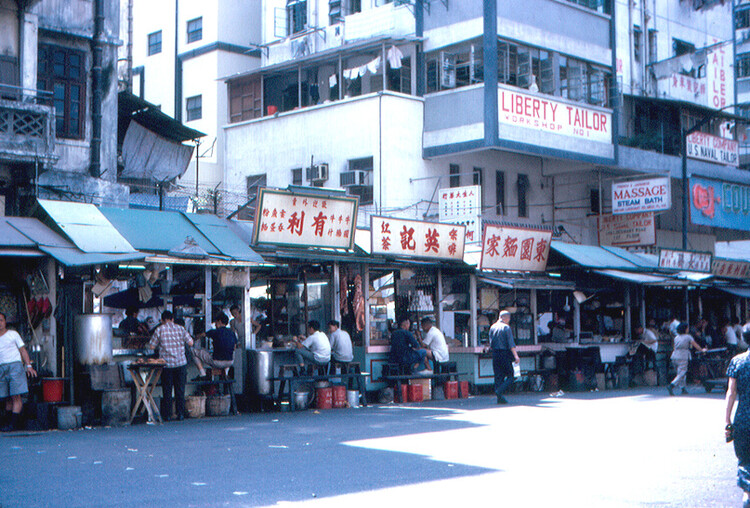
 Dai Pai Dongs, 1967, Wanchai, Hong Kong. Image © Roger W via Wikipedia under license CC BY-SA 2.0
Share
Share
Or
https://www.archdaily.com/1037794/urban-banquet-at-the-curb-hong-kongs-third-space-dining
Across cities worldwide, architecture unfolds continuously at the scale of people and community—not only through new buildings, renovations, or monumental works. “Third spaces” are especially revealing. Consider the street-side culinary realm: how seating, serving, and lingering occupy the edge of the street often discloses a city’s cultural codes and spatial habits. What forms of dining and inhabitation have emerged in response to local climate, regulation, and social custom—and how have they evolved over time?
In parts of Europe, for instance, al fresco in Italy and en terrasse in France name culturally specific ways of dining in public, drawing the meal into the urban field—attuned to weather, air, and the passive sociability of people-watching. Since COVID-19, New York City has similarly expanded outdoor dining, reflecting a community-driven desire to engage the streetscape while eating—an everyday, street-level “third place” within a dense metropolis.
 + 7
+ 7
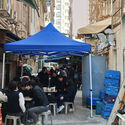
Hong Kong offers a parallel yet distinct tradition: the Dai Pai Dong. Literally “big license plate stall,” the term comes from the oversized government licenses historically issued—often to families of civil servants killed or injured during the Second World War—to legitimize small food businesses. From this lineage grew an improvised, street-front dining culture that has long stitched together everyday social life. Its persistence today—amid tightening regulations—invites a closer look at how it began, how it fosters togetherness, and how it continues to recalibrate itself within an increasingly managed city.
Related Article The Story of Miyashita Park: Resistance, Partnership, and Publicness 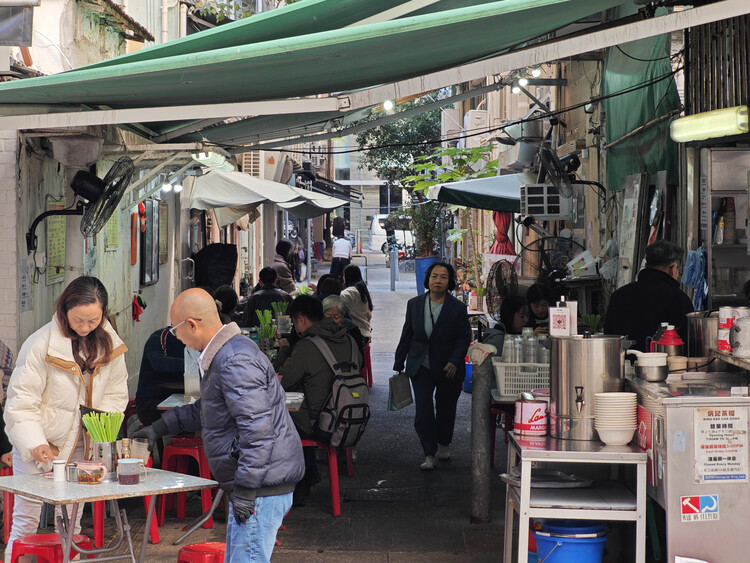 Dai Pai Dong temporarily occupying Alleyway in Hong Kong. Image © Jonathan YeungFrom License Plate to Living Room: How a Permit Became a Spatial Culture
Like al fresco or en terrasse, Dai Pai Dong does not name a cuisine; it names a way of occupying space. The term began as a literal reference to the oversized government licenses but has since evolved into a spatial, atmospheric, and environmental descriptor. While the culture gained broad traction in the 1950s as a food practice, its more recent readings emphasize dining as an urban phenomenon: people gathering to eat, talk, socialize, and linger—not only for culinary quality but for the ambience that makes such encounters possible. These setups spill into the street, transform ordinary corners, and invite the city to be experienced through a different lens—one of open air, adjacency, and the quiet theater of people-watching.
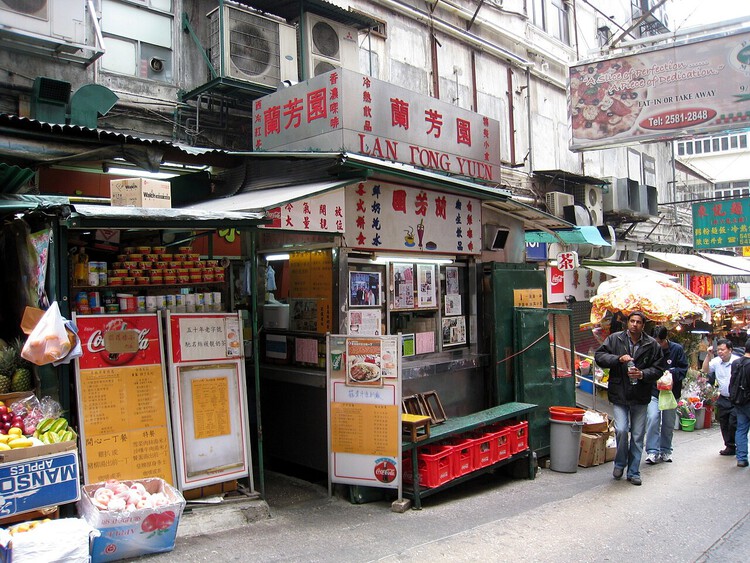 Dai Pai Dong in Central, Hong Kong. Image © WiNG via Wikipedia under license CC BY 3.0
Dai Pai Dong originated as a regulatory construct—the convergence of “fixed-stall vendor” and “cooked-food” licenses that permitted temporary street-side operations (often called hawker stalls) to serve hot meals. In the postwar decades, this format proliferated, shaping a distinctive street-eating culture. Its appeal, however, came with public-health challenges. Hygiene standards and self-discipline were uneven—unsurprising in a period before today’s broader public awareness and education around food safety, which only sharpened after later disease outbreaks—so Dai Pai Dong often struggled to meet consistent sanitary expectations.
Regulation tightened accordingly. From the 1970s, authorities restricted where Dai Pai Dong could operate and stopped issuing new licenses. In the 1980s, concerns over nighttime noise and cooking odors further pushed operators off the street and into indoor venues—especially cooked-food centers within Hong Kong’s municipal services buildings. Because the original street-vendor licenses cannot be sold or transferred except to immediate family members, the number of authentic, licensed Dai Pai Dong has dwindled; fewer than 30 remain in operation today.
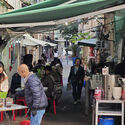
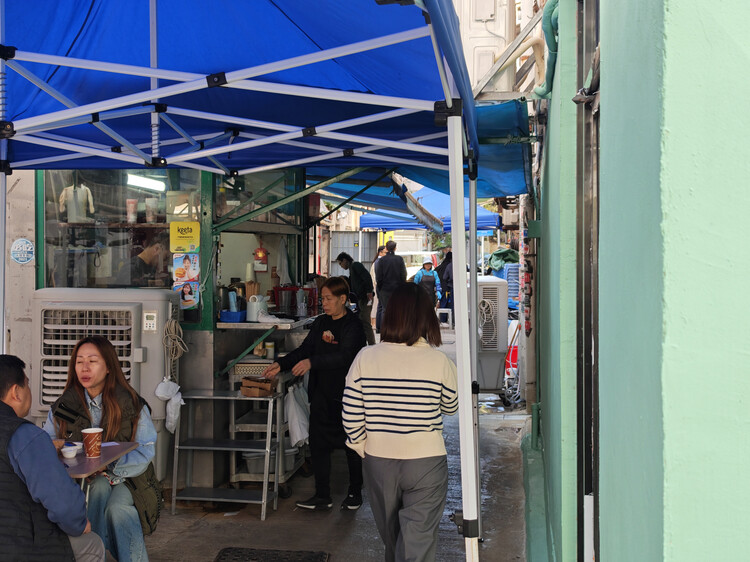 Dai Pai Dong temporarily occupying Alleyway in Hong Kong. Image © Jonathan YeungPop-Up Urbanism: Temporary Stalls, Lasting Social Fields
This mode of third-space dining in Hong Kong emerged from—and continues to rely on—a temporary, low-cost, and highly adaptable approach to serving food. That adaptability is central to its appeal. Spatially, it is the most flexible of formats: there is no formal land tenure, no permanent claim to the sidewalk, only a provisional extension of a business’s footprint into the street. On paper, this raises predictable objections. Street maintenance and the management of public space are funded by taxpayers; when Dai Pai Dong operations spill into the public realm, critics argue, private profit is being generated on collectively financed ground, potentially at the expense of other users who might also claim a right to curbside space.
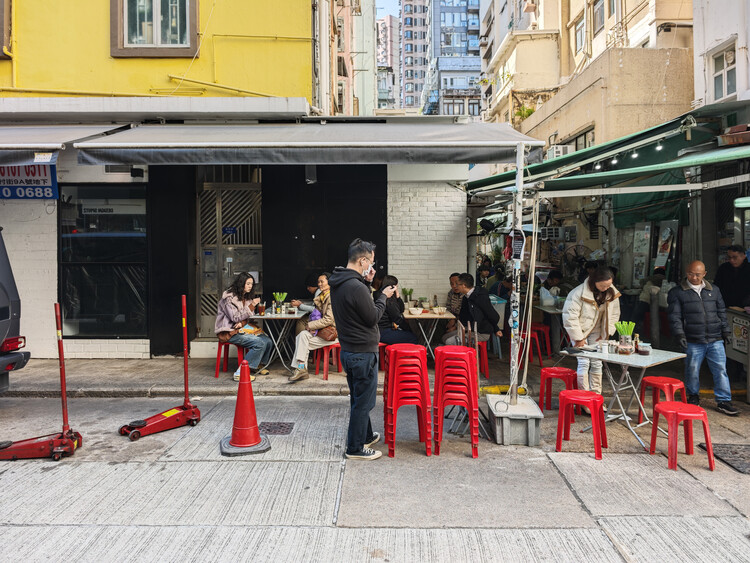 Dai Pai Dong temporarily occupying streetside in Hong Kong. Image © Jonathan Yeung
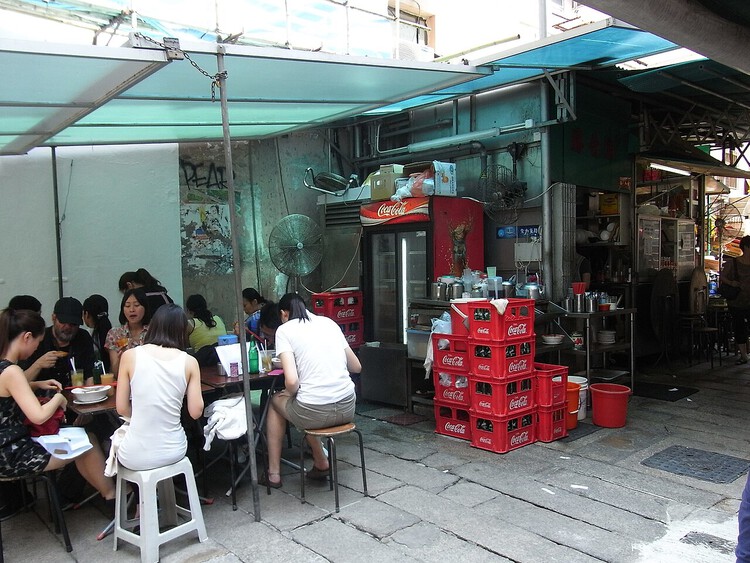 Dai Pai Dong in Central, Hong Kong. Image © Spoatricam via Wikipedia under licensse CC BY-SA 3.0
Set against those regulatory concerns, the spatial phenomenon remains striking. A typical stall—often no more than about 10 square meters in its closed, nighttime condition—can expand through agile furniture, stackable seating, and mobile equipment to accommodate upward of 50 patrons. This elastic choreography of tables, stools, and service stations converts minimal real estate into a dense social field, illustrating how modest means and temporal occupation can produce an outsized atmosphere of conviviality and shared urban life.
In some community-oriented Dai Pai Dongs, the early-morning service becomes a neighborhood ritual. Regulars from across professions, ages, and backgrounds convene for a quick breakfast in a setting largely free of tourists, renewing social ties and exchanging local news, small-business updates, and everyday logistics. The street-side perch sustains conversation without pressure: when dialogue pauses, the ambient city supplies its own narration—shops rolling open, children on their way to school, workers beginning their rounds. The result is a layered social field: the close range of tablemates in direct exchange; a middle band of incidental overhearing and occasional interjection across nearby tables; and a wider, observational register in which diners participate in urban life simply by inhabiting the street. In this way, the meal doubles as civic time—an accessible forum where routine, information, and adjacency cohere into a micro-public.
From Street Stage to Managed Cooked Food Hall: Shifting the Third Space
While the morning ritual tends to be peaceful and restrained, the evening scene—more vibrant, celebratory, and loud—can tilt toward disruption. After a long day, the street-side setting often becomes an outlet for release: animated conversations, lingering over food and drink, and an intensified cadence of people-watching. The same energy that animates these spaces can also amplify noise, prompting complaints from nearby residents, especially those who keep earlier hours. As a result, nighttime service is more susceptible to friction, as the convivial atmosphere that sustains the third-space experience sits in closer tension with neighbors’ needs for quiet and rest. Out of consideration for the surrounding community—and to preserve a positive climate for such stalls over the long term—some street-side Dai Pai Dongs simply cease operations at night. During the dark hours, many of these third spaces shift indoors to Municipal Services Buildings, where a layer of enclosure and the co-location of vendors make activity easier to manage and disturbances more controllable.
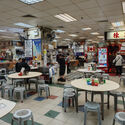
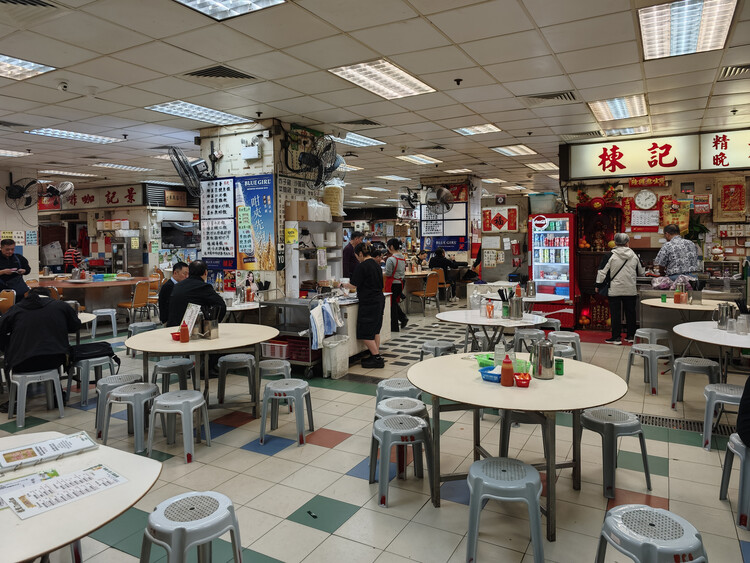 Cooked Food Centres: After Spatial Expansion with Temporary Seating. Image © Jonathan Yeung
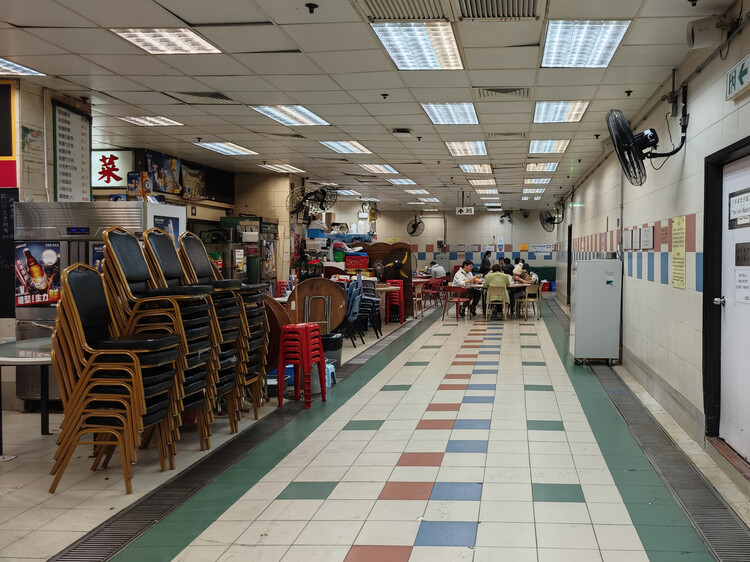 Cooked Food Centres: Before the Spill-Out. Image © Jonathan Yeung
Within Municipal Services Buildings, designated cooked food centers now host many of the surviving “new-type” Dai Pai Dong. While some contend that these are less “authentic” than their street-side predecessors, the relocated operations are typically better equipped: larger kitchens, permanent seating and tables, and dedicated HVAC systems that support more complex menus and accommodate higher ambient noise in the evening. Much of the community atmosphere and collective energy remains, yet the experience becomes more inward-looking; participation in the wider urban field—observing and being observed as part of street life—is reduced. Even so, this model represents a pragmatic adaptation that allows Dai Pai Dong culture to endure within a more regulated context and a less forgiving environment for open-air vendors.
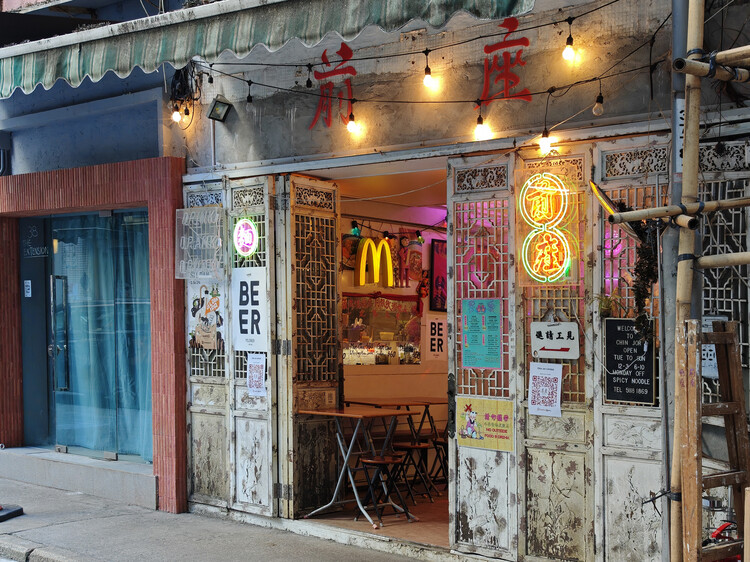 New Waves in Street Dining: Moving the Dai Pai Dong’s Indoor. Image © Jonathan Yeung
Yet the more regulated cooked food centers—and the many indoor venues that try to emulate Dai Pai Dong’s conviviality—struggle to reproduce what makes Dai Pai Dong distinct: a guerrilla elasticity in which space reshapes minute by minute with the street’s conditions, the number of patrons, and the time of day. As traditional street stalls navigate precarious survival and regulators cite the difficulty of overseeing these licenses, the question becomes how to safeguard this third space—passed down since the postwar era—without erasing its character. One path may lie in adaptive, context-responsive governance: rules that calibrate operating hours, footprint, sound levels, and spillover by neighborhood, season, or even time of day; licensing that flexes for festivals and morning markets; and enforcement that privileges cooperation and mitigation over blanket prohibition. Such dynamic regulation could preserve a narrow but vital lane for Dai Pai Dong—allowing Hong Kong residents to participate in the city’s spatial life through dining—while respecting the needs of other communities.
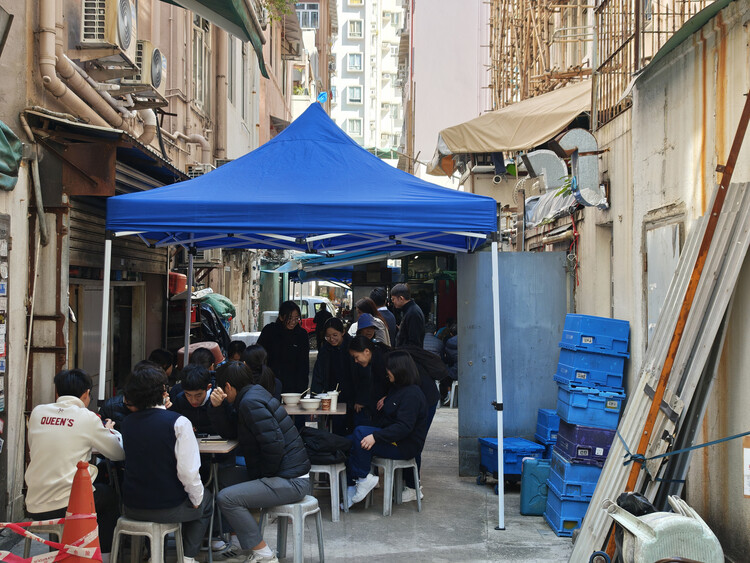 Dai Pai Dong temporarily occupying Alleyway in Hong Kong. Image © Jonathan Yeung
This article is part of the ArchDaily Topic: Coming Together and the Making of Place. Every month we explore a topic in-depth through articles, interviews, news, and architecture projects. We invite you to learn more about our ArchDaily Topics. And, as always, at ArchDaily we welcome the contributions of our readers; if you want to submit an article or project, contact us.
Dining and Cooking