
Never in a m million years, after writing commentaries on wars, the refugee crisis and major issues of the day that impact humanity, did I ever think that I’d be writing about… Avgolemono.
It was only a matter of time.
Avgolemono, our sacred, silky, lemony chicken soup; the cure-all, the childhood memory, the thing yiayias swear can bring people back from the dead, has officially gone viral. And not quietly. Oh no. Quite loudly, actually. With comments. With opinions. With accusations. With people who haven’t made soup since 1997 suddenly appointing themselves guardians of Hellenic culinary law.
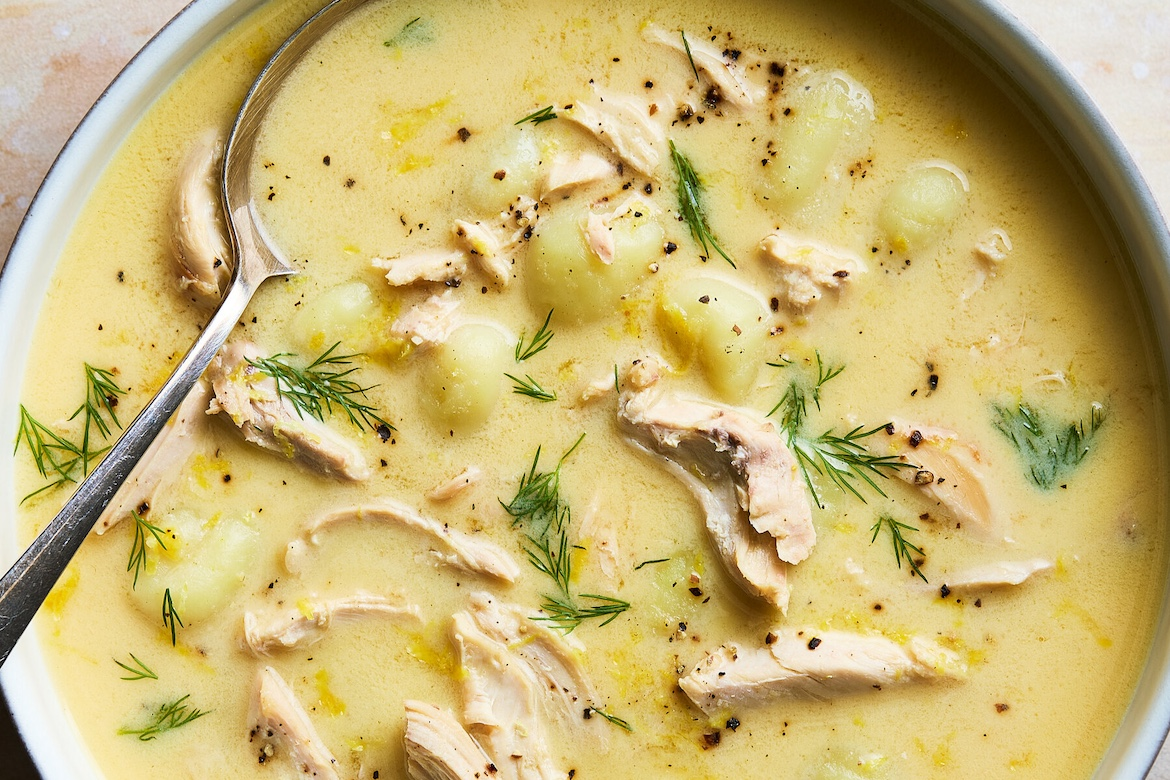
The culprit? A recipe published by New York Times Cooking titled Avgolemono Chicken Soup With Gnocchi, by Carolina Gelen.
Yes. Gnocchi.
Cue the collective gasp.
The recipe itself is, by any rational standard, perfectly pleasant. It’s a one-pot, no-fuss take inspired by avgolemono, swapping out the traditional rice for store-bought gnocchi to create a heartier, more pillowy texture.
Rotisserie chicken, stock, lemon zest, gnocchi simmered gently, egg yolks tempered carefully with warm broth so they don’t scramble (a detail many home cooks still get wrong), finished with lemon juice, dill, and black pepper. Clean. Cozy. Weeknight-friendly.
In other words: exactly the kind of recipe NYT Cooking exists to publish.
Combined, between the posts on Facebook, Instagram and other platforms, the recipe was liked, commented on and shared more than a million times.
But the comments? Oh, the comments. I actually went into a rabbit hole scrolling the comments across the different platforms, occasionally clicking on user profiles to see the people behind the ludicrous statements. I almost made popcorn.
Within hours, the digital plate smashing began. Traditionalists rushed in, wooden spoons raised, to declare that this was not avgolemono. That rice is non-negotiable. That gnocchi has no business anywhere near lemon, chicken, or Greece. That this was “fusion,” said with the same tone one might reserve for heresy.
And then— because it’s the internet, and restraint is dead— someone escalated things all the way to “cultural appropriation.” Yes, someone accused Gelin and The New York Times of “cultural appropriation” for adding something Italian to a Greek soup.
Let’s pause here.
Avgolemono is not a fragile relic under glass. It is a living, breathing soup that has survived centuries, wars, migrations, famine, diaspora kitchens, and countless personal “adjustments.” It has been made with rice, orzo, cracked wheat, chicken, lamb, leftover bones, too much lemon, not enough lemon, thick enough to stand a spoon in, or thin enough to drink from a mug when you’re sick.
Every Greek family already makes a slightly different version—and insists theirs is the only correct one.
So the idea that a bowl of soup loses its cultural passport because someone added gnocchi feels less like defense of tradition and more like performance outrage. The modern kind. The comment-section kind. The “I watched one reel and now I’m an authority” kind.
There are different iterations floating around the internet but here’s the short reel on Instagram.
Here’s the truth, no sugar-coating it: if Greek food couldn’t evolve, it wouldn’t have survived the diaspora at all. Greek cuisine has always absorbed, adapted, substituted.
That’s how recipes traveled from village to village, island to island, continent to continent. That’s how avgolemono itself likely evolved— from earlier Mediterranean egg-and-lemon sauces— long before anyone had an Instagram account to document it.
Does gnocchi make this traditional avgolemono? No.
Does it make it illegal? Also no.
Does it mean your yiayia needs to approve it? Absolutely not.
You can love tradition and laugh a little when the internet loses its mind over soup.
Make it. Or don’t. Swap the gnocchi for rice and call it a day. But maybe— just maybe— let’s save the cultural appropriation accusations for things that actually deserve them. Let’s avoid the “in your face” keyboard warrior finger pointing, haughty arrogance. (See “Hungry Electra’s comment: “This is not avgolemono. Not even close. Call it something else.”)
And if we’re really going to clutch pearls over Italian gnocchi in Greek avgolemono, let’s all take a deep breath and acknowledge the obvious: the Italians have been remixing Greek culture for centuries—and nobody called the internet police.
Cheesecake? Greek.
Pizza’s spiritual ancestor? Greek flatbread.
The gods and goddesses? Don’t even get me started— Zeus walked so Jupiter could run.
The Roman Empire didn’t just borrow from Greece; it copied, translated, rebranded, and sold it back to the world with better marketing. And somehow, civilization survived.
So no, avgolemono didn’t “lose its identity” because someone added gnocchi. Greek culture is not that fragile. It never has been. It’s resilient, adaptable, confident—and secure enough to let a dumpling float by without filing a formal complaint.
Make your avgolemono with rice. Or orzo. Or gnocchi. Or whatever’s in your pantry when the lemon is calling.
Just don’t confuse tradition with rigidity. Lighten up.
I can’t believe I wrote a somewhat serious editorial about Avgolemono.
Dining and Cooking