
Reviews
It’s been three months since the doors opened, and the crowds haven’t let up. Is Eataly KOP a culinary destination or a very expensive amusement park?
Devoted foodies and restaurant newbies love Foobooz. Sign up now for our twice weekly newsletter.
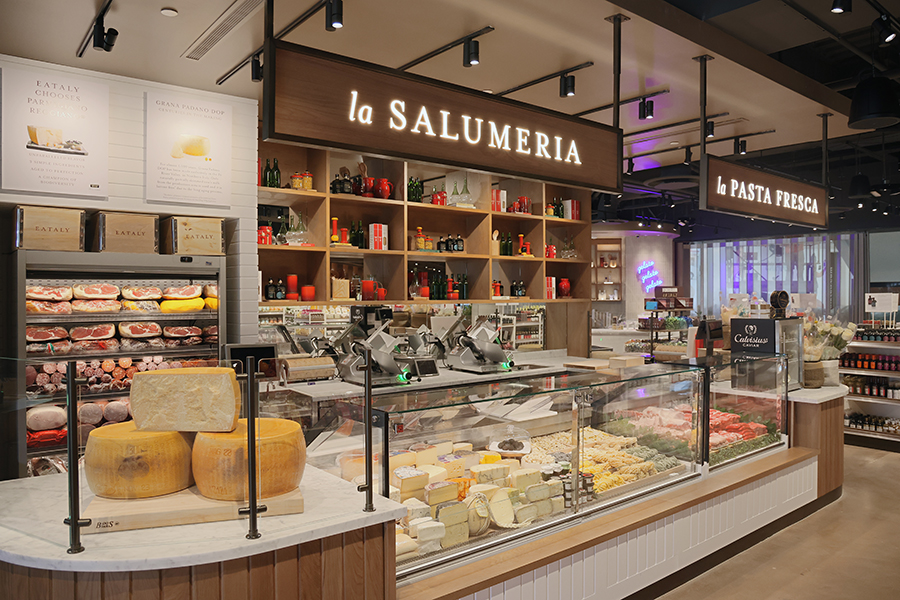
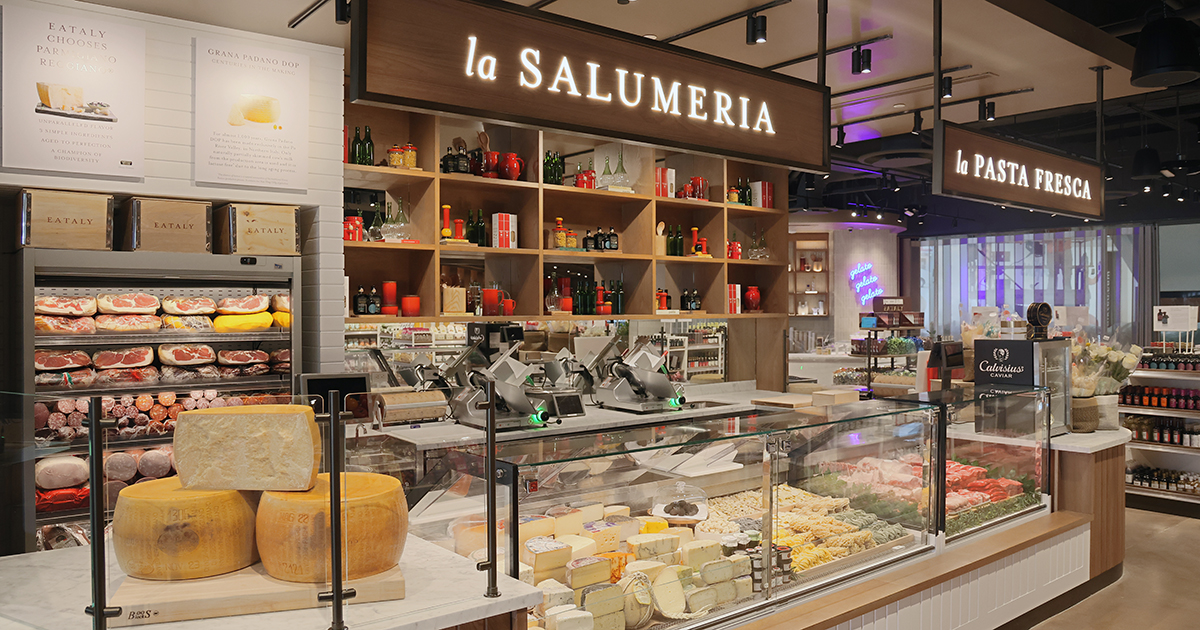
Inside Eataly KOP / Photography courtesy of Eataly KOP
The first thing you notice about Eataly King of Prussia are the crowds. The shoulder-to-shoulder, hip-to-hip crowds that mob the place with the regularity of the tides — flowing in, choking every aisle, thronging every counter, and then ebbing away. For five or 10 minutes, the only movement is a kind of involuntary motion that forces the entire mass of customers through the clogged consumerist arteries, past displays of dry pasta, wrapped candies, gift boxes, charcuterie, and imported olive oils dolled up like rare treasures. And then, inexplicably, a lull. Somewhere, a logjam breaks and there’s room to move. To browse.
It’s like the place has bad feng shui or something. Weird angles where customers cluster and snag. Like, in order to give it some stamp of regional authenticity, it was designed to operate like the Schuylkill Expressway at rush hour all the time: one minor accident, one mild distraction, one mattress thrown in the breakdown lane, and the whole thing backs up for miles.
It is overwhelming when you first walk in — a swirl of color, sound, and smell that hits you like a strong drink on an empty stomach. But for a little more than three months now, the new Eataly has been one of the major draws at the King of Prussia Mall. So I think it’s time to break down exactly what it is, what it does well, where it fails, and why it’s here in the first place. If you’re thinking of making the trip yourself, here’s everything you need to know about the experience.
A Little History
At its most basic, Eataly is an Italian food hall. That’s how it began. Back in 2007, Italian businessman Oscar Farinetti bought an abandoned vermouth factory in Turin and turned it into the world’s first Eataly — a kind of Italian food megastore that would combine the best aspects of a grocery store, a farmers’ market, a food court, and an event space all under one roof. It sold fresh, local produce and charcuterie, offered cooking classes and dry goods. It was essentially a combination open-air market and Italian Whole Foods, all contained inside four walls, and Farinetti had plans from the very start that he was going to open a lot of them.
The first New York location opened in 2010: 50,000 square feet in Manhattan with lines that stretched down 5th Avenue for weeks after the opening. Soon, Eataly opened stores in Tokyo and Sao Paolo. It took over an abandoned airport terminal in Rome. It has mobile locations on two different cruise ships. The Chicago location is 63,000 square feet and cost an estimated $20 million to build. In Las Vegas, the MGM casino has its own Eataly. There’s one at the Century City Mall in Los Angeles that’s even bigger than the one in Chicago.
There are currently more than 50 Eataly locations scattered across the globe, from Paris to Stockholm and South Korea to the UAE. The fact that the entire chain got its start in Italy makes it hard to argue against its authentic bonafides. Disgraced celebrity chef Mario Batali was an early investor (which is problematic for sure), but the company cut ties with him after the first sexual misconduct allegations surfaced in 2017.
The King of Prussia location is small by comparison, just 21,000 square feet. And while that’s huge for a restaurant (Borromini, for example, is around 15,000 square feet, two stories tall, and seats more than 250 people), it’s pretty small for an Eataly, half the size of the big ones in Rome, New York, L.A., and elsewhere.
Footprint aside, this location has been in the works for a long time. And it’s been anticipated for even longer. Rumors that they were coming to town started swirling around back in 2013. We all assumed they’d open in the old Strawbridge’s at 8th and Market. (Maybe it’s for the best that they didn’t — the Giant Heirloom store that opened there closed in early 2025 after just three years.)
But now, here we are. Eataly finally opened in the only place in the region where such a thing made even a little bit of sense: out in the suburbs, attached to a mall, around the corner from the new Netflix House. To me, it feels less like a functional market and more like a theme park — a little trip to Italy, entirely contained within four walls.
The Vibes
Eataly presents itself as a market, but it’s also a restaurant, a classroom, an event space, an Italian food Disneyland carefully set-dressed and designed as anything in the Magic Kingdom. But, mostly, it’s the kind of place you go just to go. To look at displays of marbled meats and pizzas and pastries, but not to touch. Not to shop in any meaningful, intentional way.
As such, the KOP Eataly is arranged and operated (as I imagine all Eatalys are) less like a local Acme or Whole Foods than it is a gift shop. Except the only place you traveled to is Eataly. Which I guess shows a kind of ruthless efficiency that should be admired. It is a place that is so brand-aware and marketing-forward that the gift shop itself is the entirety of the experience, and sells you branded merch to commemorate the trip.
There is no inch of the place that doesn’t have the Eataly logo on it. In design, it might be trying to make you feel like you’re in a market square in Rome browsing the local wares, but functionally it needs to remind you a dozen times a minute that where you are is Eataly. And only Eataly.
It is a universe unto itself.
The Food
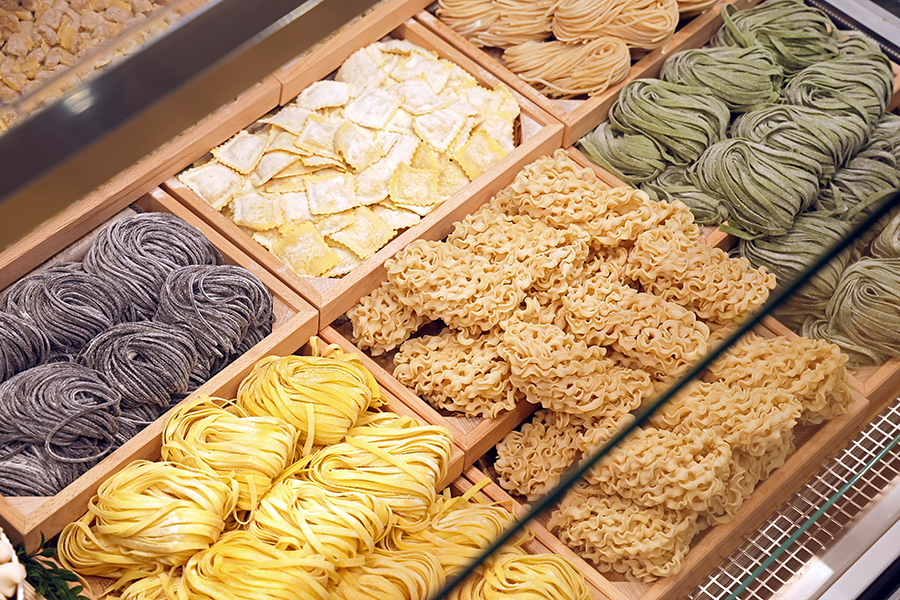
KOP’s Eataly may be (relatively) small, but they cram a lot into the limited space.
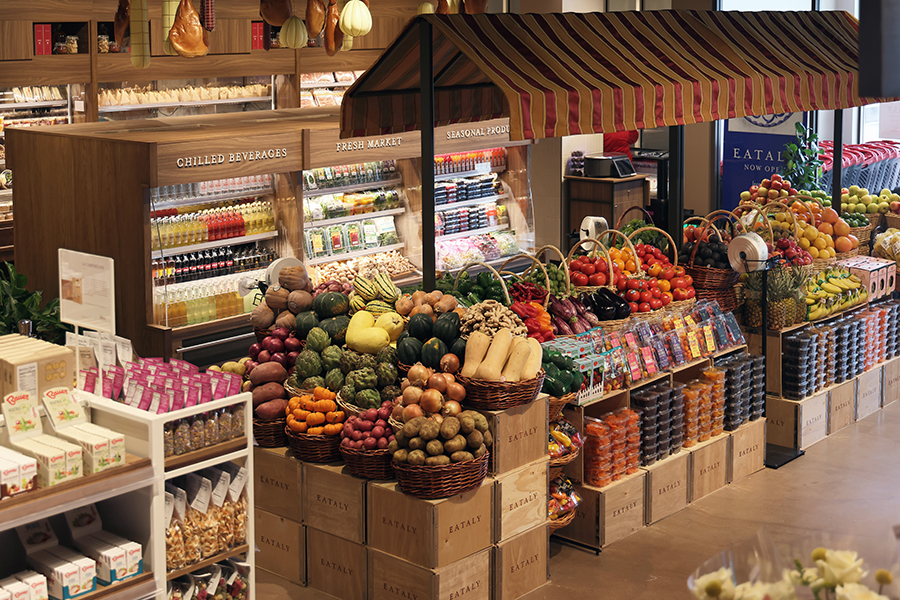
There is some fresh produce, positioned right near the front doors. There’s packaged charcuterie and cheeses displayed in coolers along the righthand wall. Jars of olives, cans of oil, boxes upon boxes of dried pasta, sauces, chocolate bars and candy — the center of the store is dedicated to overflowing displays of dry goods and staples, most of which lean heavily on their import status and authentically Italian sourcing.
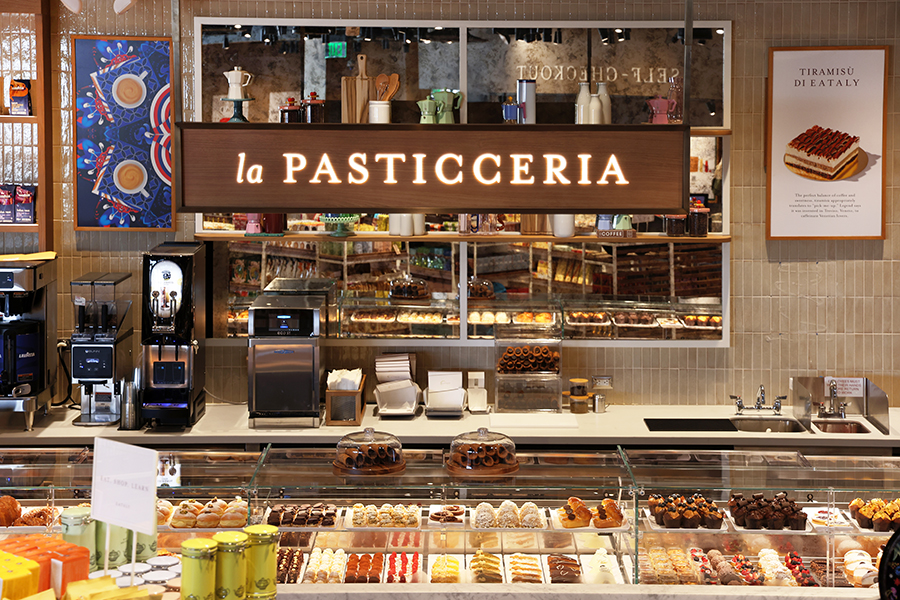
The pastry case is where the crowds seem to congregate, pressing their noses (figuratively speaking) against the lighted glass displays of cream-filled ciccio, cannoli, cassis tarts, and almond cakes laced with Chantilly cream. There’s espresso for the beleaguered shopper, Roman-style street pizza, and sandwiches under heat lamps that seem to get switched out more frequently than is absolutely necessary. Catch them when they’re fresh out of the oven, and a slice topped with folds of mortadella, burrata, and crumbled pistachio can be really good — better than anything at a food court ought to be, really — mounted on a crust that’s as soft as a good focaccia but with some crunch on the bottom.
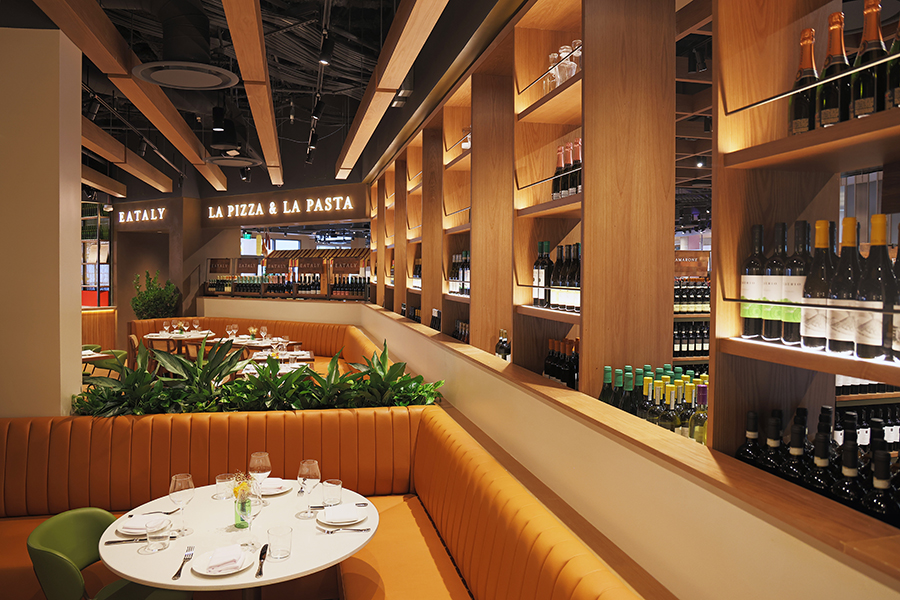
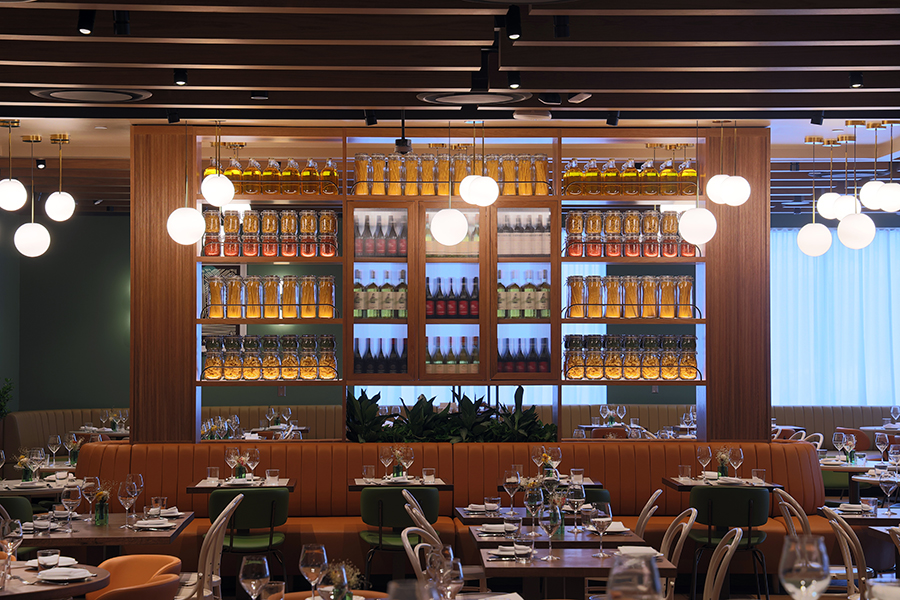
There’s a cheese counter and a butcher stand selling wildly pricey cuts, though I never saw a single customer buying. It’s more about the look of all those beautifully marbled steaks sitting there, like precious gems under glass. Eataly also has its own restaurant, and reservations can be hard to come by. During the holidays (which was when I was most recently there), every seat was booked, open to close. But if you snag one, the menu is more or less what you’d expect from any of the thousand other Italian restaurants in the region: whole pizzas, Italian wines, fresh tagliatelle with sliced black truffle, house-made gnocchi with pesto, chicken Milanese, and grandma’s meatballs.
The Prices
It’s really fucking expensive.
There’s no legitimate conversation about this place that doesn’t consider this. The prosciutto will run you more than $50 a pound. A gift box of six small bottles of olive oil is $197.99. The hazelnuts are imported from Piedmonte and there’s foraged white truffles from Urbani (which cost upwards of $400 an ounce), freshly made mozzarella, and meatball mix from Pat LaFrieda made with heritage breed pork, Black Angus beef and milk-fed veal, but they’re charging $64 for a three-pound package.
Want a single-serving dark chocolate glazed tortino from the bakery (emblazoned with the Eataly logo)? That’s $11.90. A medium-size box of Italian chocolates (also Eataly-branded) was around fifty bucks. A box of dry pasta? $11, and it wasn’t even anything particularly fancy.
The one place where the prices seem more or less in line is the actual restaurant. $20 pastas and $30 mains is more or less consistent with Center City prices. And while $17.50 for a plate of bruschetta seems a little high, I’m never gonna fault a joint for trying to make a buck on the simple stuff.
The Verdict
Believe it or not, I think you should go. At least once. Just to say you’ve done it.
As designed, simply visiting the place and seeing it for yourself is an adventure. Can you find better stuff at Di Bruno’s? And fancier things at Biederman’s? And better prices at Reading Terminal? Absolutely. But the reason Eataly works in KOP is because for someone living in Limerick or Bryn Mawr or Pottstown, a drive to Rittenhouse to visit the Di Bruno flagship is the same as someone from South Philly making the trip out to King of Prussia. And the parking at KOP is a whole lot easier.
Plus, in the suburbs, the really excellent Italian delis and markets are fewer and further between. They exist, for sure. But not with the kind of glitz and concentrated excitement of a place like Eataly.
So what I’m saying is that our region’s brand-new Eataly succeeds at the one thing that is most important to it: being Eataly. It is unique in its Eataly-ness, fanatically committed to its vision of itself, clean and well-lit, rigorously inoffensive, fantastically expensive, and an all-things-to-all-people, one-stop shop for experiencing exactly what it’s like to be at an Eataly. Inasmuch as McDonald’s was once remarkable for its ability to recreate its own pocket McDonald’s universes everywhere from Paris to Moscow to Hong Kong, so, too, is Eataly just Eataly wherever you go.
And that’s kind of an amazing thing to experience, no matter where you are. Whether you need $200 worth of imported olive oil or not.
Dining and Cooking