
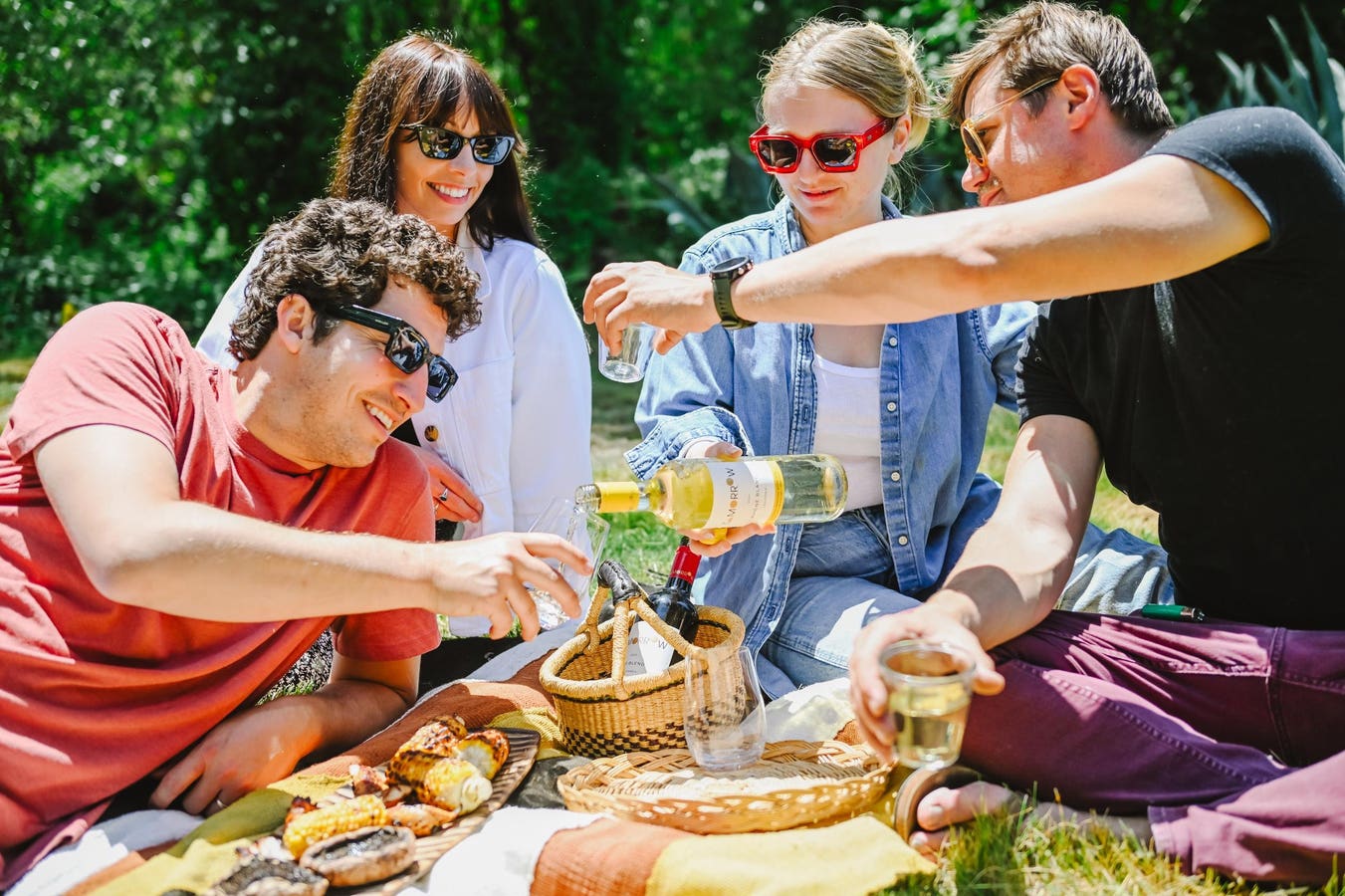
Enjoying Tomorrow Cellars Non-Alcoholic Wine
Tomorrow Cellars, photo credit Marielle V ChauNon-Alcoholic Wine Is Evolving
For decades, non-alcoholic wine lived in an uncomfortable space—too often dismissed as a drink for the kids on special occasions or as a compromise rather than a choice. Dry January was the drink’s most effective marketing campaign.
But that is rapidly changing. Wine sales are dropping, but the alcohol-free wine sector is booming.
What’s changed? For one reason, modern NA wines have improved, reflecting a growing range of technical approaches, stylistic intentions, and cultural motivations—many led by serious winemakers who see wine as something larger than alcohol alone.
As of the beginning of January 2026, the nonalcoholic wine market is up 29.1% with the overall wine market down 4.9%
NielsenIQ (”NIQ”) 2025 Beverage Alcohol Year in Review
Companies like ALTR are advancing the technology around alcohol removal from wine and the thinking around a drink’s ABV, offering more options for wine drinkers. In ALTR’s case, they are passing the wine through a membrane that maintains all the wine’s qualities, except alcohol, and allows the dealcoholizing to produce a spectrum of ABV levels, both no-alcohol and low-alcohol. This is just one of the methods of producing non-alcoholic wine.
DUESSELDORF, GERMANY – MARCH 17: Non-alcoholic wine and sparkling wine bottles are pictured at a Proxydrinks booth at the ProWein International Trade Fair for Wines and Spirits on March 17, 2025 in Duesseldorf, Germany. (Photo by Andreas Rentz/Getty Images)
Getty ImagesThe Various Styles of Non-Alcoholic Wine
Many people are unaware of the importance of the language around alcohol-free wine. “Non-alcoholic wine” has become an umbrella term that covers several fundamentally different styles: 1. Some wines are never fully fermented, relying on grape must or verjus and, in some cases, botanicals to build structure and flavor. 2. Others are partially fermented, allowing limited alcohol to form before fermentation is halted. 3. And then there are dealcoholized wines, which begin as fully fermented wine before alcohol is removed using techniques such as vacuum distillation, reverse osmosis, or spinning cone technology.
Each approach offers distinct advantages. Never-fermented and botanical-driven wines allow producers to shape flavor with precision, often resulting in expressive, food-friendly bottlings that stand apart from traditional wine expectations.
Partially fermented wines, meanwhile, can preserve fresh aromatics and natural grape sweetness while avoiding the structural losses that sometimes occur during alcohol removal. These styles often feel lively and approachable, particularly well suited to aperitif moments and lighter cuisine.
Dealcoholized wines, however, bring a different strength: they start as real wine. Because fermentation has already created texture, acidity, and phenolic complexity, careful alcohol removal can retain much of wine’s original architecture—particularly when the base wine is thoughtfully chosen.
Non-Alcoholic Wines To Try
Serena Mode Dealcoholized Sauvignon Blanc and Cinsault Rose
Photo Credit: Serena Winery
In Chile, Serena Mode 0.0, produced by Miguel Torres Chile, uses spinning cone technology to preserve varietal character, resulting in a Sauvignon Blanc and Rosé that remain aromatic, crisp, and distinctly vinous.
Giesen 0% Sauvignon Blanc from New Zealand
Photo credit: GIESEN
In New Zealand, Giesen 0% follows a similar philosophy, starting with high-quality base wines before gently removing alcohol to maintain balance and freshness—particularly in its lightly sparkling styles designed for social occasions.
Many California producers are approaching the category as well. Missing Thorn, co-crafted by Aaron Pott and Stephanie Honig, uses the same meticulous process Pott employs for his award-winning Napa Valley wines, then applies an innovative gentle distillation technique to remove alcohol while preserving 100% of the natural aromas and flavors. Natural flavors are carefully added to complement and enhance the wine’s existing profile.
Missing Thorn Red Blend.
Photo credit: Missing Thorn
Sparkling Blanc de Rhône by Tomorrow Cellars
Photo credit: Marielle V Chua
Tomorrow Cellars produces Petite Sirah with blackberry, cassis, and warm spice notes, and the Rhône Blanc shows ripe pear, honeysuckle, and lemon zest. The Sparkling Blanc de Rhône is a standout, with jasmine notes and a grapefruit finish.
These wines are not trying to replicate alcohol; instead, they aim to recreate wine’s depth and rhythm without relying on ethanol at all.
Germany Occupies An Esteemed Place In The Non-Alcoholic Landscape
“German producers have long been innovators in this space, experimenting with and refining dealcoholization techniques for more than a century.”
Jenna Fields, President of The German Wine Collection
Long before non-alcoholic wine became a modern trend, German producers were experimenting with reduced-alcohol and alcohol-free wines. That history has translated into technical leadership today. Climate also plays a role. Germany’s cool-climate vineyards naturally produce wines with lower alcohol and high acidity—traits that translate well once alcohol is removed.
Leitz Eins Zwei Zero Rosé
Photo Courtesy of Lietz
Leitz was among the first producers to demonstrate that alcohol-free wines could retain freshness and varietal clarity without tipping into sweetness. Crafted from Pinot Noir, Leitz Eins Zwei Zero Rosé delivers bright red fruit—strawberry, watermelon, cherry—supported by brisk acidity and lean minerality.
Loosen Brothers’ Dr Lo non-alcoholic Riesling.
Photo credit: John Valls Photography
From one of Germany’s most respected Riesling estates, Loosen Brothers, Dr. Lo begins as traditionally fermented Mosel Riesling before undergoing gentle vacuum distillation. Riesling lends itself to dealcoholization particularly well—the result preserves slate-driven minerality, crisp acidity, and citrus-stone fruit tension—hallmarks of the region.
“For us, Riesling is an ideal choice for NA wines. The natural fruitiness and juiciness of the grape make it so tasty, even without the alcohol. And here in the Mosel, we have the advantage of wines with naturally low alcohol to begin with, which allows the removal process to be gentler.”
Ernst Loosen of Loosen Bros.
Other excellent non-alcoholic wines from Germany include Alkoholfrei Müller Thurgau and Raumland Zerozzante’s range of highly-rated sparkling wines.
Non-Alcoholic Wine Is Not Confined To January Resolutions
Non-alcoholic wines, when made with care, become another chapter in wine’s history—offering a companion to traditional wine, giving people a way to stay in the experience even when they choose to skip the alcohol.
Dining and Cooking