
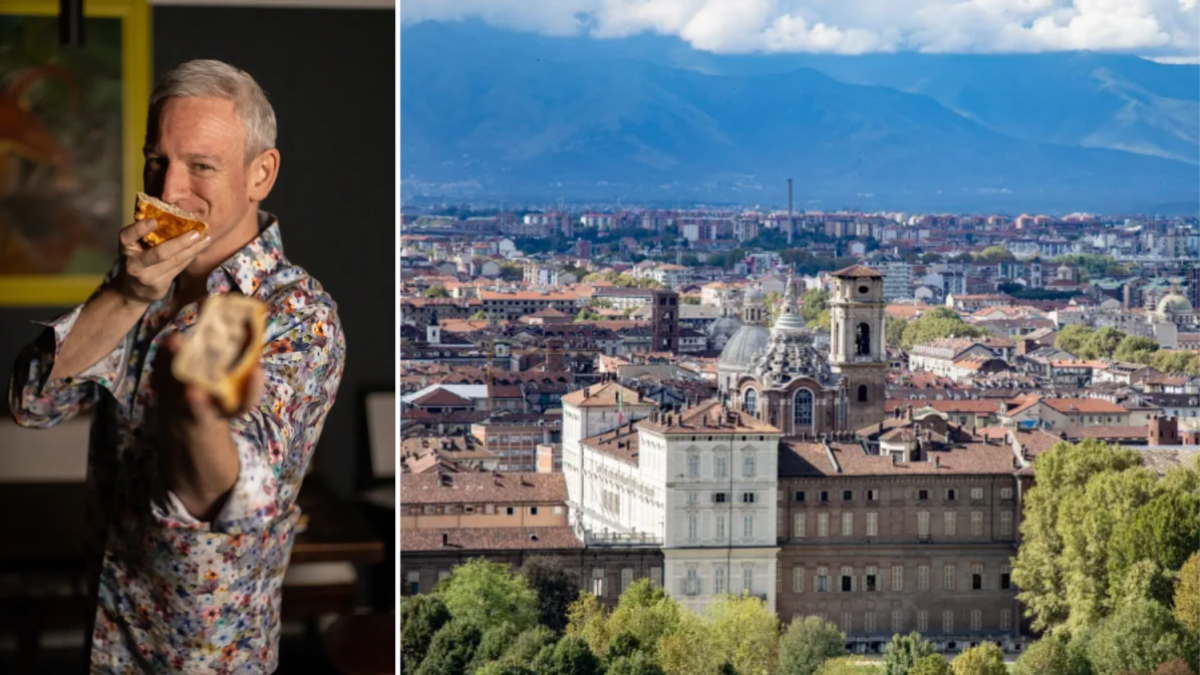
‘Some pubs claim they offer British-style food, but when I see ‘pie and beans’ on a menu, I cringe. We’re defending a cuisine,” expat Adam Smith explains from Turin
When Adam Smith decided to set up a British restaurant in Italy eight years ago, he knew he was attempting the impossible.
In a country famed for its cuisine, from pasta, pizza and mozzarella to tiramisu and limoncello – so much so that Italian cooking has been recognised by Unesco as part of the world’s “intangible cultural heritage” – he knew that selling traditional British food to Italians would be a tall order.
Smith, 50, had left Lancashire to travel the world, but in 2008 was feeling the need for a more permanent change. He settled in Turin, one of northern Italy‘s historic cities, near the French border.
After a decade living there and hearing Italians – notoriously proud of their food – disparage British cuisine, he realised that there was a gap in the market for the premium-quality British food with which he was familiar.
Having met his partner, Manuela Badino, who ran a cocktail bar, Casa Manitù and who became his business partner, he felt it was time for him to set up his own business to show the Italians just how good British food could be.
In 2018, Smith, a former aerospace engineer, turned restaurateur and opened Smith’s British, serving traditional dishes including haggis, pies, and fish and chips.
“The idea for a British restaurant came from years of hearing Italians say: ‘I love London, but the food is terrible,’” he tells The i Paper.
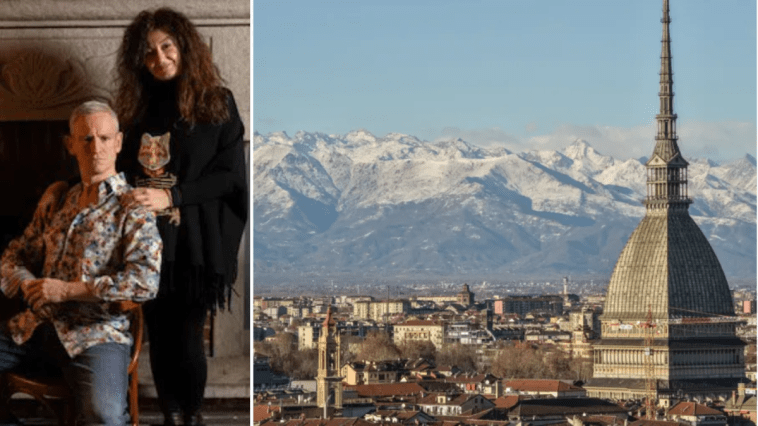 Adam Smith with his partner, Manuela Badino, with whom he runs the business with in Turin (Photo: Adam Smith; Andia/Universal via Getty)
That was “combined with a trip back to the UK where I visited some outstanding gastropubs. That contrast made me realise how unfair the stereotype was.
“From there came the slightly mad idea that British food could work in Turin, which is a city I love but is famously suspicious of foreign cuisine.”
He points out that anyone who has eaten in a good British gastropub knows how wrong the stereotype of bad British food is, with many such restaurants as good as Italian restaurants, if not better.
Today, he believes he has done the impossible: made authentic British food popular with Italians.
He says that since opening his restaurant, there has been a huge appetite for his dishes, helping to destroy the stereotype that “British food is crap”.
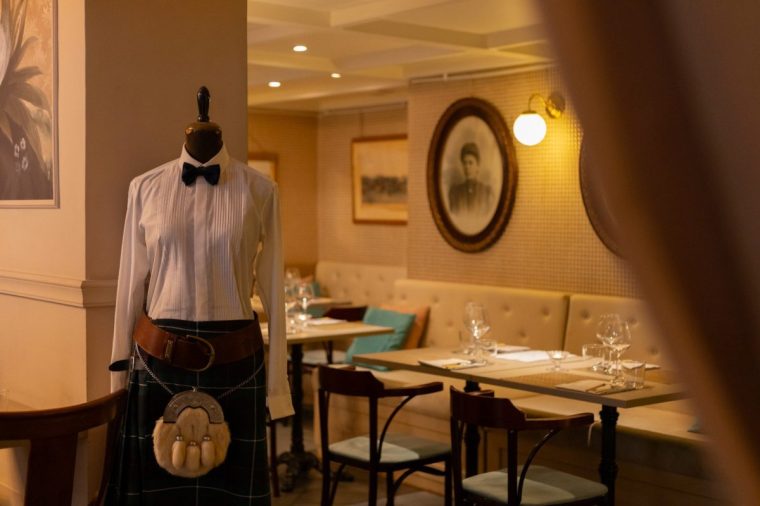 Smith says the restaurant’s clientele is mainly professionals, including many passionate anglophiles (Photo: Adam Smith)
The restaurant has a classic décor: sand-coloured walls, quilted velvet seating and an antique, cherry-wood bar.
It serves British classics such as fish and chips, roast beef and pies. Burn’s Night at the restaurant is so popular it has now expanded to a full month serving haggis made with imported Welsh lamb alongside neeps and tatties, as well as Cullen skink, the classic Scottish haddock chowder. Almost all dishes are made in house: individual beef wellingtons, pork pies and shepherd’s pie made with pulled lamb.
“Our clientele is mainly professionals, many of whom are passionate anglophiles,” he says. “It’s not uncommon to see people in Barbour jackets or tartan. They love the UK – the monarchy, history, traditions, literature and myths – and Smith’s gives them a place where that fascination feels authentic.”
Smith says he works “relentlessly” against stereotypes and is obsessive about quality. He does not want to give anyone an excuse to say: “See? British food really is awful.”
He sources as many ingredients as possible from the UK including meat, fish, cheese and beer. Through the quality and provenance of the ingredients, as well as the standard of the cooking, Smith has worked hard to distinguish his restaurant from the many cheap pubs in Italy claiming to offer British food.
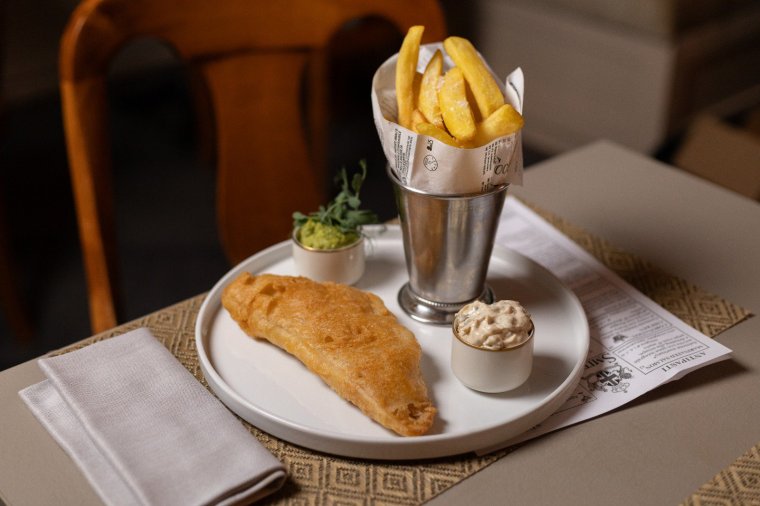 Fish and chips is among traditional British dishes served (Photo: Adam Smith)
“We are the only true British restaurant in Italy. There are pubs and places that offer ‘British-style’ food, but when I see ‘pie and beans’ on a menu, I cringe. We’re not chasing a trend, we’re defending a cuisine,” he says.
Smith is proud that most dishes at his establishment are prepared using classic methods. Haggis is cooked slowly, using fewer oats for a richer, gourmet style, while pies are made using proper flaky butter pastry.
He believes that the decline of British food culture and its poor reputation can be traced back to rationing during and after the war, as well as the mechanisation and industrialisation of the food industry, along with people removing their stoves for central heating. Now there is a proliferation of ready-meals, prepared foods and bland vegetables on offer in Britain, he says.
Smith recalled amusing anecdotes of culinary shocks among his clientele. “We’ve had couples arguing at the table: the partner was livid that they had been taken to a British restaurant for a birthday. Luckily the food, service and atmosphere rescued the situation.”
Your next read

A few clients have asked for coronation “kitchen” instead of coronation chicken, he recalls. Others are shocked there is no pasta or ask for their Yorkshire pudding to be changed because there is a hole in the middle.
But Smith would not change it. He says life in Turin suits him. He enjoys the fine weather, the slower pace of life and the city’s “quiet elegance”. In his spare time he bikes in the hills and woods near the city.
“I like the caffé and aperitivo society and the Italians seemed to like me and took me to their hearts,” he says.
Dining and Cooking