
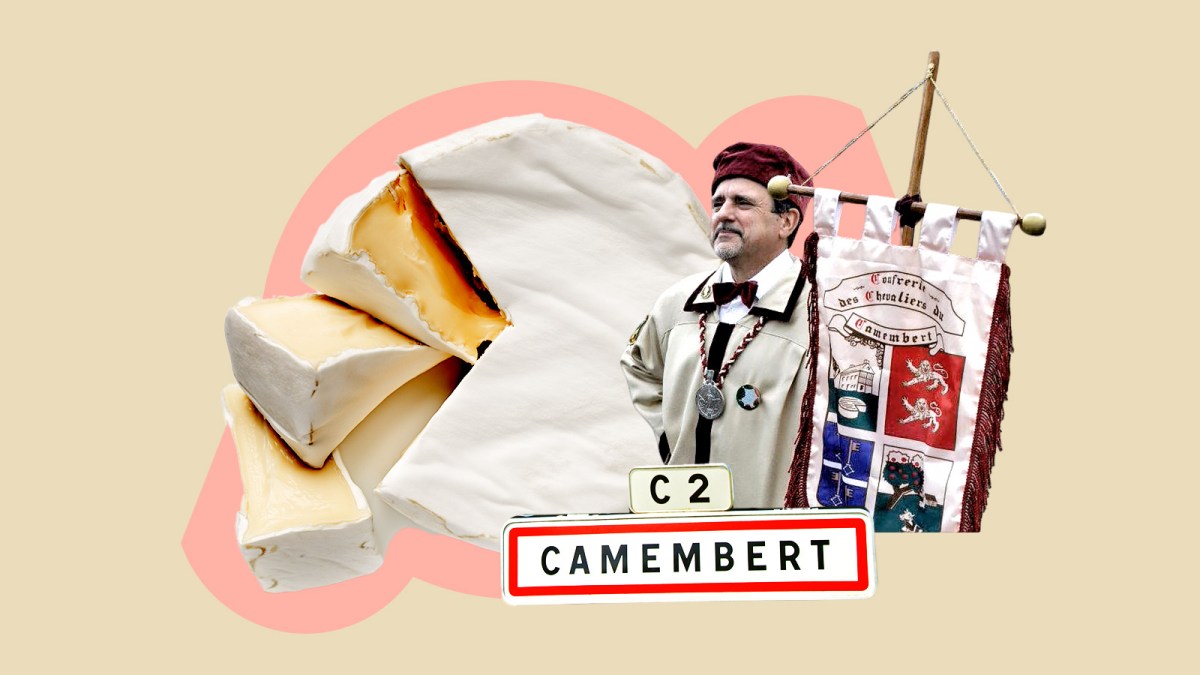
Several American creameries turn out cheeses that they call camembert. In Italy, there is a so-called camembert made with buffalo milk. In South Korea, consumers can buy a ketchup-style bottle also said to contain camembert that can be squirted onto their food.
Now defenders of the genuine artisanal cheese made in Normandy have had enough. They want their beloved delicacy to be given world heritage status by Unesco in the hope of protecting it against usurpers.
“The problem today is that the name is not protected at all,” said Dominique Vignot, the Grand Master of the Brotherhood of the Knights of Camembert, which is leading the campaign for intangible heritage status.
“Anyone can make something and call it camembert,” she said. “I even saw a tube of camembert once. That really was a step too far.”
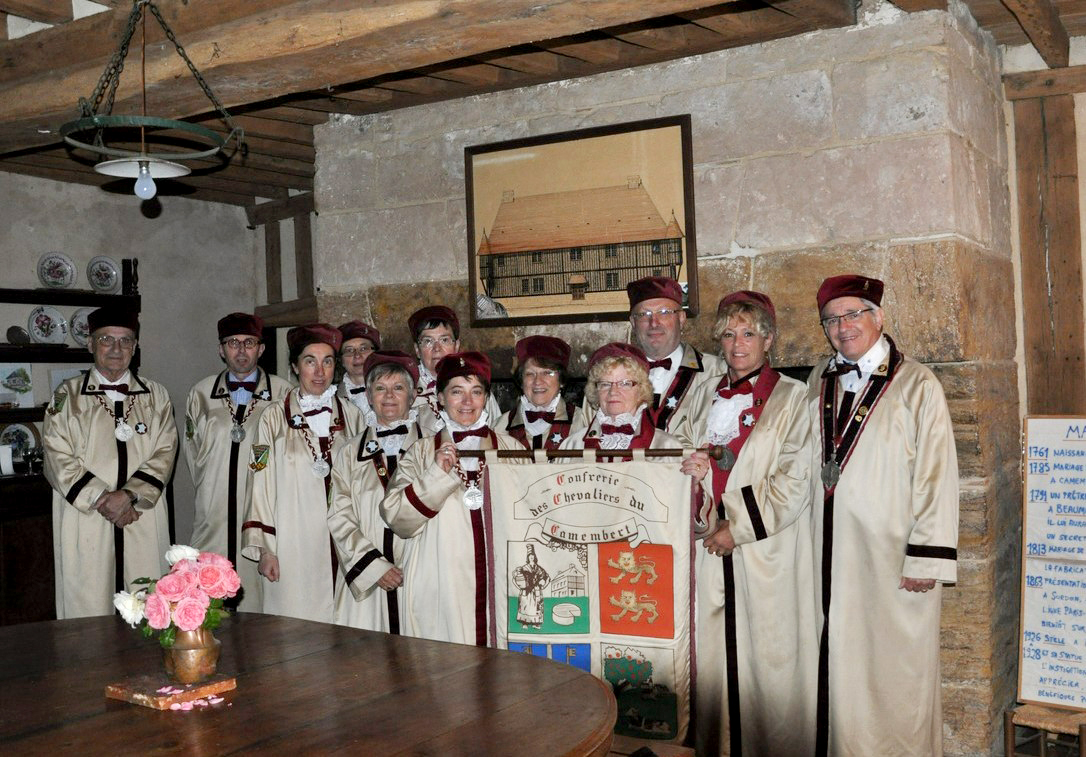
The Brotherhood of the Knights of Camembert think they have a strong case to get protected designation of origin
• French cheesemakers at war over foreign milk in camembert
The brotherhood believes that if craftsmanship of camembert was placed on Unesco’s world heritage list, it would become difficult for Americans, Italians, South Koreans and others to use the name on ersatz versions.
“The veritable Protected Designation of Origin Camembert of Normandy requires a precise and ancient know-how. It is a product of terroir and tradition and it has a history. It is known throughout the world,” Vignot said.
The Confrérie des Chevaliers du Camembert was created in 1986 and has more than 1,000 knights, who are authorised to join if they can prove their “passion” for camembert and their “determination” to defend it. They include dairy producers, chefs, politicians and gastronomes with a particular love of the cheese. In practice, the bulk of the work in the brotherhood is done by 30 or so volunteers known officially as dignitaries.
The brotherhood first began talking about a candidacy for world heritage status in 2017, but only got down to working on the issue in 2021. In 2023, it submitted its case to the French government, whose backing it needed for the application to stand any chance of Unesco approval.
Camembert has fallen victim to the political turmoil that has gripped France during President Macron’s second term. Over the past two years, ministers have been too busy trying to save their jobs amid endless cabinet reshuffles to support the cause of camembert.
Now the brotherhood is planning a campaign to drum up support among MPs and senators but also in the wider population in hope of building up momentum for its case.
“We want to mobilise elected representatives, consumers and the population. When you speak to people no one seems to be against this idea,” Vignot said.
Although Unesco does not give world heritage status to foods as such, it does approve the crafts behind them. Last year, for instance, the traditional methods behind Brazil’s raw-milk Minas cheese were placed on the heritage list. The art of the Neapolitan Pizzaiuolo has also been registered by Unesco, along with “Belgium’s beer culture” and “the French gastronomic meal”.
Camembert enthusiasts claim that they have just as strong a case. “It’s not easy to make camembert,” Vignot said. “You have to be extremely precise and meticulous and the milk has to be perfect.”
Camembert was created in the 1790s by Marie Harel, a farmer’s wife from the Normandy village that gave its name to the product. She is said to have come up with the recipe when she modified her cheese-making technique on the advice of a priest to whom she had given shelter after he fled in fear of his life from French revolutionaries.
• Camembert purists relish victory over industrial dairy giants
Like the producers of many French cheeses, camembert makers can acquire appellation d’origine protégée (protected designation of origin) status, a French label designed to ensure quality and respect of tradition. In order to obtain the label, camembert must be made with raw milk, half of which must come from the Normande breed of cattle, which must graze in the region’s fields for at least six months a year.
The curds are ladled into the moulds to form five layers, with about 50 minutes between each ladleful. The cheese must age for at least 21 days.
But not all camembert is made in the traditional way. The vast majority of the camembert sold in the nation’s supermarkets is industrially produced from pasteurised milk, often from cows that have never seen a blade of Normandy grass. It is sold as camembert but does not have the protected designation of origin label.
Purists have long waged court battles against this industrial camembert, arguing that it should be singled out so that the difference between factory and farm produced cheese is obvious on the packaging. They have largely gone unheard.
Some commentators believe the division between artisanal and industrial camembert makers could undermine the case for Unesco status. Vignot disagreed. She said that even the country’s big dairy companies had raised no objections to her cause.
Dining and Cooking