
Thai Liang Lim/Getty Images
When I first arrived in Florence four years ago, I was a culinary student with big ambitions. But what I quickly realized was that the most transformative lessons didn’t come from the classroom — they came from the restaurant kitchens I worked in across the region. After four years of working throughout kitchens in Tuscany and beyond, I’ve discovered that comfort food isn’t just a simple category in Italian cuisine; it’s everything. It encompasses everything from Milanese costoletta, gently fried in clarified butter, to a paper-thin focaccia studded with melted stracchino cheese and baked until golden brown and bubbly.
Comfort food in Italy isn’t just a category, it’s method of cooking and a way of preserving ancient recipes and traditional cooking techniques. These 15 dishes are a handful of delicious recipes that define Italy’s vast realm of comfort food and are definitely ones that you need to try at least once.
1. Arancini
Drong/Getty Images
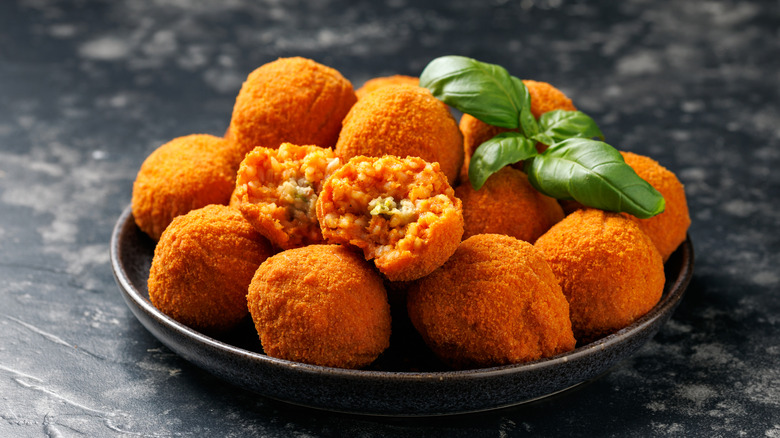
Arancini, meaning “little oranges” in Italian, are Sicilian fried rice balls commonly served as street food at outdoor farmers’ markets in cities like Palermo, Catania, and Syracuse. They are basically deep-fried balls of risotto and often stuffed with ragù, cheese, braised meat, seafood, or vegetables. They have a crispy, golden brown exterior with a soft, creamy, savory interior that’s just bursting with flavor from the rich fillings.
The rice mixture is traditionally flavored with saffron, giving it a luscious golden hue and fragrant, aromatic flavor that will surely make any mouth water. The use of saffron in Sicilian cooking stems from the Arab rule of Sicily during the 10th century. During this time, the Arabs introduced ingredients including saffron, rice, citrus, spices, and nuts to the island, transforming the culinary landscape, resulting in the creation of dishes like arancini, cannoli, caponata, and other Italian dishes.
2. Trippa alla Fiorentina
Elflaco1983/Shutterstock
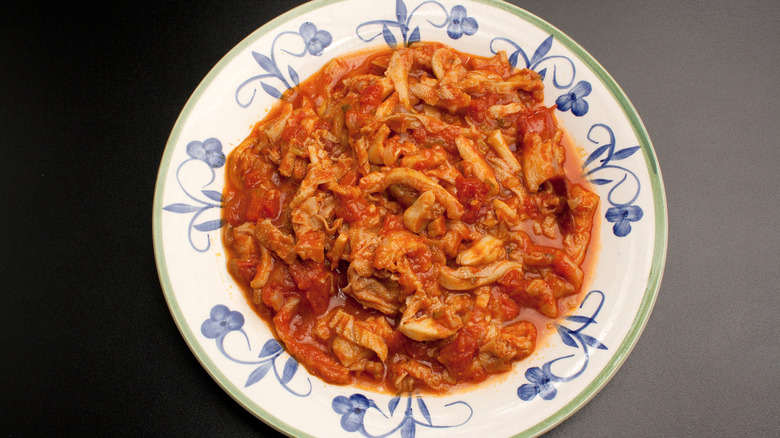
One underrated Italian comfort food you’ve probably never heard of is trippa alla Fiorentina. This unique dish consists of slow-cooked, stewed tripe (the stomach lining of a cow) with tomato sauce, garlic, onions, and a medley of herbs, until it’s completely fork-tender and soft. While sweetbreads like tripe might scare some people away, it’s actually incredibly flavorful and will surprise you with its delicious, savory taste. The trippa has an intense umami flavor from the tomatoes, and, when paired with a shaving of Parmesan, it will surely have you coming back for seconds.
Like many sweetbreads and offal dishes, trippa alla Fiorentina is a beloved meal in Florence, where you can find street vendors and food carts at farmers’ markets selling endless bowls of it to the locals. Florence, just like the rest of Italy, has a deep tradition of nose-to-tail eating, so the next time you’re there, be like a local and dig into a plate of tripe.
3. Focaccia di Recco
Sabino Parente/Shutterstock
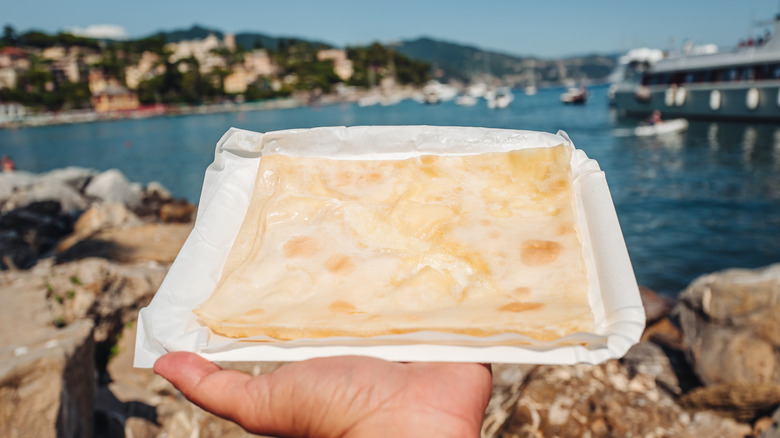
Focaccia di Recco is a thin, crispy style of focaccia from the Ligurian town of Recco. It’s made with paper-thin sheets of dough, layered with Italian stracchino cheese. Once it’s assembled, the focaccia is baked in a stone oven until the cheese is completely melted and the dough is crispy, with golden-brown blisters everywhere. It has pockets of melted stracchino cheese and shattered bits of crispy focaccia that will make you reach in for seconds before you even finish your first slice.
Focaccia di Recco is protected by the European PGI (Protected Geographical Indication) status. This means that the authentic version must be made in specific cities using local ingredients, following the traditional method of preparation. The PGI status is meant to safeguard this unique style of focaccia by protecting it from adulterated versions and supporting local bakers, ensuring consumers receive the real, regionally tied product.
4. Pasta alla Norcina
Olga Larionova/Shutterstock
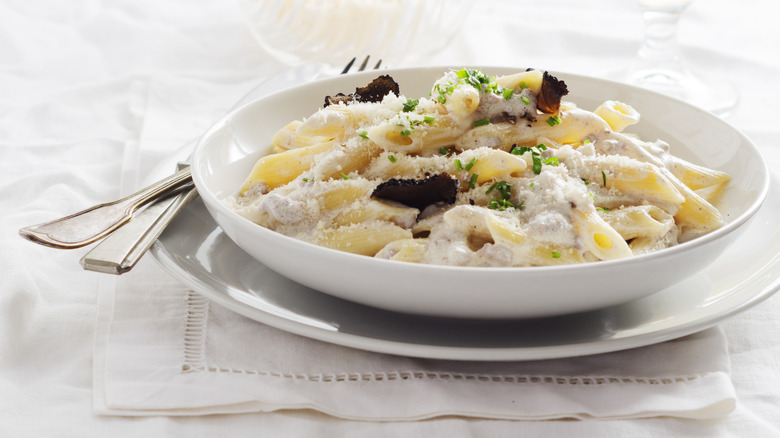
Pasta alla Norcina is a rich and comforting pasta dish from the town of Norcia in Umbria, a landlocked region in Central Italy. The dish gets its name from the skilled butchers called “norcini,” who specialize in processing and curing pork to make various Italian cured meats. Norcia is well-known for this artisanal tradition, making it a staple in anyone’s culinary itinerary during a trip to Italy.
The pasta dish features crumbled pork sausage that’s been slow-cooked in a creamy sauce made with either heavy cream or ricotta, infused with cracked black pepper, grated nutmeg, oregano, and, occasionally, porcini mushrooms or black truffles. Oftentimes, chefs in Umbria will deglaze the pan with white wine, which adds a subtle acidity that cuts through the richness of the sauce. The sauce is completed with a generous sprinkle of grated Pecorino Romano for a salty, umami finish. Locals typically use either short, ridged rigatoni or orecchiette pasta, which perfectly capture the sauce in their crevices.
5. Pappardelle al cinghiale
Grifone97/Shutterstock
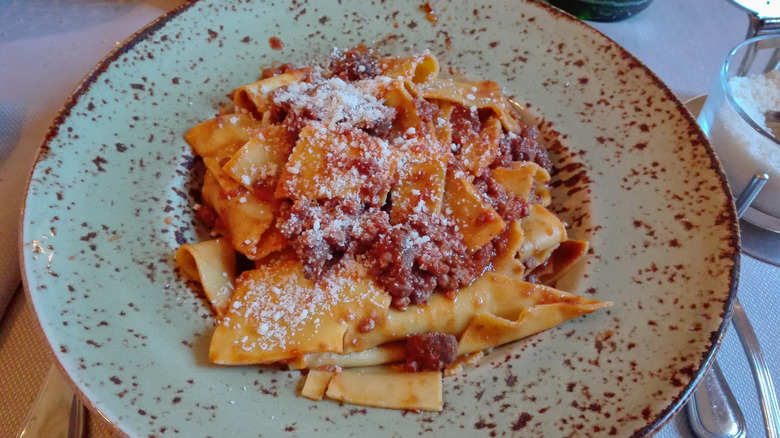
Pappardelle al cinghiale is a classic Tuscan pasta dish consisting of flat, wide pappardelle pasta, tossed in a rich ragù sauce made from wild boar meat called “cinghiale” in Italian. The ragù has a deeply savory and distinctly gamey flavor from slow-cooking the cinghiale with red wine, tomatoes, and aromatic herbs, including oregano, rosemary, and sage. It’s typically slow-simmered for around 2 to 3 hours, breaking down the meat into a fine crumble, resulting in a hearty, meaty sauce with rich, savory flavor and a tender, velvety texture. Oftentimes, you’ll find it tossed with fresh or dried pappardelle pasta — either way, the sauce perfectly coats the pasta, clinging to every ridge and curve.
This dish is commonly served in trattorias across Central Italy, especially in Tuscany, where you’ll most likely find it on nearly every menu. It’s typically garnished with Pecorino Romano, freshly cracked black pepper, and sometimes a drizzle of extra-virgin olive oil.
6. Tortellini en brodo
Ildi Papp/Shutterstock
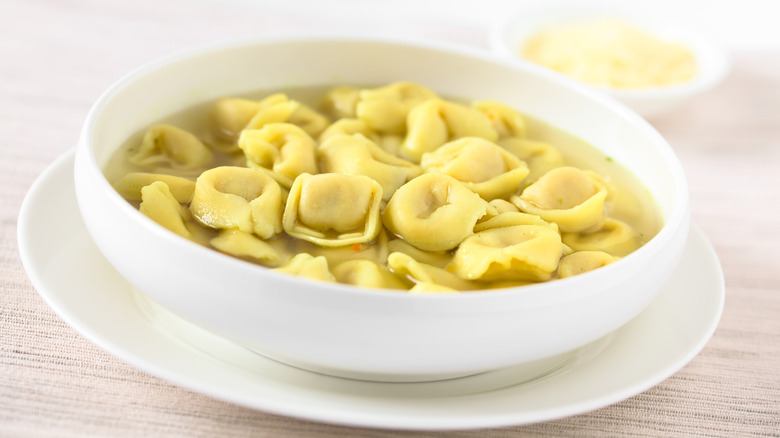
Looking for a cozy, heartwarming dish to curl up on the couch with on a rainy day? Well, then you need to try the ultimate Italian comfort food: tortellini en brodo. This classic Emilia-Romagna dish features tiny, hat-shaped tortellini that are gently simmered in a rich, savory chicken broth topped with a cloud of freshly grated Parmesan — how bad can that be? The tortellini are traditionally filled with a rich meat mixture consisting of pork loin, mortadella di Bologna, prosciutto, Parmesan, and a sprinkle of nutmeg. Each bite of tortellini is bursting with cheesy, porky flavor that pairs wonderfully with the deeply rich broth.
Typically, the tortellini are cooked directly in the broth just before serving, allowing them to absorb all that delicious flavor. It’s a staple dish throughout the Emilia-Romagna region, where you find it being served in trattorias across cities like Bologna, Parma, and Modena. It’s a must-have on Christmas day, when Italian families come together to hand-fold each tortellini with care and love, passing down the tradition through generations.
7. Coccoli fiorentini con prosciutto e stracchino
Marynavoronova/Getty Images
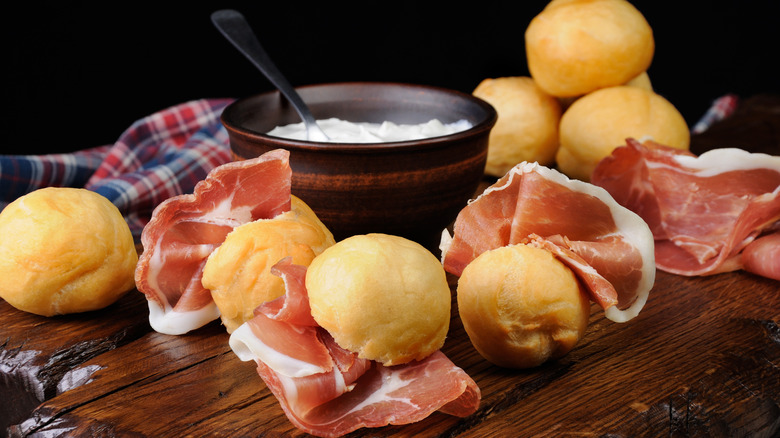
Coccoli fiorentini con prosciutto e stracchino are pillowy fried dough pockets from Florence filled with creamy stracchino cheese and prosciutto. Coccoli, which translates to “cuddles” in Italian, are warm, fluffy dough balls that are crisp and golden brown on the outside with a soft and fluffy interior. The coccoli have a similar consistency to pizza dough, with a slightly chewier and softer consistency — plus, it’s deep-fried until crispy.
In Florence, they are commonly served with thinly sliced prosciutto and stracchino cheese — to eat it, you simply tear the coccoli in half and smear them with stracchino cheese and a slice of prosciutto, creating the perfect salty, savory bite. There are regional variations all over in Italy, with some regions mixing in seaweed into the dough, giving it salt, umami flavor and others serving a slice of mortadella instead of prosciutto for a fattier, richer bite.
8. Spaghetti all’assassina
Bonchan/Getty Images
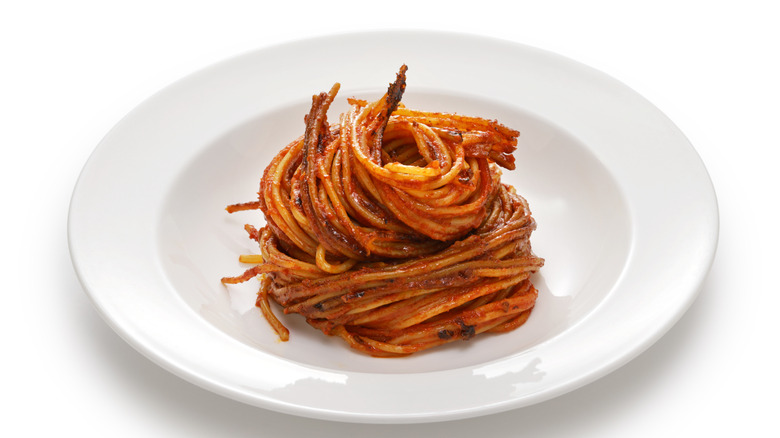
Spaghetti all’assassina is a Puglian dish consisting of spaghetti cooked in a shallow frying pan with tomatoes, garlic, shallots, red chili pepper, and olive oil, then left uninterrupted until a crispy, golden brown charred crust forms on the bottom. It has an intense savory, spicy, and slightly charred taste with a mouthwatering caramelized tomato flavor with notes of fiery chili heat and smokiness. This dish is known for its unique, crispy, charred texture, achieved through a high-heat cooking process that caramelizes the sauce and chars the pasta to perfection.
Instead of being boiled in salt water and finished in a sauce, the spaghetti all’assassina uses a method called “risottata,” in which the pasta is cooked directly in a single pan with a sauce or broth. Using this method allows the spaghetti to absorb the sauce while releasing starch, creating a creamy, homogenized consistency. Typically, this method is used for dishes like risotto and pastina — but chefs down in Puglia adapted it to make a cohesive dish where the pasta and sauce cling together.
9. Seadas
Alessio Orru/Shutterstock
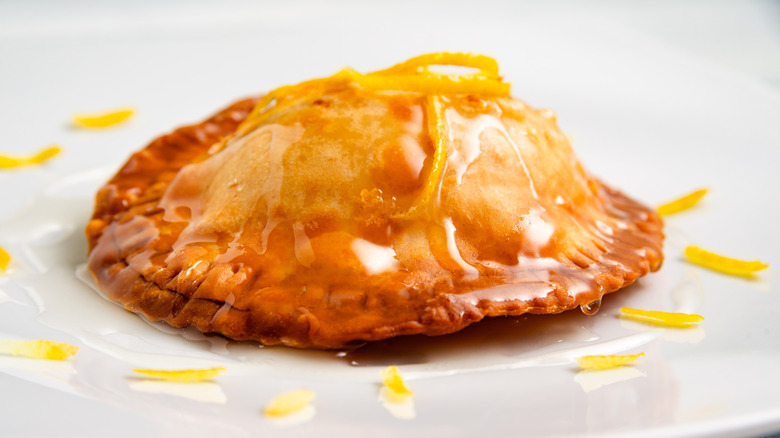
Seadas, also known as “sebadas”, are a traditional Sardinian dessert consisting of a crispy, fried pastry stuffed with a tangy, local sheep-milk cheese called “pecorino sardo” and drizzled with a generous portion of warm honey. The dough is made of a simple mixture including semolina flour, water, salt, and lard, known in Italy as “pasta violata.” For seadas, the pastry dough is shaped like a sun and then deep-fried until crispy and golden brown.
This unique dessert has a balance of sweet, savory, tangy, and rich flavors — the sheep-milk pecorino is often infused with lemon zest, which adds a lovely brightness, while the warmed honey provides a pleasant floral sweetness. The cheese in the center becomes soft, stringy, and gooey, while the rustic semolina pastry stays perfectly crisp, providing a satisfying crunchy element — all of which is completely drowned in honey. You can find seadas across Sardinia, often being made at trattorias or farmhouse-style restaurants called “agriturismo” for dessert.
10. Carbonara
Thai Liang Lim/Getty Images
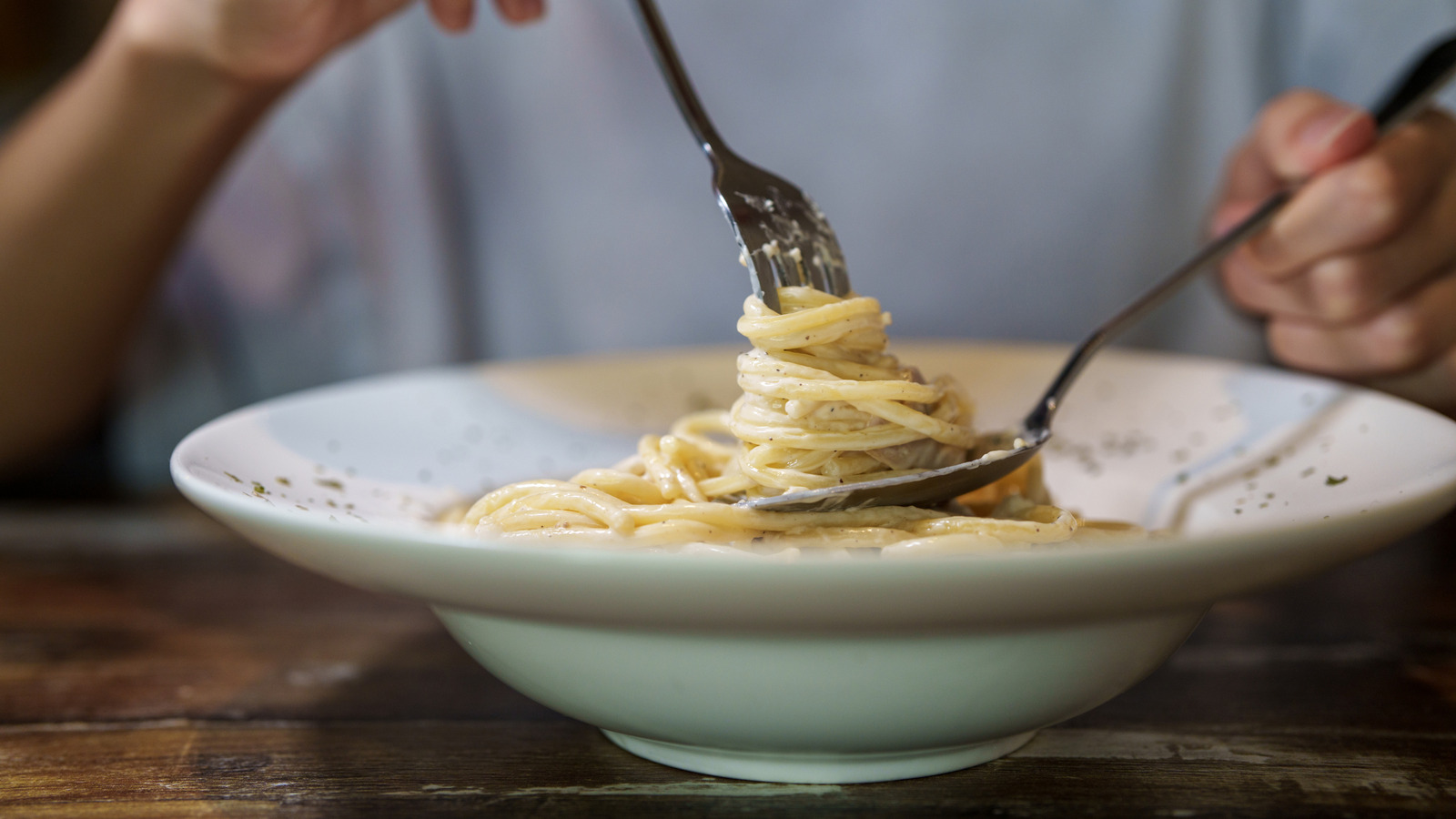
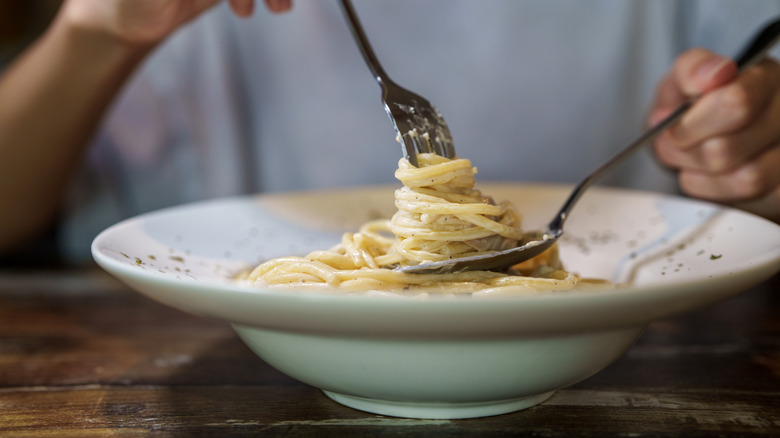
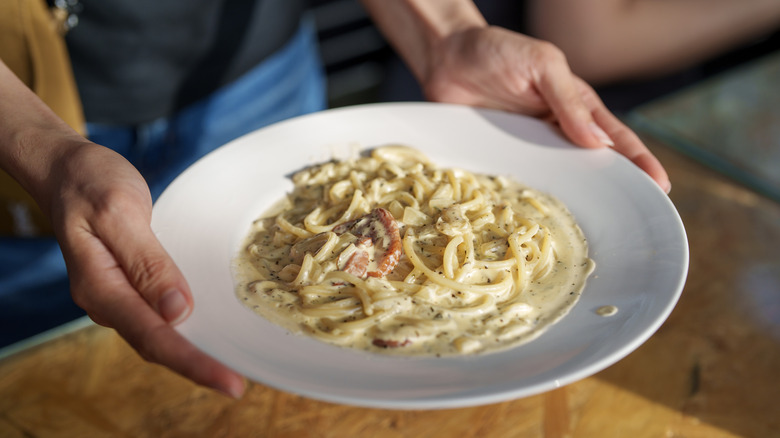
Carbonara is one of the most quintessential Italian pasta dishes, consisting of eggs, Pecorino Romano cheese, ground black pepper, and guanciale (cured pork jowl). It’s one of the four main pasta dishes from Rome, including cacio e pepe, gricia, and Amatriciana, all known for their simple ingredients and rich flavors. All of these four pasta dishes build upon each other, with cacio e pepe (cheese and black pepper) being the foundation from which carbonara, gricia, and Amatriciana have evolved.
Carbonara is well-known for its incredibly rich and peppery sauce with a luscious, creamy, velvety texture from the eggs and cheese. Everything is emulsified together from the fat rendered from the guanciale, which adds a fatty, salty element that brings everything together without making it too heavy or overly “eggy.” It’s typically made with short, ridged rigatoni or bucatini — both of these pastas hold the sauce beautifully, trapping it in every crevice and ridge.
11. Risotto alla Milanese
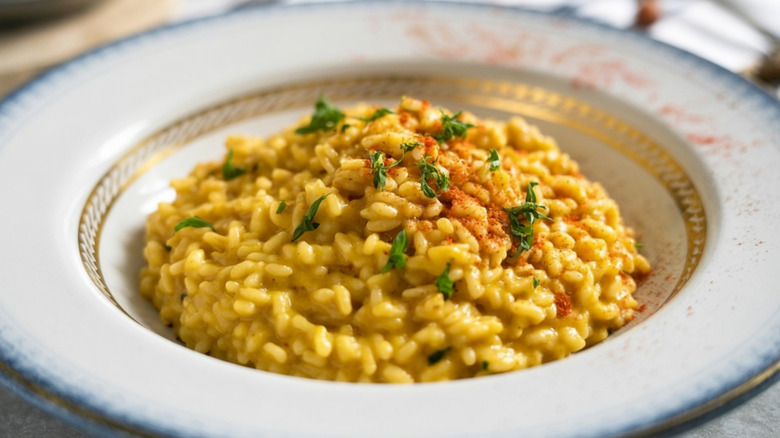
I am food/Shutterstock
Risotto alla Milanese is the quintessential risotto dish hailing from the bustling city of Milan. This dish consists of Arborio rice that’s slow-cooked with chicken broth, white wine, butter (sometimes bone marrow), Parmesan cheese, and, of course, saffron. The star of the dish is the saffron, which gives it a distinctive bright golden hue and subtle floral flavor, while the butter and Parmesan cheese add a lovely fatty richness to the dish that wraps everything together.
This risotto is known for its luscious creamy, starchy sauce that perfectly envelopes each grain of rice. You might be wondering, “How does all of that rice turn into such a lovely sauce?” This is largely due to the technique of constantly stirring the risotto, which releases the starch from the rice grains, creating that signature velvety, emulsified sauce. You can find it being served at trattorias and osterias throughout Milan — oftentimes it’s served with osso buco (braised oxtail) or Milanese costoletta (fried pork cutlet).
12. Bistecca alla Fiorentina
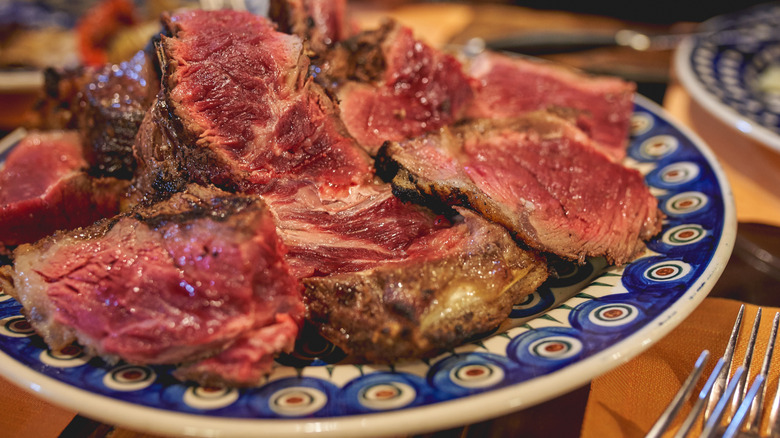
Paolo Paradiso/Shutterstock
Bistecca alla Fiorentina is a massive porterhouse steak from the Chianina cattle of Tuscany, grilled over hot coals and finished with just salt, pepper, and a drizzle of extra virgin olive oil. It’s traditionally served as a shared delicacy in Tuscany, specifically Florence, where you’ll find osterias and trattorias selling it by the kilo.
Since the steak is a porterhouse cut, it contains both the sirloin and tenderloin, making it perfect for sharing with a hungry crowd. It must be at least 2 inches thick, or, as they measure in Tuscany, three to four fingers thick, to ensure the grill creates a delicious crust while keeping it fork-tender and a pleasant rare pink inside. It’s typically served with a few different side dishes called “contori”, including roasted potatoes, stewed white beans, and garlicky spinach. Local Fiorentina will only drizzle a bit of olive oil on the finished steak to taste the quality of the meat — so if you’re eating at a restaurant serving it with lemon wedges and tomatoes, you’re probably at a touristy spot.
13. Fonduta Valdostana
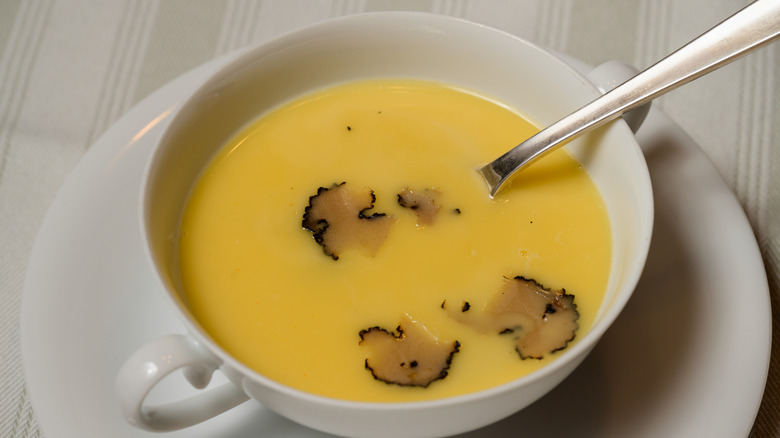
Dietmar Rauscher/Shutterstock
Fonduta valdostana is a cheesy fondue from the northern region of the Aosta Valley, featuring a cauldron of melted fontina cheese, milk, egg yolks, and sometimes freshly shaved white truffles. It has a simple, cheesy flavor profile with buttery, nutty notes from the fontina cheese, and when shaved with white truffle, it has a distinct earthy flavor. Unlike Swiss and French fondue, it omits the white wine, cornstarch, and garlic, relying on egg yolks for added richness and creaminess.
Beyond flavor, the egg yolks also give it a much thicker consistency and a lovely silken texture that will just completely melt in your mouth. It’s typically served with cubed bread, boiled potatoes, steamed vegetables, and cured meat for dipping. Occasionally, you can find it being poured over a platter of cured meats, but more often than not, it’s served in a communal setting in a bubbling, stone caldron with various foods to dip in it.
14. Milanese Costoletta
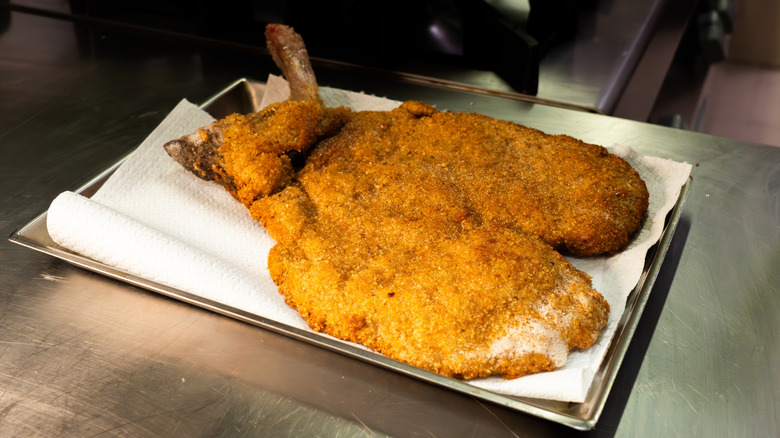
AB_Production/Shutterstock
Milanese costoletta is a thin veal cutlet that’s pounded until it’s 2 to 3 cm thick, breaded, and pan-fried in clarified butter until deep golden brown and crispy on the outside. The meat is fork-tender and slightly pink inside, while the breadcrumb crust is crunchy and deeply flavored with butter. In order for it to be a true Milanese costoletta, it must be fried and served bone-in with a simple side of lemon wedges or sliced cherry tomatoes and arugula. Sometimes you can find being served “orecchia di elefante” (elephant’s ear), where it is pounded until it’s extremely thin until it’s thin and massive, but pursuit agrees that the best way is when the cutlet measures two fingers high in width.
Some people argue that the Milanese costoletta is the predecessor of the famous Austrian Wiener Schnitzel, though the specific ancestor is heavily debated, with Italians in Bologna even staking a claim that the costoletta di Bologna is the original dish. Either way, it’s a quintessential dish in Milan and should definitely be on your bucket list the next time you head to the fashion capital of Italy.
Dining and Cooking