
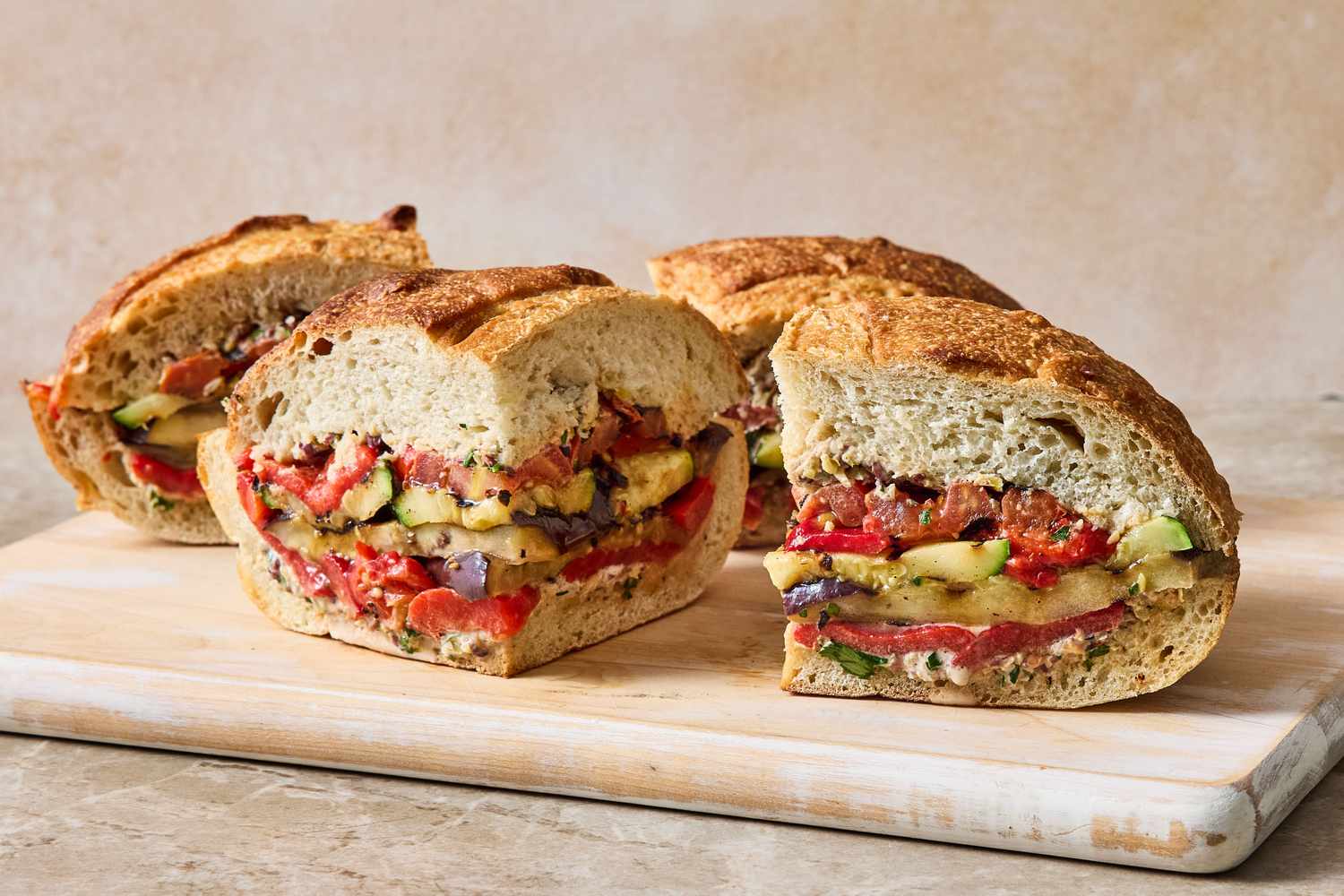
For a summery sandwich that’s fit for a crowd, look no further than this ratatouille-inspired grilled vegetable muffaletta. Featuring grilled eggplant, zucchini, and tomatoes and slathered with a tangy olive spread, it’s a hearty, picnic-ready dish that’s just right for the season.
Inspired by the meaty muffaletta, a New Orleans favorite, it’s one big sandwich built in a hollowed-out loaf of bread (you’ll want to use something sturdy and rustic that won’t fall apart, like a sourdough boule). That means it’s faster than making individual sandwiches—and more fun. You can slice it into wedges right after making it or wrap and refrigerate it for a few hours. It’ll transport well, and—unlike so many other summer sandwiches—you won’t have to worry about it getting squished at the bottom of a cooler. Whether you take it to the beach, bring it camping, or enjoy it in your very own backyard, you’re sure to love this meat-free muffaletta.
Credit:
Kelsey Hansen
The Origin of the Muffaletta
Although the muffaletta sandwich features distinctly Italian ingredients like provolone cheese, Genoa salami, and mortadella, it has stateside origins. The sandwich was created in early 20th-century New Orleans by Lupo Salvatore, a Sicilian immigrant whose market, Central Grocery, is still in operation today.
As the story goes, Salvatore noticed other Italian immigrants buying ingredients like sliced cheese, cold cuts, and olives, plus a round, squat loaf of bread known as muffuletto, for their lunches. Instead of just selling these items separately, he combined them into a layered sandwich that would be easier to eat—and just like that, the muffaletta was born.
Why You Should Salt the Eggplant
Many of our eggplant recipes call for salting the vegetable and letting it sit before cooking. Doing so helps to draw out excess moisture so the eggplant cooks up silky and creamy rather than soggy or spongey. And while it can seem like a superfluous step, it really does make a difference—especially when you want the texture of the eggplant to shine, like in this layered sandwich.
To Rinse or Not to Rinse?
Since only a small amount of salt (less than a teaspoon) is sprinkled over the eggplant, there’s no need to rinse it off after draining. Just be sure not to season it a second time when you salt the remaining vegetables, or you’ll risk making it too salty.
If you’re salting your eggplant more generously for other recipes, however, it’s a good idea to briefly rinse the pieces and then pat them dry before cooking.
You’ll need to hollow out a round loaf of bread for this recipe. Rather than tossing the insides, make them into croutons to pair with a Caesar salad, or bake them in a 300-degree Fahrenheit oven until they are very dry and crisp for homemade breadcrumbs.
Dining and Cooking