
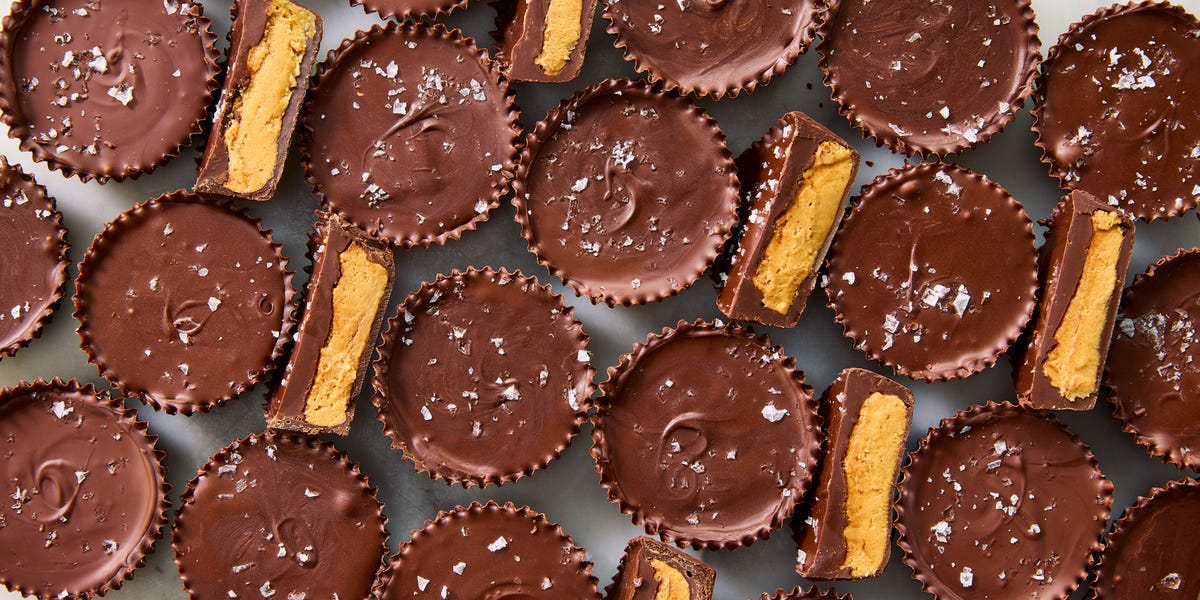

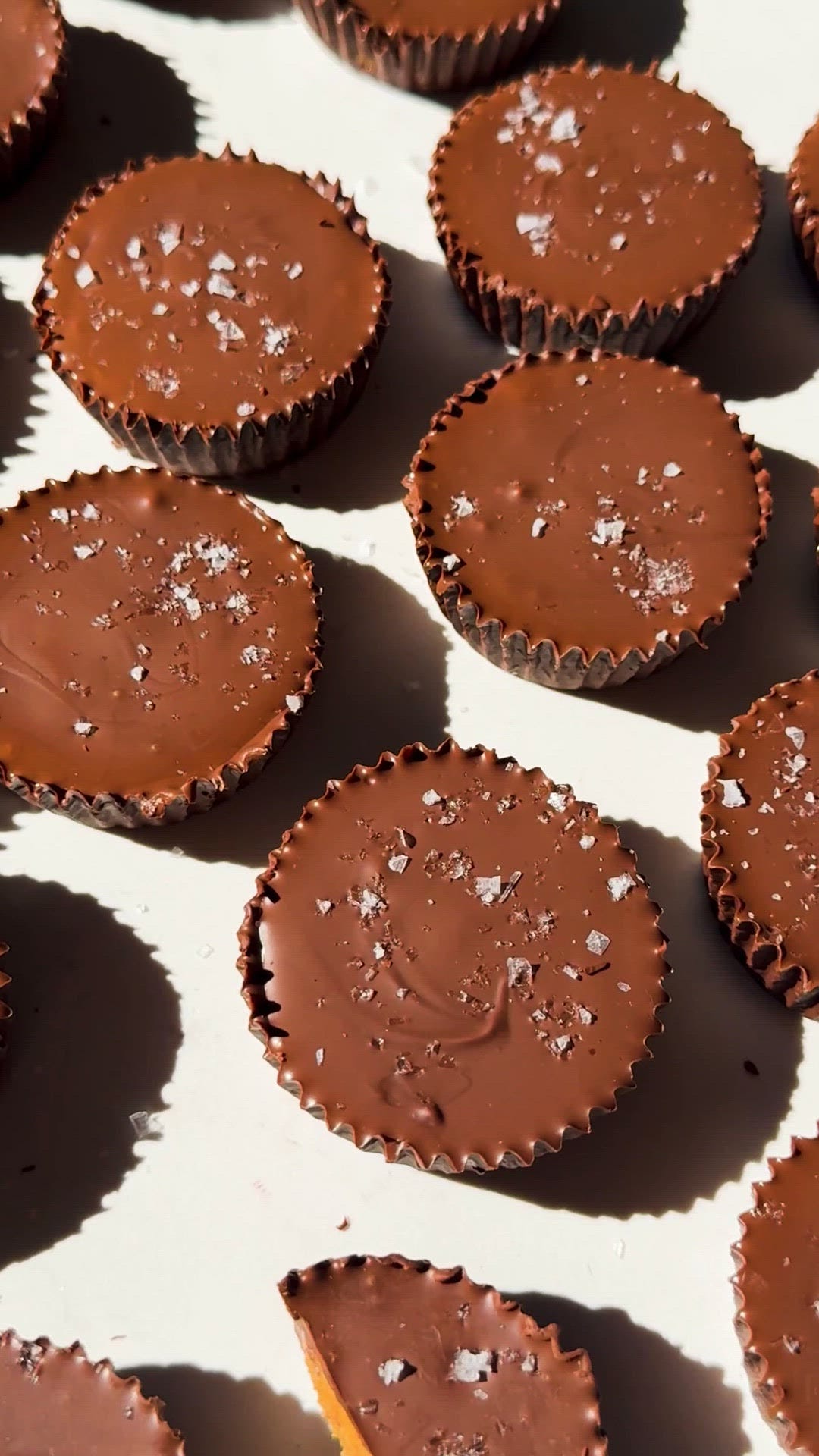
Peanut butter cups used to be my guilty pleasure, but not anymore. Packed with over 7 grams of protein per cup, this homemade version promises to help you meet those protein goals, while still holding on to the nostalgic flavor and texture of the classic dessert. Here’s everything you need to know.
Protein sources:
These cups get their protein punch from three different ingredients: peanut butter, protein powder, and peanut powder. Since these are also the only three ingredients in the filling, it’s important to choose them wisely.
The peanut butter:
While I typically prefer to bake with the kind of peanut butter that’s “natural,” it tends to separate in the jar. I actually recommend the no-stir varieties of “all-natural” peanut butter for these cups. In testing, I found that the smoother, homogenized texture of brands like Jif or Skippy helps re-create the creaminess of a “real” peanut butter cup. That said, you can use whatever brand you prefer or have on hand. Just make sure it’s salted!
The protein powder:
Since the goal is to let that peanut butter flavor shine, plain vanilla protein powder is the name of the game here. Use your favorite brand if you have one; if you don’t, Ascent worked well for me during testing.
The powdered peanut butter:
When you press peanuts to remove most of their fat and then grind them up, you end up with powdered peanut butter. I used it here to thicken the filling and add extra flavor and protein, but whether you’re making these cups or not, I highly recommend stocking this magical ingredient in your kitchen. You can use it to flavor buttercreams, season dry rubs, or to add an extra boost of peanut flavor to your morning smoothie.
Storage:
These high-protein peanut butter cups can be stored in an airtight container in the refrigerator for up to 1 week or frozen for up to 1 month.
Made these? Rate and review them below!
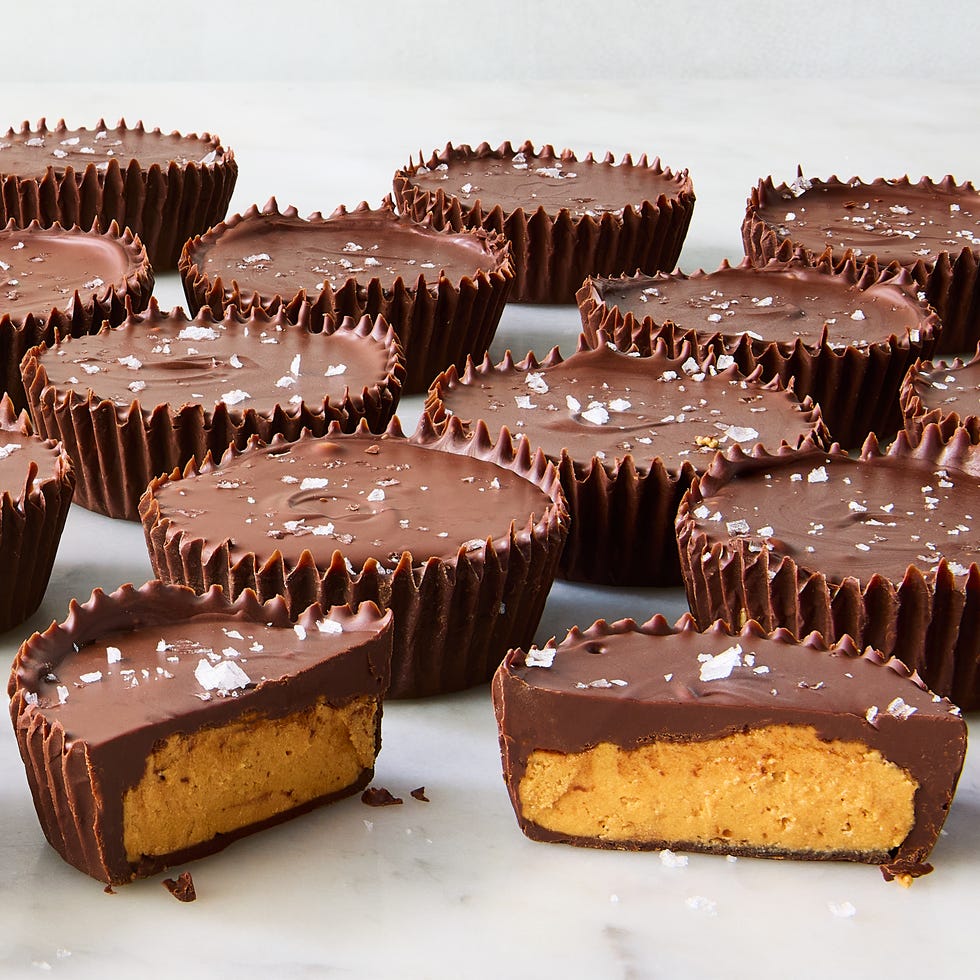

PHOTO: RYAN LIEBE; FOOD STYLING: TAYLOR ANN SPENCER
Dining and Cooking