
For attracting companies, Georgia’s secret sauce may be its healthy dose of collaboration among stakeholders, but for an Italian provider of marinara, the state’s true advantages have only become fully clear after a few years of operating in the state.
La Regina picked Alma, Ga., for a new plant amid the pandemic, as Americans were snapping up pasta sauce for easy at-home meals.
The Italian firm faced regulations preventing the import of meat sauces like bolognese, so it needed a domestic facility where it could blend Italian inputs with locally sourced ingredients.
Five years later, the strategy seems to have paid off, as the company earned itself a shoutout from Gov. Brian Kemp in his final State of the State address to the Legislature Jan. 15.
Mr. Kemp and First Lady Marty Kemp visited La Regina’s farms and operations on a 2024 trade mission to Italy and saw why, the governor believes, the company has proven so compatible with the state.
“We talked to the men and women who have preserved their family’s recipes for over 100 years, and we saw how similar their values were to the very family-owned farms and businesses here in Georgia that La Regina supports,” Mr. Kemp said. “That company — a full ocean away from our state — has the same values that we do: family, community, and a strong belief in a hard day’s work.”
 Emidio Rinaldi
La Regina spent $20 million in Georgia, taking up residence in a former bakery facility. It has hired about 110, short of projections when the investment was announced, but still significant in a rural town of 4,000 people.
During his speech, Mr. Kemp invited Emidio Rinaldi, COO of La Regina in the U.S., to stand and be recognized for the company’s investment in the state, where Mr. Rinaldi moved his family. He was joined by Jerry Lady, the plant manager, who was hired from the closed bakery as La Regina’s first employee, overseeing an operation for the Naples-based company.
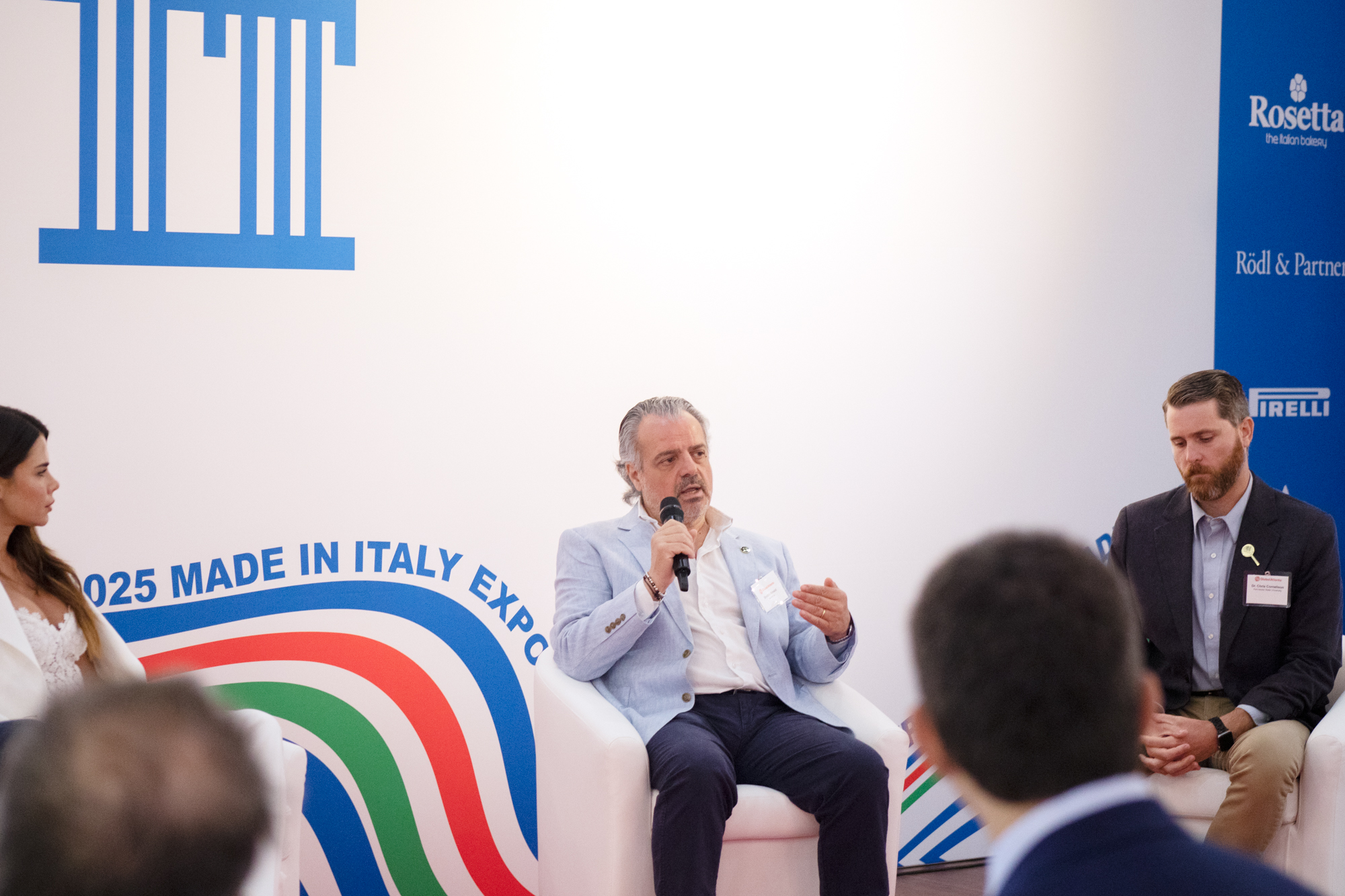
During last September’s Made in Italy Expo, Mr. Rinaldi joined an innovation panel and outlined how the “marriage” of Italian quality and American processes came together in Georgia.
La Regina started supplying tomatoes in the U.S., including to the Pellegrino family in New York, which had started making their own sauce in an effort to stop saying “No” to the customers being turned away a their small, family-owned restaurant, Rao’s.
“We, as Italy, we were looking for the best product, and America made the purpose,” Mr. Rinaldi said during an industry talk moderated by Global Atlanta.
Fast forward 30 years, and the collaboration has turned into the best-selling sauce in the U.S., still under the Rao’s name despite acquisition from the Campbell Soup Co. by way of Sovos Brands.
Mr. Rinaldi said homebound Americans started to crave the sauce event more with the outbreak of COVID-19. “Italians can cook it, but Americans don’t,” he said, to laughter from the audience. Production needed to be ramped up and on-shored.
That’s when the company discovered the agrarian charms of south Georgia — and its logistical convenience for an outpost that would combine local sourcing of carrots, meat and other items with imports of indispensably Italian staples like tomatoes and olive oil. It was also a six-hour time difference from Italy.
“We didn’t know that Savannah was the second port of the U.S. East Coast,” Mr. Rinaldi said during a panel discussion in September on Food, Factories and the Future. Read the full panel wrap-up here
Three years from the start of production and three decades since it began serving the U.S. market, La Regina is “very proud” of its operation in the “very nice community” of Alma, and the people who power its success, Mr. Rinaldi said.
Last year, the governor said, La Regina sourced from 100 Georgia farms, including 40,000 pounds of onions, on the way to producing more than 25 million jars of sauce, Mr. Kemp said.
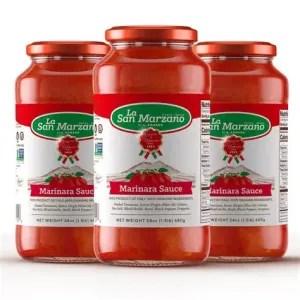
Mr. Rinaldi said Georgia capacity has grown to 120,000 jars per day, and La Regina is also introducing its own fully made-in-Italy brand, La San Marzano, into the United States, even amid threats of tariffs on pasta and other Italian foods.
“It’s a long journey, and this is just the last chapter.”
From the archive:
Dining and Cooking