
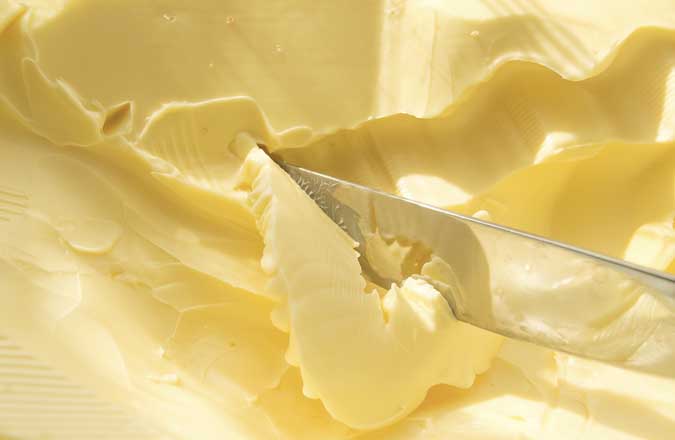
Il Italian butter It represents a symbolic food of the national dairy tradition, closely linked to cattle breeding areas, cow feeding, and milk processing practices. Often the subject of controversial nutritional judgments, butter deserves particular attention for its butyric acid, a short-chain fatty acid that provides energy directly to the mitochondria and supports the production of GABA, the neurotransmitter responsible for balance and relaxation, without acidifying the stomach.
Italian butter, the history
The production of butter in Italy has ancient roots, especially in the regions of North part, where dairy cattle breeding has developed in a structured way since Middle AgesIn the Alpine and pre-Alpine areas, butter was initially created as a by-product of dairy production, obtained from the natural skimming of the cream from the milk intended for the oldest long-aged cheeses, such as Parmigiano Reggiano and Grana Padano.
Over the centuries, butter has assumed a central role in Northern Italian cuisine, in contrast to the olive oil that was prevalent in central and southern Italy. With the introduction of cream centrifugation in the 19th century, production gradually became industrialized, improving hygiene standards, yield, and product stability, without, however, erasing traditional mountain production.
Places of production and sustainability
Butter production in Italy today is mainly concentrated in Lombardy, Veneto, Trentino-Alto Adige, Piedmont, and Emilia-Romagna, territories characterised by a high density of dairy cattle farms and structured dairy supply chains.
On the level of sustainability, the available data indicate that the supply chains linked to the great PDO cheeses of Northern Italy adopt systems of animal feed Predominantly based on local fodder, with a positive impact on reducing feed imports and improving raw material traceability (CREA; ISPRA). However, the sustainability of butter cannot be generalized: it depends on the farming model, animal welfare, waste management, and energy efficiency of the plants. Only with certified systems (organic, mountain production, DOP supply chains) is it possible to provide consistent evidence of sustainability.
Categories and production methods
Butter is defined as ‘the product with a milk fat content of not less than 80% but less than 90%, a maximum water content of 16% and a maximum non-fat milk solids content of 2%’ (EU regulation 1308/13).
The production method distinguishes two main categories of butter:
centrifuged butterObtained from fresh cream separated by centrifugation immediately after milking. It is the most widely used butter in the modern industry, characterized by greater freshness, a clear sensory profile, and lower acidity;
cream butterDerived from the cream that naturally rises from raw milk, often used in the production of PDO cheeses such as Parmigiano Reggiano. It has a more complex aromatic profile and lower oxidative stability.
In recent years the following have also emerged on the Italian market:
lactose-free butterProduced by hydrolysis of residual lactose, it maintains the lipid fraction unchanged and is suitable for people with lactose intolerance;
clarified butter (ghee). Obtained by removing water and milk proteins through controlled heating, it is characterized by greater thermal stability, the almost total absence of lactose and casein, and a long shelf life.
Nutritional properties
According to official data from CREA, butter provides approximately 758 kcal per 100 g, with an average composition equal to:
saturated fatty acids, 54,20 g;
monounsaturated fatty acids, 26,35 g;
monounsaturated fatty acids, 3,05 g;
Fat-soluble vitamins. Vitamin A (930 μg, compared to a Nutritional Reference Value (NRV) of 800 μg) and E (2,4 mg, compared to a Nutritional Reference Value of 12 mg). (NRVs defined in Annex XIII of EU Regulation No. 1169/11).
Butter is naturally carbohydrate-free and contains only trace amounts of protein. Its nutritional value can be appreciated through regular consumption of small amounts of raw butter and lies essentially in the presence of short- and medium-chain fatty acids, including butyric acid, as well as its richness in vitamin A and its role as a source of vitamin E.
The role of butyric acid
THEbutyric acid (C4) is a short-chain fatty acid naturally present in dairy fats, particularly butter, where it represents approximately 3-4% of total fatty acids. Numerous scientific studies indicate that butyrate plays a key role in mitochondrial energy metabolism, acting as a preferential energy substrate for colonocytes (colon epithelial cells) and contributing to the regulation of the gut-brain axis.
Unlike other fatty acids, butyrate exerts specific metabolic effects without acidifying the gastric environment. Recent scientific evidence demonstrates that butyrate:
supports the integrity of the intestinal barrier, promoting the function of tight junctions (tight junctions) and reducing intestinal permeability. A 2025 clinical study demonstrated acute protective effects of butyrate on transcellular intestinal permeability in patients with irritable bowel syndrome (Noordhout et al., 2025). Butyrate stabilizes hypoxia-induced factor (HIF), which is essential for intestinal epithelial barrier function (Kelly et al., 2015);
modulates intestinal and systemic inflammation, through the inhibition of NF-κB and the reduction of pro-inflammatory cytokine production. Recent studies confirm that butyrate protects the intestinal barrier and suppresses immune activation through the inhibition of histone deacetylases (HDACs) (van der Hee et al., 2023);
exerts epigenetic effects, inhibiting histone deacetylases (HDACs) and influencing gene expression (Donohoe et al., 2012);
contributes to neuroprotection, through multiple mechanisms that include: modulation of microglia-mediated neuroinflammation (Guo et al., 2023), support of mitochondrial function and synaptic plasticity (Cavaliere et al., 2023), restoration of intestinal microbiota and inhibition of the TLR4/MyD88/NF-κB signaling pathway in the gut-brain axis (Alpino et al., 2024). Emerging evidence indicates that dietary butyrate intake is associated with improved cognitive functions in the elderly (Ma et al., 2025), while its central action can improve intestinal permeability and visceral sensitivity through cannabinoid signaling (Okumura et al., 2021);
supports brain energy metabolism, with recent studies demonstrating the potential of butyrate in the treatment of neurodegenerative diseases, including Alzheimer’s and Parkinson’s, through mechanisms involving HDAC inhibition, anti-inflammatory modulation and maintenance of blood-brain barrier integrity (Senarath et al., 2024; Banasiewicz et al., 2020).
These benefits are more marked when the butter comes from milk from animals fed mainly on grass, a condition which also increases the content of omega-3 fatty acids and conjugated linoleic acid (CLA) (Elgersma et al., 2006).
Conclusions
Italian butter is a product that goes beyond its simple culinary function. It represents an expression of livestock and local biodiversity, a key ingredient in gastronomic tradition, and a source of functional lipids of growing scientific interest. Moving beyond ideological and reductionist approaches allows us to promote butter as a food to be consciously integrated, prioritizing its origin, quality, and production method, in line with the principles of transparency, sustainability, and food culture promoted by GIFT.
References
Alpino, G.C.A., Pereira-Sol, G.A., Dias, M.M.E., Aguiar, A.S., & Peluzio, M.C.G. (2024). Beneficial effects of butyrate on brain functions: A view of epigenetics. Critical Reviews in Food Science and Nutrition, 64(12), 3961-3970. https://doi.org/10.1080/10408398.2022.2137776
Banasiewicz, T., Domagalska, D., Borycka-Kiciak, K., & Rydzewska, G. (2020). Determination of butyric acid dosage based on clinical and experimental studies – A literature review. Przegląd Gastroenterologiczny, 15(2), 119-125. https://doi.org/10.5114/pg.2020.95556
Cavaliere, G., Catapano, A., Trinchese, G., Cimmino, F., Penna, E., Pizzella, A., … & Mollica, MP (2023). Butyrate improves neuroinflammation and mitochondrial impairment in cerebral cortex and synaptic fraction in an animal model of diet-induced obesity. Antioxidants, 12(1), 4. https://doi.org/10.3390/antiox12010004
Donohoe, D. R., Collins, L. B., Wali, A., Bigler, R., Sun, W., & Bultman, S. J. (2012). The Warburg effect dictates the mechanism of butyrate-mediated histone acetylation and cell proliferation. Molecular cells, 48(4), 612-626. https://doi.org/10.1016/j.molcel.2012.08.033
Guo, T.T., Zhang, Z., Sun, Y., Zhu, R.Y., Wang, F.X., Ma, L.J., … & Liu, H.D. (2023). Neuroprotective effects of sodium butyrate by restoring gut microbiota and inhibiting TLR4 signaling in mice with MPTP-induced Parkinson’s disease. Nutrients, 15(4), 930. https://doi.org/10.3390/nu15040930
ISPRA – Higher Institute for Environmental Protection and Research. (2022). Livestock Farming and Environmental Impacts in ItalyRome: ISPRA.
Kelly, C. J., Zheng, L., Campbell, E. L., Saeedi, B., Scholz, C. C., Bayless, A. J., … & Colgan, S. P. (2015). Crosstalk between microbiota-derived short-chain fatty acids and intestinal epithelial HIF increases tissue barrier function. Cell Host & Microbe, 17(5), 662-671. https://doi.org/10.1016/j.chom.2015.03.005
Ma, L., Niu, M., Jiang, D., Ding, C., Li, S., Chen, H., … & Zhang, P. (2025). Higher dietary butyrate intake is associated with better cognitive function in older adults: Evidence from a cross-sectional study. Frontiers in Aging Neuroscience, 17, 1522498. https://doi.org/10.3389/fnagi.2025.1522498
Noordhout, M., Romijn, J. A., van der Flier, L. G., van Schooten, C., Van Klinken, J. B., Laman, J. D., & Meijer, L. (2025). Acute effects of butyrate on intestinal permeability in patients with irritable bowel syndrome assessed by a novel colonoscopy research model. Gut Microbes, 17(1), 2545414. https://doi.org/10.1080/19490976.2025.2545414
Okumura, T., Nozu, T., Ishioh, M., Igarashi, S., Kumei, S., & Ohhira, M. (2021). Centrally administered butyrate improves gut barrier function, visceral sensation and septic lethality in rats. Journal of pharmacological sciences, 146(4), 183-191. https://doi.org/10.1016/j.jphs.2021.04.005
Regulation (EU) No 1308/2013 of the European Parliament and of the Council of 17 December 2013 establishing a common organization of the markets in agricultural products. Annex VII, Appendix II, Section: A. Milk fats, Point 1. Consolidated text: 08/11/2024. http://data.europa.eu/eli/reg/2013/1308/2024-11-08
Senarath, R. M. US., Oikari, L. E., Bharadwaj, P., Jayasena, V., Martins, R. N., & Fernando, W. MADB (2025). The Therapeutic Potential of Butyrate and Lauric Acid in Modulating Glial and Neuronal Activity in Alzheimer’s Disease. Nutrients, 17(14), 2286. https://doi.org/10.3390/nu17142286
van der Hee, B., Madsen, O., Vervoort, J., Smidt, H., & Wells, J. M. (2023). Butyrate protects barrier integrity and suppresses immune activation in a Caco-2/PBMC co-culture model while HDAC inhibition mimics butyrate in restoring cytokine-induced barrier disruption. Nutrients, 15(12), 2760. https://doi.org/10.3390/nu15122760

Dario Dongo, lawyer and journalist, PhD in international food law, founder of WIISE (FARE – GIFT – Food Times) and Égalité.
Dining and Cooking