
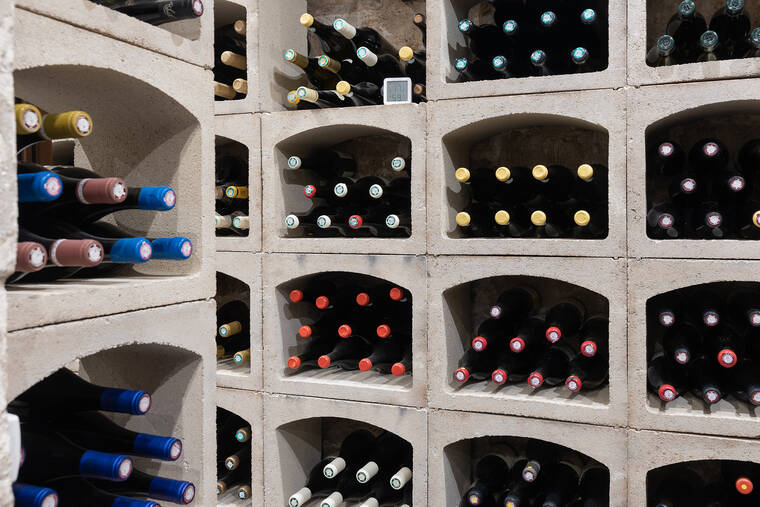
President Donald Trump threatened on Monday to impose 200% tariffs on French wine, including Champagne, if President Emmanuel Macron of France declined to join his proposed “Board of Peace” for the Gaza Strip.
France was among the countries the Trump administration invited last week to join the body, which Trump has said he plans to lead to oversee the ceasefire between Israel and Hamas and supervise the rebuilding of Gaza.
Critics said the board could undermine the United Nations, which Trump has accused of liberal bias and waste. A senior French official said Monday that France did not intend to join, citing concerns that the board’s charter raised serious questions about respecting the role of the United Nations.
Asked Monday about France’s refusal to join, Trump threatened to impose steep tariffs on some of the country’s best-known exports.
Trump said he would impose the tariffs if France took what he described as a hostile stance, suggesting that the pressure would push Macron to join the board.
Trump has increasingly used trade threats as a tool of diplomacy and a way to achieve his broader foreign policy goals. On Saturday, he demanded a deal to buy Greenland, warning that he would otherwise impose 10% tariffs on a group of European countries, which he said could later rise to 25%.
On Tuesday morning, Annie Genevard, France’s minister of agriculture, described Trump’s comments as a form of “blackmail.”
“It’s shocking because it’s brutal, it’s done to force compliance,” Genevard told the French television station TF1, describing it as a threat aimed at not only France but also other countries who have been invited to join the board.
Reactions across France on Tuesday were angry, with many calling for a firm European response. Nathalie Loiseau, a member of the European Parliament and a former minister for European affairs, said on France Inter public radio that “positive parenting” is over with Trump and that “today is the time for firmness.”
“Either we assert ourselves,” she said, “or we fade into history.”
© 2026 The New York Times Company
Dining and Cooking