
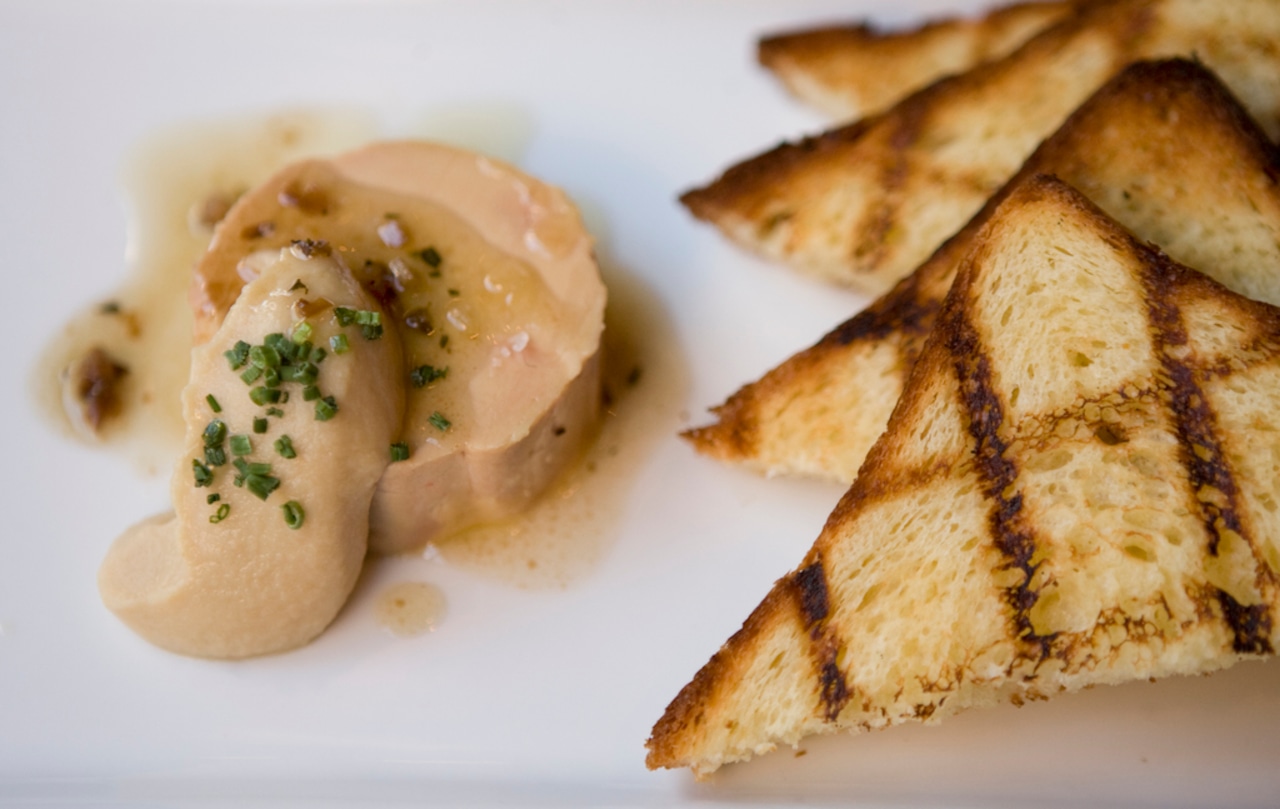
Portland city councilors this week will weigh a potential ban on foie gras, the French delicacy made with the livers of force-fed waterfowl such as ducks or geese.
A proposal scheduled for a hearing Tuesday before the council’s Arts and Economy Committee would prohibit the sale of the luxury food item in the city and impose fines of up to $5,000 for violations.
The ordinance, introduced by Councilor Mitch Green and Council President Jamie Dunphy, casts the production of foie gras as inhumane and environmentally unsustainable, practices that run contrary to Portland values.
“We should not cater to animal cruelty,” said Green. He added that the proposal would still allow establishments to offer fatty liver dishes that can be produced without force-feeding.
Yet it’s unclear whether it can muster a majority of support on the five-member committee.
California, Pittsburgh and Brookline, Massachusetts have all enacted similar bans, according to materials filed with the city. New York City attempted to do so in 2019, but the law was ultimately struck down by the New York Supreme Court five years later.
For more than two decades foie gras opponents in Portland have staged demonstrations at upscale restaurants that serve the delicacy, a tactic that has sometimes prompted their proprietors to remove it from the menu.
Kurt Huffman, the prominent restaurateur behind Portland’s ChefStable group, said he chose that option last fall after Northwest Portland bistro St. Jack became a target.
“Protesters would reserve a table in the dining room, wait for the restaurant to fill up and then stand up and start screaming at everybody about how inhumane it was,” Huffman said. “After that happened a couple times, we just stopped serving it.”
In recent years activists have also repeatedly implored Portland leaders to enact a foie gras ban citywide. Proponents estimate that fewer than a dozen restaurants or speciality markets in the city currently serve or sell it.
Portland Commissioners Mingus Mapps and Carmen Rubio each expressed an interest in doing so in 2021. The pair ultimately backed away from the effort, mostly out of concern that championing the issue would strike residents as trivial amid a surge in homicides, homeless encampments and other problems that consumed the city at the time.
That Portland continues to grapple with an array of mounting crises has given some current councilors pause on backing the proposal. Council Vice President Olivia Clark, who serves on the Arts and Economy Committee alongside Green and Dunphy, said she also had concerns about whether a foie gras ban would harm Portland’s global reputation as a food destination.
“My focus remains on the pressing issues that directly affect the daily lives of Portlanders: housing affordability, public safety, infrastructure, and other essential services,” Clark said. “Given the significant challenges our city is facing, I believe it is in the best interest of council to prioritize policies that have the biggest impact on our constituents.”
Green said he believed the Portland City Council was capable of tackling issues, both big and small, simultaneously.
“I am more than confident we can take on a couple of things at once,” he said.
Dining and Cooking