
Well, it’s a new year and that’s got a lot of us thinking about resolutions — maybe being healthier, eating better. One popular resolution for health and sustainability is always to cut back on meat — or cut it out all together and go vegetarian for the new year.
Well, our next guest is here to say: You can do it — and still enjoy the Sonoran favorites that make up Southwestern cuisine.
Jackie Alpers is a cookbook author and food photographer and one of her latest Substacks is all about vegetarian Sonoran options. The Show spoke with her more about it.

Full conversation
JACKIE ALPERS: My husband is a vegetarian, and so I’m constantly kind of trying to balance out what he’s eating with what I’m eating, and it’s resulted in me making a lot of more vegetable forward dishes where vegetables are really the star and meat is secondary.
LAUREN GILGER: That seems a little counterintuitive, right? Because when I think about Southwestern cuisine, I think about like stewed meats, right? And I think about like carne asada, like these kind of things that are very meat forward.
Tell us about how you think about this differently. Like what are the proteins, what are the centers of the dishes when you think about vegetarian Southwestern food?
ALPERS: Well, Sonoran cuisine really is beef based in a lot of ways. It’s one of the kind of founding pinnacles of what people think of when they think of Sonoran cuisine. They think of, as you said, carne asada and beef tacos and chili con carne. And so what I’ve done is I’ve tried to make vegetarian versions of these recipes that everybody can enjoy.
So for chili con carne, I’ve made a version where I’ve used a crispy tofu in the Chile Colorado sauce and with the kind of famous Sonoran style beef tacos which are made with a beef patty. I’ve used a beef alternative like Impossible Beef in the same way so that you don’t lose the essence of what we know Sonoran cuisine to be, but also can incorporate some of these plant-based options.
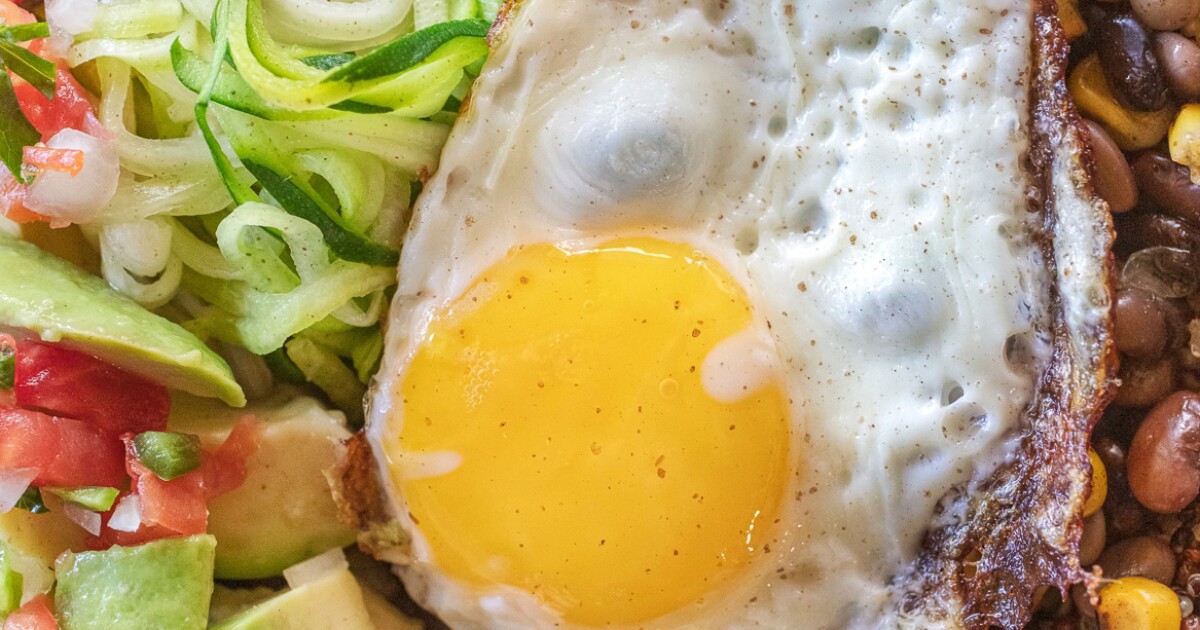
GILGER: Yeah. So let’s talk about some of the recipes you outline here for us in our vegetarian versions, right? Like one that I thought was really interesting was this breakfast bowl, because you’re looking at tepary beans, corn and squash, like the three sisters, right? These very traditional and ancient kind of combinations. of indigenous ingredients. Talk about that one.
ALPERS: Sure. So squash, beans and corn are the three sisters, and the reason they’re called that is because they both grow together and they complement each other nutritionally. So when you’re eating corns, beans and squash together, you’re getting a complete protein, which is something that vegetarians really rely on.
GILGER: Yeah. And not all of these, we should say, are like, you know, super healthy, clean eating kind of things. Like, you’ve got these street corn cups that sound pretty indulgent.
ALPERS: They are. They’re very indulgent. And those are vegetarian, not vegan, because I do use some cream and some cheese in there. And of course, you can always switch out vegan, you know, sour cream now, there’s vegan everything, if you want. But it really does focus on corn, which is another pillar of Sonoran cuisine, going back to the beginning of time. When the people that were indigenous to the Sonoran culture always had corn, where other plants were brought in later, like we talked about corn, beans and squash, those are, those are pillars of Sonoran cuisine that are indigenous to this region.
GILGER: Yeah.
ALPERS: The Sonoran region is one of the most biodiverse regions on the entire planet. And the reason for that is that we have this amazing mishmashing of cultures that’s both indigenous. So corn, beans and squash, as we were talking about, and tomatoes and chilies and even Mexican oregano are indigenous to this region. And other cultures, be it European settlers or people coming from anywhere else in the world, have brought their own plants and grown them here.
So now we are so fortunate to be able to have such a wide variety of vegetables available to us. Wheat, for example, comes from the European settlers and even beef, but that’s not a plant, but there’s so many things that were brought in by others that we’re so lucky to be able to eat now here.
GILGER: Let me ask you about another kind of ingredient you have on the list, which is just peppers, right? Like various kinds of those red peppers that you can do a lot with and use in various ways. I mean, I think most people think about peppers and they think about just buying a ground-up cayenne pepper or red pepper flakes in a spice jar, but you’re talking about doing it yourself, essentially.
ALPERS: Oh yeah, that’s one of my favorite things to do because this is the time of year where you have so many peppers, like an abundance of peppers, and you may not know what to do with them. I certainly was like, ah!
So what you can do, anyone can do, is either use an abundance of peppers from your garden or buy specialty peppers at the market. Sometimes they’re on sale and you’re like, oh my gosh, what am I going to do with these ghost peppers? I never see them at the market, but I feel like I should buy them because they’re there. You can try those, any kind of pepper in a dehydrator or sometimes even in the sun or in the oven. And then you can just use a spice grinder.
I have one that’s specifically like a coffee grinder that’s specifically, I use only for grinding up chili so that my coffee doesn’t taste like chilies. That could be cool, I guess, but if not, you can just get a dedicated coffee grinder and grind them up and make either like dedicated chili powder
So you have your habaneros or your serranos or whatever kind of chilies. You can do green chilies and red chilies, or you can experiment and make custom spice blends, which is also really fun. Like I have a carne asada spice blend in my Taste of Tucson cookbook that I use all the time for everything, not just carne asada, that’s made with Sonoran sea salt and Mexican oregano and chili peppers that I’ve ground up. But you could make your own chili, like, seasoning, like, chili powder.
GILGER: Yeah.
ALPERS: But you can make all kinds of cool custom blends.
GILGER: Yeah, that’s so cool. I mean, and so you mentioned using, you know, an Impossible Beef burger or, like, using crispy tofu in vegan Chile Colorado. Like, you also have on this list vegetarian Sonoran dogs. Like, I wonder it sounds like you’re pretty pro-meat replacements. Do you think they passed the test?
ALPERS: Well, there’s a lot of controversy about meat replacements. They’re not always the best thing for you. They sometimes, you have to really read the labels. There’s a variety of different kinds of meat replacements and some of them have have a lot of fillers or have a lot of artificial ingredients. So you really have to be careful about that.
GILGER: Yeah.
ALPERS: But there are some out there that are not made with tofu and spices that aren’t made with a lot of weird stuff that you don’t want to eat. So like, just with anything, like with anything else, I’d say read the labels and try and find the ones that don’t have a lot of, of artificial ingredients, artificial coloring or additives that you wouldn’t want to put in your body anyway.
GILGER: Yeah. I think let’s end with a dessert, right? Because you include one here and dessert’s the end of the meal. So let’s talk about your Mexican chocolate popcorn treats. I think popcorn seems light and maybe like a healthy version of a dessert you might choose, right?
ALPERS: Yeah, that’s a fun one. So popcorn, of course, corn is indigenous to Arizona and to the Sonoran region, but that’s not really why I made it, just because popcorn treats are really fun. So they’re almost like Rice Krispie treats made with popcorn and then the Mexican chocolate, which has a little bit of cinnamon and red chili in it mixed with a little bit of marshmallow. And I put pretzels in mine. It’s a little bit lighter because it is made with corn, so it’s better there for you than you might think.
GILGER: Better for them than you might think. All right. A good note to end on for a New Year’s eating conversation.
KJZZ’s The Show transcripts are created on deadline. This text is edited for length and clarity, and may not be in its final form. The authoritative record of KJZZ’s programming is the audio record.
Dining and Cooking