
One of the fundamental ingredients of Italian pizza — a layer of rich tomato sauce — was first added to the dish in America, not Italy, an expert has claimed in a new book that dares to challenge some of Italian cooking’s proudest traditions.
In La cucina italiana non esiste, published on Tuesday, the food historian Alberto Grandi has risked his reputation by stating that a number of Italy’s most jealously guarded dishes developed thanks to influences from overseas.
“I may be seen as the enemy here in Italy, but this country has done well to create an image of its food and wine which did not exist as recently as 50 years ago,” he told The Times.

The original Naples pizza would have used fresh tomatoes, not tomato sauce
GETTY IMAGES
Pizza as we know it may have been invented in Naples in the 19th century, but if tomato was added back then, it was pieces of fresh tomato, not sauce, said Grandi, who teaches at the University of Parma.
“Tomato sauce did exist after it was introduced from Spain in the 18th century, but it was not preserved,” he said. “Only when it started to be canned in the US and taken back to Italy did it start to be used on pizza at the start of the 20th century.”
“Pasta was eaten mainly in Naples before it was taken to America by emigrants, which is where many Italians discovered it. In the 1930s Italy’s fascist government viewed pasta as a foreign invention, with some arguing it weakened the will to fight,” Grandi said.
Today, Italian chefs are proud sticklers and rigidly adhere to Italian recipes. Reacting with outrage if a foreigner messes around with Italian standards has become a social media pastime in Italy.

The rich red wines for which Italy is famous, such as Barolo, truly emerged only after the 1986 methanol scandal
GETTY IMAGES
Grandi said that Italy’s traditional top quality wines — often rich reds — become a phenomenon only when the country’s vintners had to rebuild their image from scratch after a 1986 scandal involving methanol being added to wines.
“Before that, Italy was making a lot of lesser quality wine,” he said.
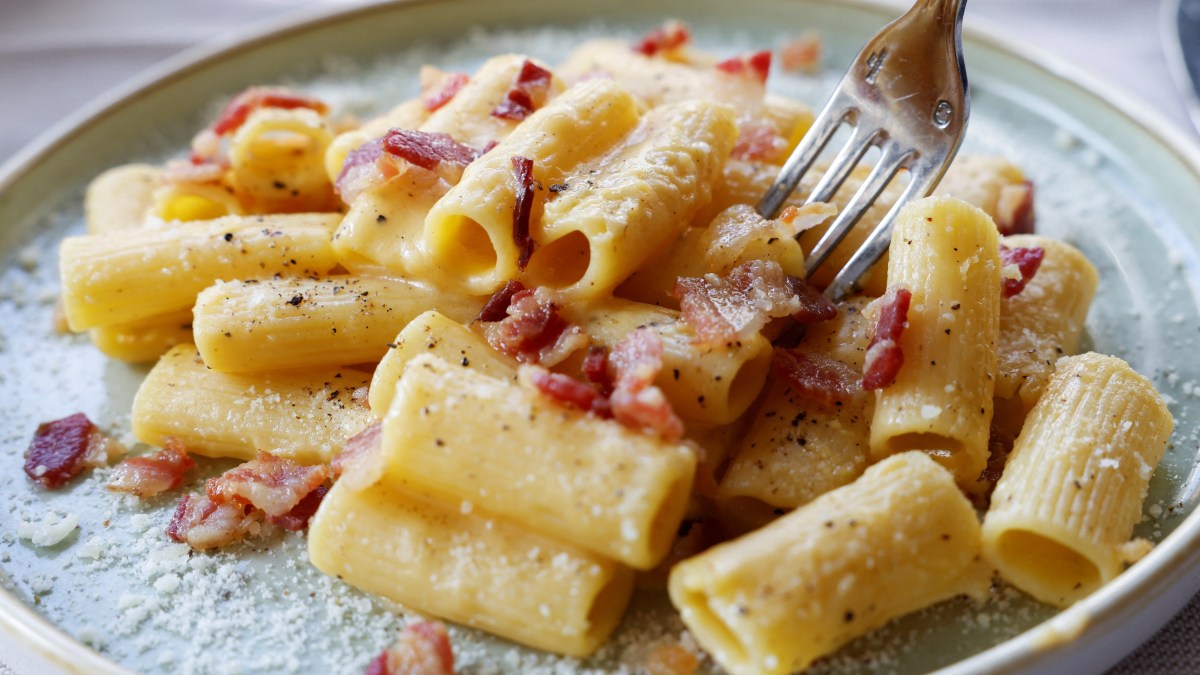
The book, which Grandi co-authored with Daniele Soffiati, touches on the rumbling row about pasta alla carbonara, the Roman spaghetti dish made with pork jowl (guanciale), beaten egg whites and pecorino.
One theory maintains it was invented by GIs in Rome after the Second World War, but last year an Italian chef discovered a 1954 recipe in an Italian cookery guide that used Swiss Gruyère cheese, garlic and scrambled eggs. Grandi said that a Roman journalist to whom he once tried to explain the truth about carbonara threatened to punch him.

Italian cooking in the 1950s, such as the meat on sale at a stall in the Little Italy market in New York, bore little resemblance to its current form
MONDADORI/GETTY IMAGES
The book delves back into history to debunk myths, including Catherine de Medici introducing the French to Italian food in the 16th century.
“That’s invented — she didn’t take a cook with her,” Grandi said. Today, the Italian prime minister, Giorgia Meloni, has seized on the task of protecting Italian culinary traditions from foreign meddlers as a way of pushing her patriotic agenda.
“The risk is confusing patriotism, which means saying we have the best food, with nationalism, which is saying outsiders are trying to destroy our culture,” said Grandi.
“The real problem is that today Italians lack an identity, and food has stepped into the breach,” he added.
Dining and Cooking