
Cricket season in South Africa seems to bring out the perennial bleats about the wham-bam instant gratification of the 20-over version of the game vs the nuances of the five-day game played in creamy whites. The crack of leather and willow is still the same, and if it gets families to enjoy a game at the traditional grounds, surely cricket is still benefiting?
The same applies to wine. There are doom-filled prophecies about shrinking markets, rising prices, diminishing vineyard plantings and a younger generation eschewing alcohol altogether. A recent statistic shared on social media stated that only 5% of South Africa’s wine sells at more than R200 — so the large majority of what local winemakers bottle is sold at significantly less.
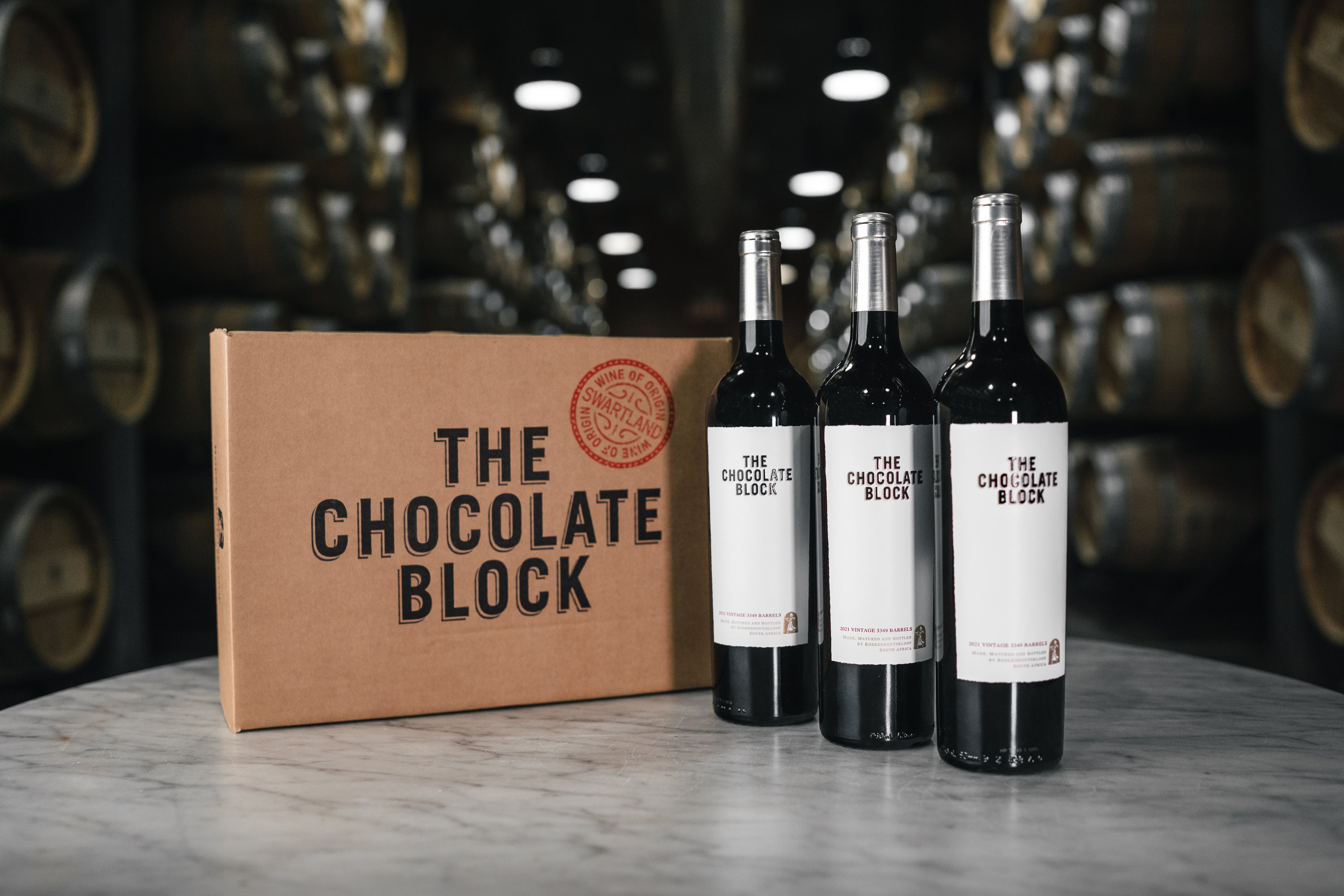 The Chocolate Block (Supplied)
Two of the biggest challenges the local wine industry faces are competition and scale. Internationally, the increasing column inches devoted to ratings and stories about South African wine make it fairly obvious that quality is not in question. Wines by Eben Sadie, Adi Badenhorst and the Mullineuxs are in high demand, along with other well-known names, but the biggest stumbling block to really cracking the global market is producing wine of top quality in commercially significant volumes.
It’s not that it can’t be done. One of Bordeaux’s First Growths, Château Mouton Rothschild, for example, makes up to 240,000 bottles of its Grand Vin annually. Sadie and Mullineux? In a good year 2,000 to 3,000. Try to spread that around 20 or 30 international markets, and some countries are lucky to get more than a few cases.
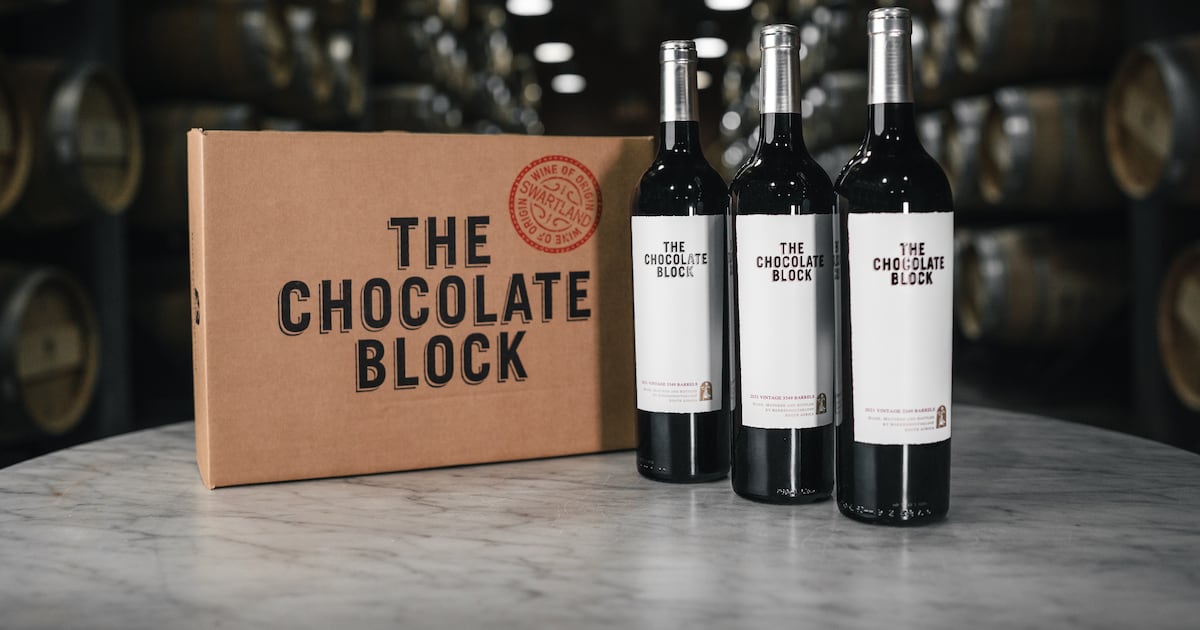
But there’s one wine showing the way – available in 90 markets, with 1.2-million bottles produced at last count and selling at a decent/premium price. It’s a bottle that will give you R5 or R10 change from R300, depending on whether you buy it at Woolworths or Checkers. It’s The Chocolate Block, a syrah-based red blend that has been proudly Swartland wine of origin for the past decade.
The Chocolate Block is a phenomenon: it has its own purpose-built cellar with more than 6,000 barrels of wine made specifically for the blend
And it has a cricket link. The story Marc Kent, head honcho at Boekenhoutskloof, tells is that he was at Lord’s cricket ground in London in 2000 when Tony Allen of OddBins, the UK high street wine shop, asked him to make an exclusive for the chain. “Forget it, Tony, we’re not into that,” was Kent’s typically succinct response. But a visit to France’s Languedoc-Roussillon in 2001 set Kent’s brain cogs whirring, seeing a bit of cabernet sauvignon being blended with the more traditional syrah and grenache noir grapes.
History reflects that in 2002 Kent blended the maiden The Chocolate Block — just 15 barrels’ worth — but it was a wine that hit the proverbial sweet spot with consumers. Twenty-four years later, The Chocolate Block is a phenomenon: it has its own purpose-built cellar with more than 6,000 barrels of wine made specifically for the blend.
Its lack of pretence and artifice is one of its strongest selling points. There’s no whimsical manor house laying claim to hundreds of years of heritage or origins on the label, just bold graphic type. “The label only gets the first bottle off the shelf,” Kent said in an interview with Dan Nichol in 2021. It has to stand or fall on its quality and price. “South Africa needs more brands at premium price points and also at scale,” he said.
Writing on Winemag.co.za on a vertical tasting of 20 vintages of The Chocolate Block in 2023, Tim James pointed out that Rupert & Rothschild’s Classique red blend production was slightly higher than The Chocolate Block, albeit at R50 a bottle less, while Meerlust’s Rubicon was about a third of that — but at a higher price point of R600-plus.
It’s the type of wine equally at home on a dinner party table accompanying a roast and three veg as it is alongside a braai fire with wors, chops and a side salad. Unpretentious, appealing, bloody delicious and at a price that won’t break the bank. Quite the achievement in less than 25 years. South Africa (and the world) needs more like it.
Dining and Cooking