
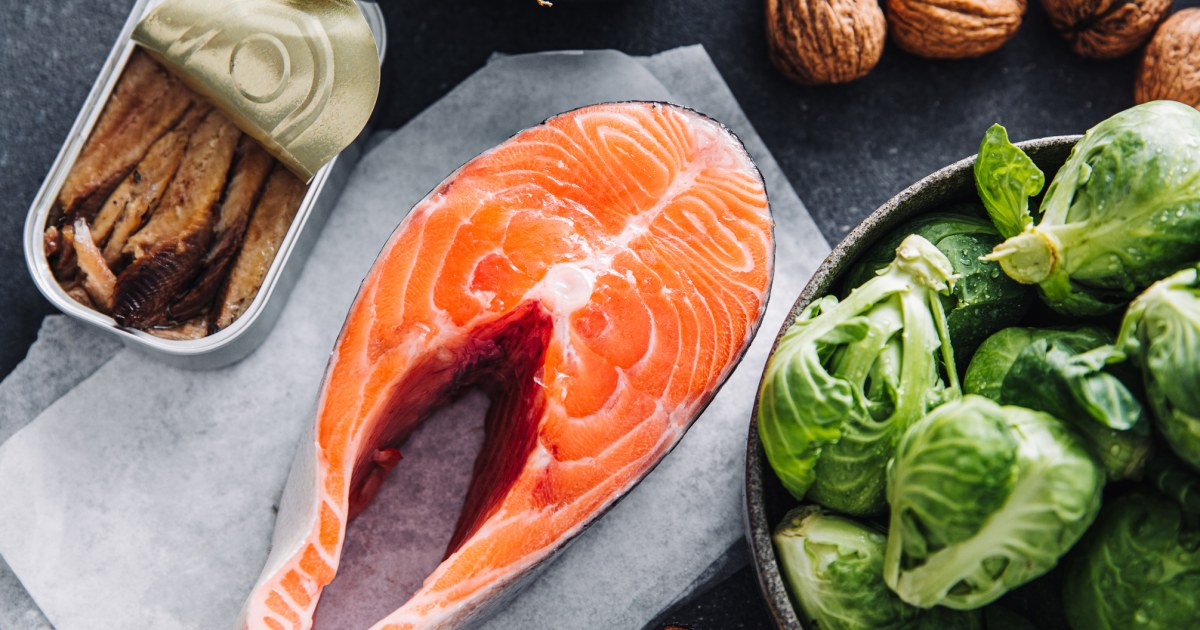
Take a walk down the drugstore vitamin aisle, and you’ll see one word over and over: omega-3s.
Omega-3s are a type of polyunsaturated fatty acid that play an essential role in heart and brain health. The body can’t make omega-3 fatty acids on its own, so we need to get them regularly from our diet.
If you prefer to pop a pill to get your daily dose, you’re not alone. Omega-3s are one of the most common supplements used in the United States.
Omega fatty acids are essential unsaturated fats, aka healthy fats, which provide energy, insulate our organs and help the body absorb nutrients.
These can be split into omega-3s, omega-6s and omega-9s, but omega-3s stand out for their anti-inflammatory properties and health benefits, Collin Popp, Ph.D., dietitian and professor at the NYU Grossman School of Medicine, tells TODAY.com.
There are three forms of omega-3s, alpha-linolenic acid (ALA), eicosapentaenoic acid (EPA) and docosahexaeinoic (DHA).
ALA fatty acids are found in plants, while EPA and DHA come mostly from seafood, says Popp.
The body can convert ALA into EPA and DHA, Popp adds, but only a small amount. That’s why it’s best to get a variety of omega-3s from different sources.
Benefits of Omega-3s
“Omega-3s are best known for their role in heart health, but research has linked them to a wide range of benefits,” Vanessa King, registered dietitian and spokesperson for the Academy of Nutrition and Dietetics, tells TODAY.com.
These include fighting inflammation, protecting heart health, improving skin and supporting cognitive function.
“Omega-3s may play an important role across the lifespan by supporting infant health and brain development and contributing to immune function,” says King.
Higher intake of omega-3s has been linked to cardiovascular disease prevention, lower triglycerides and lower blood pressure.
The omega-3s from seafood are particularly protective against dying from heart disease, but studies have found that ALA from plant sources is linked to a lower risk of dying from all causes, Frances Largeman-Roth, registered dietitian nutritionist and author, tells TODAY.com.
Additionally, research suggests omega-3s may have potential anti-cancer benefits, King adds.
How Much Omega-3 Do You Need?
There isn’t a recommended daily allowance for total omega-3 intake, says King.
The adequate intake of ALA is 1.6 grams per day for men, 1.1 grams per day for women, and 1.4 grams for pregnant women, per the National Institutes of Health.
For EPA and DHA, the guideline is about 1 gram (combined) per day or two servings of fish per week, says King.
Most Americans get enough ALA through their diet and small amounts of EPA and DHA, but deficiencies are rare, per the NIH.
Still, omega-3 supplements are incredibly popular. These include fish oil, flaxseed oil, cod liver oil, krill oil and algae oil, says Popp.
Supplements can help fill nutritional gaps, but the experts emphasize that most people don’t need to take them to maintain adequate omega-3 levels. Instead, they recommend getting ALA, EPA, and DHA from whole foods.
Benefits of Getting Omega-3s from Food
Food sources of omega-3s will provide a wide range of other nutrients, says King. These include macronutrients, vitamins, minerals and antioxidants you won’t find in a standalone supplement like fish oil.
In addition to the EPA and DHA in seafood, for example, you’ll get protein to support muscle repair. Plants rich in ALA also have gut-healthy fiber. Many foods high in omega-3s also provide vitamin D, potassium, magnesium, calcium, and the list goes on.
“You’re checking all these boxes by eating this food …it’s all right there, kind of like nature’s multivitamin,” Popp adds.
Foods With the Most Omega-3s
Fish, mainly fatty cold-water fish, provides the most EPA and DHA, says King. You’ll find plant-based ALA primarily in nuts and seeds.
Plant-based oils, such as flaxseed, soybean and canola oil are also good sources of ALA omega-3s, Popp adds.
A nutritious, varied diet is the most effective way to increase your overall omega-3 intake, King notes. Aim to eat a range of these 9 foods to get the maximum nutrients and benefits:
Salmon
Salmon is a nutrition superstar.
A three-ounce serving of wild salmon provides 1.5 grams of EPA and DHA fatty acids, per the NIH.
In addition to heart-healthy omega-3s, salmon provides high-quality protein, vitamins B6 and B12, and selenium.
Salmon is also one of the few foods naturally rich in vitamin D, which helps the body absorb calcium to build and maintain strong bones, TODAY.com reported previously. “Vitamin D is really important, especially in the winter months,” Popp adds.
It’s naturally low in mercury, says Popp, and considered a “best choice” by the U.S. Food and Drug Administration.
Walnuts
If you’re trying to increase your omega-3 intake from plants, walnuts are a no brainer. “Walnuts are the only tree nut that is an excellent source of ALA,” Largeman-Roth says.
One ounce of English walnuts provides 2.5 grams of ALA omega-3s, over 200% of the daily value.
The ALA in walnuts can support a healthy heart and brain, and walnuts are rich in an amino acid called L-arginine, which can help lower inflammation and improve blood pressure.
Walnuts also provide some fiber, along with magnesium, copper and manganese.
Enjoy a handful of walnuts, add them to oatmeal or blend them into a pasta sauce.
Chia Seeds
“Chia seeds are a really healthy food in general,” says Popp. The tiny seeds are loaded with ALA, and you can easily sprinkle them into your diet instead of taking a supplement. “You can add them to smoothies, put it on our greek yogurt,” says Popp.
One ounce of chia seeds provides a whopping 5 grams of ALA omega-3s, over 400% of the daily value, per the NIH.
The ALA in chia seeds has anti-inflammatory benefits, and helps protect heart and brain health, according to Largeman-Roth.
Chia seeds have benefits for nearly every part of the body, including the skin, digestive system and bones. They contain some protein and fiber, making them a filling snack.
Sardines
Canned sardines are delicious, shelf-stable and loaded with omega-3s along with other beneficial nutrients.
One serving of canned sardines, drained, provides about 1.2 grams of EPA and DHA.
Packing about 22 grams of protein per can, sardines are a filling food that can help curb hunger and support weight loss. They’re also good source of vitamin D, calcium, vitamin B12, selenium and choline, TODAY.com explained previously.
Eating sardines has benefits for the heart, brain and skin.
Smaller fish like sardines are also low in mercury, making them safe to eat regularly.
Herring
Herring is another small oily fish that’s loaded with heart-healthy fats. Often canned or pickled, it’s a highly nutritious seafood option to increase your omega-3 intake.
Three ounces of Atlantic herring provides 1.6 grams of EPA and DHA omega-3s, over 100% the daily value.
Eating herring regularly may help support brain health, reduce blood pressure and fight inflammation, the experts note.
Herring is also rich in protein and a top natural food source of creatine, which can boost performance and muscle growth. You’ll also get some vitamin D and A, selenium and phosphorus.
Flaxseeds
Flaxseeds are an excellent vegetarian-friendly source of omega-3s. “One or two tablespoons of flaxseeds, and you have your bases covered,” says Popp.
One tablespoon of flaxseeds has about 2.35 grams of ALA.
Flaxseeds are rich in dietary fiber and provide some plant protein, which makes them satiating. Plus, they’re a good source of magnesium and thiamin, essential nutrients for healthy nerve and muscle function, TODAY.com reported previously.
These tiny nutrient-dense seeds also contain antioxidants with potent anti-inflammatory properties.
Sprinkle flaxseeds into oatmeal, yogurt or smoothies, says Popp.
Mackerel
Mackerel is a fatty cold-water fish that’s rich in healthy fats and other nutrients. One serving of cooked Atlantic mackerel provides just over 1 gram of omega-3 fatty acids.
Mackerel’s high EPA and DHA content may help lower blood pressure, inflammation and LDL, or “bad” cholesterol, research shows. Eating mackerel regularly can protect cardiovascular health and support brain function.
Mackerel is one of the best food sources of vitamin D, and it’s rich in B vitamins, phosphorus, calcium and iodine, TODAY.com reported previously.
Always opt for Atlantic or Pacific chub mackerel, which are lower in mercury, per the FDA.
Oysters
Love them or hate them, oysters are a great source of omega-3 fatty acids. Oysters are a unique food source because they contain all three forms of omega-3s: ALA, EPA and DHA.
One serving of cooked wild oysters provides about 0.7 grams of omega-3s total, per the NIH.
These tasty bivalves are rich in heart-healthy fats, along with essential amino acids which provide energy and support the heart and bones. Oysters are also loaded with lean protein, immune-boosting zinc, vitamins and minerals.
Edamame
Edamame, aka immature soybeans, are another solid plant-based source of omega-3s.
One half-cup of edamame contains about 0.3 grams of ALA omega-3s.
In addition to anti-inflammatory fatty acids, edamame contains the most protein of any bean and an impressive amount of fiber. It’s a satiating bean that supports cardiovascular health, cholesterol and a healthy gut.
Edamame is rich in vitamins C and K, which support immune function and normal blood clotting. You’ll also get some calcium, folate and iron.
Enjoy edamame roasted as a snack or on top of rice and salads.
Dining and Cooking