
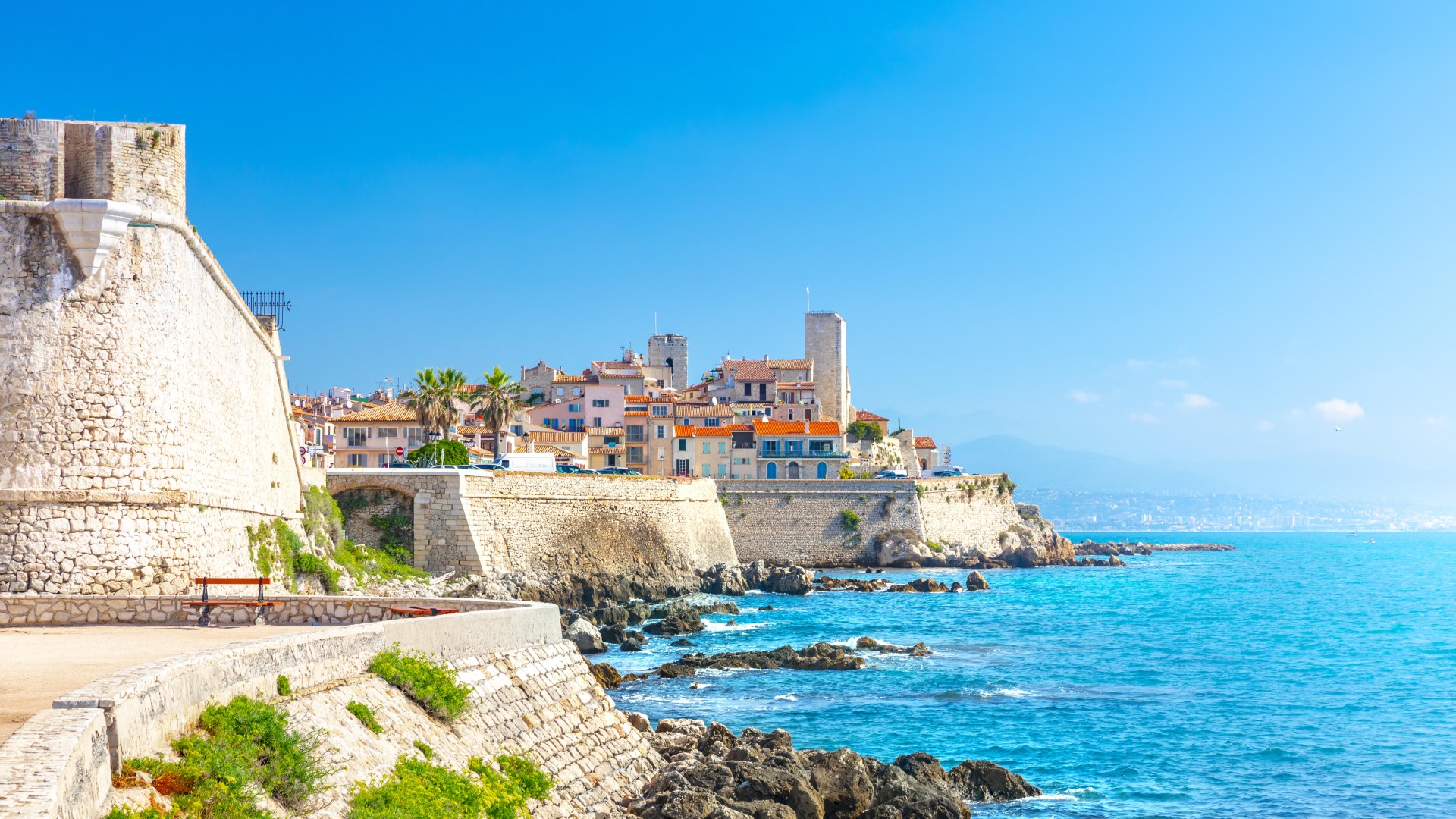
 Credit: Alamy Stock Photo
THE French Riviera always seemed too posh for the likes of me.
Even the name — Côte d’Azur — sounds like the kind of place I’d get turned away from for wearing the wrong footwear.
Sign up for Scottish Sun newsletter
Thank you!
The Historic center of Antibes is a fabulous place to exploreCredit: Alamy
Antibes harbour is home to many mega yachts.Credit: Getty
But I was pleasantly surprised to find Antibes has something to suit all budgets, amid the super yachts.
Nestled between metropolitan Nice and slightly more upmarket Cannes, Antibes feels like a bohemian interloper at the French ambassador’s party.
The old town, a former walled city with a historical reputation for turning away unwelcome outsiders, is now a bustling maze of bars, affordable restaurants, local craft shops and fashion outlets.
Far from feeling like a shifty foreigner, I discovered that another Scottish scoundrel practically “invented” the place.
CHECKING IN
The best Scots hotels revealed – from luxury city spots to quaint country stays
DULL VISIT
Residents of tiny Scots village bag free luxury trip to European capital
Lord Henry Brougham — the Edinburgh-born politician, lawyer and occasional political journalist — popularised the French Riviera as a winter destination for 19th century Anglo aristocrats.
There’s an imposing statue of the Scot in Cannes, a ten minute train ride from Antibes.
LORD BROUGHAM statue, CANNESCredit: Alamy
He moved to the region seeking a temperate climate for his sick daughter, and when his posh mates heard how lovely it was they emigrated in their droves.
I could see why as I sat drinking cold red wine on the sun-drenched deck of the Lilian Bonnefoi patisserie in the charming Safranier square.
It serves the kind of healthy food that looks so simple you swear you could whip it up in your kitchen every day — but would probably fail — before stuffing your face with its famous pastries and cakes.
I had the smoked salmon salad with quinoa, radishes, tomatoes, red onion and quirky little squares of mango, proving that fruit isn’t only for dessert.
After lunch my wife Joanna and I took a walk along the promenade, stopping to listen to busker Andrea Salmaso belting out old blues standards.
It was a beautiful day, calm and easily into the 20s, as we sauntered down to the harbour to admire the yachts and dream of a life beyond our means.
The harbour houses meg yachts of the rich and famousCredit: Vertige Photo
For interest, we Googled the owners revealing a rogues gallery of oligarchs, royalty and billionaire businessmen.
But the town doesn’t just serve the well-heeled — there’s plenty of bohemian fun for the less well-off. There’s an English pub near the harbour, Le Blue Lady, for homesick mariners seeking multiscreen sports and generic lager.
The harbour also has hoardings revealing the history of the town, beginning with its origins as a Greek outpost called Antipolis meaning “opposite city”.
Nobody seems quite sure what Antipolis was opposite from but the prevailing theory appears to be the other side of the Var Estuary from Nikaia, now modern day Nice.
There’s a monument in the Place Nationale commemorating the city’s loyalty to King Louis XVIII and defiance of Napoleon during his 1815 return from Elba.
Place Nationale
The Picasso Museum in AntibesCredit: Uniq Pictures
Meanwhile, just up the road in Vallauris Golfe-Juan, they hold an annual festival celebrating Napoleon’s landing, demonstrating military history isn’t the binary us-vs-them simplification we’re taught in history class.
While Antibes wasn’t fond of the Little Corsican it was more than welcoming to outsiders in future years including its most famous occasional resident Pablo Picasso.
The Spanish artist spent his later years on the French Riviera including time in Antibes in 1946. The city converted his former studio in the 14th century Château Grimaldi into the Picasso Museum in 1966.
Picasso wasn’t the only local artist as demonstrated by the Painters’ Trail along the promenade featuring images of Antibes over time.
There are also murals all over town and little morose figurines placed apparently at random on walls and windowsills — the work of local artist Isaac Cordal.
Dinner was had at Bistrot Margaux, a lovely restaurant serving traditional French food including the snails and frogs’ legs that make many a tourist wince.
Bistrot Margaux
Mark and Joanna enjoy some fabulous French vinoCredit: Mark McLaughlin
The Absinthe Bar,Credit: The Absinthe
We settled on a charcuterie for two to start, followed by chicken and couple of glasses of wonderful red wine.
It’s such a treat to holiday in a town where good wine is the rule rather than exception, and France is of course famous for its wine.
No trip to Antibes is complete without a venture down to The Absinthe Bar, a cramped basement where they really pack ‘em in — but nobody cares as they huddle together soaking up the boozy Fin de Siècle fun.
However steer clear if you’re claustrophobic or bashful as there’s only one unisex toilet with just a thin curtain for modesty.
We bedded down at La Villa Port d’Antibes hotel and spa, a four star boutique just back from the harbour.
La Villa has an outdoor pool, that was a little chilly in the winter for moi, despite the ambient temperature being firmly in ‘taps aff’ territory.
La Villa Port d’Antibes hotelCredit: Booking.com
La Villa Port d’Antibes hotelCredit: Booking.com
La Villa Port d’Antibes hotelCredit: Booking.com
La Cour des Thes bistorCredit: La Cour des Thes
The following morning we headed for brunch at La Cour des Thes, a bright little bistro in a sheltered courtyard in the heart of town.
I had the grandly named “L’oeuf cocotte aux senteurs de truffes et sa cuisson spectaculaire”, which roughly translates as “spectacularly baked eggs”.
Its speciality involves lightly cooking the egg in a test-tube like contraption with a ramekin filled with just enough flaming oil to cook it to perfection.
It was still a bit runny for my taste but that’s how they roll in France, apparently, and it was a unique experience.
Day two of our trip was a bit more blustery but the locals don’t care. When the sun shines they sit outside and drink wine, and when the wind blows they dig out their windsurfing gear and get busy on the waves.
The harbour was teeming with all sorts of windswept water-sports overlooked by fishermen selling their catches-of-the-day.
We wafted through the fish stalls and up to the Provencal Market, a sensory delight of colours and smells with fresh tomatoes, peppers, herbs and spices.
Then it was up the hill to Notre Dame de la Garoupe, up the pilgrims’ path featuring Christ’s Stations of the Cross.
The views were more than worth it.
Provencal Market in Antibes is a must see
The church of Notre Dame de la Garoupe,
Chez Mo was perfect place for dinner
Dinner was at Chez Mo, a quirky seafood restaurant on the harbour with some very tempting looking lobsters, but we settled for the French classic moules-frites.
Then it was straight to bed ahead of our morning flight home. But Antibes wasn’t finished with us yet.
One of the benefits of visiting the French Riviera in winter is you don’t have to get up at stupid o’clock to catch the sunrise.
After a not-too-early breakfast we got our transfer to Nice airport just as the sun was emerging on the clear blue horizon, right, emerging from the Mediterranean like the Birth of Venus from her scallop shell.
The French don’t call the place The Azure Coast for nothing.
GO: FRANCE
GO: ANTIBES JUAN-LES-PINS
GETTING THERE: EasyJet flies from Edinburgh to Nice with fares from £26.99pp. See easyjet.com.
From the airport, hop on a regional train to reach Antibes in 20 minutes for less than £5.
STAYING THERE: Rooms at La Villa Port d’Antibes from £86 a night. See villa-port-antibes.com.
MORE INFO: For more on visiting Antibes see antibesjuanlespins.com/en
Dining and Cooking