
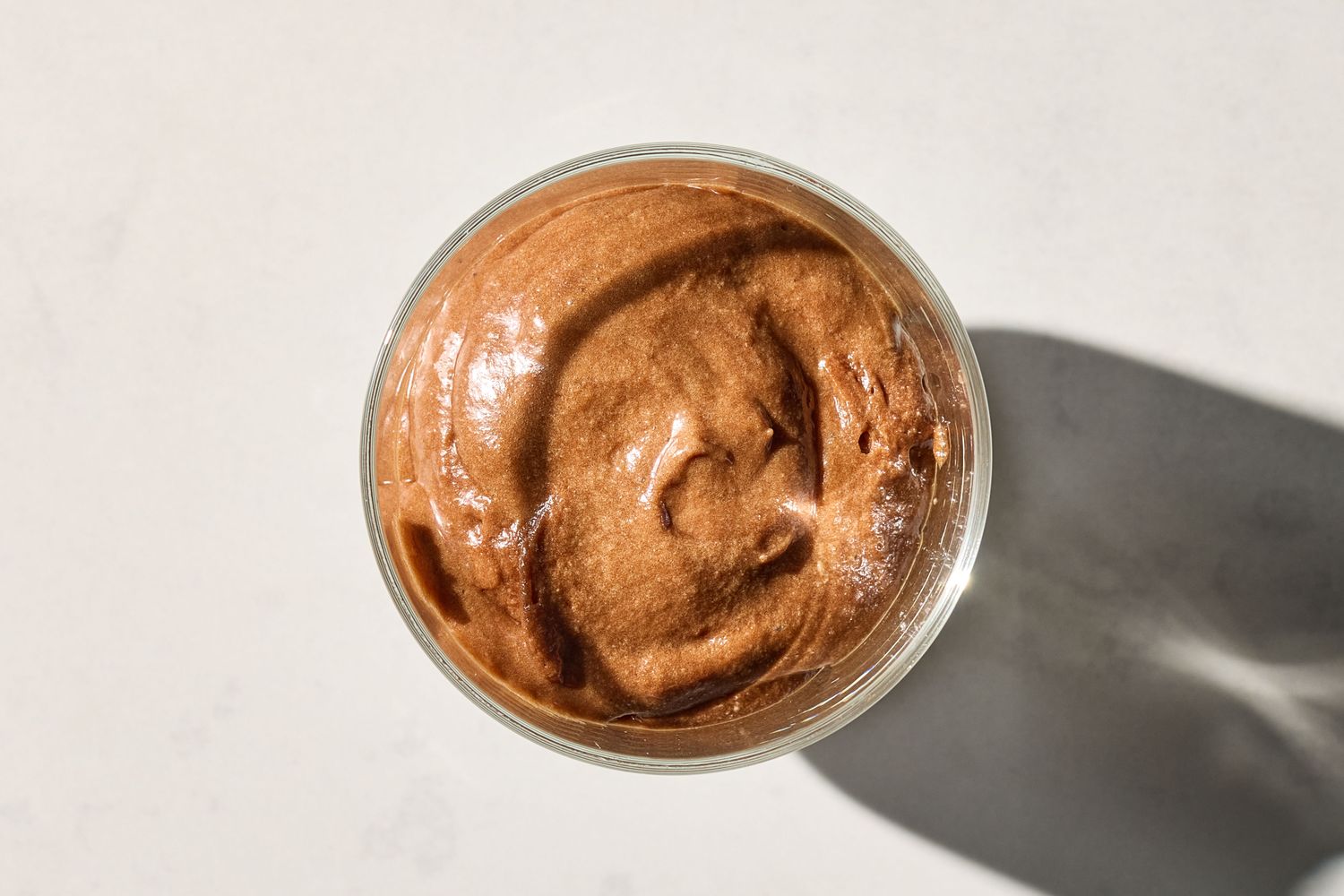
This mousse balances rich chocolate with subtle citrus and coffee notes for complexity without heaviness.Classic French techniques give reliable results for home cooks.This dessert is elegantly versatile — it serves as a refined dinner finish or a show-stopping party dessert.
Originally published in 1961, the first volume of Julia Child’s Mastering the Art of French Cooking, co-written by Louisette Bertholle and Simone Beck, introduced American home cooks to classic French culinary techniques and dishes. More than six decades later, this book (along with the second volume, which was published in 1970) remains one of the most influential and essential cookbooks of all time. Tucked into its pages is this recipe for Mousseline au Chocolat (Chocolate Mousse) — a quintessentially Parisian dessert transported into American home kitchens.
This chocolate mousse isn’t simply a bowl of whipped cream and chocolate. It’s a study in texture and balance, marrying the intensity of semisweet chocolate with nuanced layers of orange liqueur and a hint of coffee. The result is a silky, rich dessert that defies its luxurious flavor with surprising lift. Unlike some contemporary mousses that lean heavily on stabilized creams or gelatin, Child’s version relies on time-honored French techniques — gently heating egg yolks and sugar to create a sabayon custard base, coaxing air into egg whites to build lofty volume, and folding everything together in a way that results in a mousse that’s both light and deeply satisfying. The harmony between technique and taste is what makes this recipe endure: There’s the richness from the chocolate-butter combo, a lifted aroma from the orange liqueur, and just enough coffee to round out the cocoa notes without overpowering them.
Whether you’re preparing dessert for a special dinner or simply indulging a craving for something decadent and rich, this chocolate mousse delivers. And while it might sound fussy, the step-by-step method is easy to follow for home cooks who are ready to embrace classic techniques.
How to balance the richness of the chocolate
Julia Child’s mousse is a lesson in achieving maximum chocolate impact without heaviness. The combination of semisweet chocolate, orange liqueur, and a splash of strong coffee creates a deep chocolate profile with complex flavor notes. The orange liqueur doesn’t make the mousse taste boozy. Instead, it harmonizes with the chocolate, lifting and brightening the taste. A splash of brewed strong coffee intensifies the chocolate flavor without adding bitterness. This layered approach to flavor is what makes this dessert truly memorable.
Techniques that ensure a silky, airy texture
The heart of this recipe lies in its technique. First, you prepare a warm sabayon by beating egg yolks and sugar over gentle heat. This cooks the yolks just enough to stabilize them without scrambling. Next, you melt chocolate with coffee over a gentle water bath and incorporate softened butter for shine and richness. Egg whites are then whipped to stiff peaks and folded in gently; this is where the air gets trapped, creating the characteristic mousse lift. The key is to use broad, gentle motions with a large spatula — overmixing deflates the air you just worked to build, while undermixing leaves visible pockets of egg whites. Patience and delicate handling here yield that signature French-style lightness.
Notes from the Food & Wine Test Kitchen
Keep the bowl above the simmering water — not touching — when melting chocolate to prevent scorching.
Bring the butter to true room temperature so it emulsifies smoothly into the chocolate; small cool chunks can cause the mixture to tighten and lose gloss.
When folding in egg whites, use broad, gentle motions to preserve volume and avoid deflation.
This recipe was developed by Julia Child and adapted from Mastering the Art of French Cooking, Volume One; the text was written by Ann Taylor Pittman.
Dining and Cooking