
Is Oatly reshaping the UPF debate with on-pack messaging? SummaryConsumers remain confused as UPF risks and benefits appear contradictoryOatly launches on-pack education explaining processing benefits and transparent scienceBrand accepts processed-food association risk to promote balanced evidence-led discussionOatly challenges simplified media narratives by clarifying Nova classification limitationsCompany urges wider industry engagement to reduce misinformation and consumer confusion
Ultra-processed foods (UPFs) are scaring – and confusing – consumers. On the one hand, damning research links the UPF diet to a host of chronic diseases. On the other, industry is holding its ground: UPFs can make food safer, cheaper, more nutrient-dense and sustainable.
It’s no wonder people are confused.
Although it’s widely acknowledged among FMCGs that consumer education is the answer – the thinking is fear would subside if their benefits were better understood – so far they’ve been all talk and no action. Food and drink companies are hesitant to lean into the UPF discussion with consumers, likely because it comes with a big risk.
Any brand that speaks up could instantly be labelled as “ultra-processed”. And that’s an association few are willing to take on, until now.
Oatly takes the risk with UPF education on-pack
Swedish multinational Oatly acknowledges the risk, but that hasn’t put the oat milk brand off from working to educate consumers on-pack. In a communication it’s coined “trust the processed”, the brand explains that processing can improve food safety, reduce nutrient lost, cut food waste, and make food more affordable.
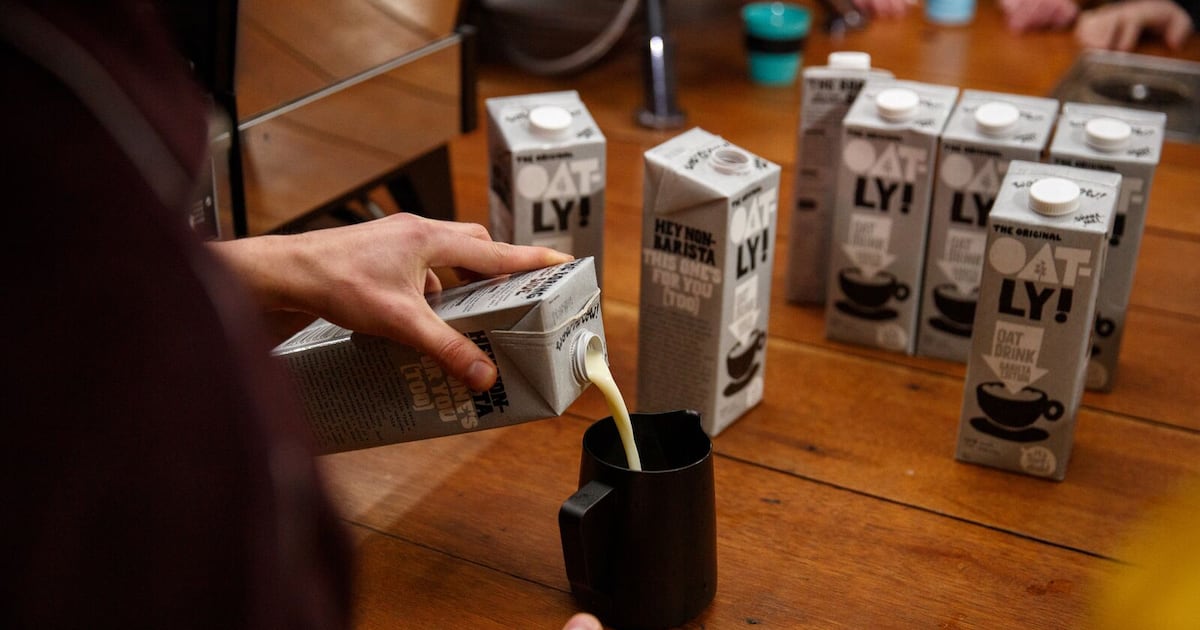
 Oatly wants consumers to trust in its food processing. (Image: Oatly)
The brand has also made its stance on food processing explicit: Oatly is processed, some consumers may find that worrying, but the company is fully “100% on board” with being identified this way.
Also read → Industry can no longer ignore the UPF problem – it’s time to lean in
Some of Oatly’s products are ultra-processed, according to the Nova food classification. Others are free from stabilisers and sugars, like its organic oat milk, which contains just oats, water and salt. Oatly knows that by educating consumers on food processing, it risks being automatically tarnished with the UPF brush.
“That is a risk,” explains Caroline Orfila Jenkins, VP, science and technology at Oatly, “and it’s something we’ve chosen to address head on.
“We believe science and transparency lead to informed choices, and therefore engaging with the conversation is worth it.”
Where does Oatly stand on the UPF debate?
The decision to engage openly with consumers responds to the way UPFs are described in the media. Often, they’re “oversimplified” as being “bad and unhealthy”, explains Jenkins. But the science is more nuanced, she says.
The Nova food classification is often wrongly interpreted as an indicator of nutrition. It’s not, it measures the level of processing only. So when a food or ingredient falls into Nova category 4 (ultra-processed), it’s then often deemed unhealthy. “While some are high in sugar, salt or saturated fats and should be eaten in moderation for those reasons, many are not and have high nutritional value,” says Jenkins.
“By highlighting both the nutritional and environmental benefits of our products, we aim to support a more balanced, evidence-led conversation about the future of food.”
What makes Oatly processed?
Oatly processed oat groats into its drink product, and says it preserves the majority of nutrients from the oats themselves.
The company then adds unsaturated fats, like rapeseed oil, and add vitamins and minerals. The formula is then homogenised and heat treated before being packaged. No sweeteners, preservatives or emulsifiers are added.
First Oatly, who’s next?
As an early adopter of on-pack communication around food processing, Oatly hopes more brands will feel confident enough to similarly engage. After all, ignoring the UPF issue won’t make it disappear.
“Misinformation in nutrition – and climate – has understandably made consumers cautious, but avoiding the conversation altogether can leave people without the clarity they need to make informed decisions.”
Also read → What do consumers really think about UPF?
Jenkins advocates for more open, science-based communication across the industry, which she expects would help move the discussion beyond “simplified” narratives that “clean” labels are good and UPFs are bad. It’s the quality of the nutrition that’s important, as well as how it connects to human and planetary health, she says.
Will any other big-name FMCGs take the leap and add similar messaging to pack labels? We’ll be watching.
Dining and Cooking