
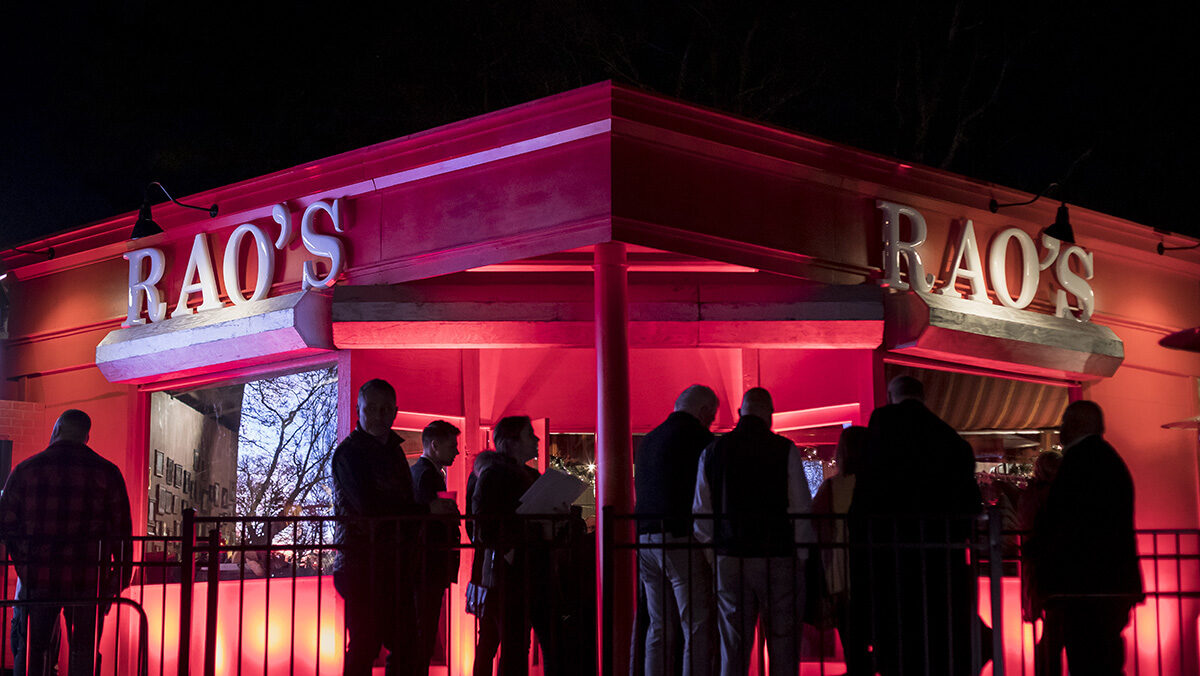
You may recognize the name “Rao’s” from your local grocery store’s pasta aisle. But for those who know, Rao’s is one of the most iconic institutions in NYC. Despite its success, for more than 130 years, Rao’s has existed in defiance of scale.
Tucked into a quiet corner of East Harlem, the ten-table Italian restaurant is less a “spot” and more a time capsule of an older New York that has largely disappeared. There is no maître d’ stand in the conventional sense, no online reservation system, no way in for the merely curious. Tables are owned, not booked. They belong to families, celebrities, athletes, and longtime regulars who treat their night at Rao’s like a standing appointment.
Over the years, those tables have been occupied by a long list of familiar names, including Frank Sinatra, Sammy Davis Jr., Al Pacino, Martin Scorsese, Mariah Carey, Elizabeth Hurley, Leonardo DiCaprio, Martha Stewart, Drew Barrymore, and Bill Clinton. But in an industry built on turnover, Rao’s has never chased volume. It has achieved permanence.
Founded in 1896 by Salvatore Rao as a saloon, the restaurant eventually evolved into a full-service Italian spot under the stewardship of the Pellegrino family. For decades, Rao’s remained fiercely local—beloved by the neighborhood, largely invisible to outsiders. That began to change in the late 20th century, as word spread that something singular was happening behind the red awning on East 114th Street. The food was classic Southern Italian comfort—lemon chicken, meatballs, pasta marinara—but the atmosphere was electric, fueled by the intimacy of a room where everyone seemed to know one another, or wanted to.
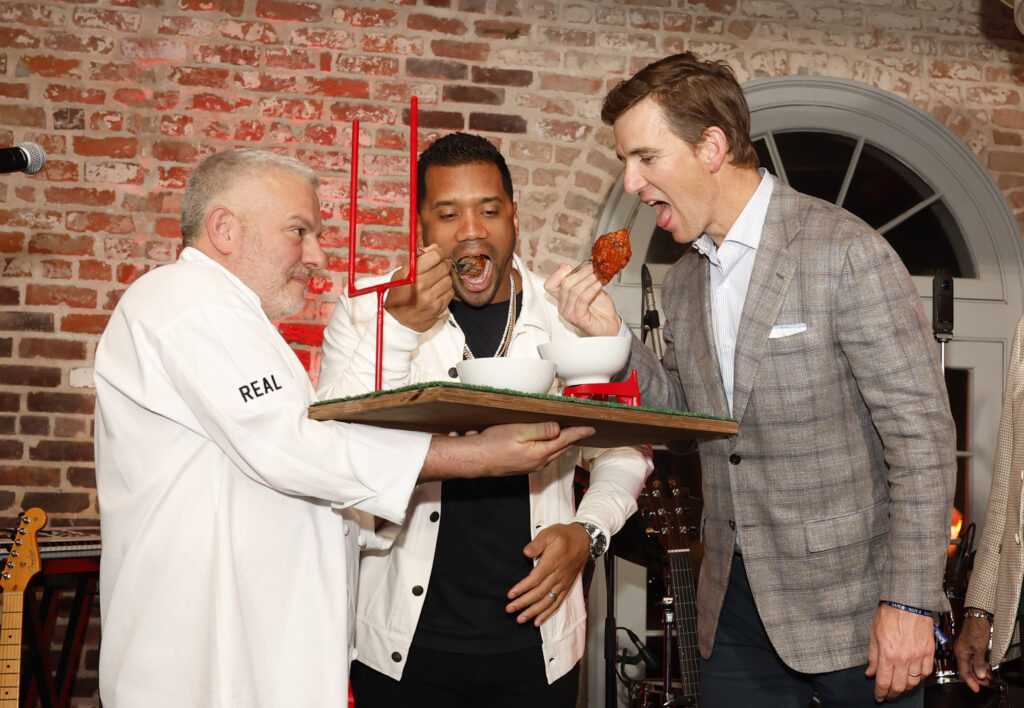 Image courtesy of Raos
The Only Thing That Scaled
At Rao’s, the table itself became the currency. You didn’t ask for one; you were invited into one.
That ethos—exclusivity not as branding, but as byproduct—has defined Rao’s for generations. And yet, in a twist few could have predicted, the restaurant’s cultural footprint has grown far beyond its physical constraints, without ever diluting its core identity.
At the center of that expansion is Frank Pellegrino Jr., who inherited not just a restaurant but a philosophy. Pellegrino has long understood that Rao’s power lies in its mythology. You cannot mass-produce intimacy. You cannot franchise trust. What you can do is protect a place’s soul while finding thoughtful ways to let more people experience it—both figuratively and literally.
That balance is what makes Rao’s such a compelling case study in modern brand stewardship.
The most visible extension of the brand was Rao’s Homemade, the line of jarred pasta sauces that began as a modest offshoot and ultimately became a juggernaut. In 2023, Campbell’s Soup Company acquired the brand for a reported $2.7 billion, a deal that stunned the food world and cemented Rao’s as one of the most successful restaurant-to-consumer expansions in history.
What made Rao’s Homemade work where so many celebrity food ventures fail was restraint. The product didn’t attempt to reinvent the restaurant experience or chase trends. It offered one thing—clean, high-quality sauce, made the old way—and did it consistently. The jars didn’t shout. They didn’t rely on gimmicks. They traded on trust, earned over decades in a tiny Harlem dining room.
Crucially, the sauce never tried to replace the restaurant. It existed alongside it, not in competition with it.
Rao’s at the Super Bowl
That same philosophy extends to Rao’s growing presence at high-profile events, particularly in sports and entertainment. In recent years, Rao’s has become a coveted fixture during Super Bowl week, hosting invite-only pop-up dinners and private events that replicate the intimacy of the original restaurant—no small feat in temporary venues and unfamiliar cities.
These events are not public. They are curated experiences, often attended by a mix of athletes, celebrities, executives, and longtime brand friends. The guest list matters. The energy matters. The sense that you are stepping into something rare matters.
A key partner in making those moments possible has been Wheels Up, the private aviation company known for serving a clientele that overlaps naturally with Rao’s own orbit. For several years, Rao’s and Wheels Up have collaborated during Super Bowl week, hosting exclusive dinners and gatherings that are less marketing activations and more extensions of the Rao’s table.
The partnership works because it feels organic. Wheels Up doesn’t plaster its logo across the experience, and Rao’s doesn’t compromise its standards to accommodate scale. Instead, the events function as modern salons—private, elegant, and deliberately unrepeatable—where relationships are deepened over plates of familiar food.
In an era where experiential marketing often feels forced or transactional, Rao’s pop-ups stand out for their refusal to perform. If you are there, it is because you belong there—or because someone who does has invited you in.
Rao’s success, both as a restaurant and as a brand, offers a quiet rebuke to the prevailing logic of hospitality growth. Bigger is not always better. Visibility is not the same as value.
Scarcity, when authentic, can be more potent than ubiquity.
The restaurant itself has changed remarkably little over the years. The walls are still lined with photos of famous guests and family milestones. The kitchen still operates with the confidence of a place that knows exactly what it is. The menu resists novelty. Dishes arrive as they always have, unbothered by food trends or dietary fads.
And yet Rao’s remains relevant—not because it adapts aggressively, but because it doesn’t need to.
Its relevance comes from its position as a cultural cornerstone. From the sense that when so much feels transient and performative, Rao’s is stubbornly real. It is a place where deals are made, friendships are cemented, and guests celebrate.
That understanding has allowed Rao’s to extend itself into new contexts without losing its gravity. Whether through a jar of sauce in a grocery aisle or a private dinner during the Super Bowl, the brand maintains the same emotional register: warm, confident, and slightly out of reach.
Perhaps that is the true legacy of Rao’s—not the celebrity sightings or the billion-dollar acquisition, but the discipline to know what not to do. To resist the temptation to overexplain, overexpose, or overextend. To trust that what made the restaurant special in 1896 can still matter today, if protected carefully enough.
In a city that constantly reinvents itself, Rao’s has chosen continuity over reinvention. And in doing so, it has achieved something rare: growth without erosion.
The red awning still hangs on East 114th Street. The tables are still spoken for. And somewhere, during Super Bowl week, a familiar plate of lemon chicken is being set down in front of someone who understands exactly how lucky they are to be there.
Dining and Cooking