
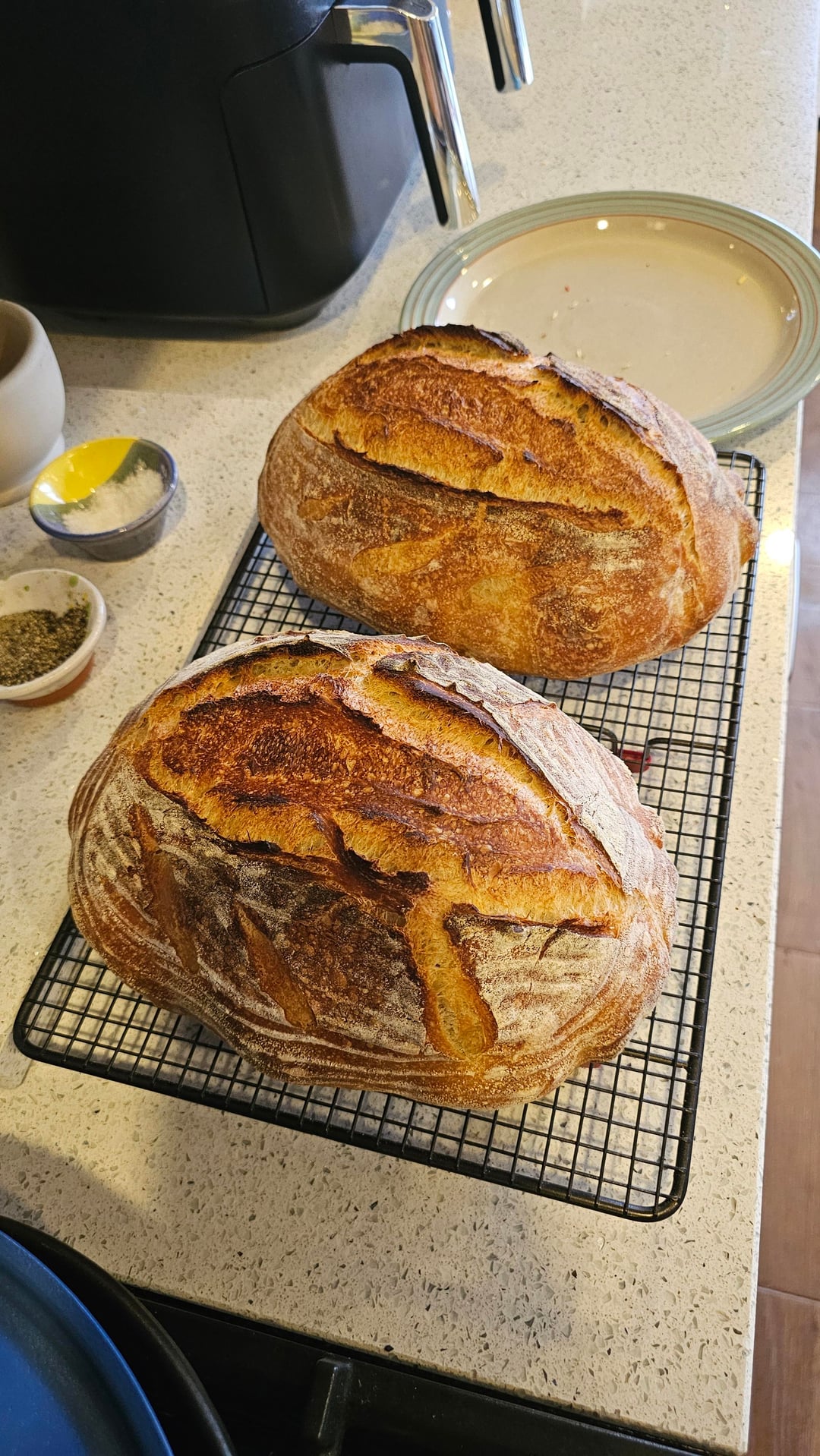
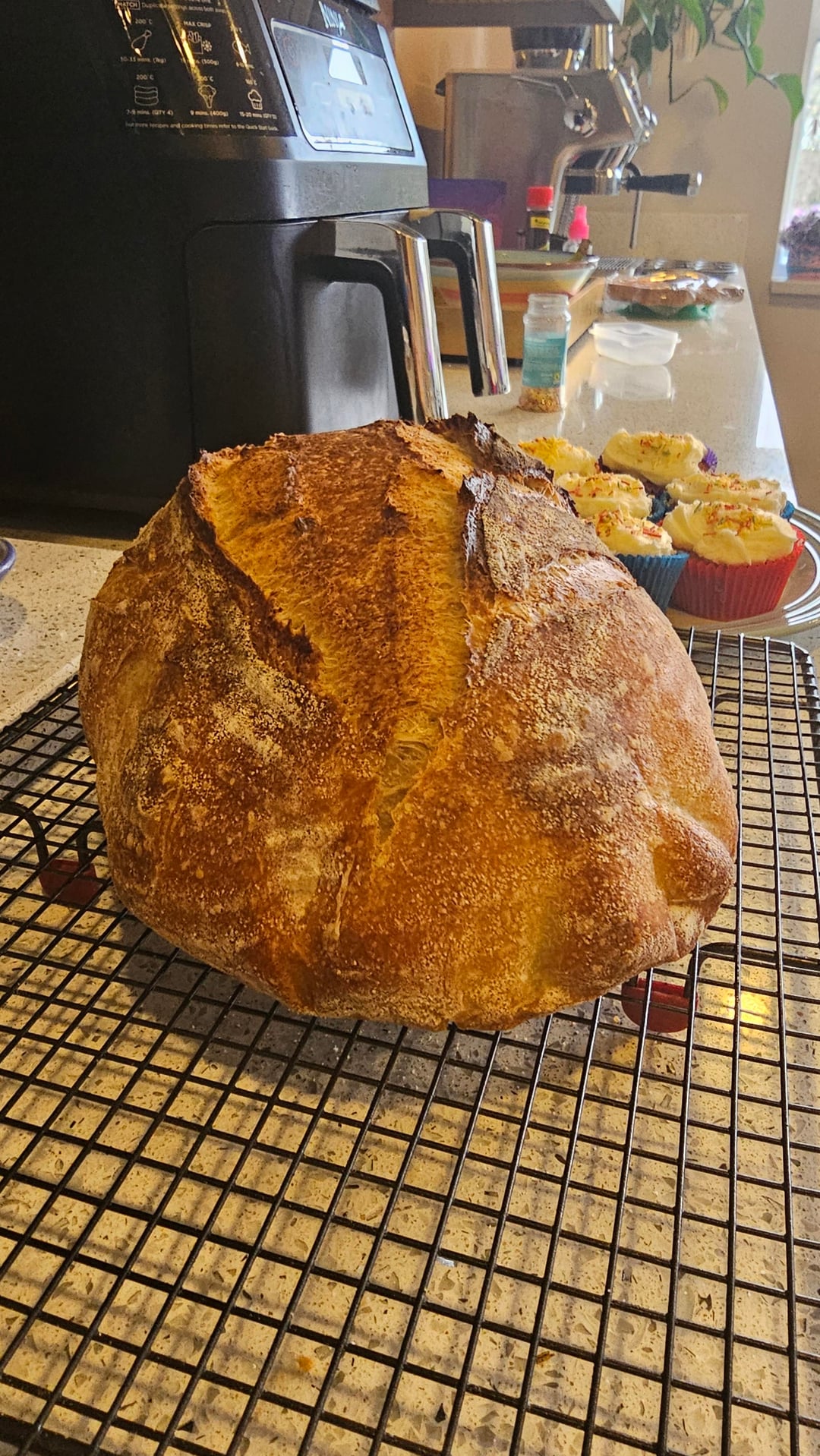
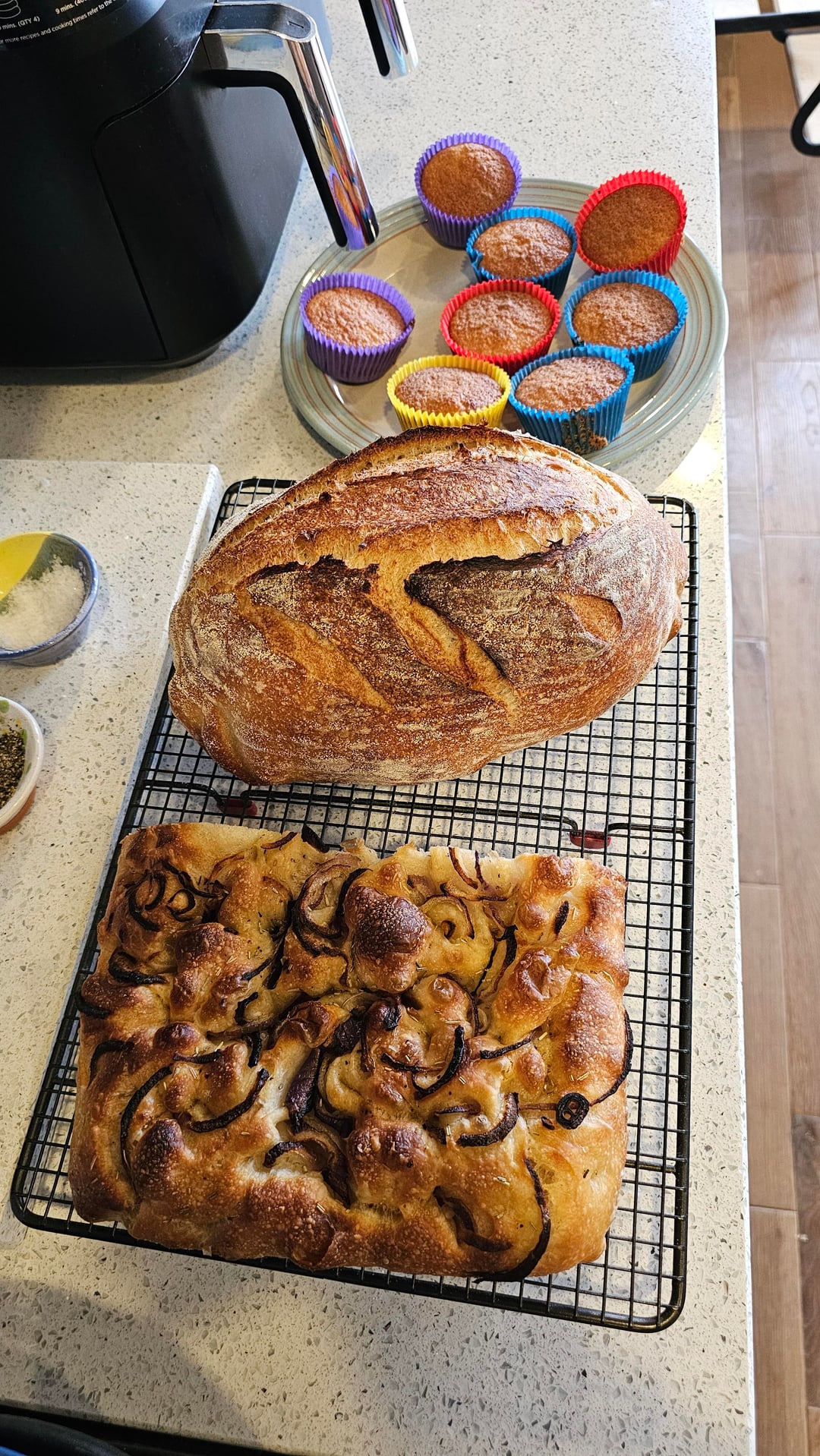
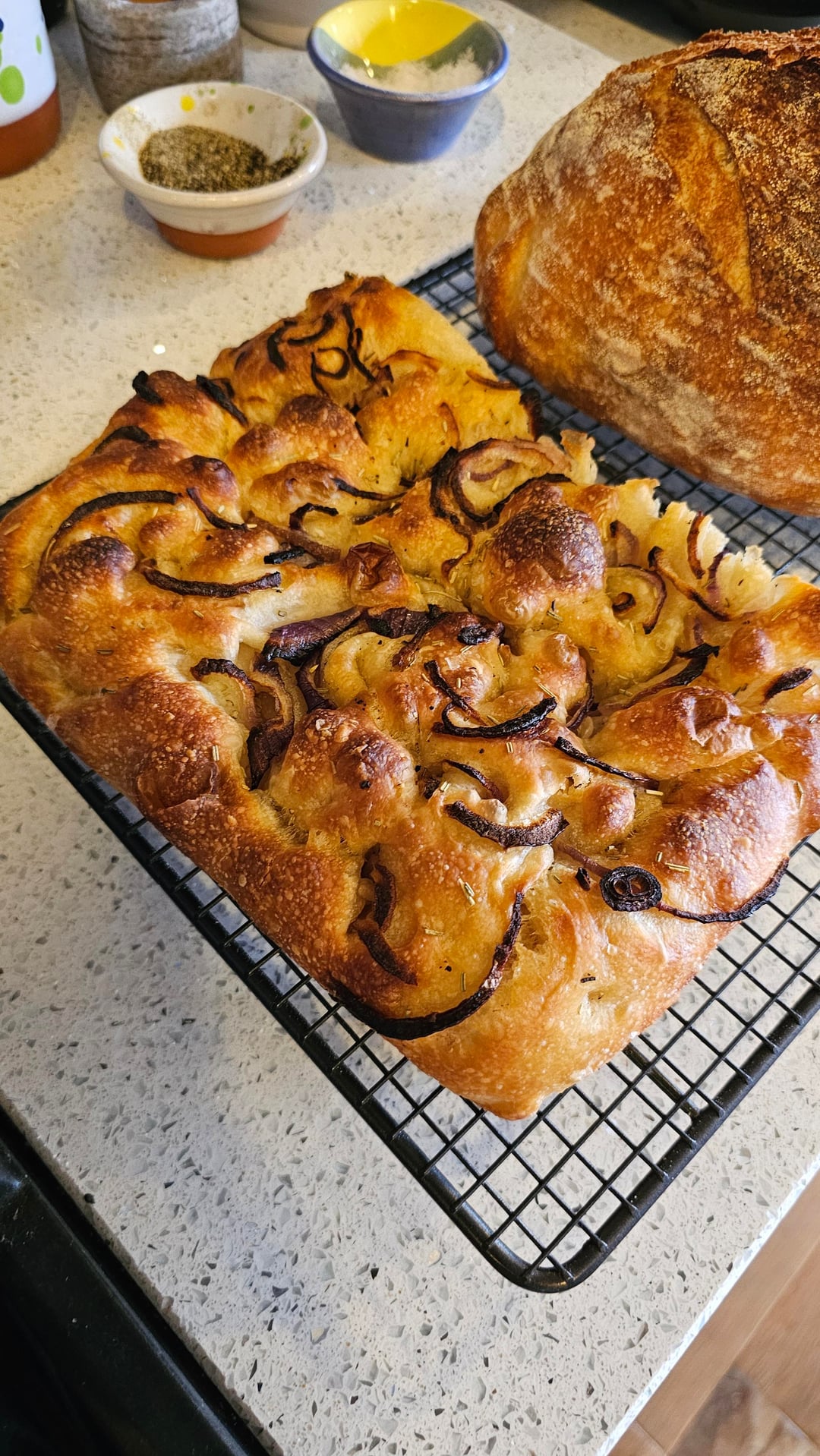
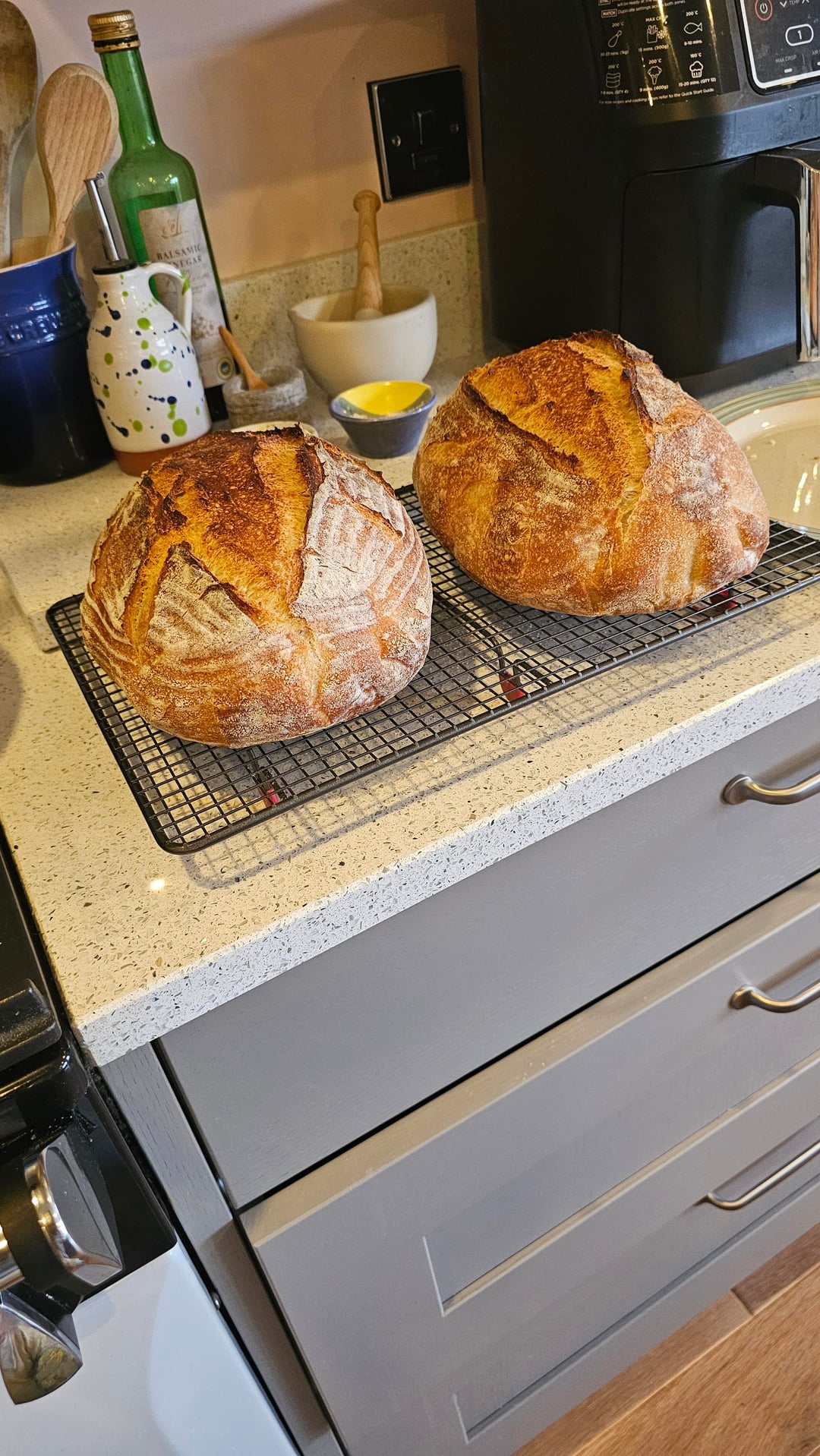
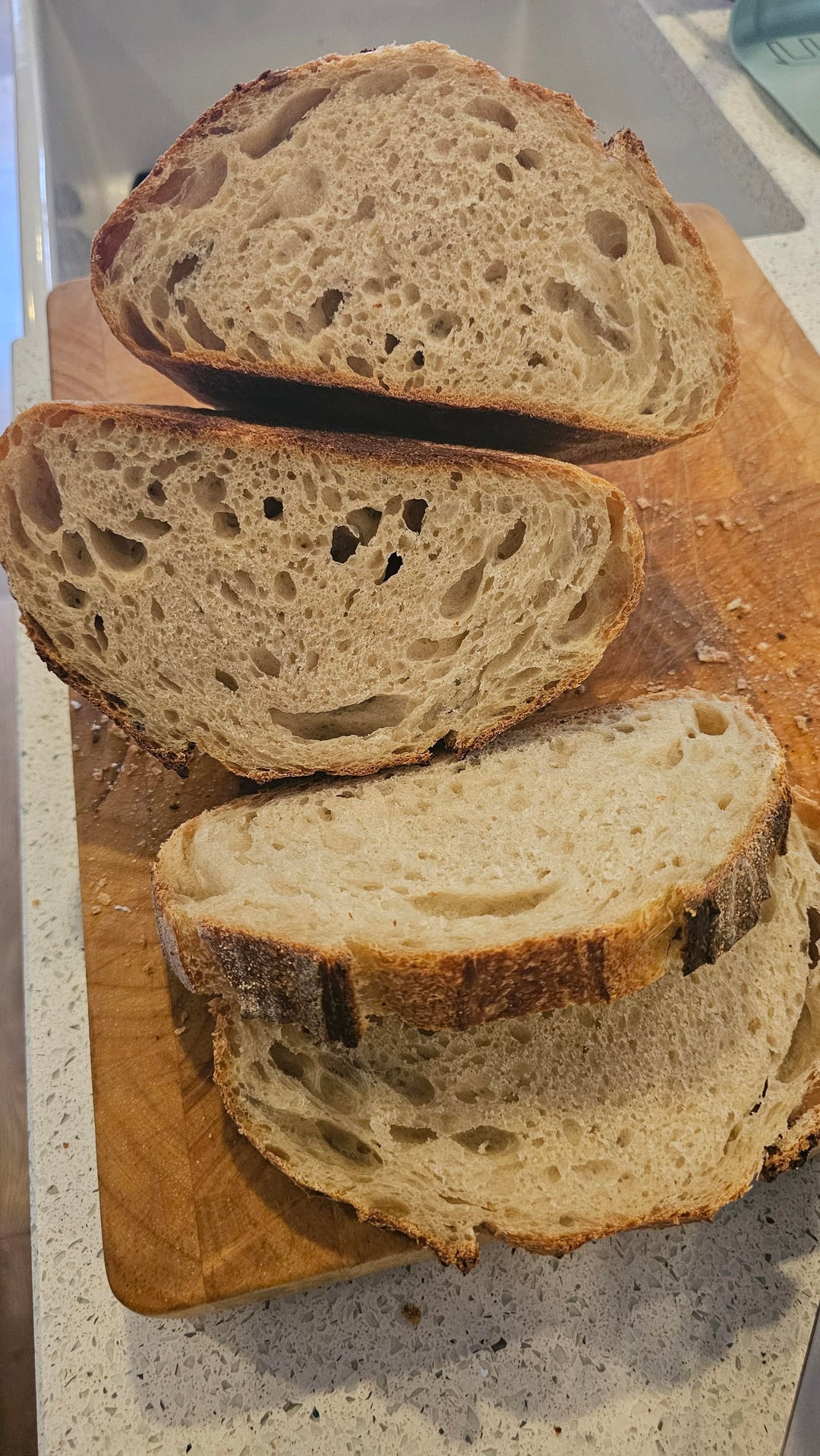
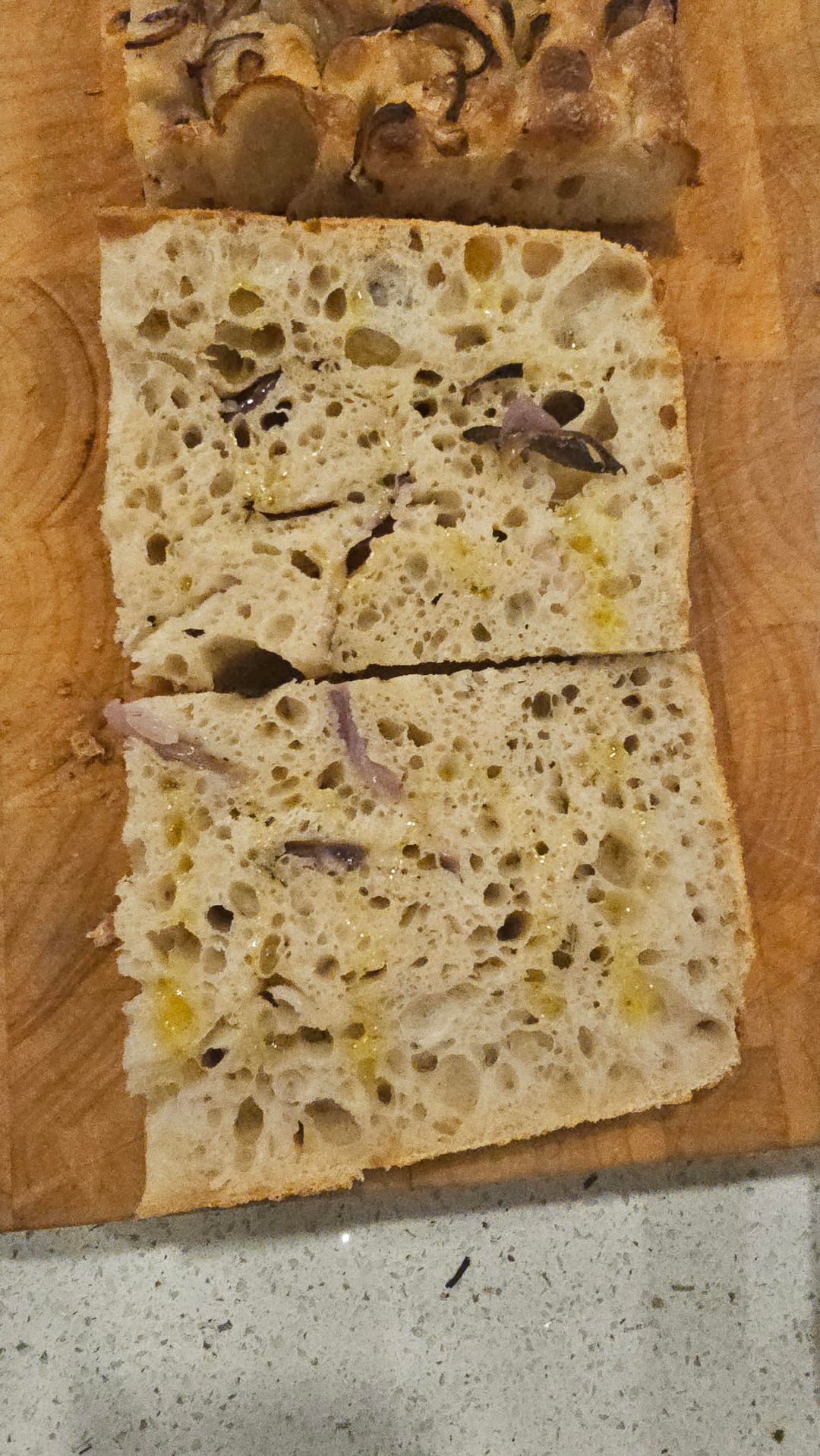
Just pulled these out of the oven and I'm pretty stoked with the results. I did two classic bloomers and a red onion focaccia—the smell in my kitchen right now is ridiculous.
I’ve been experimenting with my starter lately and moved to roughly a 20/50/30 mix (Starter/Flour/Water). It seems to be hitting that sweet spot for activity; the rise was way more predictable than my old 1:1:1 setup.
Flour: 1kg Strong White Bread Flour.
Hydration: 60% (I kept it a bit lower for the bloomers to help them hold that shape).
Salt: 12g Pink Himalayan (worked this in during the first set of folds).
I did stretch and folds every hour, then let it cold ferment in the fridge overnight. Shaped them first thing this morning and let them proof on the counter all morning before baking in a Dutch oven. For the bake, I went 20 mins lid-on and about 15 mins lid-off to get that crust color.
The red onion on the focaccia caramelized perfectly, but I'm most happy with the bloomers. Has anyone else tried unconventional starter ratios like this? I’m curious if this 20/50/30 vibe holds up when the weather gets colder.
What do you guys think of the scoring?
by TechtoneOfficial
15 Comments
How Did the starter’s consistency change when you went to the new ratio?
What was the starter’s consistency before the change?
What was the recipe for the dough? And how long did you bulk ferment before cold proofing? I’ve never put it in the fridge before shaping and also never counter proofed after fridge. How long did you have it out on the counter after shaping?
Looks great!
Focaccia looks amazing with a great rise. Can you share the recipe? Thanks!
They look quite lovely!
I have not tried unusual ratios, but thicker than usual. 1:1:0.5 (stiff) or 1:1:0.8 (just a bit thicker). I have not noticed a significant difference in the bread based on those changes.
Was your starter getting thin due to the starter turning acidic perhaps?
I started doing 20/50/30 as well and it is a game changer – honestly like a light switch. Best I can describe it is it’s visually similar to buttercream frosting in a mixing bowl.
That process seems backwards to me. By leaving the loaves on the counter before baking, you’re making it much harder to score them.
My process is:
Overnight levain. (17% of weight – same hydration as my final loaf 77%)
Form dough in the morning.
Autolyse 30 minutes.
Add salt.
Stretch and folds.
BF.
Shape.
Overnight retard.
Next morning, score and bake.
Scoring cold loaves is a piece of cake! ( pun intended 😄)
I have always ran a low hydration starter, 62%. I find it a bit more resilient, more controlled, and a little slower acting which is fine for me since I cold ferment all my dough. And plus..it’s just easier to work and mix with.
stiff starters are in peak longer than runnier ones. I started using a stiff starter after mediocre loafs and it was a game changer for me.
Looks so good! What was your oven temp for the lid on and lid off?
bloomers?
Yes thicker starters are the way to go!
For focaccia, i’ve found a much higher hydration (80%) to be ideal. You don’t need your dough to hold a shape anyways, so you might as well go for some big bubbles.
I tried a browned butter cinnamon bun focaccia today and it’s maybe the best dessert I’ve ever made.
recipe:
dough (400g flour)
1/2 cups butter (browned)
1/2 cup brown sugar
2 tbsp cinnamon
Let the dough rise until it’s super big and fluffy.
Put half the butter mix in the dough (fold it over on itself) and half on the dough.
bake at 420 for about 23 mins
for a drizzle, combine 2.5 tbsp milk with 1 cup of powdered sugar and drizzle on after the bread has cooled.
it really looks good
It’s not unconventional, it’s just different. For example, here in italy sourdough starter is traditionally made with 2:2:1 ratio (starter:flour:water). Thicker starter are more resilient, they behave better in the fermentation and have a different, much lighter flavour profile since they develop more acetic acid (liquid starte develop lactic acid, more strong flavor).
But i have to say they are a bit time consuming in the feeding process since you have to knead it well, it isnt enough to just mix like liquid starters.
I use about 22% of starter in my cold European land. Works great. I’m wondering however, if 12g of salt isn’t too low? I always use 2%.