
The blushing bubbles of a sparkling rosé are enough to make any bubbly buff swoon. So, what is it about this elegant pink drink that makes it so special?
Believe it or not, the bubbles in sparkling wine were initially considered a nuisance in the Champagne region of northeast France, where the first wines were pale pink with nary a bubble in sight.
Produced primarily from Pinot Noir, the wines often struggled to finish fermentation under cool autumn temperatures unbeknownst to vintners who bottled them anyway. In the spring, the warmer temperatures awakened the dormant yeast, producing carbon dioxide and an effervescence winemakers found infuriating.
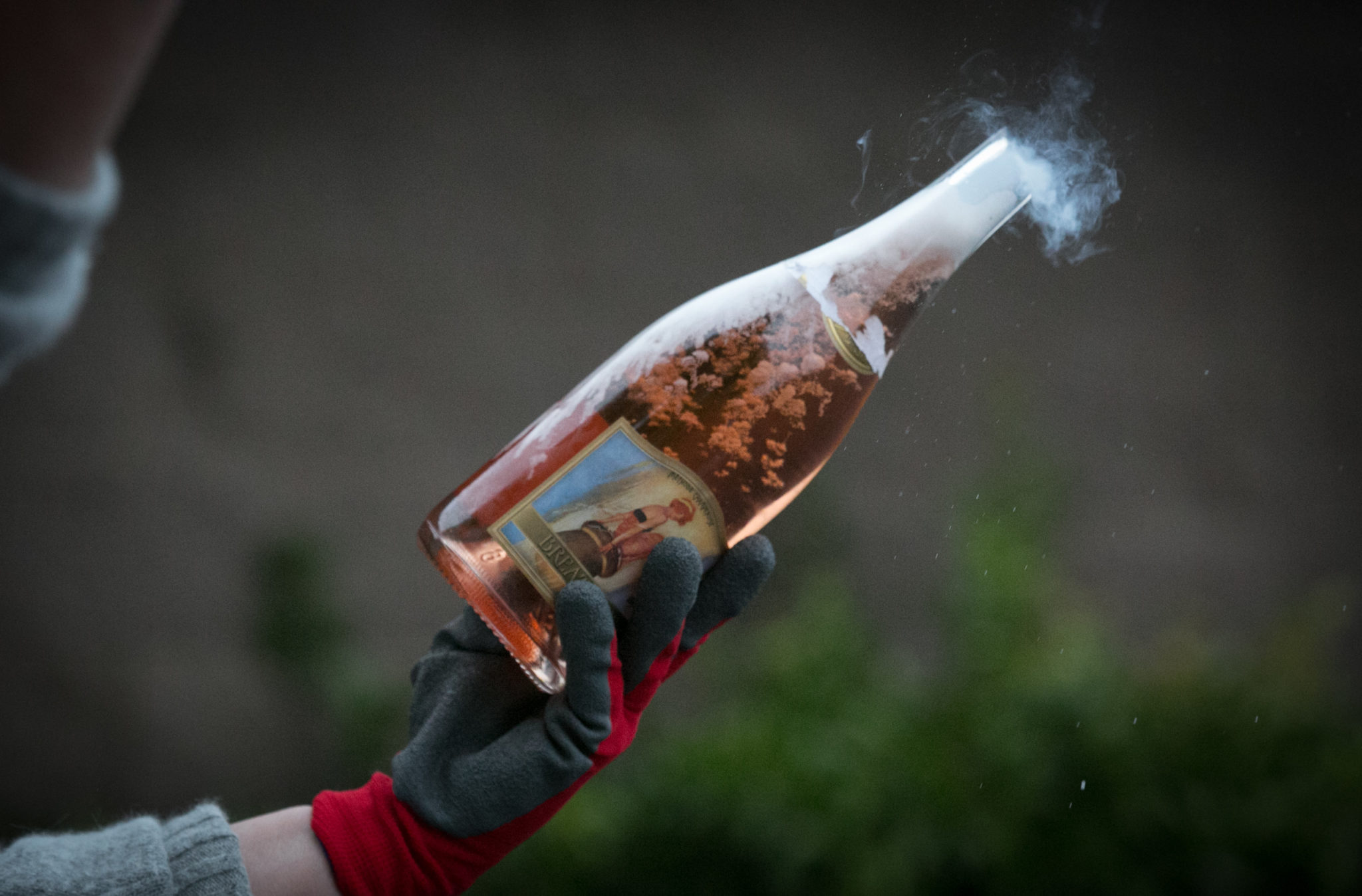 Breathless Wines held a holiday party featuring sabering, the art of lopping off the top of a bottle of bubbly with a sword, in addition to wine and food pairings. (Jeremy Portje, file)
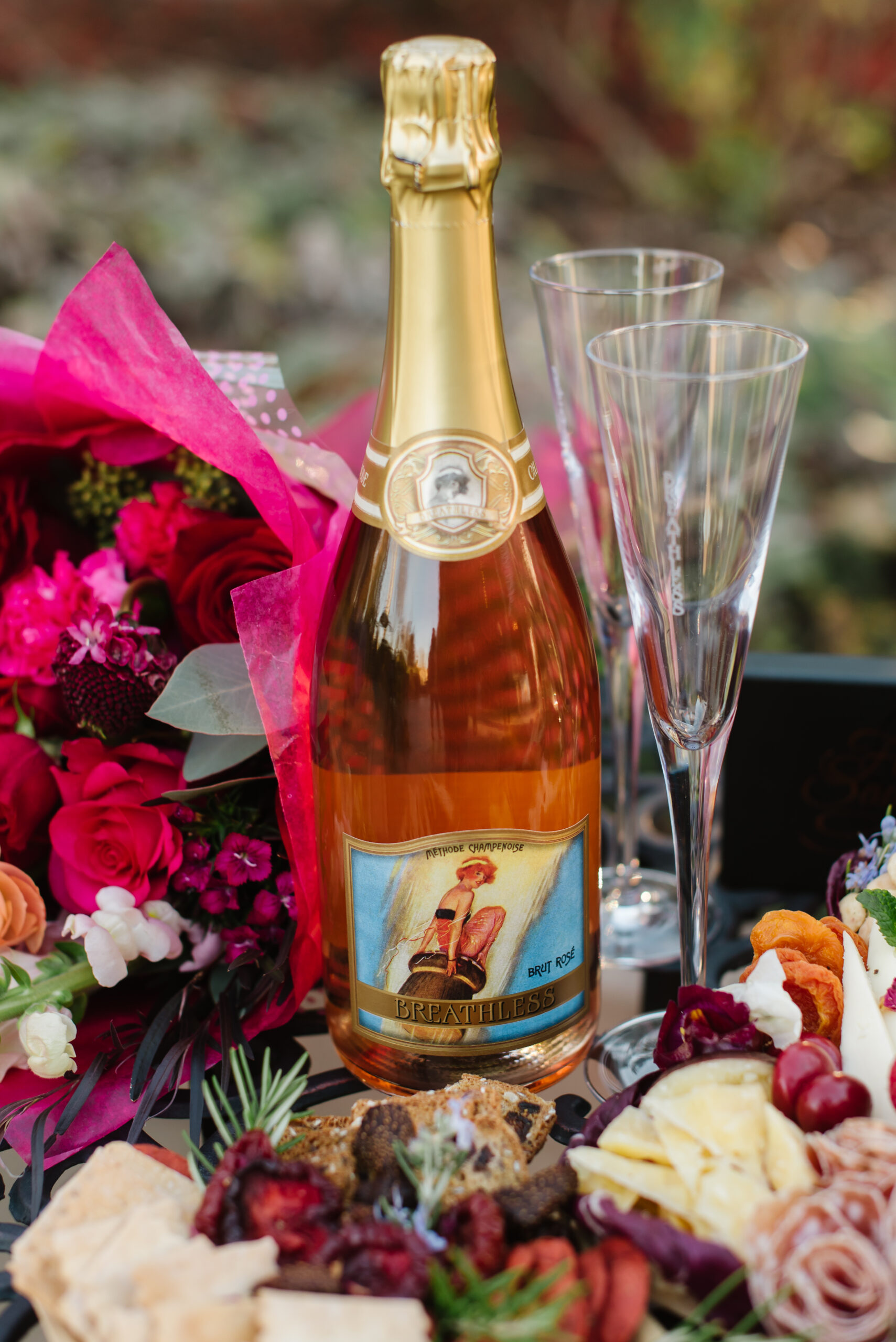 A bottle of sparkling Brut rosé from Breathless Wines in Healdsburg. (Breathless Wines)
Eventually, sparkles were embraced and methods improved, thanks especially to Madame Clicquot Ponsardin. Prior to Clicquot, sparkling rosé was often produced by crushing red grapes (like Pinot Noir and Pinot Gris), then allowing the juice to macerate on the skins until the desired color was achieved. Without modern winemaking techniques, the resulting wines were cloudy, inconsistent, and unstable.
Clicquot saw a better way. Utilizing a riddling rack (a device she pioneered), she was able to produce consistently clear red and white wines, which she blended together with precision — a method still in use by most Champagne producers.
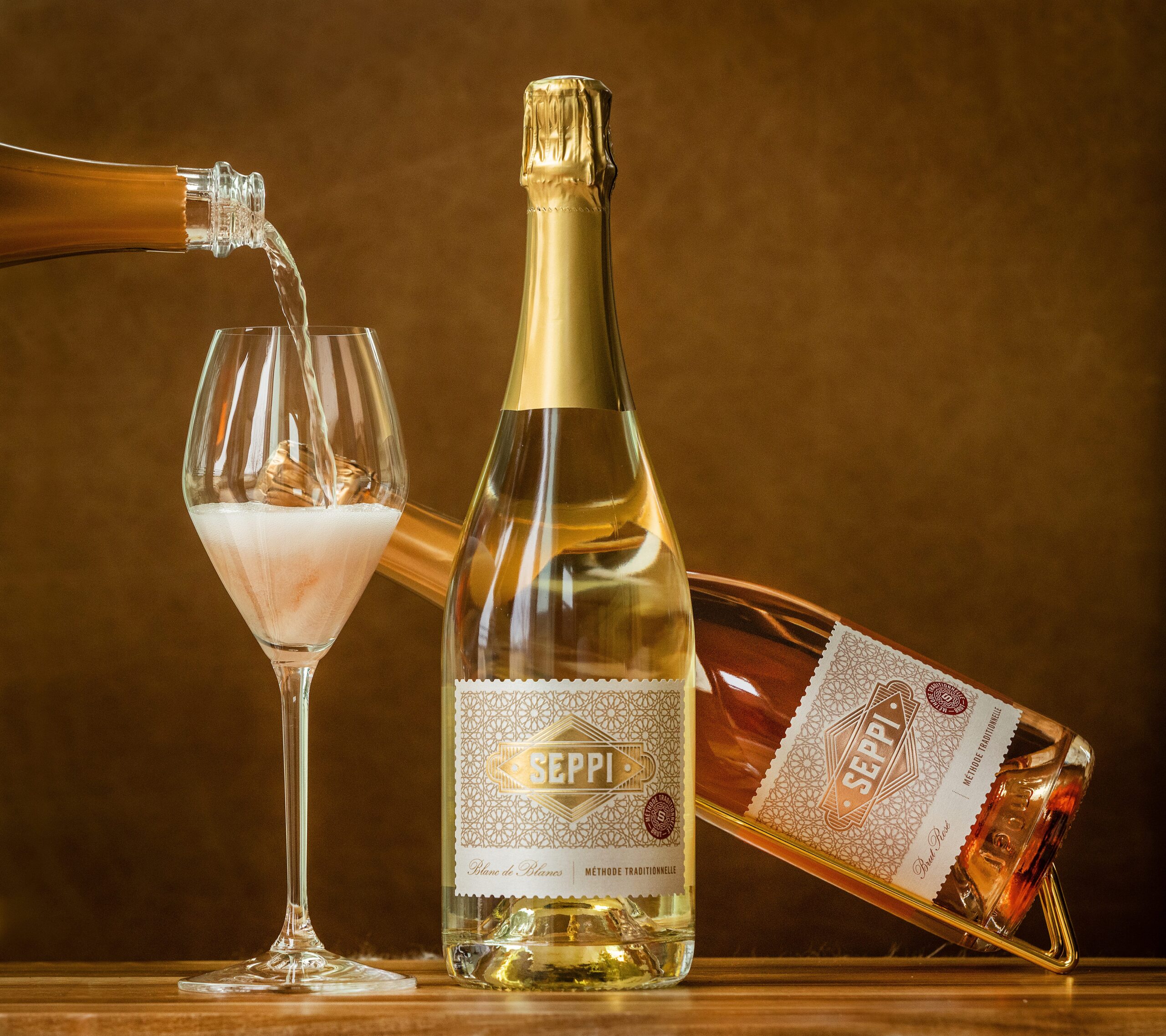 Vintner Kelsey Phelps named her sparkling wine “Seppi” after her grandfather, Napa Valley wine pioneer Joseph Phelps. Photo taken Friday, Jan. 23, 2026, in Healdsburg. (John Burgess / The Press Democrat)
While French Champagne rosé must be produced with Chardonnay, Pinot Noir, Pinot Meunier, or a combination, California winemakers have the freedom to use any grapes they choose. That means local sparkling rosés vary wildly in flavor. With fruity notes of watermelon, strawberry, and raspberry, and floral aromas like rose petals, they truly offer something for everyone. Whether you’re celebrating the season of love with your partner, your mom, or your best friends, these delicious sparklers will help you do Valentine’s Day right.
Three to Try
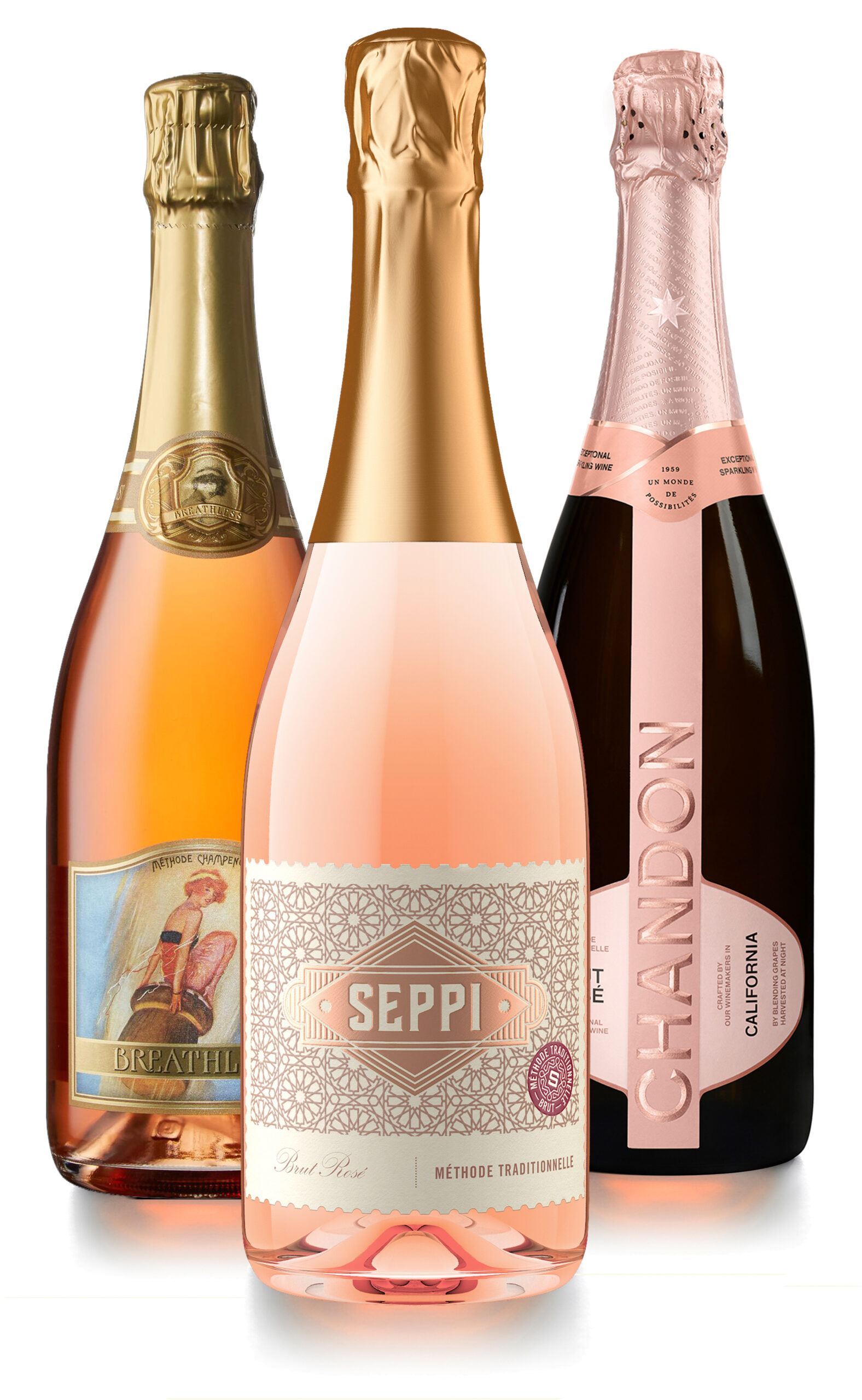 Bottles of Brut rosé from Breathless Wines, SEPPI Wines and Chandon. (Courtesy of Breathless, SEPPI and Chandon wineries)
Chandon (NV) Brut Rosé, California, $27
This sparkling rosé from Chandon winemaker Pauline Lhote is a blend of 57% Chardonnay, 40% Pinot Noir, and 3% Pinot Meunier. Produced using méthode champenoise — a lengthy process that involves a second fermentation in the bottle — the wine offers notes of strawberries, red cherries, and pomegranate, with raspberry tart on the finish. chandon.com
Breathless (NV) Rosé, Sonoma County, $29
Winemaker Penny Gadd-Coster is the talent behind Breathless’ sparkling wines, winning the Healdsburg-based brand countless gold medals. A blend of 83% Pinot Noir, 10% Chardonnay, and 6% Pinot Meunier, this sparkling rosé is buoyant on the palate, with flavors of pear and apple enveloped in a fine creamy mousse. breathlesswines.com
SEPPI (NV) Brut Rosé, California, $32
Founded by Kelsey Phelps, Healdsburg’s SEPPI is named in honor of her celebrated winemaker grandfather, Joseph Phelps, who inspired her passion for wine. Produced in méthode champenoise with Chardonnay and Pinot Noir, this sparkling rosé offers aromas of strawberry, raspberry, and a touch of citrus blossom, followed by cranberry, strawberry, and a hint of tart crab apple on the juicy finish. drinkseppi.com
Dining and Cooking