
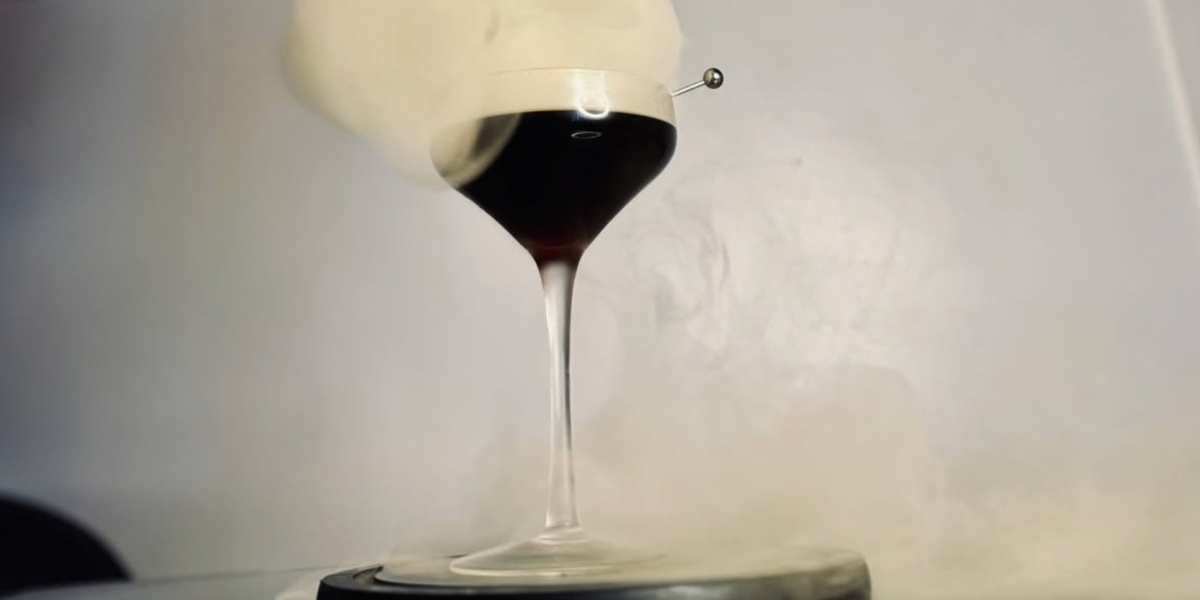
In Italy there’s a popular saying, often expressed when sharing drinks amongst friends: “Years, loves, and glasses of wine—or cocktails—should never be counted.” Indulge in the finer pleasures without worrying about overindulgence. It’s an easier philosophy to embrace when said drinks are spectacular. And the Italians know a thing or two about that. These are the folks who invented the Negroni, Aperol Spritz, and even Aperitivo hour. They essentially perfected the modern art of hospitality itself.
What goes into the ideal Italian cocktail, as a result, is as much about sociability and presentation as it is about a specific flavor profile or provenance of ingredients. It isn’t just a drink, it’s a way of life. As soulful as a Puccini-penned opera. As colorful and exuberant as a summer sunset over the Amalfi Coast. Equally as expressive regardless of time or season.
You needn’t wait for a dedicated occasion to toast with such a tipple. The drink is the occasion. As it so happens, though, the Winter Olympics in Northeast Italy this month. In honor of their arrival, we asked some of our favorite bartenders from across the globe to share their favorite Italian cocktail recipes, along with detailed instructions on how to assemble them at home. We’ve sharing 15 examples below. But who’s counting?
Americano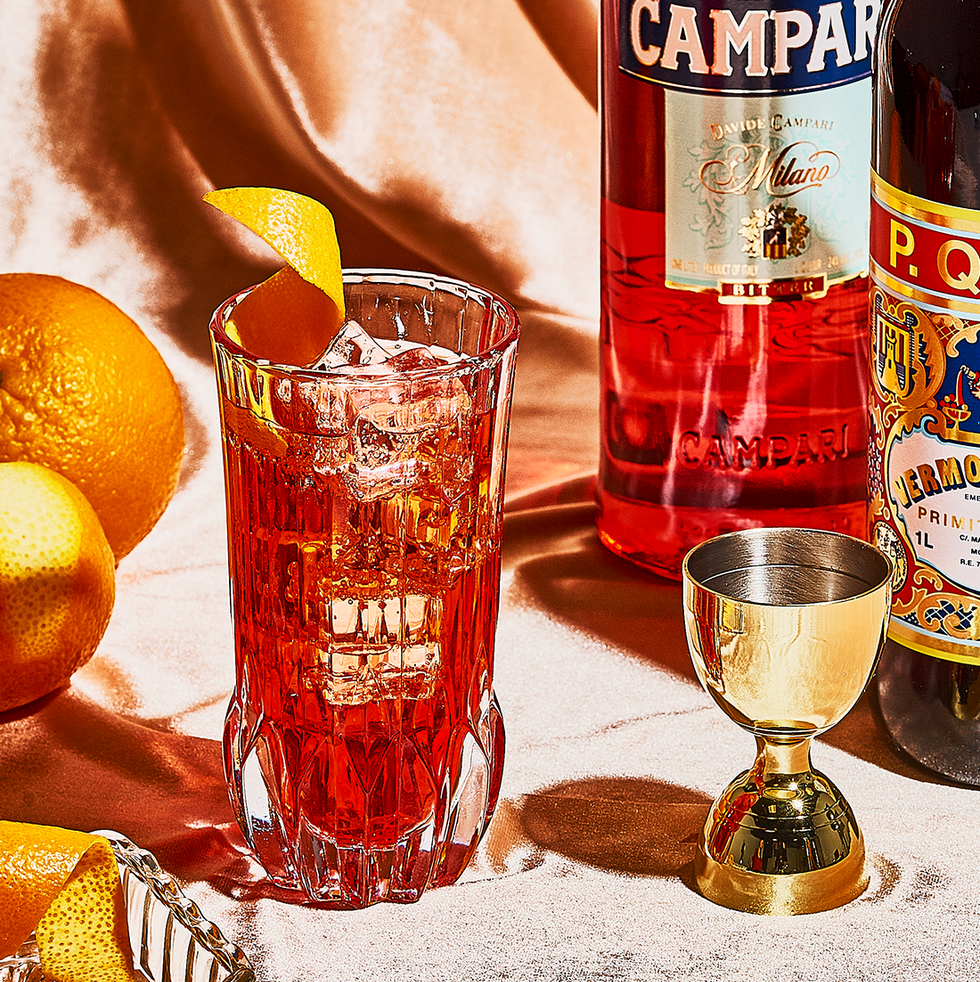
Italian cocktail culture can largely trace its origins back to the birth of this simple creation, within the cafes of 1860s Milan. Ironically, it’s named for American tourists, who drank it more frequently than water when exploring this part of the world in the early 20th century. Originally, it was known as the Mi-To, shorthand for Milano and Torino. Low in ABV, refreshing on the palate, and a splash to make at home, it remains the ultimate fallback whenever you want to entertain with a Mediterranean flair. The singular caveat to be mindful of when throwing it together is to apply a tender touch with the soda water. You really want your spritz to spritz.
Ingredients
1 1/2 oz Campari1 1/2 oz sweet vermouth1–3 oz club sodaOrange or lemon slice
Directions
Fill a highball or rocks glass with ice. Add the Campari and sweet vermouth into the glass and top up gently with club soda, to taste. Lightly stir with bar spoon to preserve carbonation. Garnish with an orange slice or lemon twist.
Negroni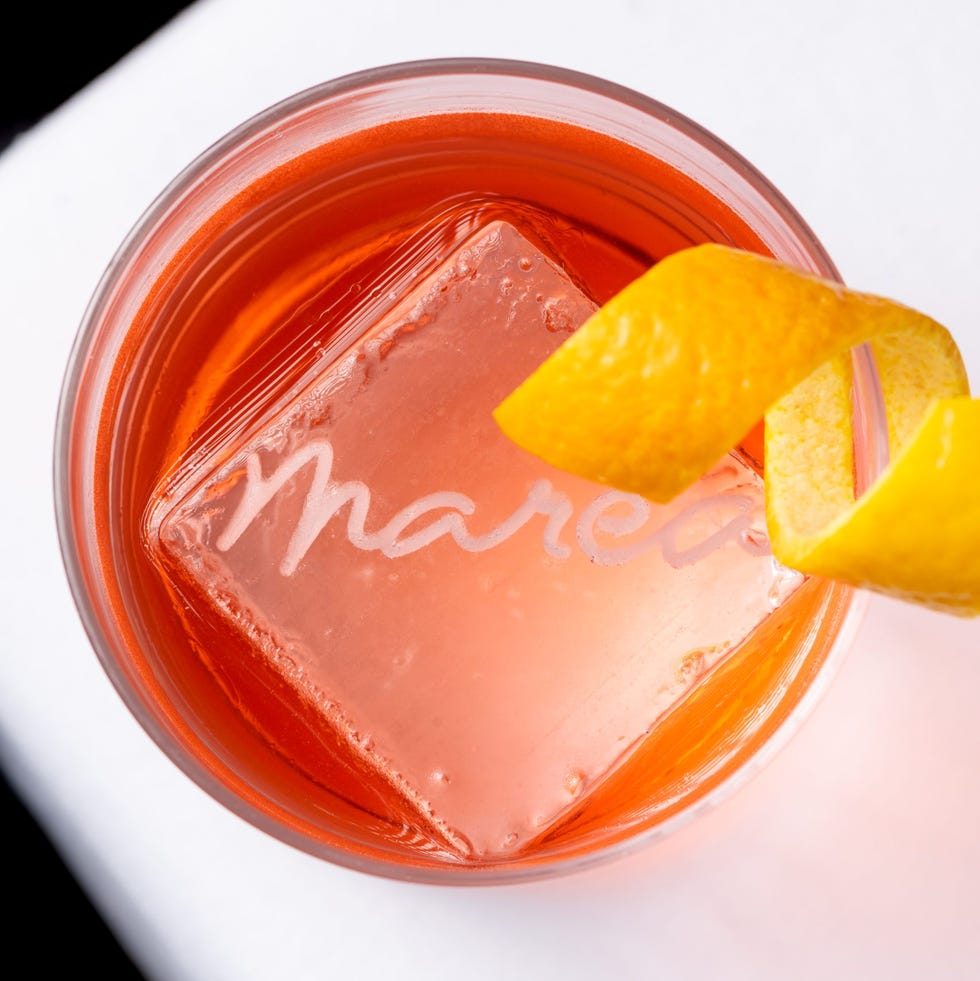
Courtesy Marea Beverly Hills
It’s been over a century since Count Camillo Negroni left his indelible mark on cocktail culture when he asked for a stiffer version of an Americano at his favorite Florentine cafe. The resulting drink, which still bears his name, is as popular today as ever. How could it not be? It’s colorful, it’s balanced, it’s incredibly easy to compose at home—three ingredients, equal parts. But if you’re not afraid to get a bit adventurous, you can zhuzh it up with just a touch of advanced preparation. At Marea Beverly Hills, the acclaimed Italian eatery administers a strawberry-infused Campari to wondrous effect.
Too Bad She’s Bad is slightly suppler and more food-friendly than a standard Negroni. It pairs naturally against saltier fare, like the caviar, crudi, and housemade seafood pastas which made Marea famous. And it’s a standout amongst the restaurant’s Sophia Loren Cocktail Collection, with each offering taking inspiration from—and named after—one of the starlet’s most iconic roles.
“The strawberry here softens the sharp bitter edges of Campari without losing its nuance,” explains Francesco Grosso, senior director for Marea’s restaurant group. “It adds dimension and roundness while keeping the soul of the drink in tact. The goal is always enhancement, never distraction.”
Too Bad She’s Bad
Ingredients
1 1/2 oz Abrojo GL Gin or Lost Explorer Mezcal1 oz grapefruit liqueur1 cup of fresh strawberries1/2 oz strawberry-infused Campari2 dashes Peychaud’s BittersOrange twist for garnish
Directions
Start off by infusing the Campari. Slice approximately 1 cup of fresh strawberries and add directly to Campari and let sit for 24 hours. Then strain out the fruit before use with a cheesecloth or coffee filter. Next, build all ingredients in a mixing glass. Add ice and stir until well chilled. Strain into a chilled rocks glass over a large cube. Express an orange twist over the drink and place on the rim.
Espresso Martini 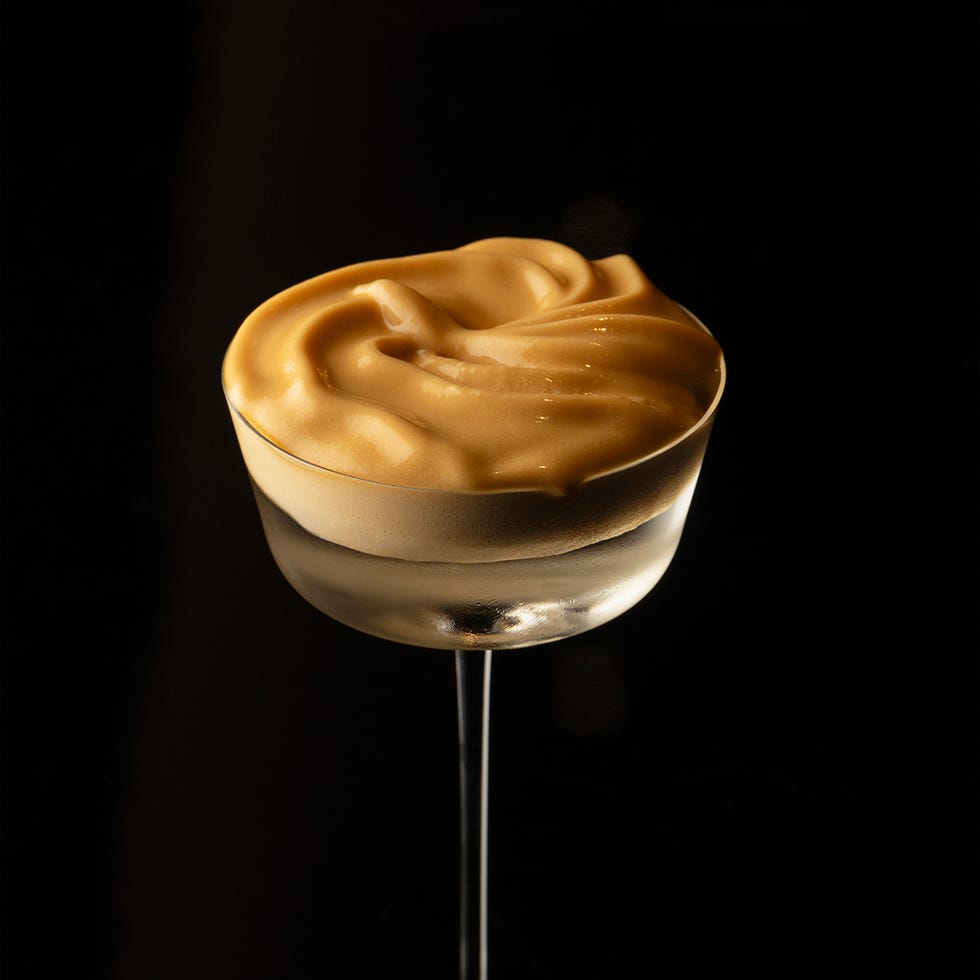
Courtesy of Gucci Giardino
Yes, this drink was actually invented by Dick Bradsell, a British bartender in 1980s London. But its key ingredient—concentrated, expertly-roasted black coffee is a staple of Italian drink culture. And as the cocktail has enjoyed a contemporary resurgence, some of its best modern renderings are attributable to Italian mixologists and Italian-inspired outposts. Like this elaborate assemblage, conceived by Sebastian Viguera at the effortlessly sleek and stylish Gucci Giardino in Osaka, Japan—the world’s second-ever Gucci bar. We’re just warning you now that this is not an endeavor for novices. You’ll need to infuse a flavorful American rye with jasmine as well as procure measures of glucose and tonka perfume. If you’re willing to go the distance, you’ll be rewarded with what we believe to be the tastiest Espresso Martini on earth: Serenade to a Stranger. But if you don’t need to be all sing-songy about it, remember: 2:1:.5—two parts vodka (or tequila), one part freshly brewed espresso, half-part Kahlua.
Serenade to a Stranger
Ingredients
40 ml jasmine-infused rye whiskey15 ml Coffee liqueur10 ml Espresso10 ml GlucoseBitter espresso foam topHazelnut and tonka bean perfume
Directions
To craft this cocktail, the team begins with a Jasmine-infused high-rye whiskey; soak the shrubs in whiskey overnight and then filter it out using a cheese cloth the following day. Add the resulting infusion into a mixing glass with ice along with fresh-brewed coffee, simple syrup and coffee liqueur. Shake vigorously for at least a minute. Top with a frothy coffee and cream foam and finish with 2–3 spritzes of hazelnut and tonka bean perfume out of an atomizer. Place 2–3 espresso beans atop the foam is a suitable alternative garnish.
Bellini
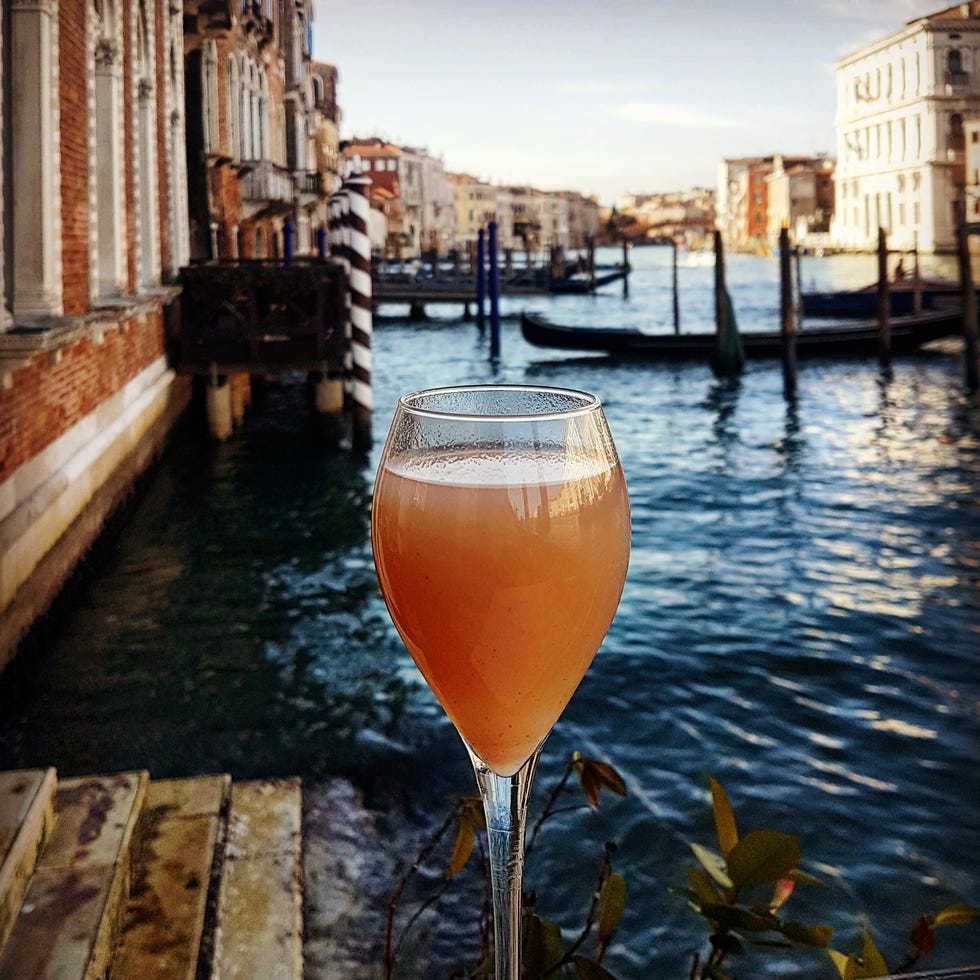
Burcu Atalay Tankut//Getty Images
For nearly 80 years, the Bellini has been the signature serve at Harry’s Bar in Venice, Italy. It was invented by the very man who founded the legendary venue, Giuseppe Cipriani—today a legend in his own right. The hallmark light-pink hue of his creation comes courtesy of its indispensable staple ingredient: white peach puree. It’s also what gives the drink its name, as it reminded Cipriani of a color scheme depicted in the work of the Renaissance master, Giovanni Bellini. Simple, sexy, and supremely quaffable, it is a drink that’s forever linked to the most serene city that birthed it.
Ingredients
2 oz chilled white peach puree4 oz well-chilled Prosecco1 tsp fresh lemon juice2 fresh raspberries1 peach slice
Directions
To make the puree, peel and blend fresh, ripe white peaches until uniformly smooth. Add a couple of raspberries for a pinker color. Strain through mesh sieve for silky texture. Pour two ounces of the cold purée into a chilled champagne flute and slowly top with four ounces of cold sparkling wine. Stir gently to preserve carbonation. Garnish with a peach slice.
From the Rockies to the Dolomites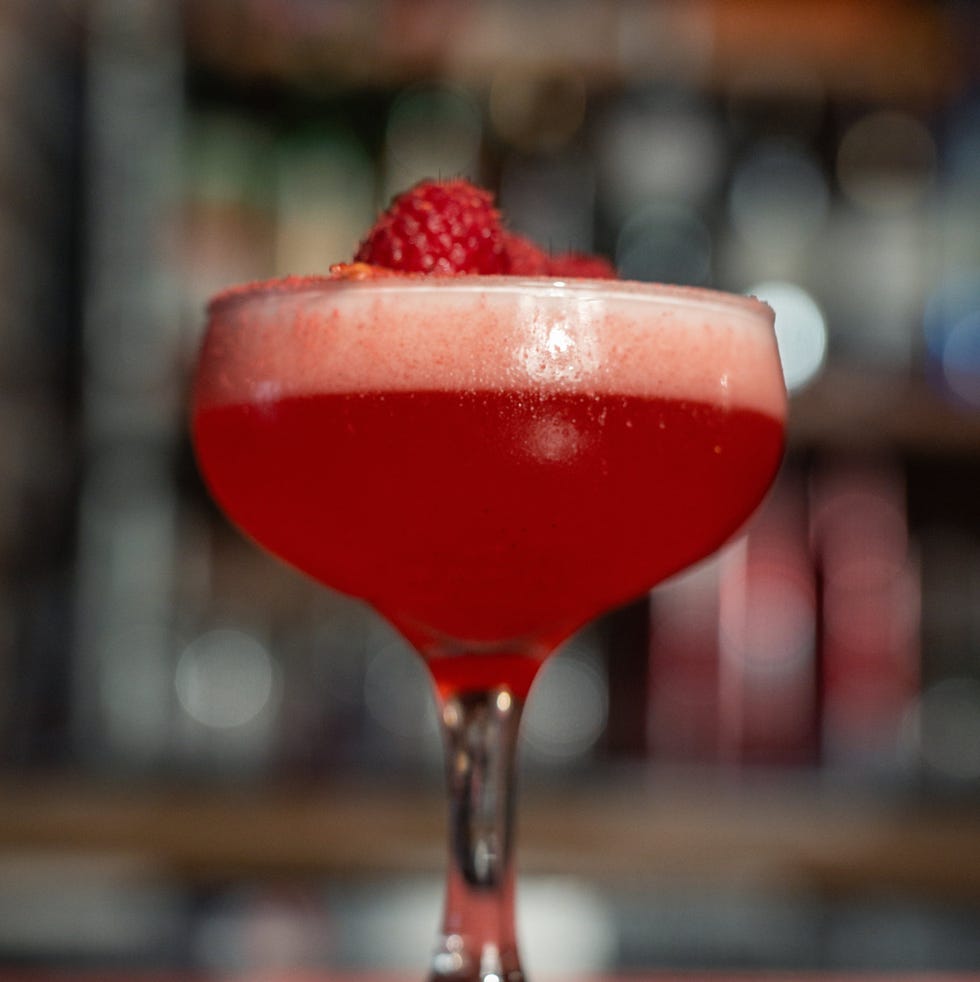
Jeff Fierberg
“Built on the structure of a classic sour, this cocktail is inspired by Italian aperitivo culture, where bitterness is not an accent but a way of life,” says Jason LaBove, lead bartender at Occidental in Denver. He invented this expressive and elegant whiskey-backed victual. “Campari anchors the drink, shaping the balance and stretching the finish with a distinctly Italian sense of restraint. Woody Creek Rye brings spice and structure from the mountains of Colorado, meeting fresh raspberry and lemon for brightness and lift. Egg white softens the palate, allowing the bitterness to arrive slowly and elegantly. A subtle touch of pink peppercorn bridges fruit and bitter with a floral warmth, echoing the alpine aromatics common to aperitivi from the mountainous regions of Italy. The result is a modern Italian inspired sour that opens bright, finishes dry and bitter, and invites another sip.”
Ingredients
5 oz rye whiskey1 oz Campari3/4 oz fresh lemon juice1 egg white1/2 oz. raspberry pink peppercorn syrup
Directions
Begin by making the Rasberry syrup. Rinse 1 lb of raspberries in a small pot, add 1/4 cup pink peppercorns, and 16 oz water, bring to a boil. Once it is boiling, bring it down to a simmer for about 20 minutes. Strain out solids, keep the liquid. Return raspberry water to the pot and add 2 cups sugar. Stir until dissolved. Allow to cool. Bottle. Shake, Strain. Next, combine the rendered syrup with all other ingredients into a shaker and shake vigorously for around a minute. Pour through a strainer into an ice cold coupe with an optional sugar rim.
Vieux Carré Isleño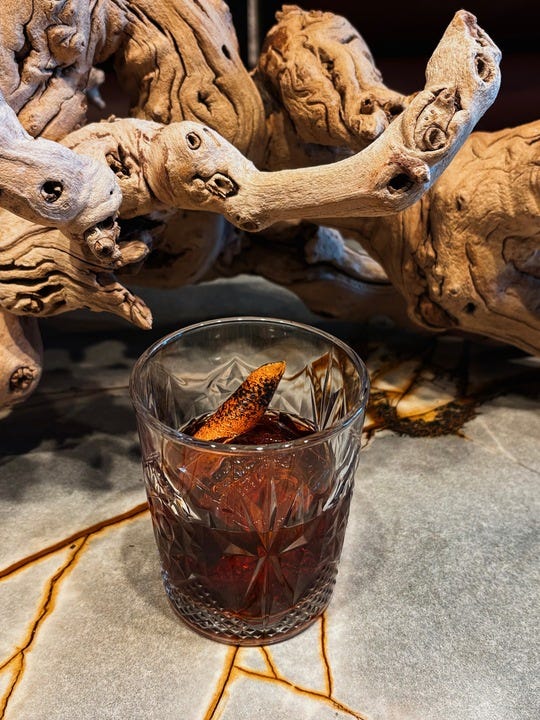
Courtesy Ritz-Carlton Lake Tahoe
If you like your cocktails with a view, you’re going to love what you get at the Ritz-Carlton, Lake Tahoe. The five-star property seated at the foot of the Northstar California Resort affords front-of-lift access to 3,170 acres of skiable terrain. Choose the right Italian cocktail here, and it’s not hard to imagine yourself in Cortina for the Olympic Games. Ivonne Gonzalez is ready to stamp your passed pour. The lead mixologist on property has jazzed up a New Orleans classic with one of Italy’s most prized liquid exports.
“The Vieux Carre Isleño also has a clear nod to Italy through Averna, a Sicilian amaro known for its bittersweet depth,” she explains. “The herbal layers in the cocktail reflect Italy’s long tradition of botanical liqueurs and fortified wines, where balance and bitterness really shine. This cocktail brings together the Caribbean, New Orleans, and Italy, proving that when different cultures and flavors meet, a little magic happens.”
Ingredients
1/2 oz Diplomatico Reserva1/2 oz Santa Teresa Rum1 oz Angels Envy Rye1/2 oz Averna1/2 oz St. Elizabeth Allspice DramOrange zest
Directions
Add the rum, rye whiskey, Averna and Allspice into a mixing glass with ice and stir until chilled. Strain into a rocks glass over fresh ice. Garnish with a flamed orange zest.
The Pom Pom 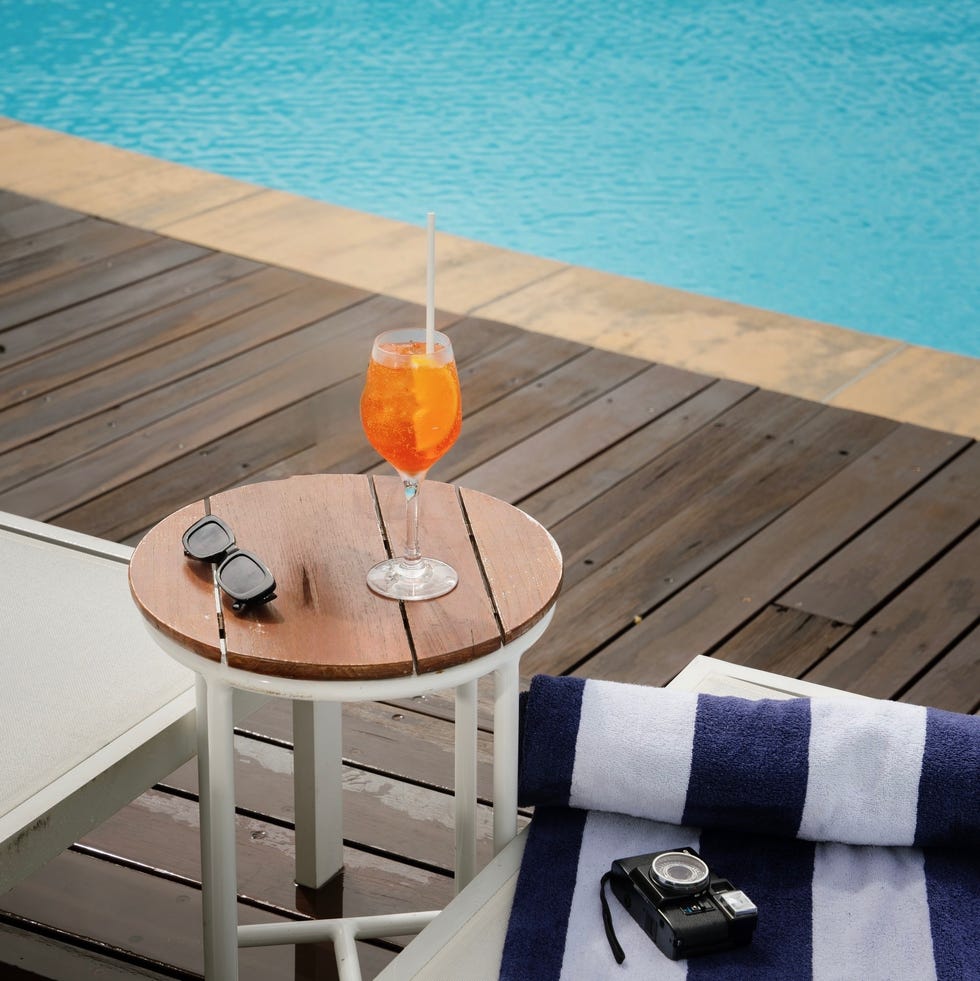
InterContinental Hayman Great Barrier Reef
The idyllic reaches of Australia’s Whitsunday Islands might seem like an unlikely source for Italian comparisons, but pristine sand beaches and cerulean surf is always going to invite a Mediterranean sense of ease. Indeed, the InterContinental Hayman Great Barrier Reef pushes out Aperol Spritzes to its sun-soaked clientele at an almost supernatural clip. Part of that is because the collision of icy cold booze and effervescence forever forms a refreshing reprieve from summertime temperatures. But it’s also because the particular rendering here incorporates a bitter tang of gin—or tequila—along with fresh Italian fruit.
“As one of the country’s most iconic aperitifs, Aperol always brings a touch of Italian flair to the shimmering turquoise waters of the Coral Sea,” adds Brid Ryan, director of food and beverage at the iconic resort.
Ingredients
45 ml tequila or gin (we like Cazcanes No. 7 Blanco)15 ml Aperol15 ml lime juice45 ml Grapefruit juice15 ml Agave syrupSoda waterOrange zest
Directions
Assemble all ingredients—aside from soda water—into a shaker with ice and shake vigorously until well-chilled. Strain and pour into a wine glass over ice. Top up stemware with soda water and apply orange zest garnish.
Soppressata-Washed Old Fashioned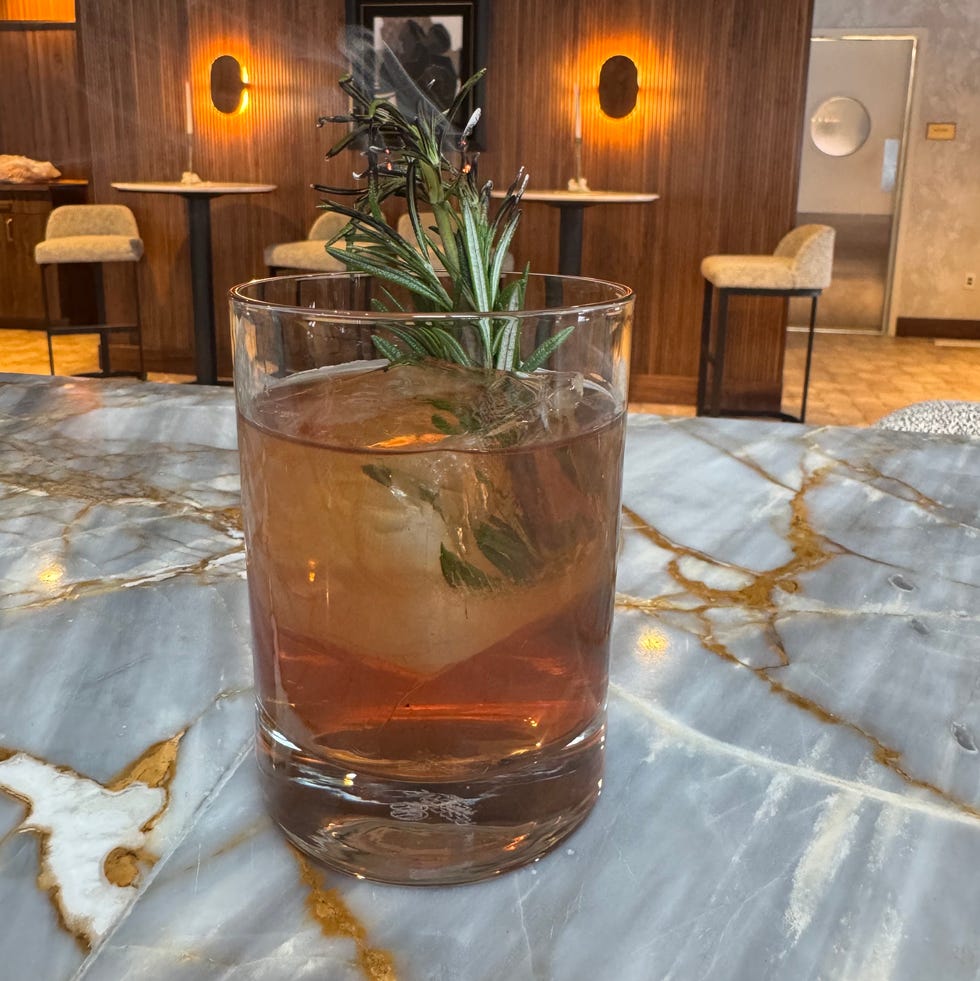
Courtesy Gusto!
The Old Fashioned cocktail is about as American as apple pie. But if you want to make it as Italian-American as pizza pie, all you have to do is add some cured meats, naturally. Hear us out—or at least listen to the talented tastemakers at Gusto! The exclamatory Italian eatery inside the Nemacolin Resort in Western Pennsylvania has tailor made a savory, meat-studded sipper like no other. Start off with some finely sliced Soppressata—though you can use Guanciale—and slowly render your selection of pork in a pan over mild heat so as not to burn the fat. Once the pork is cooked remove the meat and strain the rendered fat into a separate cup, making sure you have a minimum of 2 1/2 oz of rendered fat. Fill a 32 oz Mason jar with your bourbon of choice and add in the rendered fat. Close the lid and swirl the fat into the bourbon. Let the bourbon and fat sit at room temperature for four hours before placing it in the freezer overnight. Then, use a cheesecloth to strain the fat out of the bourbon and use this newly-refined liquid as the base for the carnivorous treat to follow.
Ingredients
2 1/2 oz. cured meat-washed bourbon1/4 oz Demerara sugar3 dashes Angostura BittersSprig of rosemary for garnish
Directions
Put the large cube in your rocks glass. Add 3 dashes of Angostura bitters. Add a short 1/4 oz of Demerara sugar. Add fat-washed bourbon. Stir for 10 seconds in the glass. Burn the top half of your rosemary and rim the glass with the garnish while the rosemary is smoking. Add to the top of the drink and serve.
Martini
Elizabeth Griffin
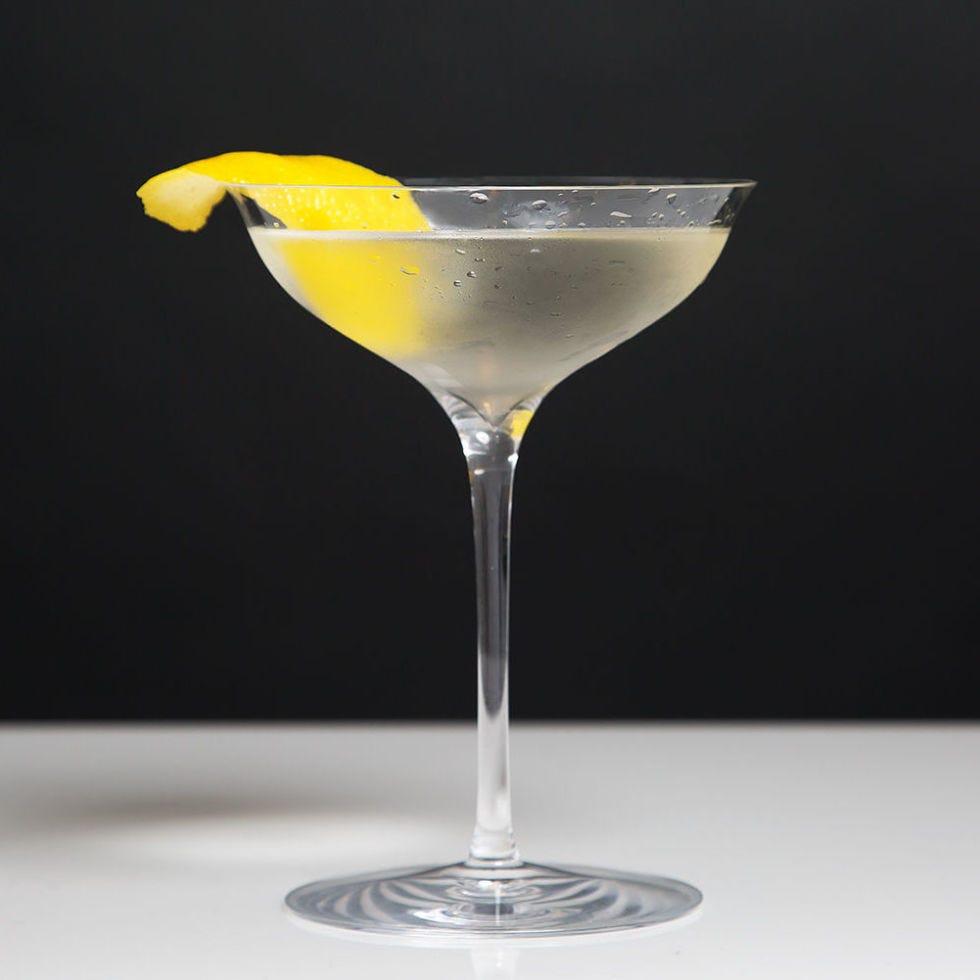
If you’re going to demand from your barkeep an outsized serving of booze in a glass, the Martini stands apart as the most socially acceptable way in which to do it. Apologies to Sir Winston Churchill, but there also ought to be a whisper of Italian vermouth in the composition. The best bartenders of London—who all happen to be Italian by birth—are never ones to forget. Alessandro Palazzi of Dukes famously rolls up to his guests with a trolley laden with frozen bottles of gin and vodka. He then proceeds to rinse equally-chilled glassware with a thimbleful of Italian fortified wine before promptly emptying it out over his shoulder. The pageantry is unparalleled. But it also serves a purpose: an ever-so-slight aromatic curiosity evocative of Mediterranean breeze. There are, of course, so many ways to take your Martini: dry, wet, dirty, filthy. One thing is immutable, however. That base spirit has to be purer—and colder—than the driven snow.
Ingredients
2.5 oz. London dry-style gin1/4 oz or less dry vermouthLemon twist or green olive for garnish.
Directions
Place a martini glass in the freezer at least one hour prior to preparation. Combine liquid ingredients into a mixing glass over ice and stir well—at least 30 seconds—to properly chill and dilute. Remove martini glass from freezer and strain the mixture into the chilled glass. Garnish with a lemon twist or olive.
Hugo Spritz 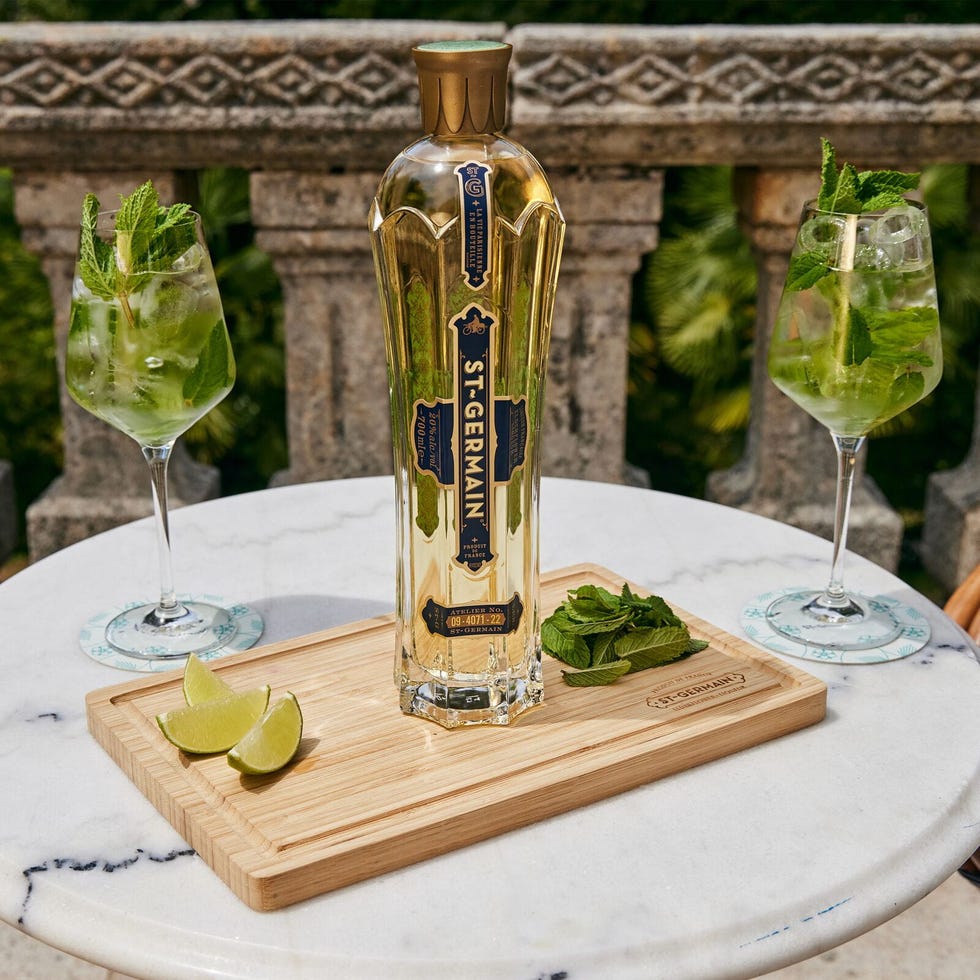
Courtesy St. Germain
If you’ve grown tired of all the attention paid to that other Spritz dominating contemporary cocktail culture, the Italians present you with an equally endearing alternative. It was invented in 2005 in Naturno, a small village at the foothills of the Dolomites in Northern Italy. Accordingly, it has evolved into the preferred pour for apres-ski in this mountainous part of continental Europe. Central to its Alpine appeal is the presence of Prosecco, fresh mint and St-Germain—a sweet-yet-herbal liqueur constructed from hand-picked elderflowers. Although the Hugo actually predates the invention of St-Germain, which didn’t arrive on the scene until 2007, today the drink and cocktail are as inextricably linked as poles and skis.
Ingredients
1 1/2 oz St-Germain Elderflower Liqueur3 oz dry Prosecco1 oz soda water or club soda8–10 fresh mint leaves1 fresh lime
Directions
Make sure all ingredients are cold before preparation. Fill a large wine glass with ice cubes. Add 8–0 mint leaves and 1 1/2 oz of St-Germain to the glass. Slowly pour in Prosecco, followed by sparkling water. Gently stir with bar spoon to combine, careful not to lose the carbonation. Garnish with a fresh mint sprig and a lime wedge.
Fumo Rosso 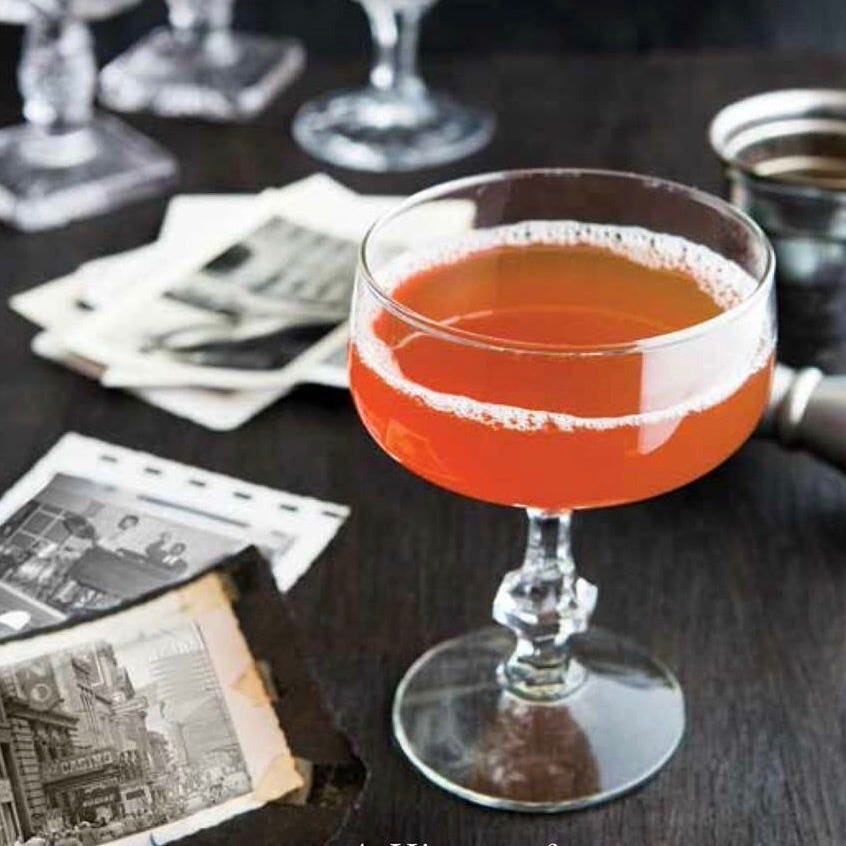
Adam Milliron
“This cocktail was designed to really make Campari, the Italian cafe sipping aperitif, stand out on its own without other stronger spirits drowning out the flavor profile,” according to its inventor, Sean Enright. “I decided to use an orange cordial to underscore the citrus notes, and wanted to maintain the Italian heritage of the cocktail by adding basil to the cordial.”
At Spoon, his craft cocktail bar in Pittsburgh, Pennsylvania, Enright builds his own orange cordial using fresh fruit, agave nectar, and basil leaves. It’s an elaborate process that amateur drink makers can avoid altogether by substituting an orange liqueur in its place. Either way, maintain an inventory of freshly-picked basil in your refrigerator at all times. It’s a simple hack for injecting aromatic vibrancy into anything you serve.
Ingredients
2 oz Smoked Campari1 oz Grand Marnier3 dashes smoky bittersOrange peelBasil leaves
Directions
Over fresh ice, build in cocktail tin. Shake and double strain into cocktail glass. Garnish with expressed orange peel and a sprig of basil.
Witches G + T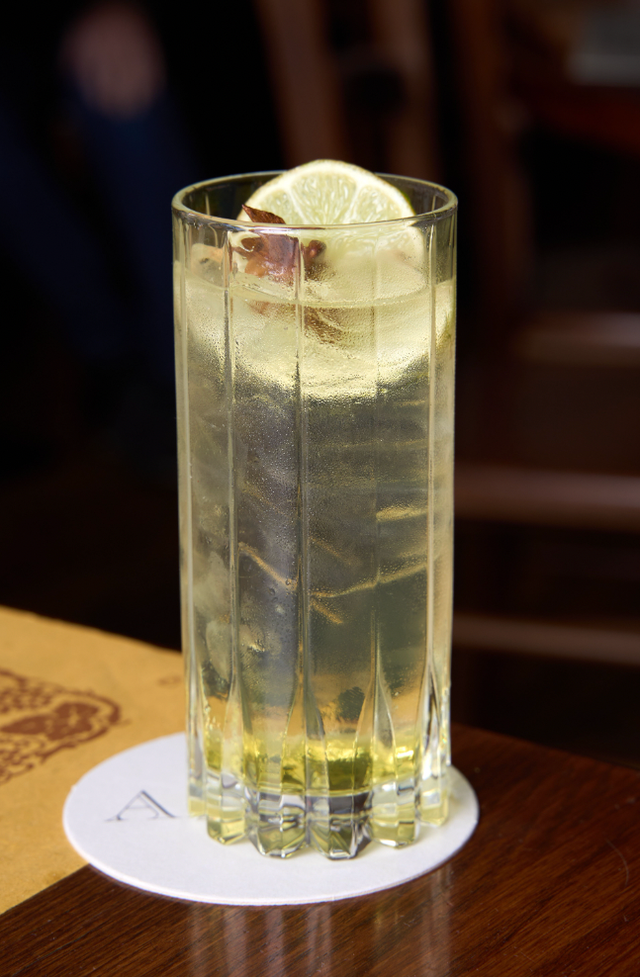
Angelini Osteria
The gin and tonic is among the most enduringly popular drinks on the planet. It was invented by British military officers to stave off malaria in colonial India using a base spirit originally hailing from the Netherlands. How is any of this Italian? It’s not. Until you add Strega, the revered herbal liqueur of Benevento.
It’s distinctive yellow hue and deeply minty essence bring an added layer of mystique to an otherwise ordinary preparation. It’s become a pervasive enough riff to merit its own nicknames, including the “Witches G+T,” or the “Stregatonic,” if you’re not into the whole brevity thing. Experts of hospitality (and house-made pastas), the folks at Angelini Osteria in the hip Fairfax district of Los Angeles have made it a centerpiece of their newly-minted Italian cocktail menu. The secret sauce here is the addition of a small yet crucial finishing touch in the form of star anise. Its herbal unctuousness really ties the whole mood together.
Ingredients
1 oz dry gin1 oz Strega Liqueur4 oz tonic water1 star anise1 lime wheel
Directions
Fill a highball or rocks glass with ice. Add the gin and Strega. Top with tonic water. Stir gently to combine. Squeeze the lime wedge over the top and garnish with anise.
Black Manhattan 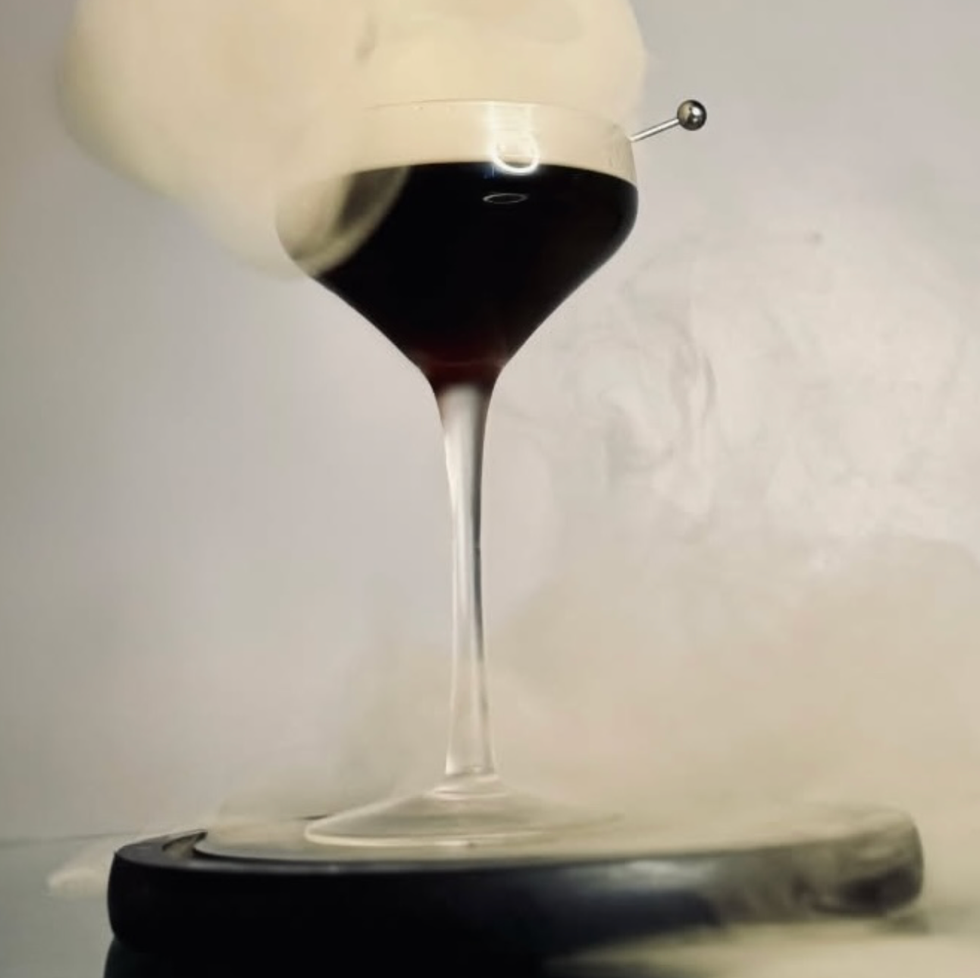
Courtesy Space Bar
The Black Manhattan is an Italian-ified variant of the classic Manhattan, in which Sicilian amaro stands in for sweet vermouth alongside an assertive American rye. It allows for a richer, more robust sipping experience that’s especially delightful as digestivo. “Fittingly, it was not born in New York at all, but in San Francisco, where it emerged in the mid-2000s as part of the craft-cocktail movement’s turn toward bitterness, structure, and restraint,” explains Dale Vaughn of Space Bar in Pittsburgh. “The Black Manhattan showed bartenders that bitterness could be expressive rather than austere.”
Ingredients
2 oz rye whiskey1 oz Averna Amaro1–2 dashes Angostura bitters1 dash orange bittersCocktail cherry
Directions
Chill a coupe or martini glass in the freezer for up to an hour prior to preparation. Fill a mixing glass with ice and add all liquid ingredients. Stir well until thoroughly chilled—at least thirty seconds. Strain the mixture into the chilled glass. Serve up with a cherry garnish.
Toronto
Ray Kachatorian//Getty Images
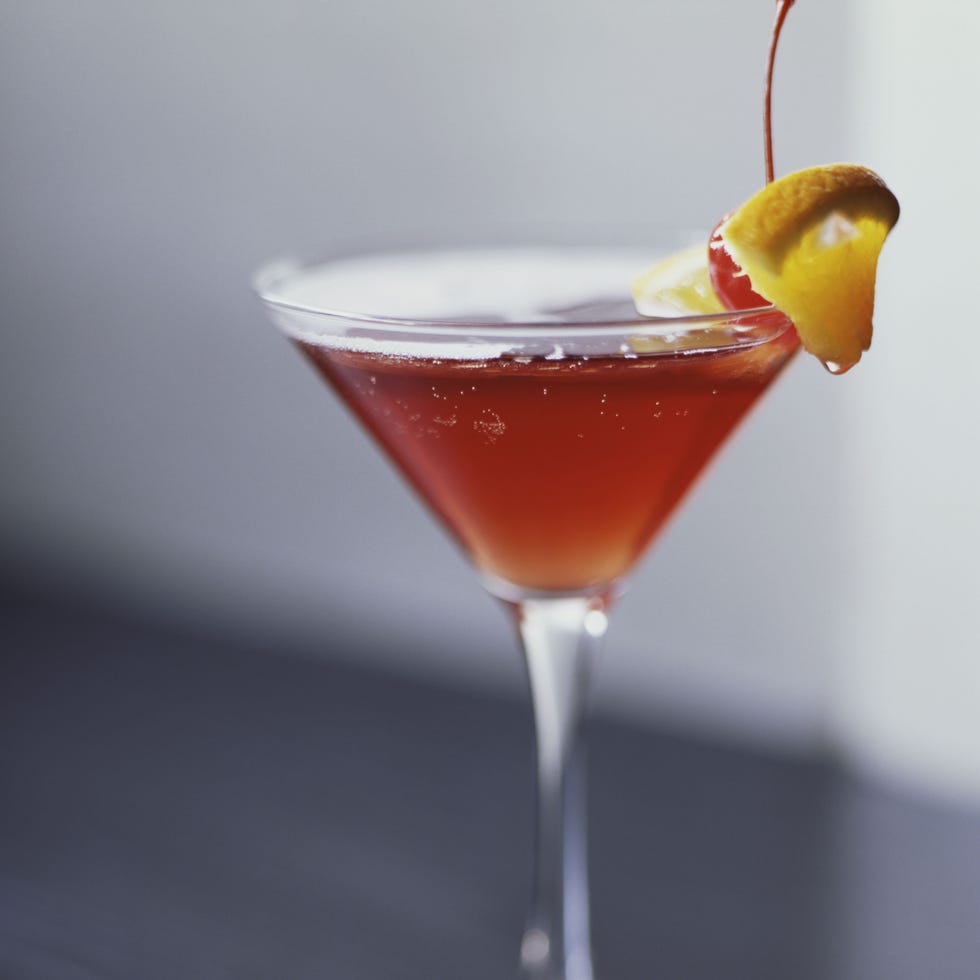
While we’re on the subject of Manhattan riffs, we’d be derelict in our duties if we overlooked this complex classic, a favorite amongst Fernet fans. Truth be told, even for drinkers who are outright resistant to that most polarizing of Italian amari, this is a surefire way to win them over. It first appeared in a cocktail book penned by Robert Vermeire in 1922—a time when many American drinkers would venture up to Ontario’s capital city to escape American Prohibition. Bittersweet with a lasting mentholated sophistication, its allure is universal. In fact, it’s precisely what you need to warm up through a winter night in the Italian Alps. Or, to spiritually transport yourself there while watching the Olympics from the comfort of your living room. Our recipe calls for Canadian rye, to maintain nominative accuracy, but just about any sturdy North American-sourced whiskey will do the trick.
Ingredients
2 oz Canadian rye whisky1/4 oz Fernet-Branca1/4 oz ounce simple syrup2 dashes Angostura bittersOrange twist
Directions
Add the liquid ingredients into a mixing glass over ice and stir thoroughly until well-chilled. Strain into a chilled coupe glass, serve up and garnish with an orange twist.
The Godfather
Brent Hofacker / 500px//Getty Images
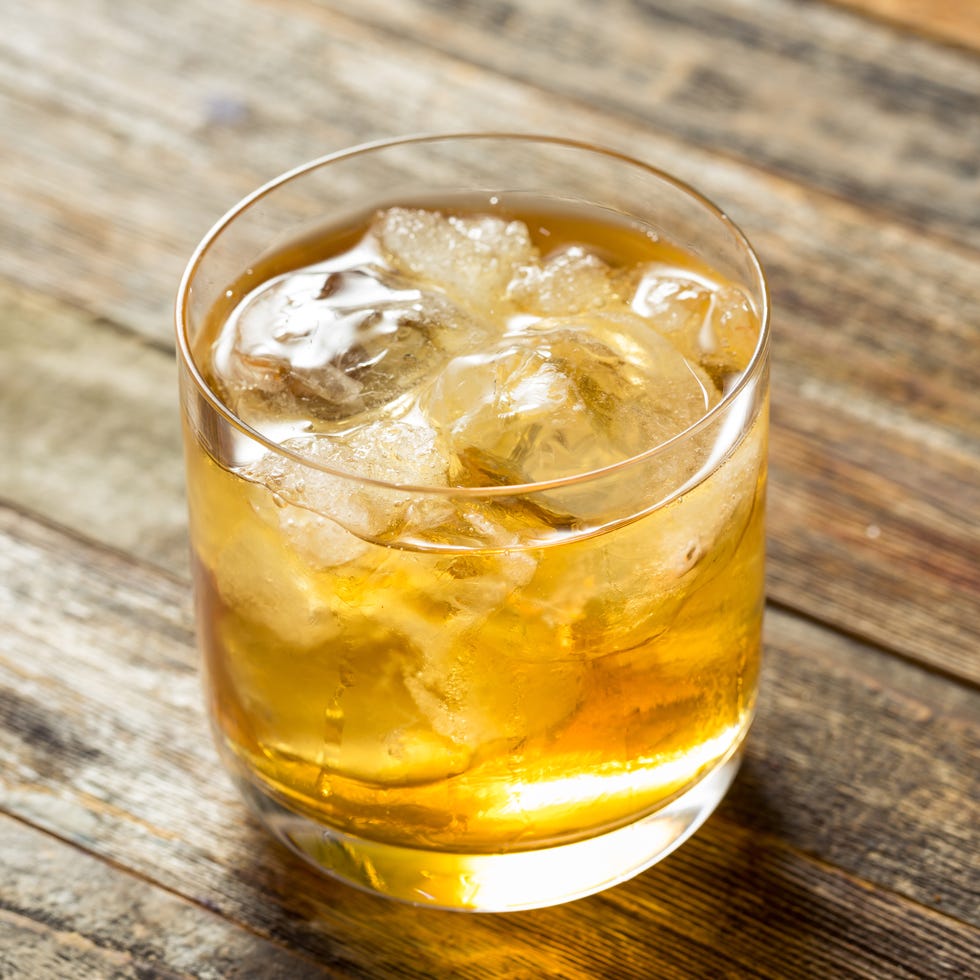
The Italian bonafides of this two-ingredient tipple are myriad. It was allegedly conceived by legendary Italian-American bartender Donato “Duke” Antone—the same maestro responsible for the Harvey Wallbanger, Rusty Nail, and White Russian. Alongside Scotch it relies on Italian amaretto to establish its nutty mouthfeel and sweet-yet-smoky taste profile. It’s named after one of the most famous Italian-American pieces of art ever produced. Legend has it that none other than Marlon Brando himself was instrumental in popularizing the 70s-era drink. We happen to think it’s a criminally underrated cocktail. It mines minimal ingredients and preparation to yield maximized results. And if you’re keen on peatier Scotch, by all means, lean into that smoke. It’s fire, we promise.
“The Godfather, for me, is emblematic of cocktails from the seventies and eighties,” says Michael Neff, bar director at The Green Door in Morgantown, West Virginia. “Two ingredients cocktails were all the rage, so a pour of something strong with a dash of something sweet to tone it down a bit. In the case of The Godfather, it’s blended Scotch and Amaretto. If you squint, it can sub for a Scotch Old Fashioned, with the sugar and bitter components both originating with the Amaretto.”
Ingredients
2 oz blended Scotch whisky1/4 oz Disaronno AmarettoOrange or lemon twist for garnish
Directions
Build in glass; add Scotch and amaretto to a rocks glass over ice. Stir gently with bar spoon for up to one minute, until mixture is well-chilled. Garnish with an orange or lemon twist if desired.
more cocktail recipes
Dining and Cooking