
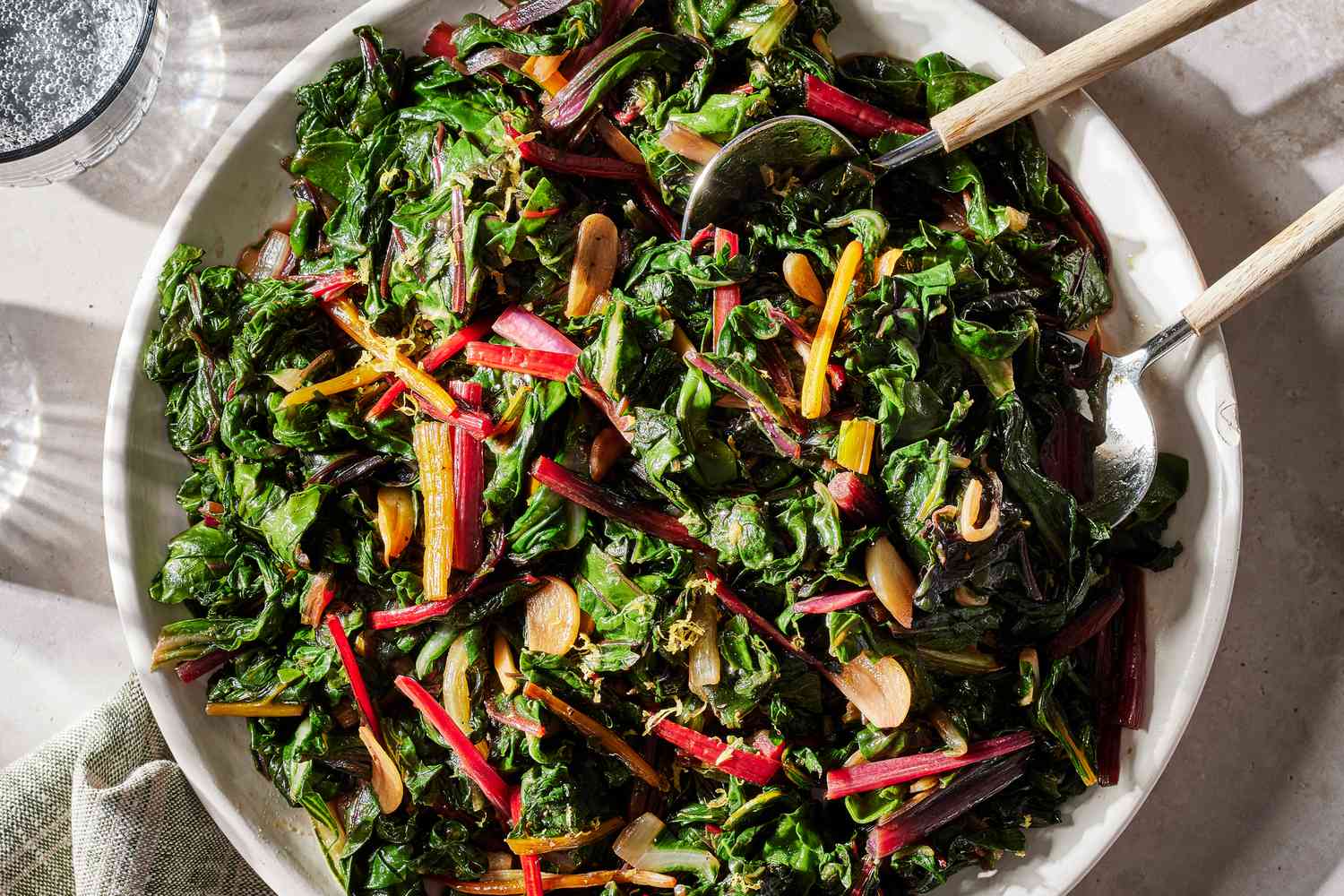
This simple rainbow chard recipe comes from Fabio Trabocchi, the Italian chef behind Fiola and other Washington, D.C. restaurants. All it takes is some garlic, lemon zest, and a few glugs of good olive oil to make this vegetable side dish as delicious as it is colorful. One trick to cooking these leafy greens perfectly: Trabocchi suggests detaching the chard leaves from the inner ribs (and discarding the toughest lower part of the stem), then getting that ideal crisp-tender balance by sauteing each of them separately, since they will cook at different rates.
Frequently Asked Questions
What is the difference between Swiss chard and rainbow chard?
Chard and Swiss chard essentially refer to the same thing, and the difference between chard varieties doesn’t go much beyond color! Some have paler stalks and ribs, while others have more colorful stalks of red, pink, or yellow. The red-ribbed varieties are often called “ruby chard,” which is sometimes described as having a slightly stronger flavor. A bunch that’s sold as “rainbow chard” is merely a grouping of leaves with stalks ranging in color. You’ll sometimes see the phrase “Swiss chard” used to describe the variety with light green or whitish ribs, simply to differentiate it from its more colorful counterparts. With ruby or rainbow chard, this recipe has an assortment of hues that makes for an aesthetically interesting dish — but any type of chard will be delicious here.
What part of rainbow chard is edible?
There’s no part of chard that is inedible — you can eat the stems, the leaves, and the inner ribs that run along the leafy vegetable. Chard’s sturdy leaves are sometimes compared to a more toothsome spinach, green-tasting and slightly bitter, though this diminishes with cooking; the ribs are milder and more fibrous. The thick stems can be tough, and many recipes, including this one, will recommend trimming and omitting them. You don’t have to throw them out, though! Chard stems can be good pickled, braised, or chopped and sautéed.
Notes from the Food & Wine Test Kitchen
This rainbow chard recipe calls for a half cup of olive oil, which initially seems like a lot until we consider that we’re cooking up four pounds of the vegetable. (After all, it yields 10 servings!) Feel free to reduce the amount of oil, but you may need to sprinkle in some water if the chard seems dry. If you like really garlicky greens, you can increase the number of garlic cloves.
Dining and Cooking