
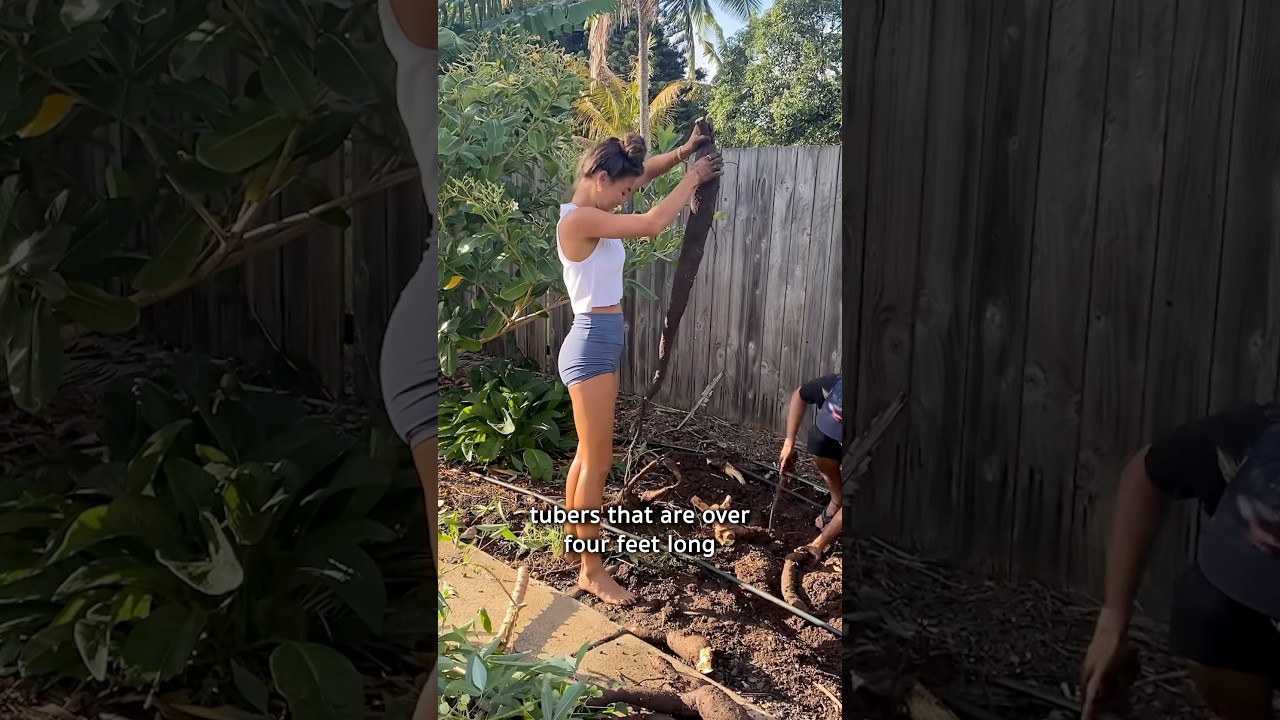
Growing food has been the most empowering thing. It has opened our eyes to how valuable the knowledge is and essential for security in this unstable world. I hope everyone gets a chance to feel that freedom and taste the difference. Here’s a little video of how things are progressing back home in Hawaii, while we are traveling.
#foodsecurity #growingfood #growfood #selfsufficient #gardener #backyardgardener #cassava #tapioca #yuca #growfoodnotlawns #homesteading #hawaii #homestead #tropicalfood
32 Comments
Cassava, also known as yuca or manioc, is a woody shrub cultivated for its edible, starchy tuberous roots. It's a staple crop in many tropical and subtropical regions, known for its drought tolerance and ability to thrive in poor soils. The roots are a significant source of calories and are consumed in various forms, including boiled, fried, or processed into flour (tapioca).
Key Characteristics:
Plant Type: Woody shrub, typically grown as an annual crop.
Climate: Thrives in warm, tropical, and subtropical climates.
Roots: Edible, starchy, tuberous roots that grow underground.
Leaves: Palmate (hand-shaped) leaves, sometimes with ornamental value.
Propagation: Typically grown from stem cuttings, not seeds.
Toxicity: Contains cyanogenic glycosides, which must be removed by processing before consumption.
Uses:
Food:
Cassava roots are a major source of carbohydrates and calories, consumed in various forms.
Tapioca:
Cassava starch, known as tapioca, is used in food, animal feed, and industrial applications.
Ornamental:
Some varieties with variegated leaves are grown for their aesthetic appeal.
Growing Cassava:
Planting: Cassava is usually grown from stem cuttings, planted horizontally or vertically in the ground.
Soil: Prefers well-drained soil but can tolerate poor soil conditions.
Watering: Requires regular watering, especially during dry periods.
Harvesting: Roots are typically ready for harvest after 9-12 months, but can be left in the ground for longer.
Processing: Cassava roots must be processed to remove toxins before consumption.
In summary, cassava is a versatile and important crop, providing a vital food source in many parts of the world, while also offering ornamental value and industrial applications.
I gotta feed this to my girl. Wow
Pa sembrarle la yuca
Somebody tag the Asian height guy
What climate zones is this hardy in?
From Philippines, hi people 😊
You have to be careful with cassava. Can be poisonous if you don't know how to handle and cook it.
To obtain better roots, it is necessary to wait for the leaves to begin to yellow and fall, like those trees at the end of autumn in the northern hemisphere.
At this time, the plant will reserve all the nutrients and sugars for the root. It will become much softer and tastier.
In the states of Pará and Santa Catarina, they make wonderful flours with cassava. For a good meal, you boil bean broth and gradually add cassava flour, stirring until it forms a paste. Serve with stewed meat on top.
I can see a better place to plant your seed.
From 1955, Tapioca pudding
You can cook casava leaf with curry, so delicious dan healthy
Now I'm craving cassava dumplings and curry chicken.. … ❤🫶 from🇯🇲
What is a source of nongenetically modified casava seed/ plant?
Yuca y mandioca son dos variedades diferentes; una solo se come como harina porque hay que lavarle la toxina que tiene, y la otra se puede comer hervida, en puré, frita y se puede hacer harina y no tiene la toxina.
Those are big dongs
She got a good thigh gap
why tf would you advocate for people to grow cassava? that's why the world as we know it today is completely f*ed. Just anyone can spout any kind of garbage online and become an influencer.
Forget that plant what's up with your girl 😲❤❤❤
You are wasting the most nutritional part of it. The young leaves make Ponfu saka saka
😍🔥🔥🔥
She definitely could get me to grow a tuber.Very fast😂
Wow so many roots the cassava and also big👍🤩
First step, live in south florida
I don't think these will grow in USDA hardiness zone 4, so NEED to grow is hyperbole as far as I am concerned.
Only rich white people think eating only cassava root is ok 😂
Awesome information 😊
For smoking right?
What about the lady. She's What I'm talking about
Great job
We called it kamoteng kahoy in our country lots of cassava.
It also contains cyanide
Yuca 🇻🇪