
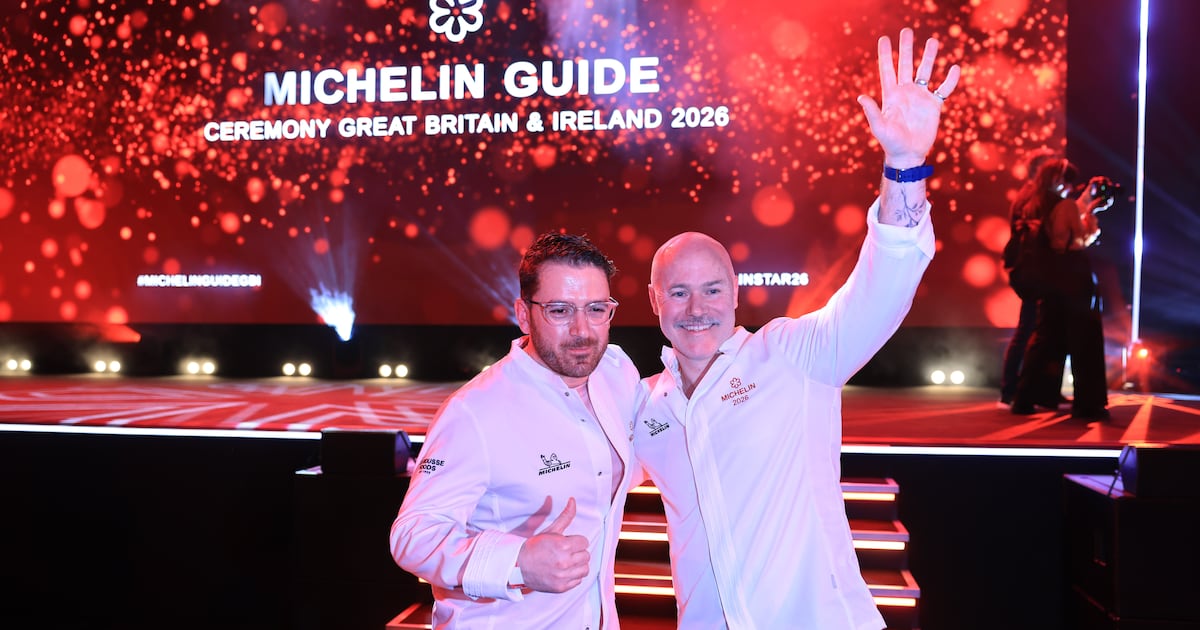
There was real cheer in the room as the Michelin Guide announcements landed. Two new one-star restaurants, The Pullman at Glenlo Abbey and Forest Avenue in Dublin, took their place in the guide.
Both awards reward cooking that is settled, assured and decisively judged. It was a good night for Irish restaurants doing serious work with no interest in distraction.
The Pullman’s star came with a flourish, but not a gimmick. Yes, the diningroom sits inside two restored Orient Express carriages from 1927 and 1954, and yes, they are glorious. But Michelin was clear: this is not novelty dining.
Angelo Vagiotis’s cooking did the work. When I ate the seven-course menu (€130), the kitchen showed its hand early and confidently: trout with beetroot and horseradish; Jerusalem artichoke with monkfish liver in a clear, roasted broth; turbot with Champagne and mussels; and a cleanly judged Colonel of rhubarb with Redbreast whiskey. Food cooked calmly, with confidence, in a room that knows when to stop showing off.
Speaking in the ceremony video, Vagiotis described his approach as “very classic, although it appears modern”.
“We don’t say no to luxury,” he said. “We use truffles, we use caviar. But the real luxury is the product from the area. I let the farm dictate the menu.”
That philosophy runs through the meal. For Galway, this matters. The Pullman is not a postcard restaurant or a special-occasion novelty. It is a proper one-star kitchen, and it puts the west firmly back on the fine-dining map, alongside Michelin starred Aniar and Lignum.
[ Michelin’s Dublin reservation: ‘It shows how far we have travelled as a food destination’Opens in new window ]
Forest Avenue’s star, by contrast, felt less like news than like an overdue correction. John Wyer has been cooking at this level for years, but recent meals showed a quiet certainty that finally pushed it over the line.
When I ate there last year, with front of house managed by his wife Sandy, the cooking was notably precise: raviolini with duck puttanesca held in check by a savoury, disciplined koji béchamel; cod and mussels pulled together by vin jaune and fermented grains; dry-aged suckling pig with girolles and black pudding. Even dessert – milk ice cream with chocolate crémeaux and buckwheat – avoided ostentation in favour of balance.
Michelin’s language echoed that restraint, praising mature, controlled cooking that avoids overcomplication and lets ingredients speak. The airy, glass-fronted room remains one of Dublin’s easiest places to eat well, and the €89 tasting menu is pitched with rare accuracy. This is a star built on judgment, not theatre. “It’s been a long time coming,” Wyer said. “I never thought this would happen.”
The 2026 Michelin Service Award, presented by Gordon Ramsay, went to Barbara Nealon of St Francis Provisions in Kinsale – a warmly received and well-deserved nod to a Bib Gourmand restaurant that makes you feel like you’re in the front room of an old friend.
Taken together, these awards strengthen Ireland’s one-star tier, bringing the total number of one-star restaurants on the island to 20, though the absence of Comet will raise eyebrows for those following the inspections closely. There were no awards for the North.
And yet expectations ran higher.
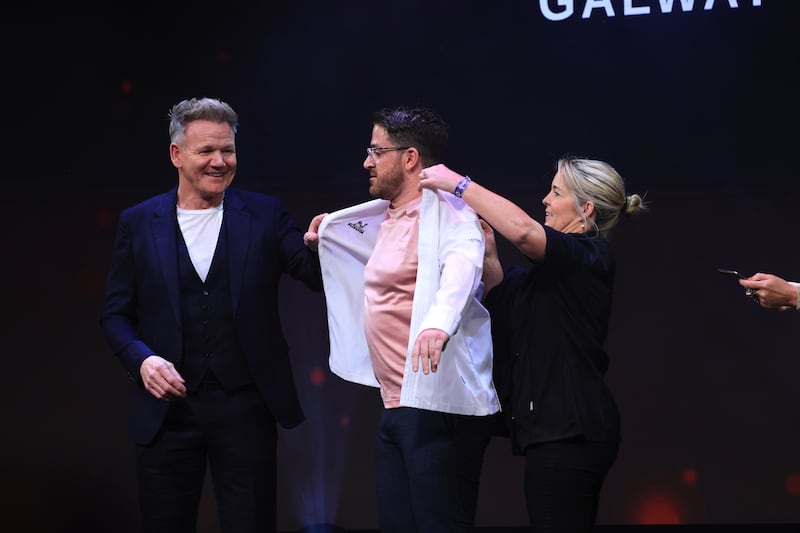 Vagiotis (centre) on stage with Gordon Ramsay. Photograph: Dara Mac Dónaill
For all the pleasure of the new awards, the night stopped short of the larger moment many had anticipated. Ireland still has no three-star restaurant.
The contenders are familiar – Chapter One, Liath, Restaurant Patrick Guilbaud, Dede and Terre – all repeatedly inspected, all operating at a level where distinctions are exacting rather than obvious.
Hosting the ceremony sharpened expectations, even if it never guaranteed an outcome. Michelin opted for restraint, and not just in Ireland: there were no new three-star awards in Britain either. All previously starred Irish restaurants retained their status.
Still, Forest Avenue and The Pullman deserve their applause. These are restaurants that earned their stars the hard way, through consistency rather than hype, judgment rather than noise.
The frustration lies not with them, but with the sense that Irish cooking is ready for the next step – and is still waiting for Michelin to agree.
Dining and Cooking