
The perennially anticipated Silicon Valley Bank (SVB) “State of the U.S. Wine Industry” report, published today, comes on the heels of a particularly difficult year for the wine industry—one in a series of annual declines. Will the 2026 “State of the U.S. Wine Industry” report finally bring better news for American wine professionals?
It’s a mixed bag on many levels. Wineries report divergent experiences this year, with a widening gap between those reporting top performance and those reporting poor performance. And even though signals for better days ahead will begin to emerge this year, Rob McMillan, the EVP and founder of Silicon Valley Bank Wine Division, cautions against painting an overly rosy picture.
“The worst is behind us, and while I shouldn’t say the next year will be easier, it will be less hard,” he says.
Don’t miss the latest drinks industry news and insights. Sign up for our award-winning newsletters and get insider intel, resources, and trends delivered to your inbox every week.
McMillan further discussed the findings of the 2026 SVB “State of the U.S. Wine Industry” report in a live webinar with Janie Brooks Heuck, the managing director of Brooks Wine, Kristin Marchesi, the managing director of Metis Mergers and Acquisitions, and Matthew Owings, the COO and CFO of Rombauer Vineyards. Ahead of their discussion, SevenFifty Daily reviewed the 2026 report, spoke with McMillan, and outlined four key takeaways for the industry.
The Wine Demand Correction Is Softening—And There’s an End in Sight
Once again, the 2026 “State of the U.S. Wine Industry” report predicts that final value and volume sales numbers will decline in 2025, with volume sales down about two percent over 2024, and industry revenue down 1.6 percent over the same time period. That’s an improvement over last year’s rate of decline, however, and that trend is expected to continue into 2026, with the steepest drops in the rearview mirror.
Much of that decline is driven by value wines under $12, while more premium wines—though not insulated from the decline—are overperforming. Premium wineries expect to record relatively flat dollar sales for 2025, and the 2026 report specifically notes that the $20 to $29 and $100-plus price tiers expect to see growth.
Last year, McMillan emphasized the fact that the wine industry had been in a demand correction for nearly a decade, with off-premise volume growth rates beginning to decline in 2017, indicating that it would likely begin looking up sooner than it seemed. Now the question is: When will conditions begin to improve?
McMillan believes that the coming year will still feel difficult for producers, particularly as some cash-strapped growers and wineries are forced to shutter and, in doing so, point to a more obvious wine industry contraction. “Anybody who says [the coming year is] not going to be negative is dreaming,” he says.
However, green shoots—the first signs of recovery—are likely to emerge in the coming year, and a “bumpy” but shallower route to the bottom is likely to form in 2027 and 2028, absent an external, unpredictable event.
Winery Sentiment and Financial Health Have Declined
In last year’s report, winery sentiment trended lower than reported financial health for individual producers, and the 2026 “State of the U.S. Wine Industry” report indicates the same. However, both sentiment and financial health declined in 2025, according to SVB’s recent survey.
According to the report’s Winery Sentiment Index, about half rated 2025 negatively and a third rated it positively—though the share of wineries saying it was “one of our better years” or “the best year in our history” increased slightly. Negative responses strongly outweighed positive ones in regards to nearly every metric, with sentiment trending more negative over 2024 for nearly every metric as well. Wineries reported feeling the worst about the economy and consumer demand.
Sentiment varied according to location as well, with Sonoma County and Napa County expressing the most pessimistic net response and Virginia and Washington expressing the most optimism—though sentiment still trended negative. This is likely due to regional cost structures, shifts in tourism, and direct-to-consumer sales dynamics.
Overall, 63 percent of wineries reported their financial health in 2025 as being good or stronger, versus 68 percent in 2024. Responses vary wildly, however; survey respondents in the top quartile reported double-digit revenue growth last year.
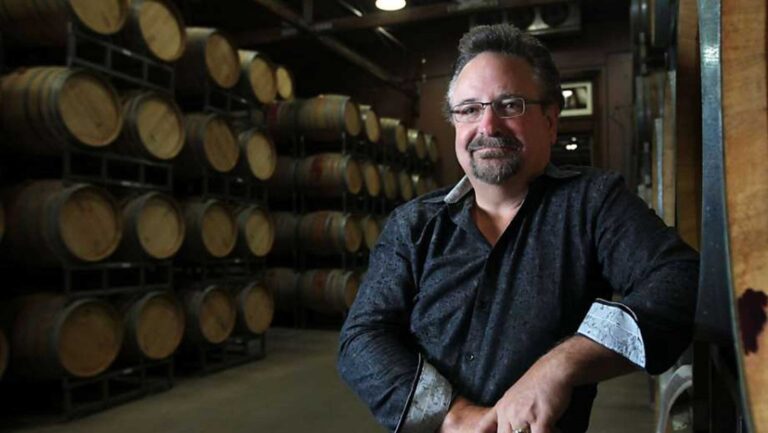 “While I shouldn’t say the next year will be easier, it will be less hard,” says Rob McMillan, the EVP and founder of Silicon Valley Bank Wine Division, who wrote the 2026 “State of the U.S. Wine Industry” report.
Inventory Surplus Is Starting to Ease at the Retail Level
As predicted, oversupply was an industry headwind in 2025 and will likely continue into 2026, with excessive inventory levels persisting across all tiers. This isn’t expected to normalize until retail sales improve, and while supply and demand won’t be balanced by the end of 2026, it could improve.
Using wholesale volume data from SipSource and retail volume data from Nielsen, the 2026 report includes a gap analysis in growth rates between the wholesale and retail tiers. Examining major varietal wines and categories—Cabernet Sauvignon, Chardonnay, red blends, Sauvignon Blanc, Pinot Noir, and Pinot Grigio—year-over-year retail volume change is still negative, but better than year-over-year wholesale volume change. Essentially, this data indicates there’s less inventory surplus at retail than there is at wholesale.
“I can’t quite say the problem’s getting smaller, but it’s not getting worse at the retail side,” says McMillan. “Distributors are using discipline in the way they’re moving things … so we don’t really see a lot of movement right now in the wholesalers’ inventories, but this is the beginning of change—and that’s what I’m talking about for 2026.”
To Survive, Wineries Must Adapt to New Consumer Behavior
Though the end of the wine industry’s downturn is visible, the 2026 “State of the U.S. Wine Industry” report cautions against simply battening down in the hopes for a return to normal. “Don’t wait for the bottom,” says McMillan. “Don’t wait for the rising tide to lift all boats, because it won’t.”
The report indicates that there’s a widening gap between the industry’s top and bottom performers, with the top quartile pulling away from the broader winery population. Wineries in the top quartile reported eight percent sales growth and 11.9 percent operating income, while those in the bottom quartile experienced a 10.2 percent sales decline and a 10.5 percent decline in operating margin.
In essence, there are pathways to succeed in today’s wine industry, but wineries need to be proactive in order to achieve that success. Rather than just focusing on the problems, wineries should focus on finding solutions, McMillan says.
“Why are we going through this change? It’s because of the shift to the consumer,” says McMillan. The 30 to 45-year-old millennial population is aging into wine-friendly stages of life, according to the 2026 report, offsetting the impact of a declining purchasing population among older consumers. However, these younger consumers interact with wine in a different way, and wineries must engage with them in a different way, too.
The 2026 “State of the U.S. Wine Industry” report includes a multipronged “success guide” for wineries, using data from the State of the U.S. Wine Industry survey and the 2025 SVB Direct-to-Consumer Survey. According to those surveys, the top decile of respondents focus on retention first, particularly when it comes to wine clubs; tactics like loyalty programs and rewarding tenure can avoid churn. It’s also essential to maintain a strong, streamlined strategy, with fewer SKUs and clear messaging. At the tourism level, top performers invest in training hospitality professionals, meeting the modern consumer’s expectations for personalized and food-paired experiences. And targeted use of digital tools have a positive impact on direct-to-consumer sales success, with top-performing wineries tying social media and email initiatives to specific, measurable business processes.
Action is key, says McMillan. “Go ahead—make the adjustments, try the strategies that you thought wouldn’t work,” he notes. “But you need to identify who your customer is, and you’ve got to adjust your brand, your label, your marketing approach to that new customer.”

Dispatch
Sign up for our award-winning newsletter
Don’t miss the latest drinks industry news and insights—delivered to your inbox every week.
Courtney Schiessl Magrini is the editor-in-chief for SevenFifty Daily and the Beverage Media Group publications. She has held sommelier positions at some of New York’s top restaurants, including Marta, Dirty French, and Terroir, and her work has appeared in Wine Enthusiast, GuildSomm, Forbes.com, VinePair, EatingWell Magazine, and more. She holds the WSET Diploma in Wines. Follow her on Instagram at @takeittocourt.
Dining and Cooking