
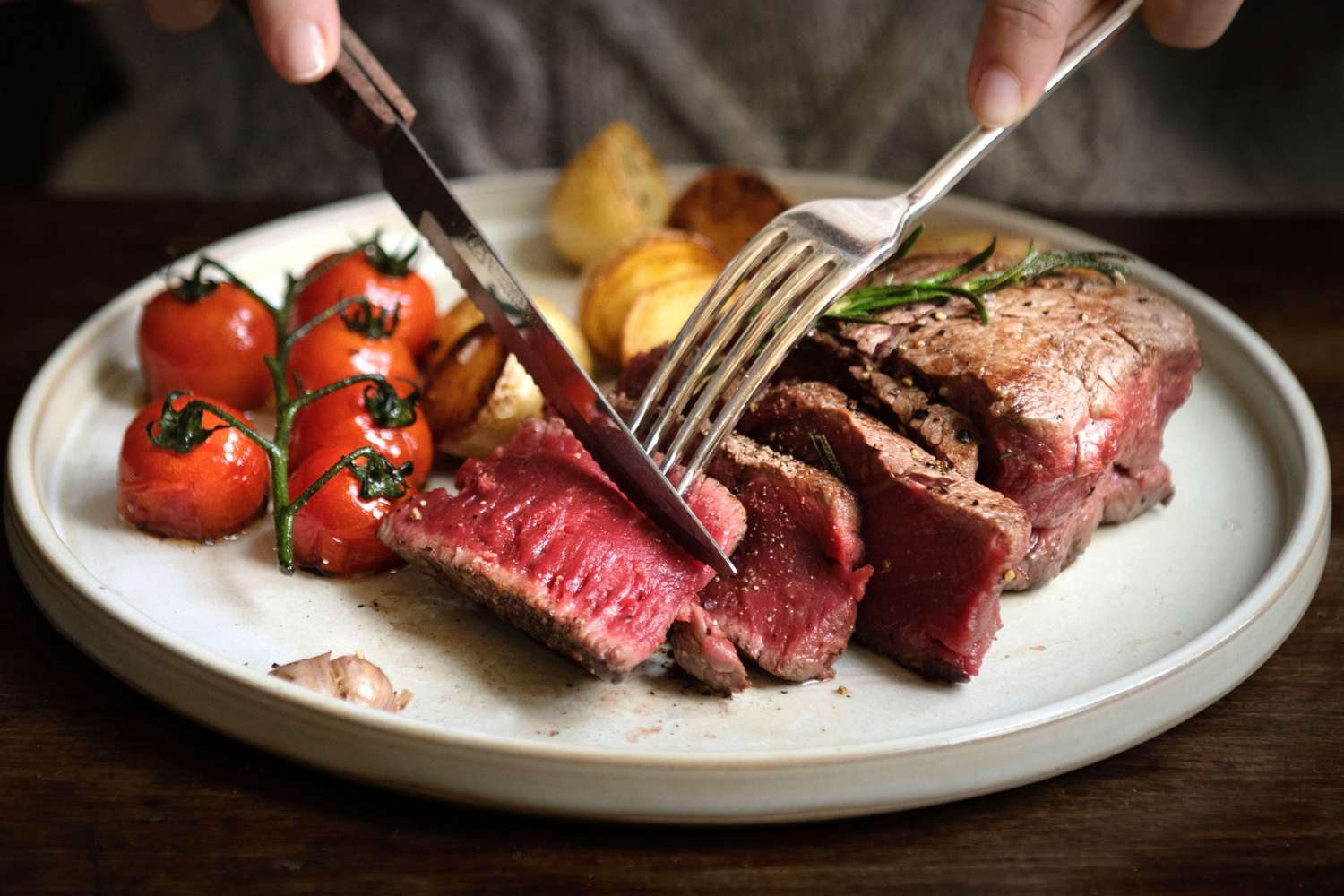
It’s hard to mess up a good-quality rib eye. Its natural fat and marbling produce an ultra-juicy, tender steak. Leaner steaks are far less forgiving, but what if we told you there’s a classic French cooking technique that can make just about any inexpensive cut taste luxurious?
“I spent three years early in my career in an apprenticeship where French cuisine was emphasized as the foundation of our work,” says Rick Yockachonis, chef of Olivine, an Italian-influenced restaurant in Auburn, Alabama. “From that training comes one of the most fundamental and quietly important concepts in classical cooking: nappe.”
What is nappe?
In traditional French cuisine, chefs slowly stir or whisk cold butter into a warm pan sauce, effectively emulsifying fat into the sauce. This process results in nappe, which generally refers to the mouthfeel of a sauce.
“I would not explain nappe as a technique, but rather the texture and consistency of a sauce or soup,” says Theo Adley, chef-owner at Marigold Lyons in Lyons, Colorado. “In short, the word is derived from the verb napper, which in French means ‘to coat.’”
Adley says the consistency is “not totally fluid or completely gelled, able to be poured as well as having enough viscosity to enrobe, both glossy and rich.” You can test for this texture by dipping a spoon into the sauce, then running your fingertip across the back of the spoon. It’s the proper consistency if “you can draw a clean line through the sauce,” Adley explains — much like crème anglaise, a classic pourable custard.
How nappe improves any steak
Jérôme Meyer, executive chef of Post House in Mount Pleasant, South Carolina, who was born and began training in Alsace, France, at the age of 14, says a rich sauce with a nappe texture can elevate affordable steaks such as hanger or flank steak.
“In my kitchen, nappe is not about hiding a cut, it’s about giving it what it’s missing,” he says. “Premium steaks like rib eye feel luxurious because of fat and texture. When I work with more affordable cuts, I re-create that richness through a controlled, precise finish.”
He doesn’t drown the steak in the rich, butter-thickened sauce; instead, he adds just enough butter to coat, about two tablespoons. “That thin layer adds roundness, shine, and depth, making the steak taste richer and more indulgent than its cut would suggest. This approach comes straight from classic French cooking: Respect the product, use what’s in the pan, and let a simple gesture do the work. At home, I follow the same rule, which is to keep it clean, restrained, and finish at the last moment.”
If you are using a very rich stock to build a pan sauce, butter can actually tame the intensity or any harsh notes, adds Nick Wilber, executive chef of Electric Hospitality Concepts’ Muchacho and Tiger Sun in Atlanta.
For example, making a demi-glace, which is a reduction of veal stock, can almost get “too robust and unctuous,” he says, as the flavors concentrate. “So, we monter au beurre (mount with butter). By whisking cold butter into the warm reduction just before service, you introduce a gentle emulsion that softens the aggressive tannins of the wine and concentrated char of the bones.”
How to achieve nappe at home
Meyer explains how he makes a pan sauce for inexpensive cuts of steak. “After searing the steak, I build a quick sauce directly in the pan using the natural juices. I reduce it just enough, then finish it with butter to create a light, glossy coating.”
You can add minced shallots and fresh herbs to the pan after the steak cooks. Pour in a rich stock or wine to deglaze, then reduce slightly and whisk in the cold butter, a little at a time, to achieve the desired nappe consistency. Using cold butter is important as it melts slower into the sauce; if the butter is warm, it’ll leave the sauce feeling greasy or may even separate.
“In the world of fine saucier work, balance is the ultimate goal; think of butter and acid as your salt and pepper, providing the final, velvety refinement that transforms a robust reduction into a harmonious masterpiece,” Wilber says.
Dining and Cooking