
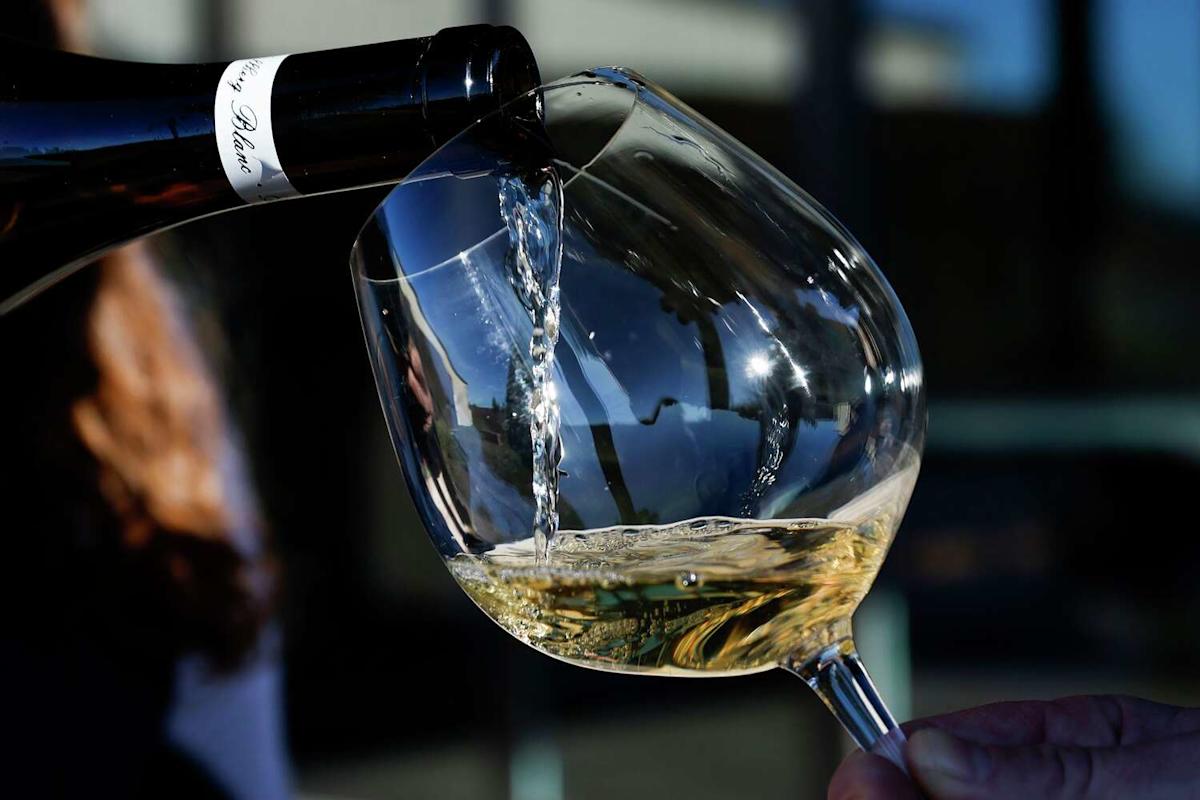
 The average price of a bottle of American wine shipped directly from U.S. wineries rose 11% in 2025, according to a new wine industry report, but sales and value experienced record declines. Wine is poured at a the Emeritus Vineyards tasting room in Sebastopol in 2024. (Jessica Christian/The Chronicle)
The average price of a bottle of American wine rose 11% in 2025 – the largest jump since 2021 – amid record declines in sales volume and value, according to a new wine industry report.
The 12% jump in 2021 was driven by the COVID-19 pandemic spending surge. This time, however, it reflects another sobering reality for the majority of U.S. wineries that rely on direct sales in a time of crisis: They’re losing consumers at a rapid rate.
The Direct-to-Consumer Wine Shipping Report, published Tuesday, revealed that the average price of a bottle of wine shipped directly from U.S. wineries last year was $56.78, up from $50.53 in 2024. Prices were highest in Napa Valley: $99.97, a 9% increase from the previous year, compared to $38.48 in Sonoma County, a 5% jump.
These spikes are largely not the result of inflation, or wineries raising their prices, said Alex Koral, the regulatory general counsel for the report’s author, Sovos ShipCompliant, a software company in the alcohol industry. It’s also not premiumization, where demand for higher-quality, costlier wines grows at the expense of more affordable ones, a hallmark trend of the 2010s.
{ “__type”: “devHubFreeformEmbed”, “__id”: “Datawrapper”, “__fallbackImage”: “https://datawrapper.dwcdn.net/xdxmj/mobile.png”, “__data”: { “datawrapper_id”: “xdxmj” } }
Instead, many value-conscious consumers have just stopped purchasing wine altogether: According to the report, wines under $15, which accounted for the greatest volume of shipments in 2010-2020, saw the biggest year-over-year decline, of some 35%.
Historically, the wine industry has relied on entry-level wines to attract new drinkers, especially younger consumers with less disposable income. Yet that on-ramp is rapidly disappearing. Over the past five years, shipments of wines under $15 “have plummeted by 67%,” the report said.
It’s not just the bottom-shelf wines, either. Declines were significant last year – upwards of 20% – for all wines under $40. “Contrary to the story for so many years, where people were moving from $15 wines to $30 to $60 and so forth, this is a drop-off in the lower end completely,” Koral said. When the lowest-priced wines fall out of the mix, the average price of a bottle naturally rises.
The annual report looked at data from Sovos and North American wine industry data analyst WineBusiness Analytics, covering more than 27 million shipments from over 1,300 U.S. wineries. Winery shipments dropped 15% in 2025 from 2024, a decline of 967,000 cases. The average value of those shipments also fell 6%, resulting in a decrease of $230 million across the U.S. (to $3.7 billion) and a decrease of $142 million in California. That the declines were concentrated in the under-$40 segment softened the overall drop in value, Koral said. Both were the steepest declines since the report’s inception in 2010.
Napa Valley fared better than other California regions. Shipment volume was down 8%, compared to 32% throughout the rest of the state, and rose 1% in value.
{ “__type”: “devHubFreeformEmbed”, “__id”: “Datawrapper”, “__fallbackImage”: “https://datawrapper.dwcdn.net/FkbDH/mobile.png”, “__data”: { “datawrapper_id”: “FkbDH” } }
Between 2010 and 2020, direct-to-consumer (DTC) sales through tasting rooms, websites and wine clubs boomed, growing from under $1 billion in annual revenue to nearly $4 billion. DTC is pivotal for America’s small wineries, which account for 97% of them – but now that sales model is “contracting at a faster rate than other[s],” the report said, “as fewer customers are receiving wine shipments from wineries.”
“I think there still is a lot of economic uncertainty, Koral said. “Consumers are just not as comfortable, perhaps, spending money on wine and wine clubs.” This applies to consumers of a wide range of budgets; all bottles priced under $200 experienced negative volume growth. “They’re worried if they’re going to have a job this year, they’re cutting back on expenses and wine is certainly a luxury expense.”
Bottles over $200 saw a 10% jump in shipments, reflecting broader trends in consumer spending.
Another contributing factor in the DTC decline is a multi-year slowdown in tasting room traffic across California, largely due to high tasting fees and hotel prices. The state accounts for 62% of the drop in wine shipments, and the majority of visitors to California wineries – where wine club signups typically take place – are local. “Fewer visits to tasting rooms means fewer wine club memberships, which will in turn result in reduced shipments,” the report said.
The woes of DTC also reflect sales declines across the entire wine industry, Koral said, as consumers are choosing other alcoholic beverages, such as ready-to-drink cocktails, and drinking less overall due to health concerns. (These consumers are most likely those who were purchasing wines under $40.)
A recent report from Silicon Valley Bank predicted that the wine industry downturn won’t hit bottom until 2027 or 2028. Koral predicted continued declines through at least the next six months. “We can’t sugarcoat it,” he said. “We’ll be looking for increased tasting room visits, increased consumer confidence, and I’m just not sure that we can confidently say those things will be coming down the pike.”
This article originally published at U.S. wine prices jumped 11% last year, but it’s a bad sign for the California wine industry.
Dining and Cooking