
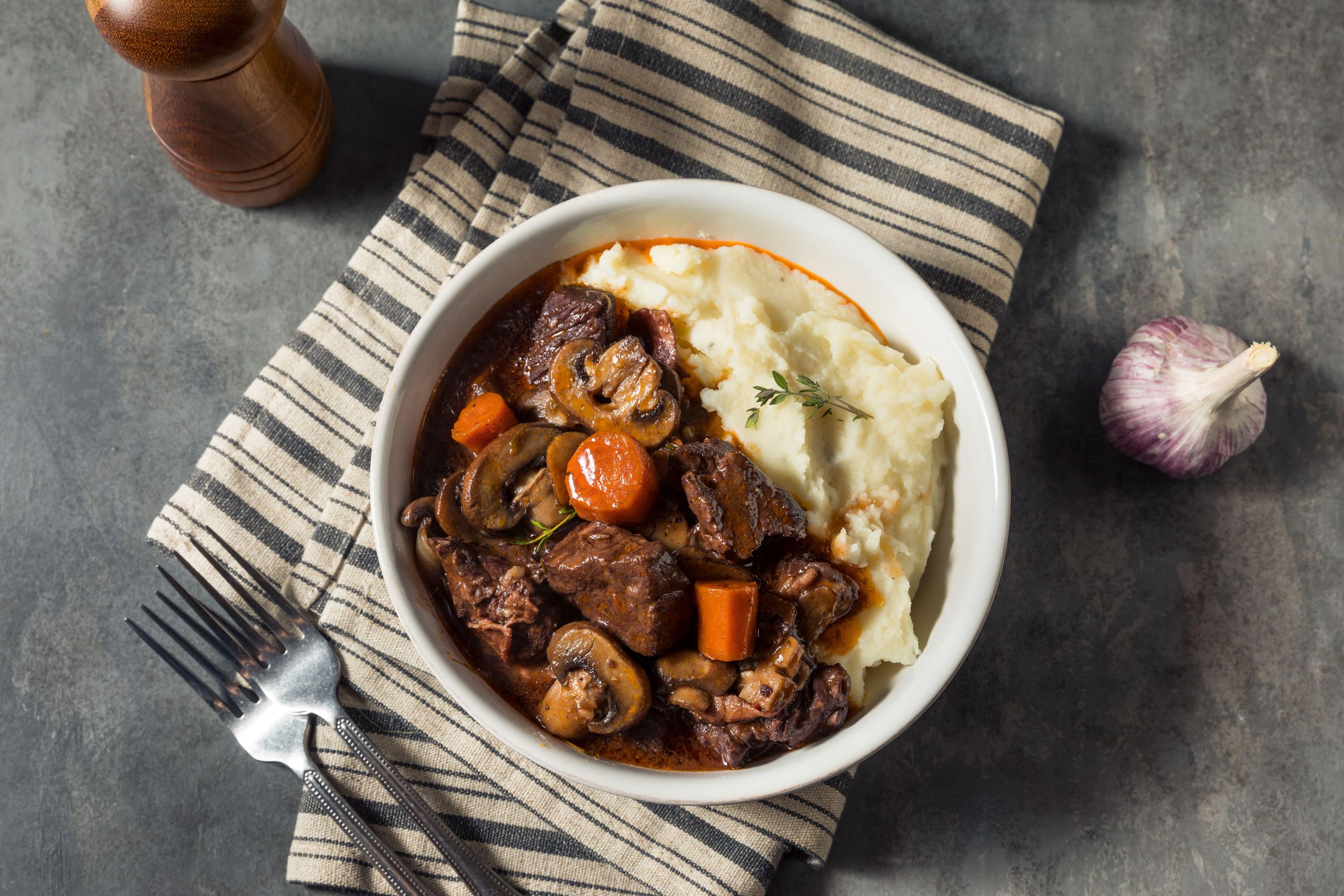
Ah, Burgundy. Once a Dukedom so rich, so powerful, so splendidly magnifique, that it was every bit the equal of the kingdom of France. Not only did they rule their eponymous lands, but Franche-Comté, Holland and much of Belgium, too. It was the Burgundians who captured Joan of Arc before selling her to the English and her fiery fate, whereas Burgundy’s rulers, known as The Grand Dukes of the West, were more prestigious than the French kings. In fact, had you asked your run-of-the-mill medieval seer, he might have confidently predicted France becoming a part of Burgundy, rather than the other way around. Oh, well, c’est la vie and all that. They’ll just have to make do with some of the world’s greatest wines (bonjour, Montrachet Grand Cru, salut Domaine de la Romanée-Conti DRC) and those buxom snails that feast upon their leaves, plucked, simmered, baked and bathed in bubbling garlic butter.
‘This is true cuisine bourgeoise, unashamedly robust, with the square jaw, easy swagger and firm handshake of a well-to-do négociant’
There’s the majestic poulet de Bresse, perhaps the world’s most glamourous chicken, simply roasted or turned into coq au vin, and jambon persillé, a glittering, set aspic study in parsley and pig. Époisses is one of my favourite cheeses, stinking yet elegant—and Dijon mustard is the only true equal to English. ‘If the attempt were made to sum up the dominant characteristic of Burgundian cooking in a single word,’ wrote Waverley Root in The Food of France, ‘perhaps that word might be “substantial”’. For this is true cuisine bourgeoise, unashamedly robust, with the square jaw, easy swagger and firm handshake of a well-to-do négociant. Hearty, but never basic, ‘his dishes demand lusty, full-blooded sauces’. And there is no dish more lusty and full blooded than boeuf à la Bourguignonne, originally made with another great beast of Burgundy, the Charolais cow. ‘
This is a favourite among those carefully composed, slowly cooked dishes, which are the domain of French housewives and owner-cooks of modest restaurants rather than of professional chefs,’ explains Elizabeth David, before going on to say that ‘such dishes do not, of course, have a rigid formula’. But, at the risk of disagreeing with the saintly ED, this does, for boeuf Bourguignon (as it’s more commonly known) always involves red wine, onions, mushroom and cured pork, just like any other dish bearing that regional name.
‘When it comes to the cut of beef, you need something that has done a little hard toil, such as cheek, shin or chuck’
As to the wine, this is not the place for a £5,000 bottle of 2006 La Tâche. Or even, for that matter, a civilised £25 bottle of Bourgogne rouge. Although it certainly needs to be decent (no mean cooking wine here), I’d suggest keeping the good stuff for drinking with your dinner and instead go for a Côtes du Rhône, beefy Languedoc, Shiraz or Cabernet Sauvignon. ‘Boeuf bourguignon needs something with plenty of body,’ advises my friend, wine writer Henry Jeffreys. ‘And make sure it isn’t sweet, as some cheaper reds can be sugary.’
When it comes to the cut of beef, you need something that has done a little hard toil, such as cheek, shin or chuck, so, after a low and slow spell in the oven, it breaks down and becomes beguilingly soft. You want big chunks of meat, too, the size of a baby’s fist. This is Burgundian after all. Brown in small batches, so you get that all important crust. If you have time, cook, allow to cool and put in the fridge overnight. Not only will you be able to scrape off any excess fat (not too much, however), but the flavour also improves. Traditionalists will argue that it must be served with boiled potatoes. What do they know? Mash is the only option and authenticity be damned.
This recipe is from Keith Floyd’s excellent Floyd on France. ‘This splendid stew has been raped and pillaged by pub and wine bar cooks the length and breadth of this fair land of ours —they add peppers and other unmentionable ingredients to what must be a simple, slow-cooked dish with no deviation from this recipe.’ Well, quite. He uses quite a lot of booze (no surprises there), so I’ve adapted it a little. A calf’s foot, easily available from the butcher, adds a wonderful glossy viscosity to the sauce and one more layer of flavour. When it comes to the cut of beef, you need something that has done a little hard toil
Ingredients
Serves six.
1.5kg well-hung beef chuck, shin, or cheek, cut in large bite-size chunks, and dipped in seasoned plain white flour5 onions, roughly chopped5 carrots, roughly chopped5 shallots, roughly chopped3 cloves garlic, chopped6 sprigs thyme2 bay leaves1 bottle punchy red wine (see above)6 thick slices streaky bacon or pancetta, cubed1 large glass brandy250ml good beef stock1 small calf’s foot (optional, but preferable!)Walnut-sized lump of butterGlug of olive oil250g mushrooms, finely chopped200g baby onions, peeled, or small shallots, peeledSalt and pepper1 handful parsley, roughly choppedMethod
Marinate the beef, onions, carrots, shallots, garlic and herbs in the wine overnight. Remove the meat and reserve the marinade.
In a large, heavy- bottomed saucepan, fry the bacon in a little olive oil, and then add the meat and brown. Add the brandy and flame.
Barely cover with the reserved marinade, which you have sieved, discarding the vegetables, plus the stock. Add the calf’s foot (if using).
Cover and simmer on a low flame for three hours (or put the pot, with lid on, into an oven heated to 140˚C, for about 3–3½ hours, until meat is soft). Top up with the marinade if it seems to be drying out.
Half an hour from the end of cooking, fry the mushrooms in a little butter and oil, and add to the meat. Then toss in the baby onions (or shallots) to the same pan, and brown.
When the onions (or shallots) are tender, add the salt and pepper and add to the meat. Season to taste. Serve very hot and finish with the parsley.
This feature originally appeared in the January 11, 2026, issue of Country Life. Click here for more information on how to subscribe.
Dining and Cooking