
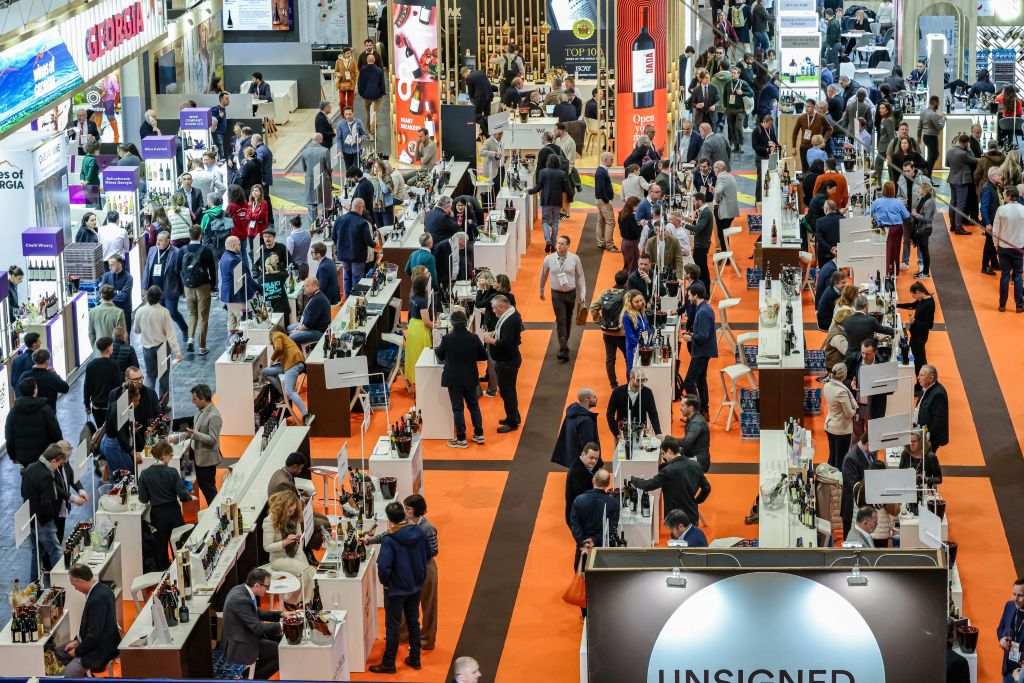
Wine Paris day 2. Photo: Philippe Labeguerie
By Meg Riley
Amidst Australia’s bid to cement itself as a producer of premium and quality wines on the global stage, exhibitors at Wine Paris have been outraged this week to find Australian red wine being sold at just 60¢ a litre, and Chardonnay at 80¢ a litre. What’s worse, is these prices are allegedly for wine from the 2026 vintage, which has not even been made yet.
In comparison, prices over the past few years have sat at 85¢/L for reds and $1.15/L for Chardonnay. Australia already offers the cheapest wine in the world by a significant margin, industry sources told Daily Wine News: the reason behind any winery’s decision to lower prices further can only be speculated.
Murray Valley grapegrower Chris Dent said that this pricing action damages the perception of Australian wine, and subsequently, grape prices in Australia.
“I’m frustrated like a lot of growers and winemakers with the lack of discipline and the continued underselling of Australian wine,” Dent said to Daily Wine News.
“Short-term desperation is driving decisions that destroy long-term recovery for everyone. When producers sell wine at prices that make sustainable grapegrowing impossible, it undermines the entire industry.
“We need a path to prosperity,” he said. “This isn’t it.”
Dent took to LinkedIn to voice his concerns, where the plight resonated with producers around the world.
“Reports are emerging of Australian wineries pre-selling 2026 vintage – wine that hasn’t even been made yet – at prices so low they make sustainable grape growing impossible,” wrote Dent.
“We’re talking prices that, after processing, freight, and taxes, leave virtually nothing for grapes. Prices that undercut the entire Australian wine industry on the international stage.
“Here’s why this matters:
“When one Australian producer sets a floor price at international trade shows, it becomes the benchmark for all Australian wine negotiations. Buyers expect everyone to match it. The race to the bottom accelerates.
“Congratulations. You cleared your tanks first. You got the deal. And you destroyed market recovery for every other Australian producer in the process. We can’t rebuild Australian wine’s reputation and market position while simultaneously telling international buyers our wine is worth nothing. These two things are incompatible.”
“Premium wine regions – Burgundy, Barossa, Napa – protect their reputations fiercely,” Dent continued. “They understand that quality has a price, and that undercutting destroys long-term value for everyone.
“Australian wine doesn’t have that discipline right now. And growers are paying the price.
To everyone representing Australian wine at international trade shows: don’t lower yourself to these prices. Hold your price. Know (and show) OUR worth. Help build a better, stronger, more sustainable reputation for Australian wine.
“Every deal you make affects every other producer,” he emphasised. “Short-term survival tactics are destroying long-term viability for all of us. We need better than this. Australian wine deserves better than this.”
Heini Smit, CEO of South African producer Simonsvlei International, commented on LinkedIn that he shared the same concerns.
“It affects not only the Australian wine industry, but global wine producers,” said Smit. “We need to stand together as a global industry and secure sustainability.”
John Pezzaniti, the executive director at Australia’s Qualia Wines, also echoed this frustration in the comments.
“Exactly what I have been saying for the last few years. A few wineries are destroying the Australian wine industry and taking down growers and other wineries with them!”
Speaking to Daily Wine News, Murray Valley Winegrowers CEO Paul Derrico said growers had already had prices for grapes from the 2026 vintage drastically revised.
“The fair market price in our region has been undermined by unscrupulous operators who have low-balled pricing, such that spot prices in our region now are well below what the fair market price was a month ago,” said Derrico, “100-$150 per tonne less than what other wineries had been offering, because they have to compete with these underhanded operators dragging the price down and just making it very difficult for growers to stay in the industry.”
Dining and Cooking