
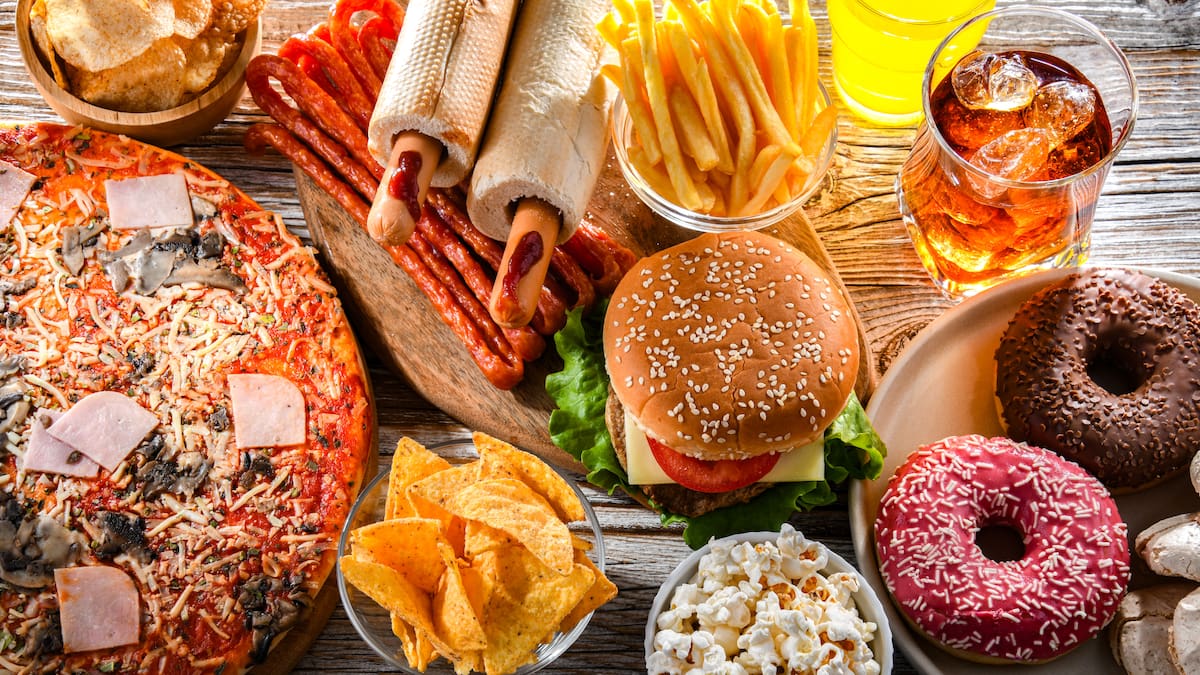
“Processing does have a really important purpose and it does enable us to also consume food that is more affordable for many people.”
The term “ultra-processed food” comes from the NOVA classification system, which groups foods by the extent and purpose of processing. It’s a term, Berry says, that has taken on a life of its own.
“The term ‘ultra-processed food’ is specific to this classification system. And this classification system is based on the extent and the purpose of processing. It’s a system that was never designed to look at how processing might impact our health.”
Berry says around in the UK, US, Australia and New Zealand, around 60% of our food would be classified as ultra-processed using the NOVA system. But she’s quick to clarify that qualifying as ultra-processed doesn’t automatically mean it’s bad for us.
“It’s such a huge category, and you have within this classification of ultra-processed food some that are really bad, but some that aren’t so bad.”
Berry suggests instead of trying to cut ultra-processed food completely out of our diets, we should take a critical approach when reaching for products at the grocery store.
“I think we kind of need to take a step back and think really what is it about food processing that’s bad in order for us to identify what we should be avoiding and what we shouldn’t be avoiding.”
One of the biggest issues is how certain foods are engineered to override our natural stopping points.
“These are foods that will be particularly high in maybe salt and sugar, or salt and fat, or fat and sugar, that you wouldn’t typically find in nature,” she says.
“It almost bypasses our natural sensory system that tells us, wow, hold on. You’ve eaten enough, you don’t need anymore.”
Berry says another factor is how quickly we eat. The texture of some food is changed during processing to be softer, meaning it can be eaten faster and potentially lead to overeating.
With crisper food lending itself to slower eating, Berry’s advice is to “put your crunch back into your lunch”.
As for how to get the balance right? Berry’s view allows for some guilt-free treats.
“If you get some pleasure in that heavily processed crisps or chocolate or yogurt, fine, enjoy it. As long as the bulk of your diet comes from healthy foods to minimally processed whole foods, as long as you are getting plenty of fibre, ideally from whole foods, then don’t worry about having a little bit of this.
“You know, sometimes a bit [of] what’s bad for you can be good for you.”
Listen to the full episode of The Little Things for more on:
What “hyper-palatable” really means.Why ultra-processed food research is more nuanced than headlines suggest.Seed oils, misinformation and what the evidence actually says.
The Little Things is available on iHeartRadio, Apple Podcasts, Spotify or wherever you get your podcasts. The series is hosted by broadcaster Francesca Rudkin and health researcher Louise Ayrey. New episodes are available every Saturday.
Dining and Cooking