
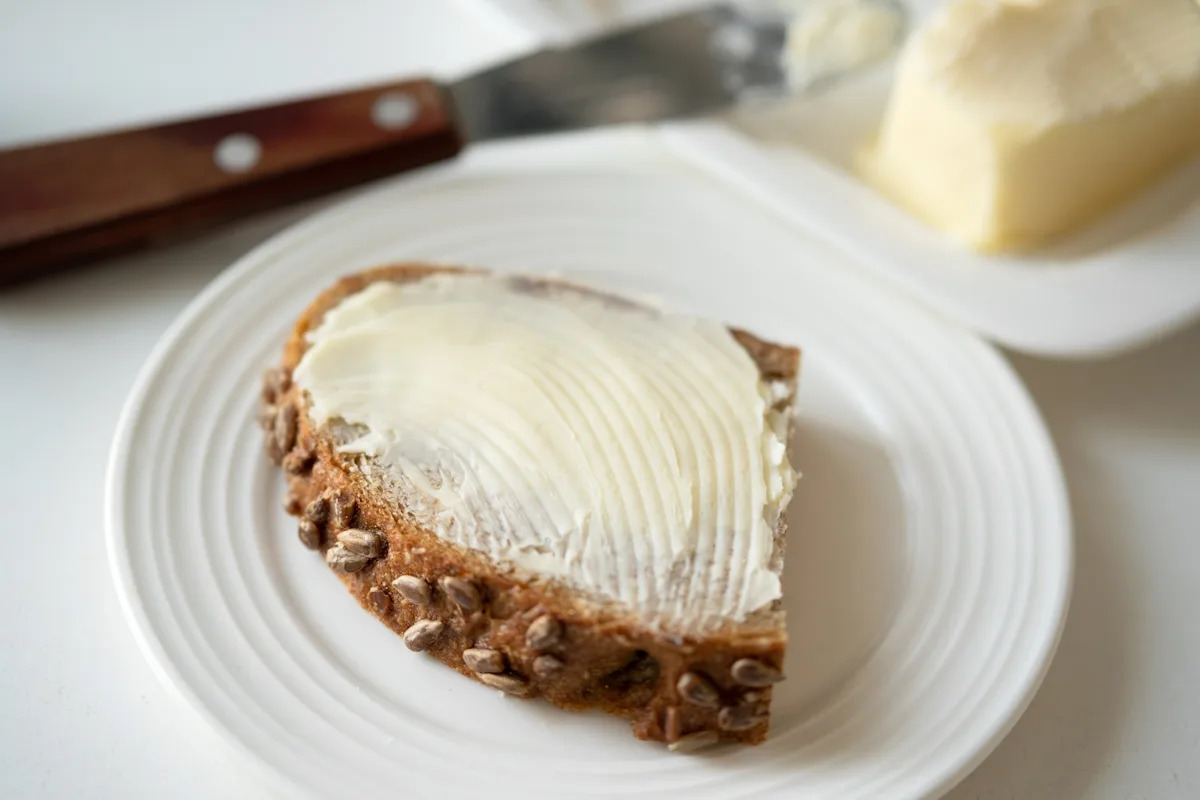
Butter isn’t a huge part of my diet … except when my husband comes home from the grocery store with a fresh baguette. Or when I bake fresh bread at home. The smell of fresh bread coming out of the oven makes it nearly impossible to resist slathering on a generous layer of butter.
Other than that, butter in our house is mostly for the kids: on their toast, mixed into pasta or whipped into mashed potatoes. The problem? Whenever I’m ready to spread it, it’s always rock solid from sitting in the fridge.
So, a few years ago, I finally bought a butter dish and decided to leave a stick on the counter.
But my husband, who constantly checks expiration dates on everything, was skeptical. He’d eye the dish, raise an eyebrow, and ask if the butter was still safe. I don’t know, I’d shrug. My answer was always the same: it smells fine, tastes fine and nobody’s gotten sick.
Still, his constant questioning sent me down a rabbit hole of butter research.
According to the USDA, butter is safe at room temperature, but only for a short period: “Butter and margarine are safe at room temperature. However, if butter is left out at room temperature for several days, the flavor can turn rancid so it’s best to leave out whatever you can use within a day or two.”
The American Butter Institute (ABI) is slightly more generous. They explain that salted butter, thanks to its preservative effect, can sit out for a few days if the kitchen is around 70 degrees or cooler. Softened salted butter should be used within a week.
With that in mind, I switched to salted butter so I could keep it out on the counter longer without worry. But then I came across an article suggesting that even this method wasn’t the best way to store it.
Enter the French butter keeper, also known as a butter crock or butter bell. Instead of letting butter sit exposed in a dish, this two-part container uses water to form an airtight seal that keeps butter fresh at room temperature far longer.
Here’s how it works: the butter is packed into the bell-shaped lid, which is then inverted into the base filled with water. The water acts as a barrier to air, preventing spoilage and keeping the butter at a stable consistency. With this method, salted butter can last on the counter for up to a month. For even better results, you can add a pinch of salt to the water and change the water every few days, which is what I do.
I ordered one and have been using it since. My butter crock looks great (they come in lots of colors) and immediately earned a permanent spot on the counter. The butter stays soft, fresh and spreadable, which I really appreciate when I’m in a rush trying to make toast in the mornings for the kids’ breakfast or sandwiches for their lunch. No fridge-chilled blocks, no greasy mess.
If you’re tired of dealing with too-hard butter or worried about food safety, a butter crock is a simple, affordable upgrade. At under $20, it’s a small change that makes a big difference in how you enjoy butter every day.
Dining and Cooking