
“Everyday wines” are everywhere. Inflation, tariffs and general purse-squeezing uncertainty has put a new focus on popular-priced wines aimed at weeknight quaffing.
Enter Barbera. You can’t talk about an Italian “wine of the people” without Barbera—far and away the Piedmont region’s most planted grape, yet one that takes a back seat in importance to the more “noble” Nebbiolo wines of Barolo and Barbaresco.
“We have few problems now with because our wines are easy and immediate and less expensive,” says Vitaliano Maccario, president of the Barbera d’Asti Wine Consortium. Asti is Italy and the Piedmont’s main Barbera producing appellation.
Over three decades, Maccario and his brother, Davide, created the area’s largest private Barbera winery, Pico Maccario, producing a world ambassador for “easy” wine with its Barbara d’Asti Lavignone. The 2021 vintage nabbed a spot in Wine Spectator’s 2023 Top 100 (92 points, $20). Last July the brothers, neither of whom have children, sold the 65,000-case estate winery to the Oniverse group, led by Italian wine retailer Signorvino.
A Chameleon
Here’s the thing about Barbera—there are several different versions. It’s a grape and wine marked by low tannins, bracing acidity and red and black fruit flavors, with floral hints on the nose—a fantastic companion to food.
That’s the basics. Barbera from Nizza (a small appellation of 18 towns in the eastern part of Barbera d’Asti) is typically richer and more structured, with wines aged at least six months in wood barrels. Asti’s Barbera neighbor to the south in the Barolo and Barbaresco zones, called Barbera d’Alba, tends to be more complex and refined and allows a blend with up to 15 percent Nebbiolo.
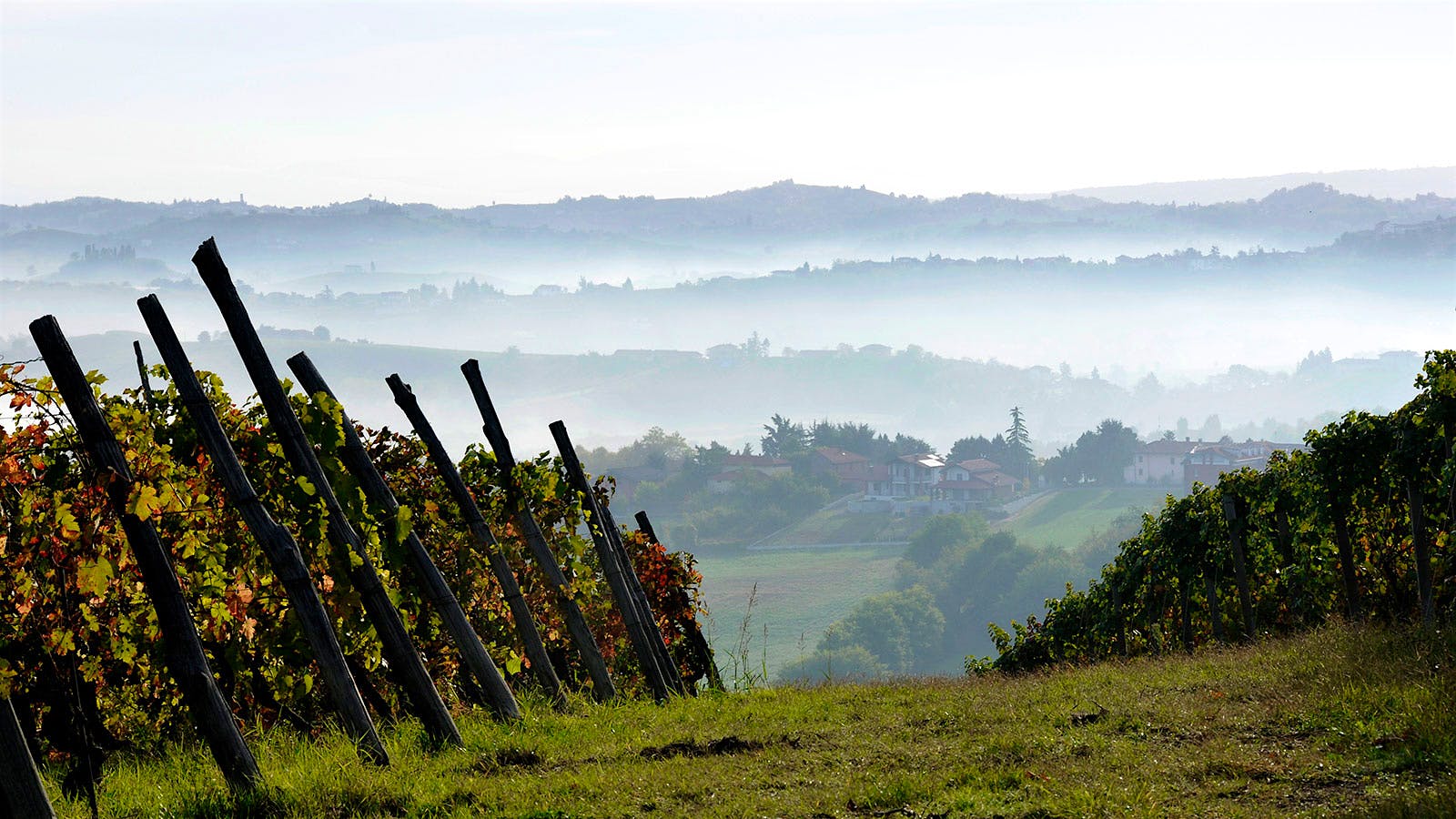
![Bersano's Cascina Cremosina vineyard.]](https://www.diningandcooking.com/wp-content/uploads/2026/02/rc_barbera-cremosina-vineyard-021826_1600.jpg)
Bersano’s Cascina Cremosina vineyards are in Nizza, where the Barberas tend to have more structure. (Courtesy of Bersano)
Soils affect the wines as well, with calcium-rich silty marls bringing out more body, and the sands typical in Asti making for lighter, fresher wines.
On top of all that, the 500 some producers throughout the Asti area tend to push Barbera in one direction or another with their viticulture and winemaking. “There are many Barberas: The styles are defined by the wineries,” said Pietro Russo, a Master of Wine I spoke with at November’s Barbera Wine Festival in Asti. “It’s a very interesting wine that hasn’t reached its potential.”
Russo is part of a camp that believes Barbera should focus on its roots as an easy, slightly rustic wine.
Which Barbera Is Best?
“Barbera is a wine from breakfast to dinner,” echoes 26-year-old Federico Orione, who runs one of the area’s oldest wineries, Bersano in Nizza Monferrato, with his mom, Federica Massimelli. “It’s got freshness, acidity, fruit and drinkability.”
Bersano, a nearly 120-year-old grouping of 10 estates across Piedmont, makes multiple Barberas. The bestselling wine is an entry-level Barbera called 4 Sorelle, or Four Sisters, which is fermented and aged in steel and made with 20 percent fruit that is harvested early to maintain slightly lower alcohol levels. But the winery also makes a pair of oak-aged Nizza Barberas from its Generala and Cremosina estates.
![Federico Orione in the cellar at Bersano.]](https://www.diningandcooking.com/wp-content/uploads/2026/02/rc_barbera-bersano-cellar-021826_1600.jpg)
Federico Orione makes the wine at Bersano, where some is aged in large oak casks to provide subtle wood and oxygen influence. (Robert Camuto)
In Asti, where vineyards are drier and planted at lower elevations than around Alba, not everyone follows the path of light and easy Barbera. Some look to the success of the Bologna family at Braida di Giacomo Bologna, which pioneered the use of French oak barrels for Barbera during the 1960s to create its flagship power-meets-elegance Bricco dell’Uccellone (2021, 92 points, $95).
At Cascina Castlèt, owner Mariuccia Borio has worked in recent years to fine tune her line of wines, including an easy, entry-level (stainless steel aging only) Barbera called Vespa, a single-vineyard barrel-aged Barbera called Litina and a complex, powerful wine called Passum, made from partially raisined grapes. “There are many kinds of Barbera and there is always one that goes with any cuisine in the world,” she enthuses.
That may be true. But Barbera has its work cut out for it. With its tendencies to both high acidity and high alcohol, finding balance can in some cases be tricky, particularly in years that have become hotter and drier with climate change.
In a couple of days of tasting across the area, I found wines that were deliciously harmonious and others that verged on harsh. It reinforced my idea that when Barbara is good it can be really good, and when it’s not it’s really not.
I love that Barbera is a wine readily showing its warts. Land on the right one, and it’s jackpot. Everyday doesn’t have to mean boring.
Travel Tip
If you travel to Monferrato, there are a pair of noteworthy private museums adjoining the Bersano winery across from the train station in Nizza Monferrato. Explore Piedmont’s rural and winemaking traditions at Bersano’s (UNESCO-listed) farming museum, containing three centuries of wine presses and other farming artifacts.
Next door, Bersano’s wine print museum in the Bersano family’s art nouveau era palazzo displays a collection of four centuries of prints, art and rare books related to wine. Admission is free for tasting room guests. For information, visit the Bersano website.
Dining and Cooking