
France may be proud of its pungent cheeses, but younger generations seem to be going off them, according to a new poll.
The study by the OpinionWay institute for the Académie Phormos, a Parisian association of eminent cheese-lovers, found that 18 to 24-year-olds were distinctly unenthusiastic about some of France’s most odorous dairy products.
In a further finding that has worried traditionalists, 9 per cent of the age group said they ate no cheese at all, compared with 5 per cent of the French population as a whole.

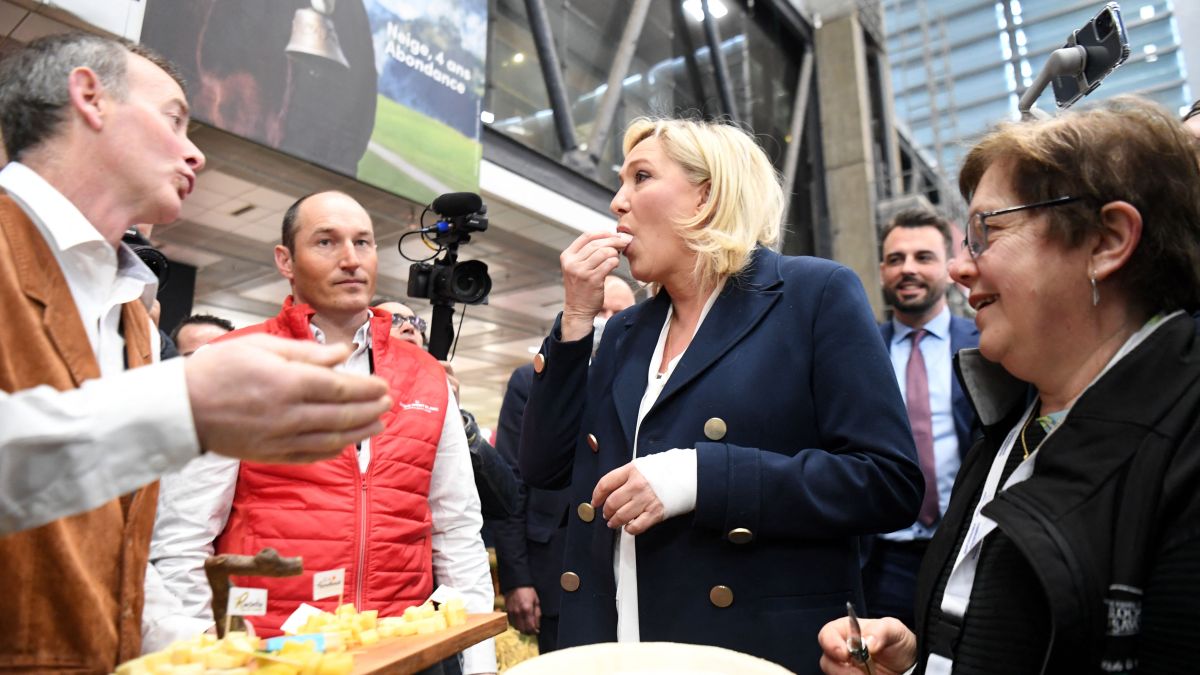
Older French people tend to look more favourably upon softer, smellier cheeses
GETTY
“It is a question of education,” Charles-Henri d’Auvigny, the founder of Académie Phormos, said. “Parents are not passing on their taste [for strong cheese]. People are being brought up with totally sanitised things.”
The poll of 1,014 people also highlighted the politics of cheese, with just 3 per cent of President Macron’s voters saying they did not eat it, compared with 4 per cent of those who backed Marine Le Pen, the populist right National Rally candidate, in the 2022 election. On the other hand, 9 per cent of people who voted for Jean-Luc Mélenchon, the radical left candidate, and 13 per cent of those who favoured Yannick Jadot, the ecologist, declared themselves to be non-cheese-eaters.
D’Auvigny said the left-right divide was clear. Cheese is a tradition in France and rightwingers “are in favour of tradition”, he said. He added that for the same reason, stilton was probably more popular on the right than on the left in Britain.
Comté, the cheese from eastern France, won the more general popularity contest, with 44 per cent of respondents citing it among their favourites. It was followed by camembert on 31 per cent, brie on 24 per cent and roquefort on 23 per cent. Only French cheeses were included.
The findings made dismal reading for supporters of blue cheeses, which were broadly half as popular as soft and semi-hard counterparts. Observers said their taste was too strong for modern diners accustomed to insipid fast food.
D’Auvigny has a personal preference for smelly cheese, but it was not entirely shared by his compatriots, with just 16 per cent naming munster and 7 per cent époisses among their favourites.
Among the 18 to 24-year-olds, the disavowal was ever starker. Just 19 per cent named camembert among their favourites, 13 per cent roquefort, 10 per cent munster, 5 per cent fourme d’ambert and 6 per cent époisses. By contrast, among over 65 year olds, 43 per cent cited camembert as a favourite, 34 per cent roquefort, 17 per cent munster, 9 per cent fourme d’ambert and 7 per cent époisses.
D’Auvigny said he hoped the tastes of young French people would change as they grew older and “the problem will be resolved”.
He created the association to promote authentic French cheeses and its members gather to taste them every every six weeks. They are campaigning for French cheese to be given world heritage status by Unesco.
But D’Auvigny insisted that his members, who include lawyers, journalists and industrialists, were broadminded and prepared to eat cheeses from countries other than France.
He said he planned to ask Dame Menna Rawlings, the British ambassador to Paris, to organise a tasting of UK cheeses for his association, for instance.
Dining and Cooking