
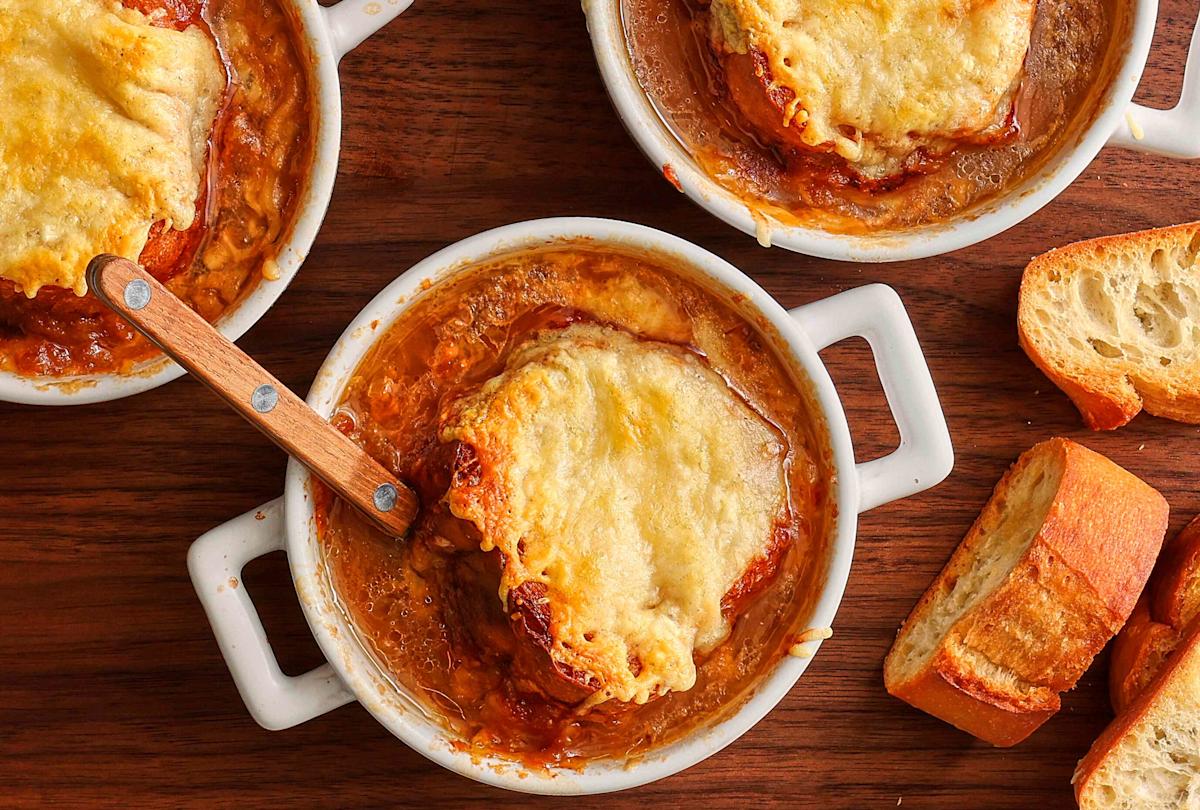
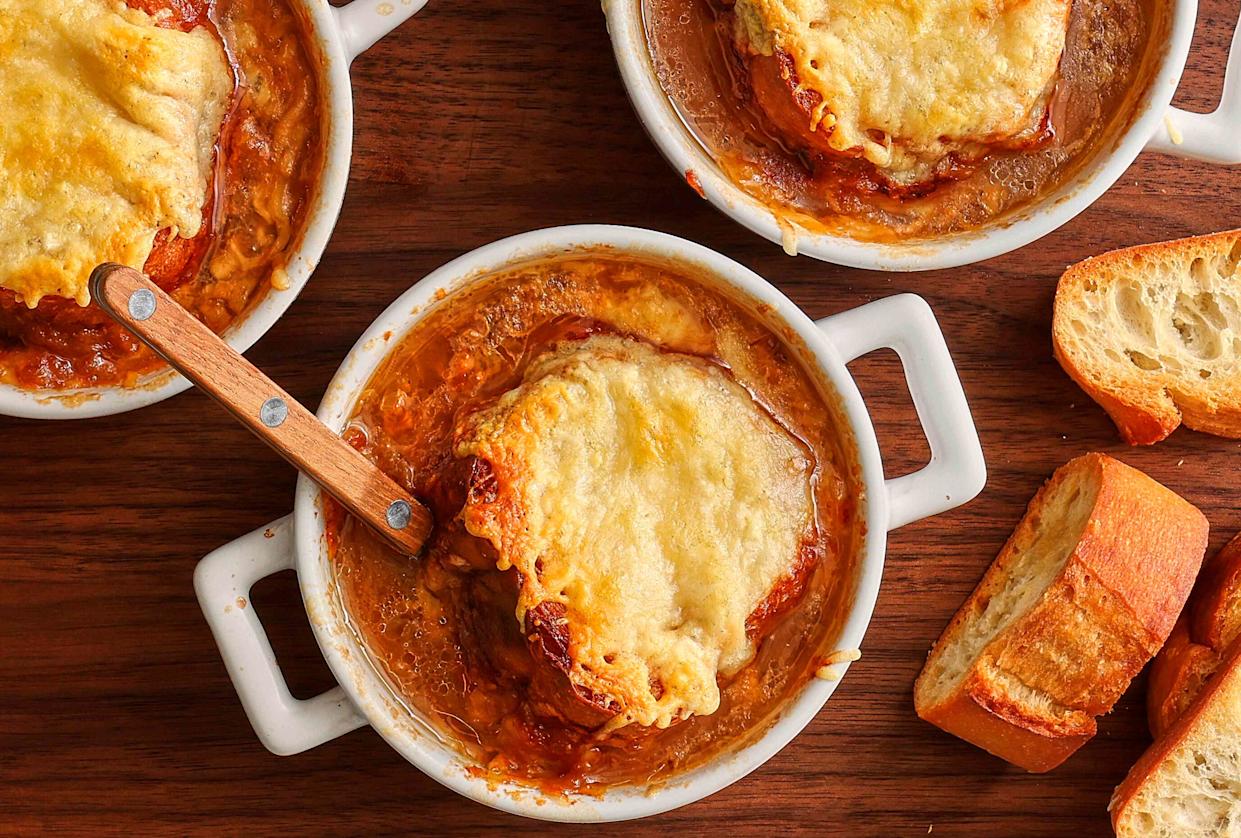
French onion soup is a classic for a reason. While seemingly simple, the best versions of the popular soup are intensely rich and savory, combining deeply caramelized onions, a rich broth, bubbly melted cheese, and crunchy toasted croutons. If you’ve ever made French onion soup at home, you know that it’s a labor of love, and low and slow is the name of the game. But what sets a homemade French onion soup apart from the rich and indulgent versions you’ll find on restaurant menus? To find out, I asked two chefs, Nick Steidle-Land of Bistro La Floraison in St. Louis and Marcel Heiduk of Venteux in Chicago. Here, they share their tips to making restaurant-quality French onion soup at home.
1. Start with a Good Stock
A well-fortified stock is the key to success with most soups, and Heiduk and Steidle-Land agree that goes double for a soup as simple as French onion. While boxed stocks and broths are a quick and easy option, this is the time to commit to a homemade broth, which will result in a richer, more flavorful soup. “These ingredients can be very convenient and go unnoticed in many if not most preparations, but in French onion soup the broth is the most important component and there will be a big difference,” Steidle-Land says.
At Bistro La Floraison, he uses beef knuckle bones that are roasted heavily until they take on a deep brown color and the fat starts to render out. The bones are then added to a pot with fresh thyme and black peppercorns, covered with cold water, and simmered on as low heat overnight. The next day, other aromatics are added and the broth simmers for an additional few hours. “Taking our time allows for great flavor extraction, which makes our soup nice and strong,” Steidle-Land says.
At Venteux, Heiduk follows a similar process but incorporates both beef and chicken bones, which he says provides a great base for flavor.
2. Play Around with Different Types of Onions
Onions are the star of French onion soup, so think carefully about the best type to use. You certainly can lean on one type of onion—Steidle-Land recommends yellow—or incorporate several different varieties, such as Spanish onions, white onions, and shallots. “You get different textures from the onions and flavors that help round it out,” Heiduk says. “Shallots have a little bit more sweetness, whereas a Spanish onion is sweet, but it’s a different texture and it’s larger. A white onion has a little more sharpness and acidity.”
 3. Carefully Caramelize
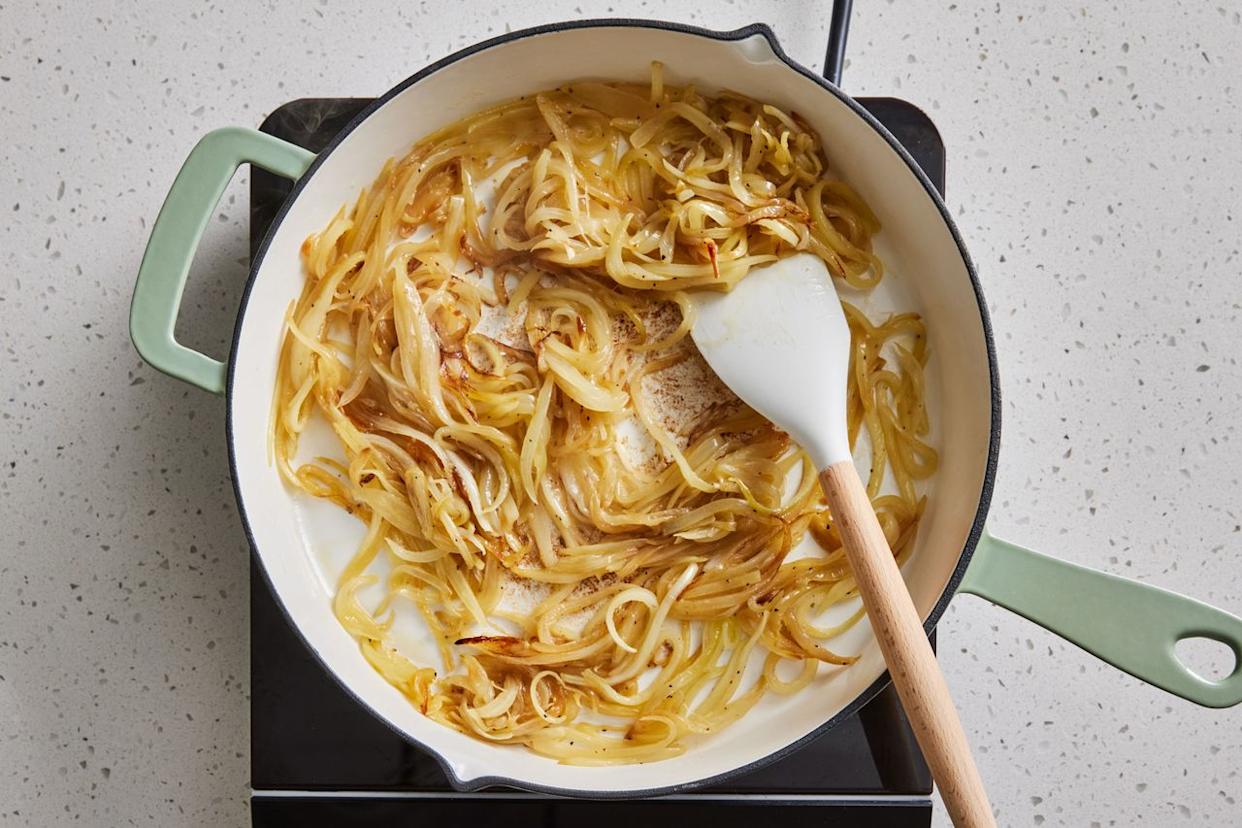
Perfectly caramelized onions are essential to a great French onion soup. Heiduk and Steidle-Land both caution against overcooking the onions, which can lead to burned and bitter onions. Instead, plan to cook them low and slow until they take on a deep, rich golden-brown color. Heiduk says to keep the heat on a low simmer and avoid a full boil, which will cause the onions to break down too much.
Steidle-Land recommends cleaning and slicing the onions, seasoning them very heavily with salt, covering them with oil in a heavy-lidded pot or Dutch oven, and cooking in the oven overnight at 225°F. Cooking the onions in the oven instead of on the stove is a hands-off approach that produces deeply flavorful results. “The trick is to make sure the least amount of liquid as possible can escape—that’s what keeps your onions from burning,” he says. “This low and slow cooking method breaks down the starches in the onions and makes them nice and sweet.”
4. Choose the Right Seasonings
The right seasonings can take a classic French onion soup to the next level. Steidle-Land recommends adding classic mirepoix, garlic, thyme, and very small amounts of star anise and clove. “Those two spices get a bad rap because they can be very overpowering, so less is certainly more, but their inclusion definitely intensifies the flavor of the beef by a lot,” he says. When reducing the onion liquid, he adds port wine and Madeira—making sure to allow all of the alcohol to cook off—which he says make the onion mix even sweeter and add a nice body to the soup.
Heiduk’s secret weapon for French onion soup—and many other dishes—is Pernod, a type of French anise liqueur. For home cooks, he recommends adding about a cup of Pernod to a batch of French onion soup. “The liqueur just brings the star anise notes out that pair really well with the soup,” he says. “You wouldn’t be able to tell that it’s actually in there, but it adds complexity and it gets richer the longer it cooks.”
5. Don’t Skimp on the Cheese
French onion soup just isn’t the same without that perfectly bubbly layer of cheese on top. Gruyère is a popular pick for its nutty flavor and superior melting quality, but Steidle-Land says you can use other high-quality Swiss-style cheeses such as Comté or Edam. “What’s important is that you aren’t shy with how much you add,” he says.
6. Choose a Sturdy Bread
Much like the gooey layer of melted cheese, crunchy croutons are a quintessential part of French onion soup. Heiduk cautions against using a soft bread, such as brioche, which will turn mushy as soon as it hits the hot broth. Instead, opt for a crusty baguette or loaf of sourdough with a stronger gluten structure. Day-old bread works great, but you can also toast it in the oven to dry it out.
“If you don’t have day-old bread, I would just toast it way before and just let it dry out,” Heiduk says. “You don’t want the cheese to fall through it or for it to fully soak in to the soup. You want to have a little bit of the texture of the bread.”
7. Salt Throughout the Cooking Process
French onion soup is a time-intensive dish, and it’s important to taste throughout the cooking process and add salt as you go. “It’s critical to season your food with salt and some kind of acid,” Steidle-Land says. “Without that, no matter what you add, your soup will be flat and all those flavors you added won’t be detectable. With salt, it is important to season at every step of the cooking process. Waiting until the end won’t allow the salt to become part of the soup and it will taste simultaneously salty and unseasoned.”
8. Add Acid
Adding a bit of acid is critical when making French onion soup, as it balances the sweetness of the caramelized onions and the richness of the beef broth. Steidle-Land recommends reaching for a high-quality sherry vinegar. “The small amount of nuttiness from the sherry does very well to accent the flavor of the beef and the sweetness of the onion,” he says. “Just remember when seasoning that you plan to eat a whole bowl of your soup, not just a few bites. It is very easy to go overboard and end up with sour soup, and once you go overboard there isn’t much you can do to bring it back without diluting everything.”
 9. Take Your Time
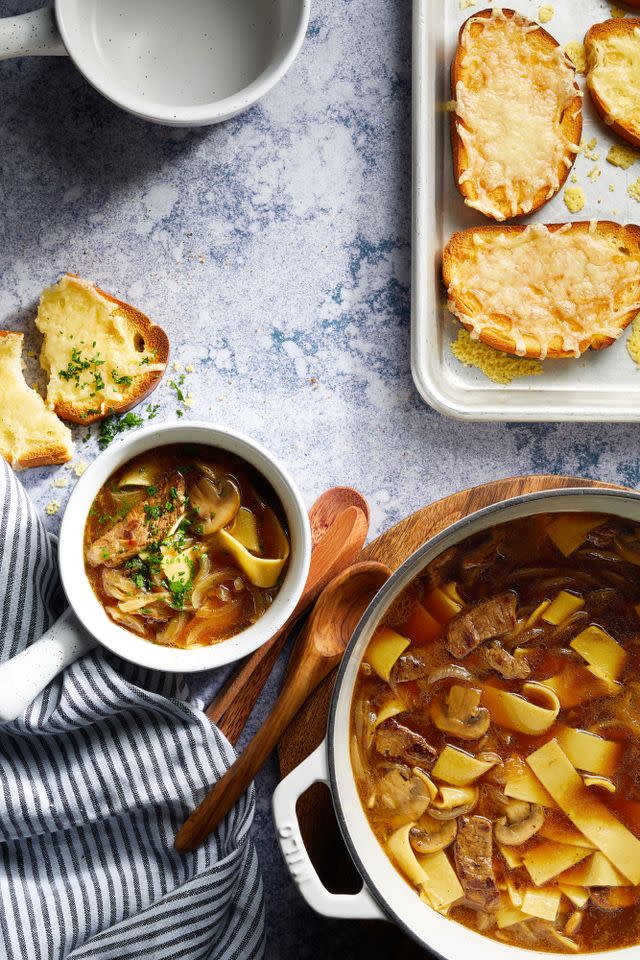
Steidle-Land says the biggest mistake that home cooks make with French onion soup (and many other dishes) is rushing. Time is a critical part of the dish, so slow down and enjoy the cooking process. “When cooking something with such humble ingredients, one must take into account the fact that the time it takes to cook is the star ingredient,” he says. “Taking shortcuts will do nothing but lessen your final product.”
Related: Cozy French Onion Recipes You Should Definitely Add to Your Winter Meal Plan
Read the original article on Better Homes & Gardens
Dining and Cooking