
Your support helps us to tell the story
From reproductive rights to climate change to Big Tech, The Independent is on the ground when the story is developing. Whether it’s investigating the financials of Elon Musk’s pro-Trump PAC or producing our latest documentary, ‘The A Word’, which shines a light on the American women fighting for reproductive rights, we know how important it is to parse out the facts from the messaging.
At such a critical moment in US history, we need reporters on the ground. Your donation allows us to keep sending journalists to speak to both sides of the story.
The Independent is trusted by Americans across the entire political spectrum. And unlike many other quality news outlets, we choose not to lock Americans out of our reporting and analysis with paywalls. We believe quality journalism should be available to everyone, paid for by those who can afford it.
Your support makes all the difference.Read more
A Budapest pizzeria is inviting diners on a culinary journey back two millennia, to a time before tomatoes, mozzarella, or even the word “pizza” were known in Europe.
At Neverland Pizzeria in the heart of the Hungarian capital, founder Josep Zara and his team have crafted a limited-edition pie using only ingredients that would have been available in ancient Rome, long before the modern pizza came into existence.
“Curiosity drove us to ask what pizza might have been like long ago,” Mr Zara said.
“We went all the way back to the Roman Empire and wondered whether they even ate pizza at the time.”
Strictly speaking, they did not. Tomatoes arrived in Europe centuries later from the Americas, and mozzarella was as yet unknown. Some histories suggest that the discovery of mozzarella led directly to the invention of pizza in Naples in the 1700s.
However, Romans did consume oven-baked flatbreads topped with herbs, cheeses, and sauces, which are considered the direct ancestors of modern pizza. These were often sold in ancient Roman snack bars known as thermopolia.
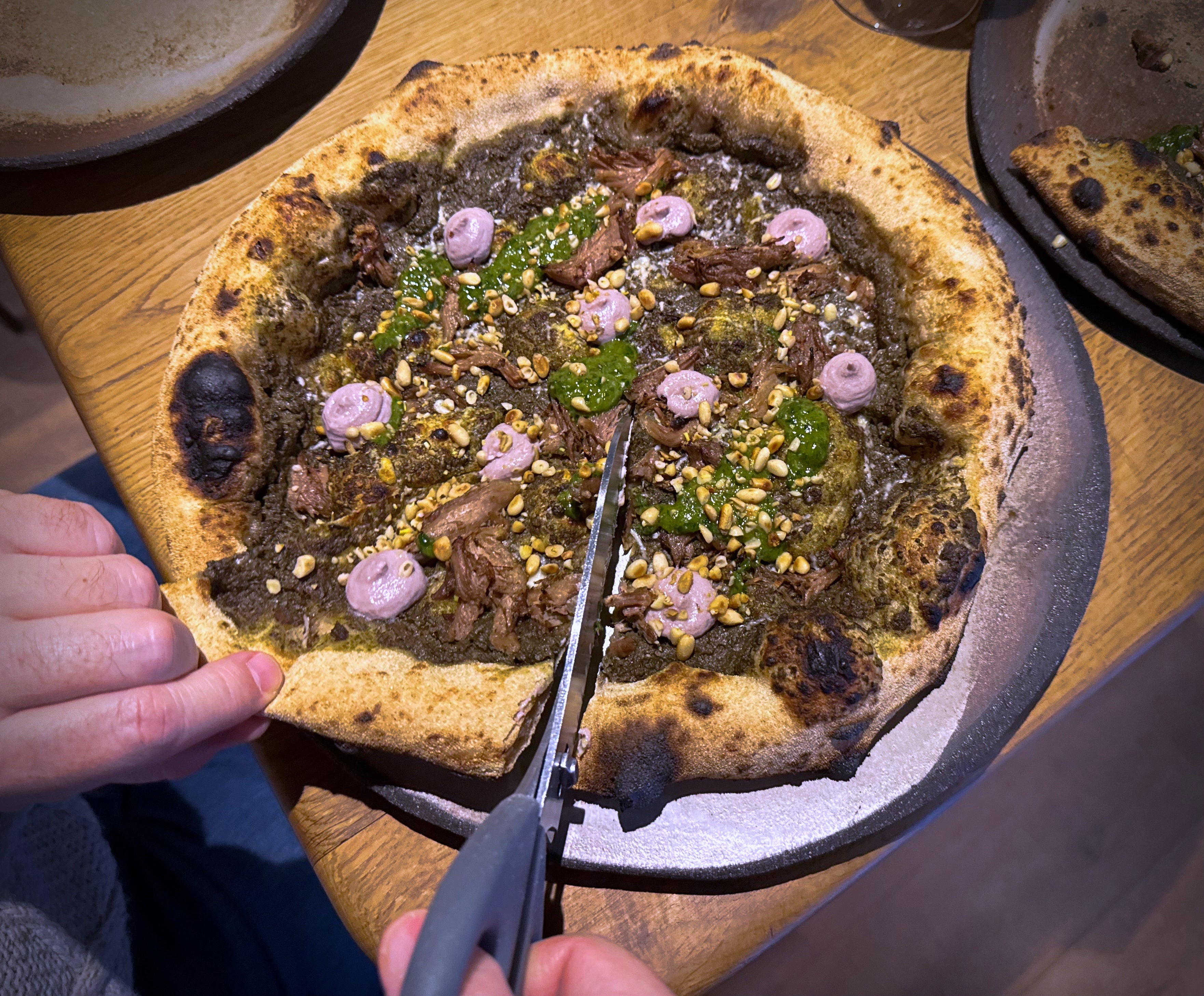
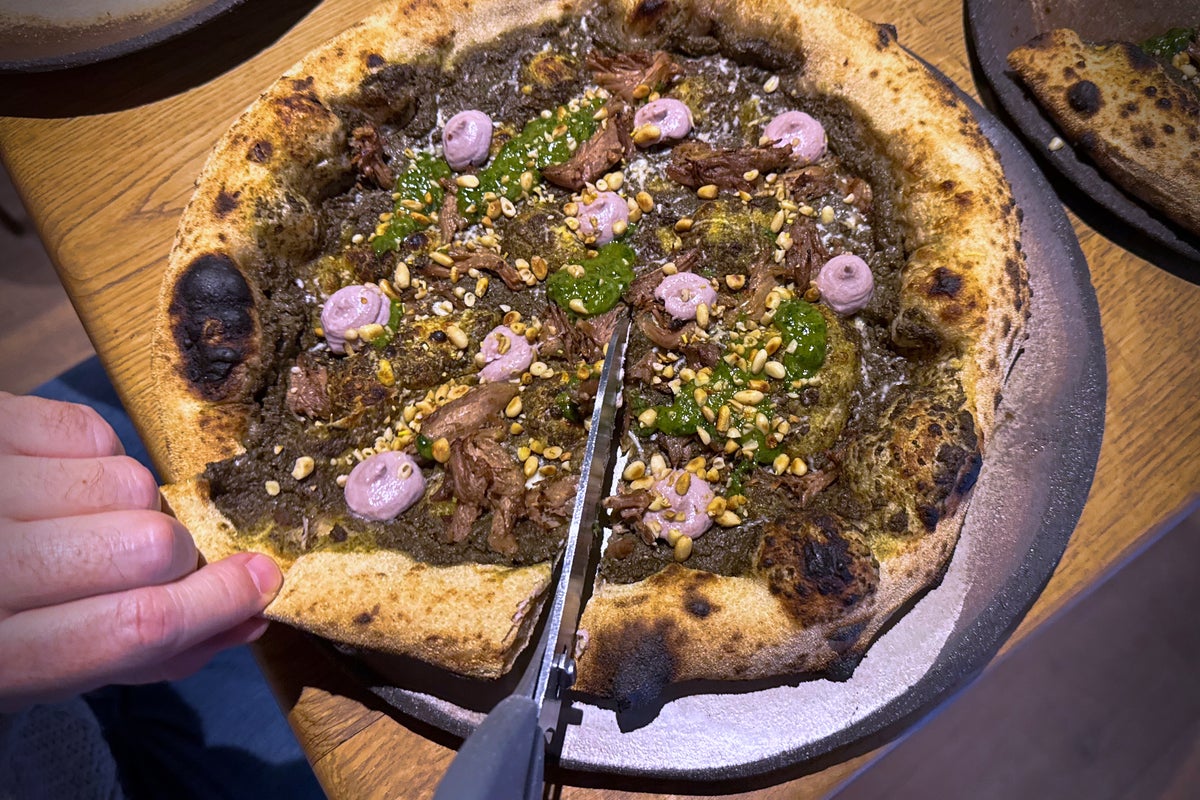
open image in gallery
A customer cuts a Roman-era pizza at Neverland Pizzeria (AP)
In 2023, archaeologists uncovered a fresco in Pompeii depicting a focaccia-like flatbread topped with what appear to be pomegranate seeds, dates, spices and a pesto-like spread. The image made headlines around the world, and sparked Mr Zara’s imagination.
“That made me very curious about what kind of flavor this food might have had,” he said.
“That’s where we got the idea to create a pizza that people might have eaten in the Roman Empire, using only ingredients that were in wide use at the time.”
Mr Zara began researching Roman culinary history, consulting a historian in Germany as well as the ancient cookbook De re coquinaria, thought to have been authored around the 5th century.
Following his research, he compiled a list of historically documented ingredients to present to the pizzeria’s head chef.
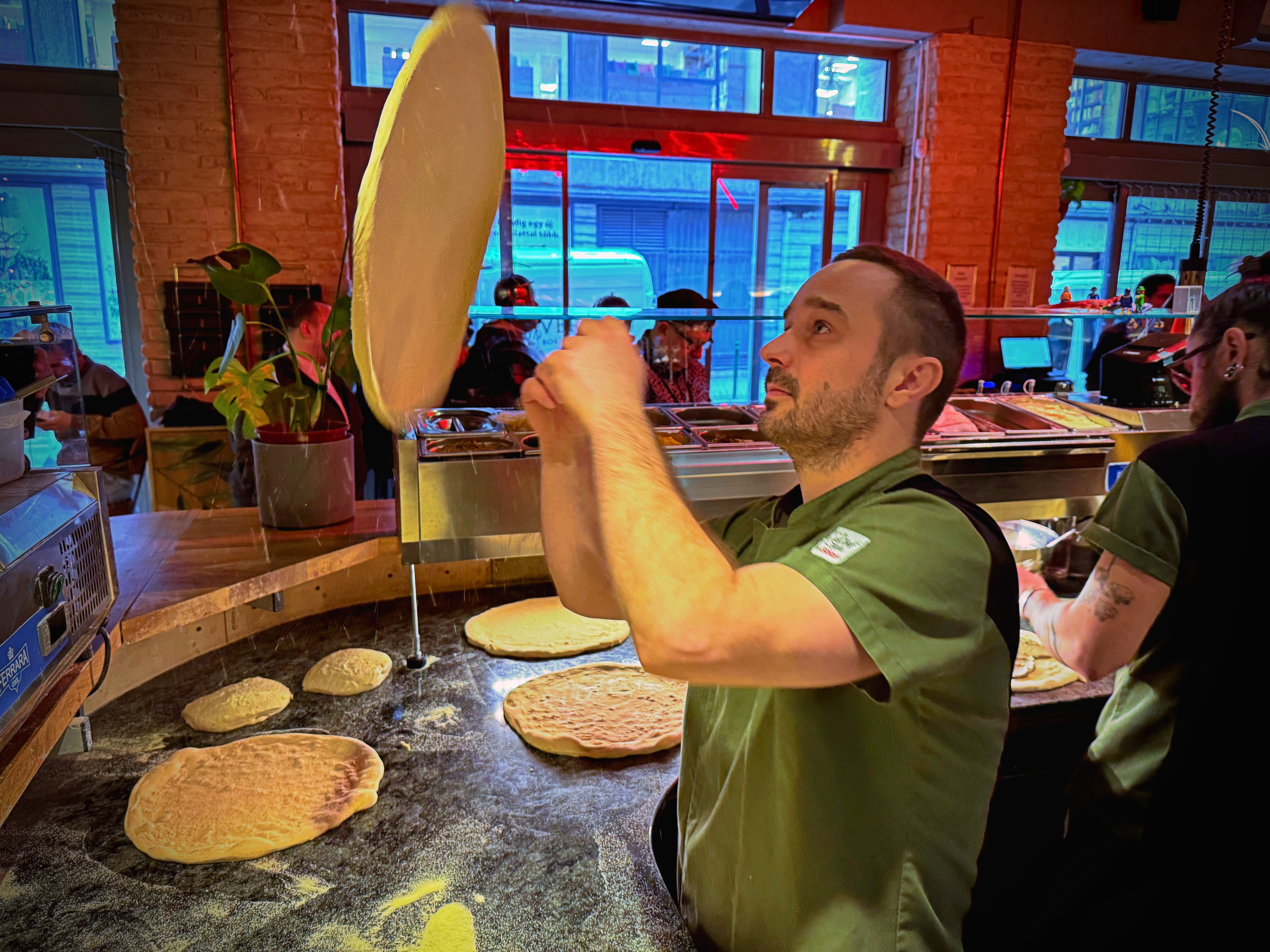
open image in gallery
A chef at Neverland Pizzeria tosses the dough (AP)
“We sat down to imagine what we might be able to make using these ingredients, and without using things like tomatoes and mozzarella,” Mr Zara said.
“We had to exclude all ingredients that originated from America.”
Head chef László Bárdossy said the constraints forced the team into months of experimentation, and a few false starts.
“We had to discard a couple ideas,” Mr Bárdossy said.
“The fact that there wasn’t infrastructure like a water system at the time of the Romans made things difficult for us, since more than 80 per cent of pizza dough is water. We had to come up with something that would have worked before running water.”
The solution: helping the dough rise using fermented spinach juice. Ancient grains such as einkorn and spelt, widely cultivated in Roman times, formed the base, and the dough ended up slightly more dense than that of most modern pizzas.
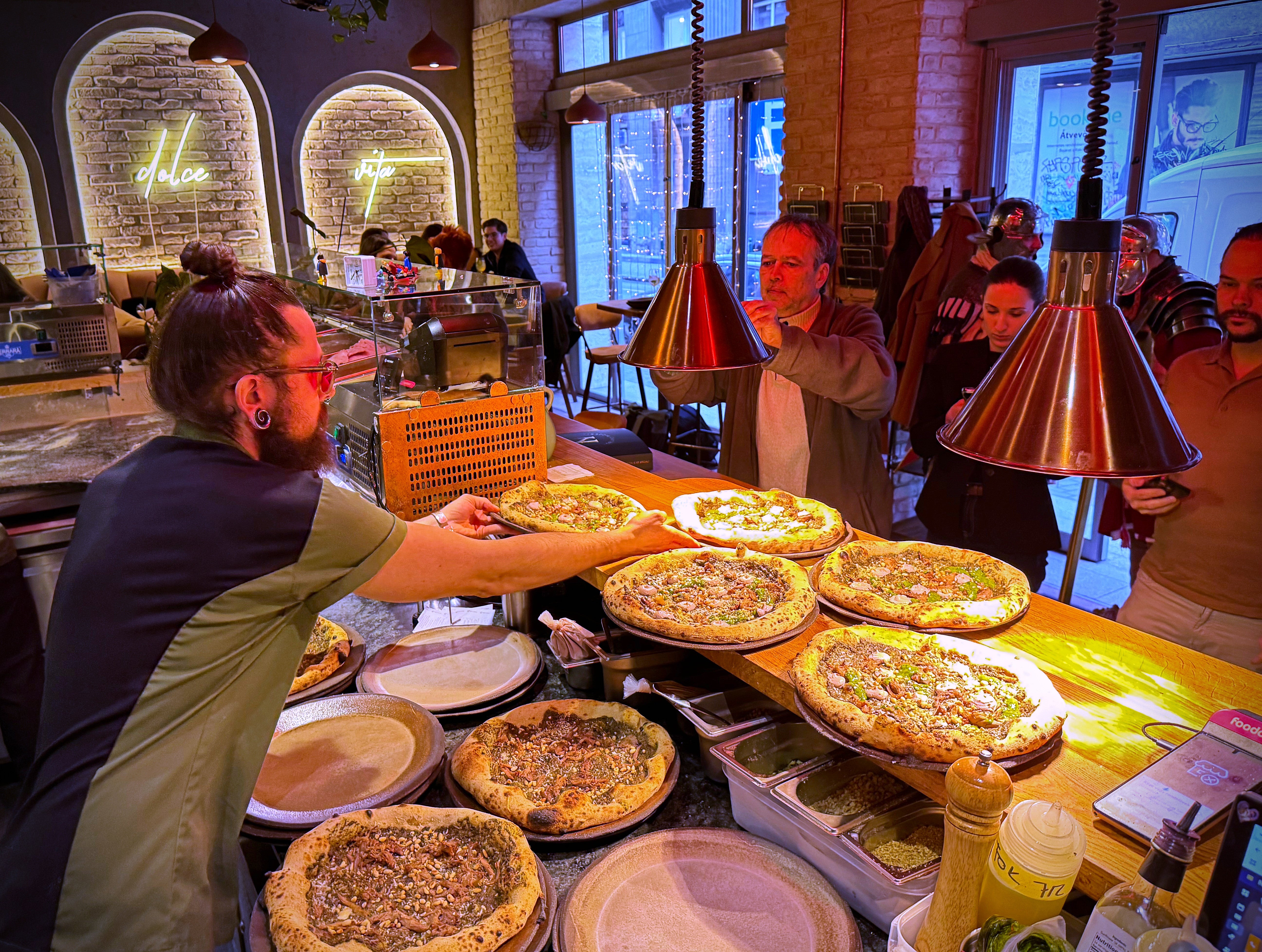
open image in gallery
László Bárdossy serves up (AP)
The finished pie is topped with ingredients associated with Roman aristocratic cuisine, including epityrum, an olive paste, garum, a fermented fish sauce ubiquitous in Roman cooking, confit duck leg, toasted pine nuts, ricotta and a grape reduction.
“Our creation can be called a modern pizza from the perspective that we tried to make it comprehensible for everyone,” Mr Bárdossy said.
“Although we wouldn’t use all its ingredients for everyday dishes. There is a narrow niche that thinks this is delicious and is curious about it, while most people want more conventional pizza, so it’s not for everyday eating. It’s something special.”
For Mr Zara, the project reflects Neverland Pizzeria’s broader philosophy.
“We’ve always liked coming up with new and interesting things, but tradition is also very important for us, and we thought that these two things together suit us,” he said.
However, he added, there is a modern boundary the restaurant will not cross.
“We do a lot of experimentation with our pizzas. But of course, we definitely do not use pineapple,” he said.
Dining and Cooking