
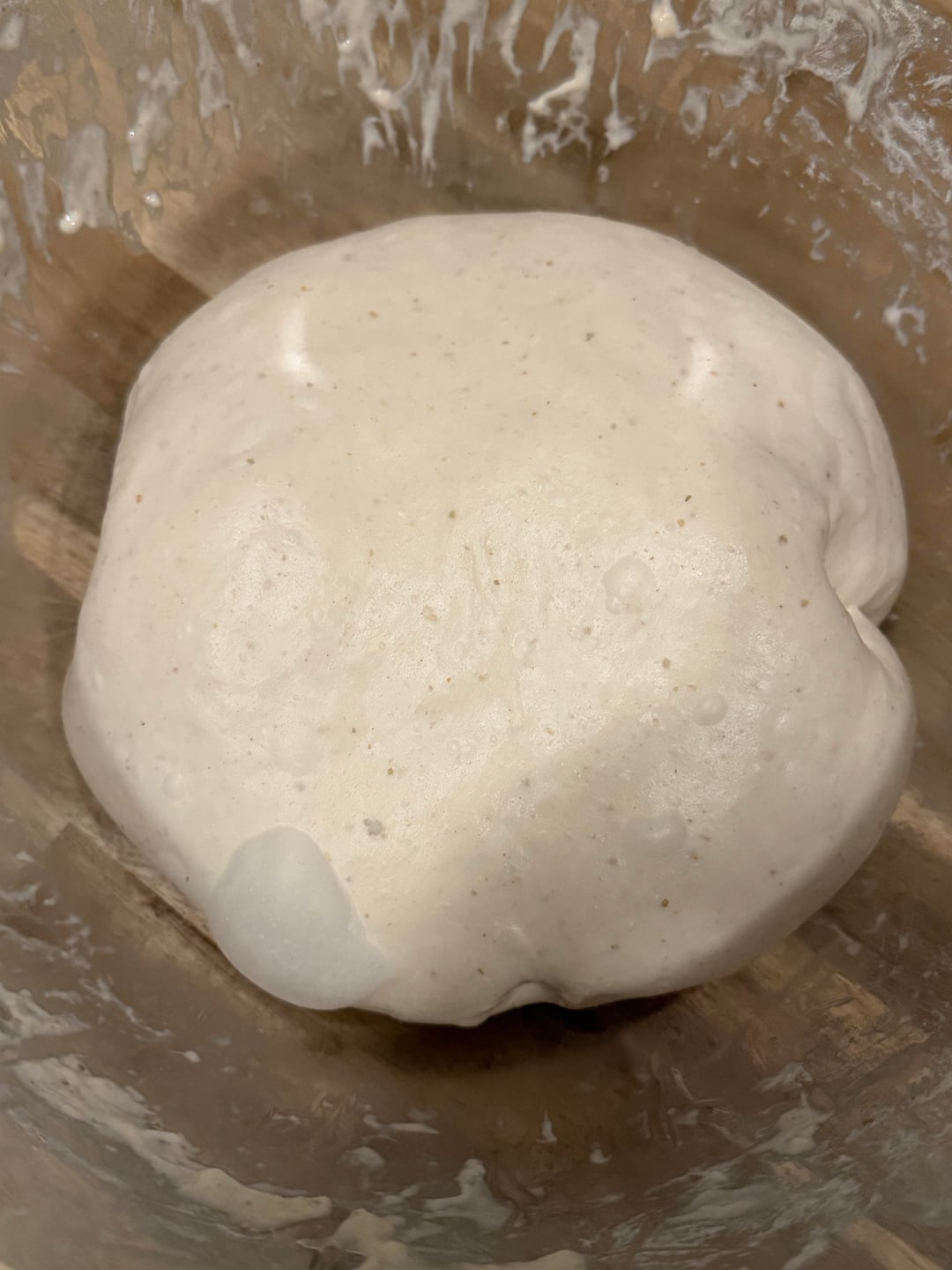
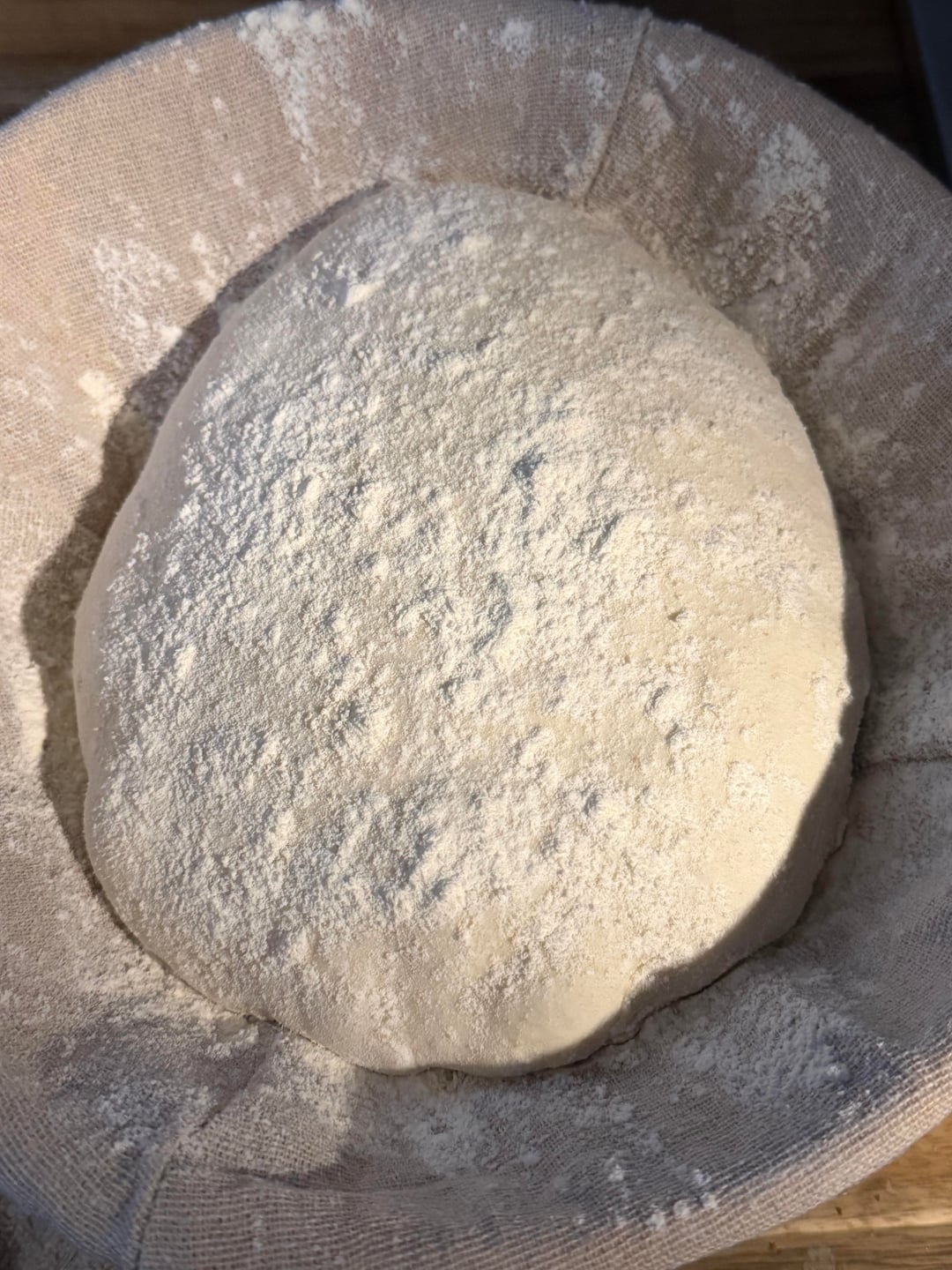
I’ve been experimenting a bit with autolyse lately and noticed that adding the starter during autolyse vs adding it afterwards actually changes the dough more than I expected. Thought I’d share some observations and see what others experience.
When you add the starter directly into the autolyse (technically more of a “fermentolyse”) fermentation basically starts right away. The acidity from the starter begins softening the gluten earlier, enzymes are more active, and the dough usually gets extensible pretty quickly. That can feel nice during mixing, but I sometimes notice slightly weaker structure later on especially with high hydration doughs. Flavor-wise it can push things a bit more sour too.
If I do a classic autolyse first (just flour + water for ~30min) and only add the starter afterwards, the dough usually feels stronger and more elastic. Fermentation timing is also easier to control since bulk fermentation clearly starts after mixing. I tend to get slightly better oven spring and a cleaner wheat flavor this way, particularly with US bread flours.
Right now my default workflow is:
Autolyse flour + water → 30min
Add starter → short rest (30 min)
Then salt and one stretch and fold & two coil folds (30min between folds)
But both approaches definitely work, seems more like a tool depending on flour strength, fermentation time, and flavor goals.
Curious how you all handle it.
Do you always do classic autolyse, mix starter in from the start, or switch depending on the recipe?
by blckbrd666
6 Comments
**Hello blckbrd666,**
# **Bot reminder – Sourdough bake pics/videos should meet [Rule 5](https://www.reddit.com/r/Sourdough/wiki/sourdoughrules/).**
(Please include ingredients & steps taken to make your bake).
**[Modmail us :-)](https://www.reddit.com/message/compose?to=/r/Sourdough)** with questions.
# **[READING CRUMB GUIDE ](https://www.reddit.com/r/Sourdough/wiki/reading_crumb/)**
# [Wiki index](https://www.reddit.com/r/Sourdough/wiki/index/), &
# [FAQ Beginner starter guide](https://www.reddit.com/r/Sourdough/s/gnqFg7osBO)
#THIS-BOT-CAN’T-READ 🙂
*I am a bot, and this action was performed automatically. Please [contact the moderators of this subreddit](/message/compose/?to=/r/Sourdough) if you have any questions or concerns.*
I started to do autolyse recently and I like how the dough handles as I add the rest of the ingredients. I’m trying out an extended autolyse today. Apparently you can even do it overnight. https://youtu.be/T7e5JfQHNk8?si=tHiqhsFDLEqTY6mS
I can really stretch and work the dough when I’m mixing the other ingredients. By the time I do my first stretch and fold I can laminate instead.
I’ve done fermentolyse, but I’m not sure it was that different from the typical recipe without autolyse.
Fermentolyse is just bulk. As soon as you add starter you are in bulk.
I’m relatively new, but tried 1 hr Autolyse for the first time. Then mixed in salt and starter. Also made my starter at the same hydration as the recipe. Mixed well for 5 min. Best result so far although I should have bulk fermented a few more hours.
I used to be finicky but I’ve been doing this six years now and throw everything in at once. Once my starter was strong and I got the technique down I didn’t notice a difference between that and adding ingredients at different times. Perfect loaves every time. Edit – I do like it extra sour though, and aim for that.
I haven’t noticed anything different about the two, all I know is that mixing all at once works better for my schedule and timing. I do water – starter (stirred and dissolved) – flour – salt (- butter, optional but delicious). I then do about 5 minutes of bowl mixing.