
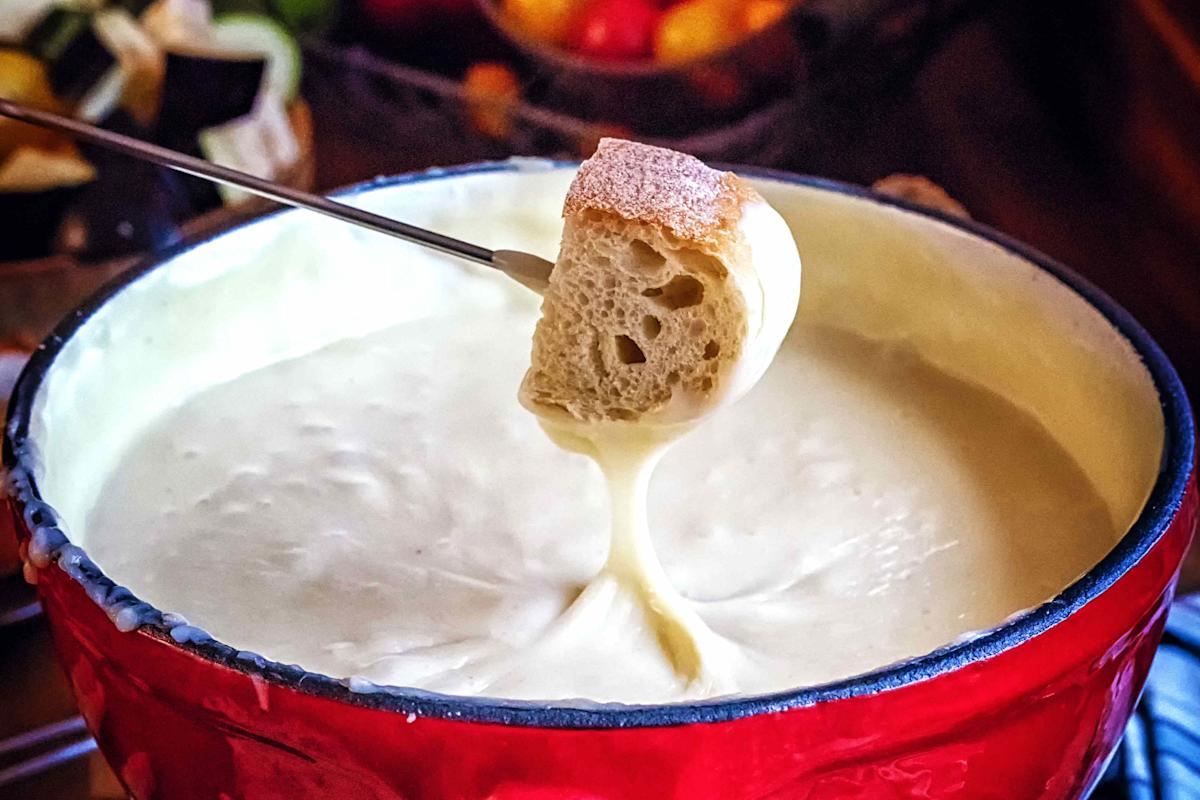
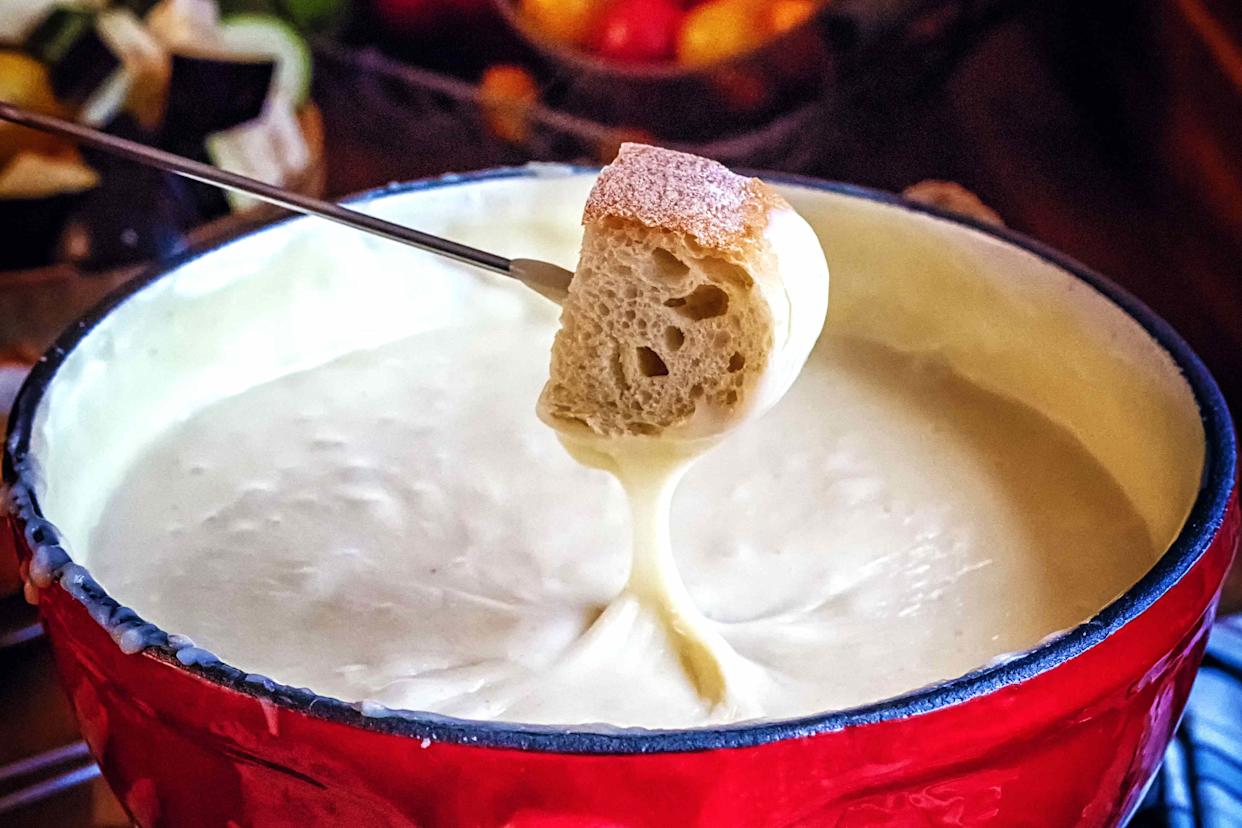
Fondue is one of those dishes I thought I’d already figured out. As someone who writes about cheese for a living, I’ve eaten plenty of fondue over the years — pleasant, cozy, sometimes forgettable. Good enough, rarely revelatory.
Then last year, I found myself in the village of Gruyères, eating fondue in a wooden chalet perched on a mountain, the sun setting leisurely. The cheese arrived bubbling and fragrant, deeply savory and impossibly smooth — stretchy but never stringy, rich without feeling heavy. One bite and it was instantly clear: Oh, this is what fondue is supposed to be like.
That meal reframed everything I thought I knew about the dish. If fondue can be this transportive — simple, elegant, quietly perfect — what makes the difference? To find out, I asked the chefs and cheesemongers who know it best.
Related: How to Make Fondue Without a Fondue Pot
The gold standard: Gruyère and Emmentaler
Again and again, the experts landed on the same two cheeses: Gruyère and Emmentaler. Together, they are the traditional backbone of Swiss fondue, and for good reason. These Alpine cheeses melt smoothly, emulsify reliably, and deliver the nutty, savory depth that fondue lovers crave. In other words, they’ve already done the hard work for you.
“When I’m making a classic cheese fondue, I go for the classics,” says cheesemonger Zach Berg of Mongers’ Provisions in Berkley, Michigan. “I want Emmental and Gruyère — or if you enjoy something bolder, grab an Appenzeller.”
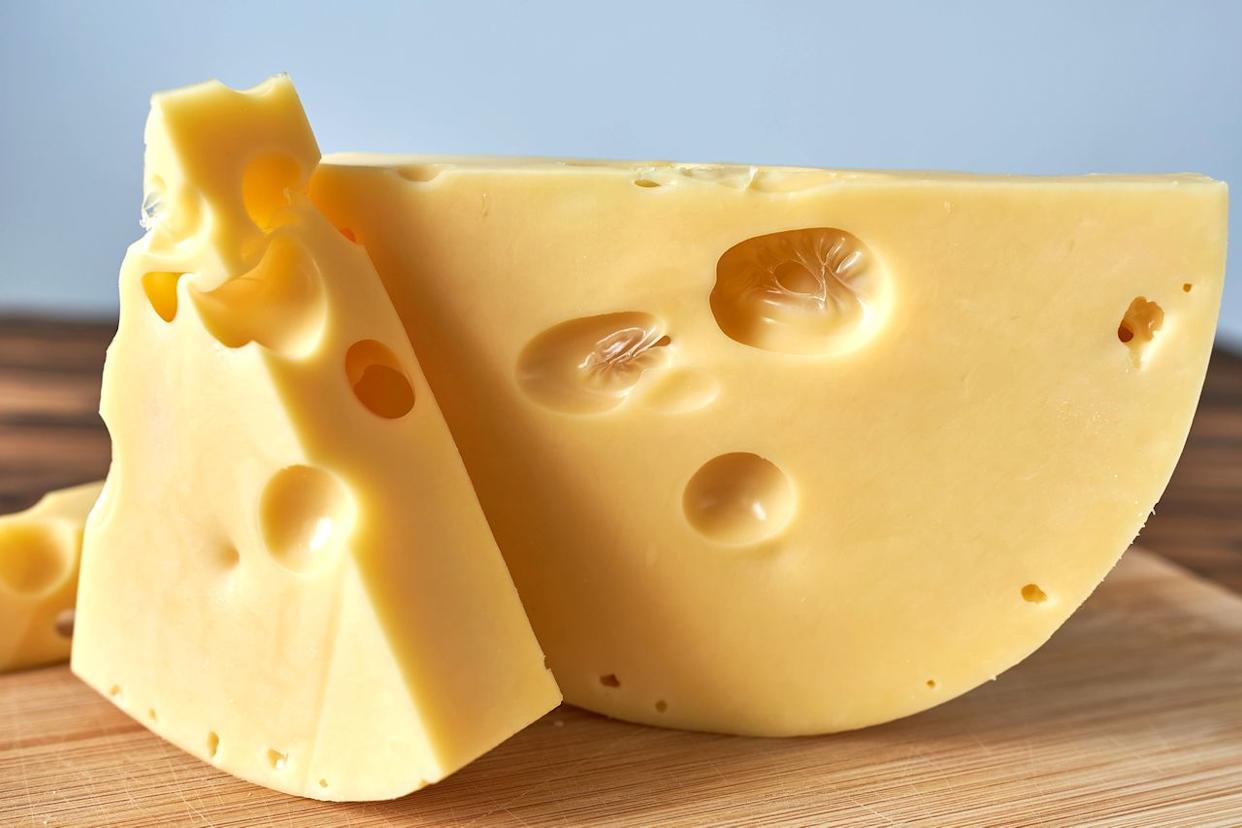 Grate Emmentaler (pictured) and other cheeses on a box grater so they melt smoothly and evenly.
Natalia Rusanova / Getty Images
The pairing of Emmental and Gruyère shows up everywhere fondue is taken seriously. Casie Wiginton, a cheese specialist at Antonelli’s Cheese in Austin, puts it bluntly: “Always, always I reach for Emmental and Gruyère. It is the original recipe — a 50/50 split — and for a dish that loves to fall apart on you in the blink of an eye, it’s sometimes best to stick with the tried and true.”
Emmentaler, often thought of simply as “Swiss cheese,” brings structure. Its classic melting prowess comes from its protein structure and balanced composition. Its moderate acidity and intact casein network allow the proteins to unwind smoothly with heat, helping create a stable, creamy emulsion when paired with wine and gentle stirring. Gruyère, meanwhile, delivers depth: umami, nuttiness, and that unmistakable Alpine savor. Together, they strike a balance between meltability and flavor that’s hard to beat.
Related: Classic Swiss Cheese Fondue
Why Alpine cheeses melt so beautifully
The magic here isn’t just tradition — it’s chemistry. According to Jeff O’Neill, executive chef of The Hirsch at Goldener Hirsch, Auberge Collection resort in Park City, Utah, Alpine cheeses are what cheesemakers call cooked and pressed.
“The curds are heated a second time so they all melt back together,” he explains. “That creates a smooth, uniform texture and the ability for the cheese to melt beautifully once it’s fully set. Pressed cheeses like cheddar lack that step, which is why they tend to separate.”
This is why even the most beloved cheeses — Parmigiano-Reggiano, aged Gouda, sharp cheddar — are better admired from afar when fondue is on the menu. They simply weren’t made for this job.
Ratios matter (but you have wiggle room)
Classic fondue isn’t just about which cheeses you choose — it’s also about how you balance them. Gillian Nyswonger, who spent years cooking in Swiss kitchens, remembers making fondue to order at London’s Swiss Centre with military precision.
“A 60/40 ratio of Gruyère to Emmental was strictly implemented for a nutty flavor, creamy texture, and ease of melting,” she says.
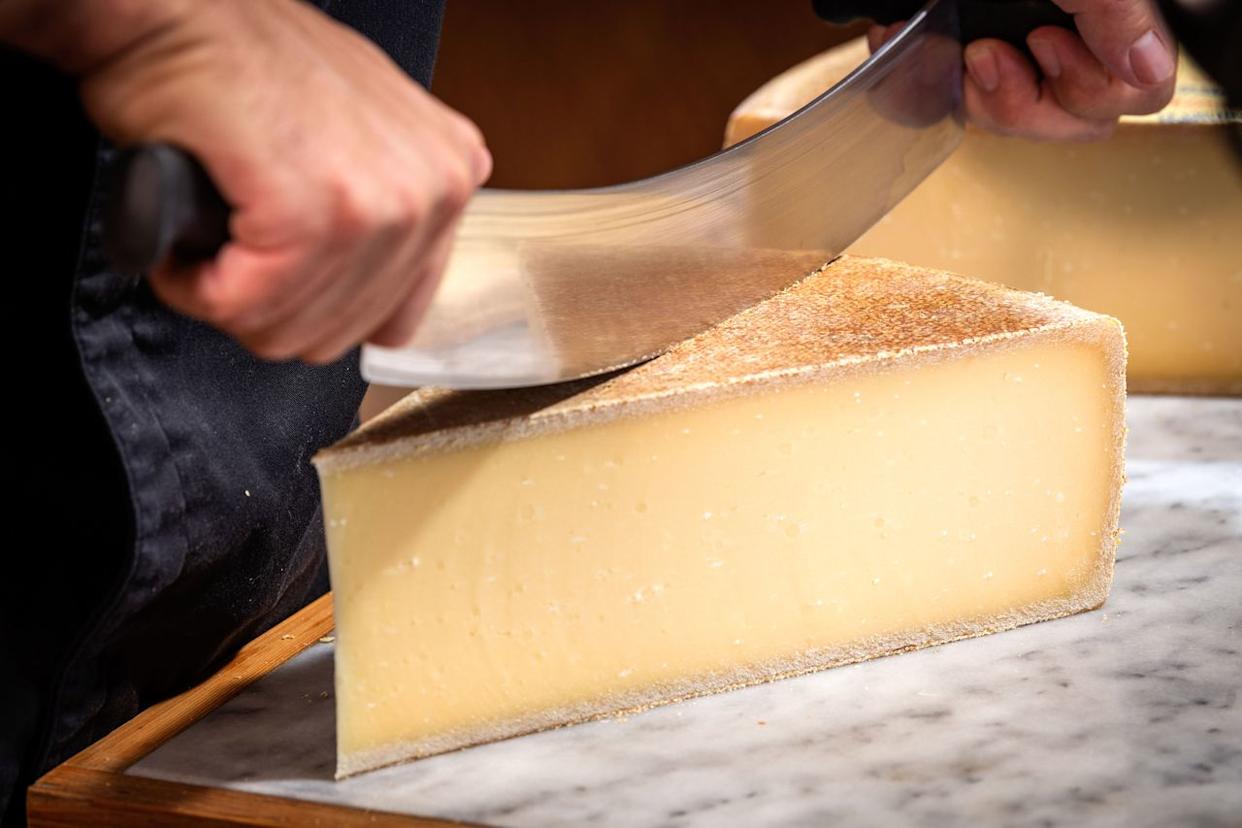 Traditional fondue calls for a 50/50 split of Gruyère (pictured) and Emmentaler, but some chefs use a 60/40 or two-to-one ratio.
ventdusud / Getty Images
Lynda Balslev, a food writer who lived in Switzerland for a decade, agrees on the structure, if not the exact numbers. “Two parts Gruyère Surchoix to one part another Alpine cheese — Swiss Emmentaler or aged Comté,” she says. “I avoid mild and go for nuance.”
Berg takes a more flexible approach: Pick one cheese for texture and fat (Emmentaler, Raclette, young Gouda), and another for flavor (Gruyère, Appenzeller, Challerhocker). “Since both cheeses melt well, you can dial the ratio bolder or milder depending on what you want,” he says.
Related: Why Alpine Cheese Is Disappearing — and What We Lose If It Goes
The biggest fondue mistakes, and how to avoid them
If fondue has a nemesis, it’s impatience. Nearly every expert warns against rushing — whether that means cranking the heat, dumping in all the cheese at once, or stirring too aggressively.
“Fondue is essentially an emulsion,” Wiginton explains. “You have to add the cheese gradually, stir slowly, and not shock the temperature.” She likens over-stirring to trying to escape those finger-trap toys from childhood: The harder you pull, the more the proteins seize up, squeezing out fat and breaking the sauce.
Berg echoes the point: “Go slow and low. If it’s way too hot right away, the proteins become bouncy and seize up, and you’ll never get the smoothness you’re looking for.”
And whatever you do, says Balslev, “stir constantly and never let the fondue boil.”
Modern spins on a classic
If you’re experimenting, the same Alpine rules apply. Berg loves a Swiss moitié-moitié (a blend of Vacherin Fribourgeois and Gruyère), while Balslev suggests adding a softer cheese like Reblochon — or even American standouts like Harbison (rind removed) from Vermont’s Jasper Hill Farm — for richness. Wiginton recommends swapping in Challerhocker for extra intensity or Fontina Val d’Aosta for an Italian spin.
Yes, you can push fondue into new territory — just don’t abandon the science. Berg notes that tools like sodium citrate can help denature proteins and make less cooperative cheeses melt smoothly. Wiginton points to a Brazilian newcomer called Mandala, recently imported to the U.S., which combines Gruyèrelike complexity with Emmentaler-style pliability. Finished with cumin instead of nutmeg and served with the cheesy Brazilian cheese bread pão de queijo and the steak cut picanha, it’s a global riff that still respects fondue’s foundations.
Related: 5 Surprising Facts You Should Know About Cheese, According to an Expert
If all this sounds like a plea for simplicity, that’s because it is. Fondue doesn’t need reinvention — it needs the right cheese, gentle heat, and a little patience.
Or, as Nyswonger puts it after years in Swiss kitchens: “Sometimes it’s good to stay with authenticity. Why fix something when it’s not broken?” That might be the most comforting advice of all — especially when there’s a pot of melted cheese involved.
Read the original article on Food & Wine
Dining and Cooking