
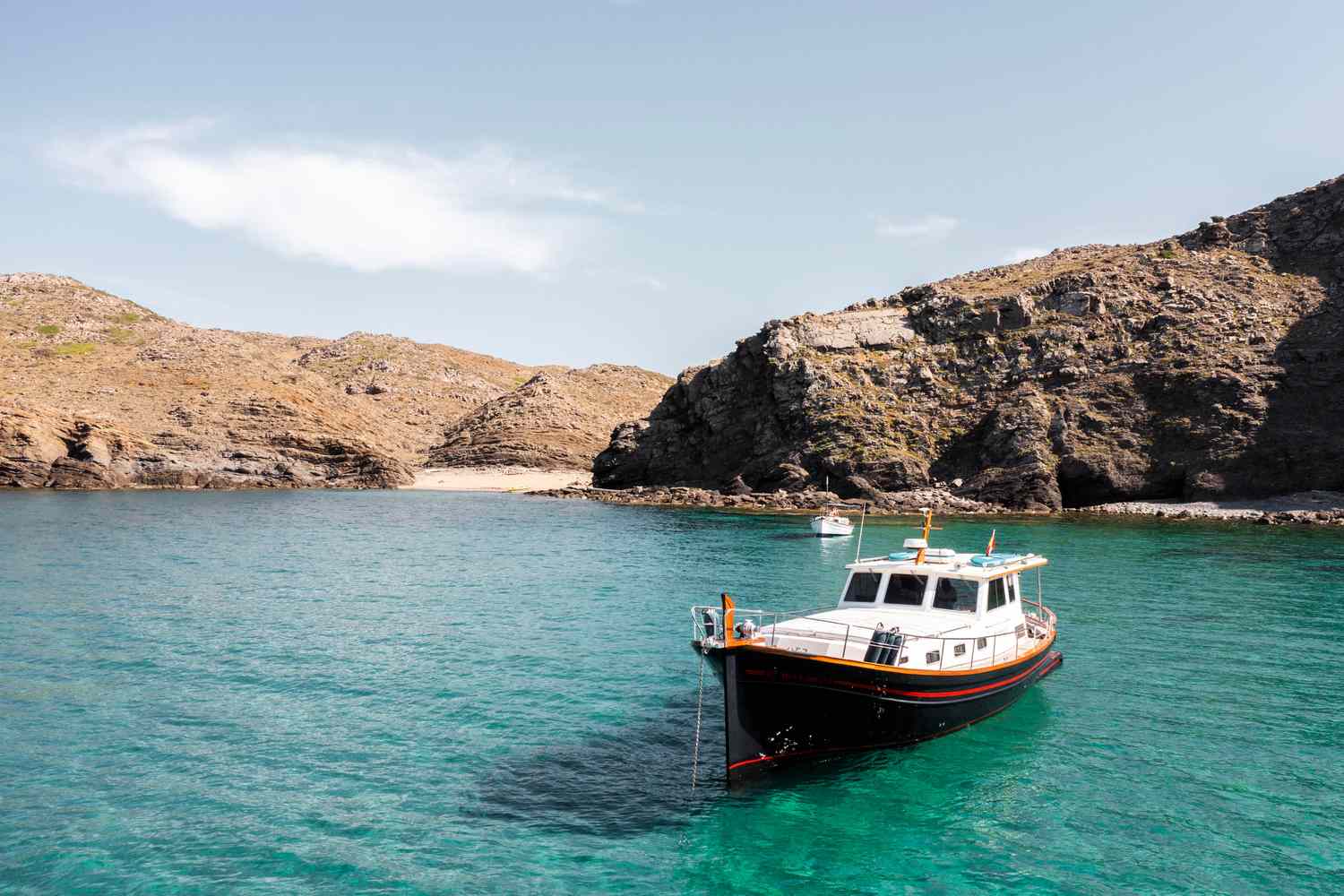
Although it is small in area, the Spanish island of Menorca features incredibly diverse landscapes, and its culinary offerings reflect that natural variety. Located southeast of Barcelona in the Mediterranean Sea, the entire island is a UNESCO Biosphere Reserve, and the scenery ranges from pristine beaches and coves, to ancient rock formations and jagged limestone cliffs. Menorca is home to working farms, small wineries, and a rich food history marked by the many cultures that have passed through, from the Romans and the Moors, to the British and the French. While the dining scene is blossoming, sparked by travelers from all over and the Europeans who’ve purchased second residences on the island, a memorable way to connect with Menorca’s gastronomic riches is to follow its ingredients to their source.
Sal de Menorca – Salinas de la Concepción
Courtesy of Sal de Menorca
On this tiny island, you are never more than five miles from the sea, and salt has been harvested here for centuries. Located in the protected wetlands along Menorca’s northern coast, La Concepción halted commercial operations in 1984, when imported salt displaced local product, but in 2020 the estate’s owners began a long restoration process, rebuilding the salt pans using natural materials. Today, it is Menorca’s only active saltworks. Long sunny days and the tramontana trade winds that regularly buffet the northern half of the island help the collected seawater slowly evaporate to reveal a mineral-rich fleur de sel that’s harvested by hand every day in the warmer months. Beyond Sal de Menorca’s plain salt, there’s also a spicy fleur de sel, a smoked variety, and another that’s blended with locally grown herbs.
During a 45- to 60-minute tour (12€/$14 for adults 18 and over), from April to October, watch for flamingos and other migratory birds that nest in this nature reserve. A tasting is included, and for an additional fee, you can pair the salts with rustic local bread and olive oil.
Sa Cooperativa del Camp de Menorca
Courtesy of Sa Cooperativa del Camp de Menorca
Head to the center of the island and visit one of the farms that belong to Sa Cooperativa del Camp. This co-op’s small producers host a range of experiences that let you roll up your sleeves and immerse yourself in rural life. Milk a cow and take the herd out to graze, or suit up as a beekeeper and handle a hive, a tour that culminates in a tasting of honey capturing the aromas of Menorca’s many wildflowers. Or try your hand at cheesemaking and sample the island’s signature cow-milk cheese, Mahón Menorca, which ranges in style from fresh and creamy, to aged and nutty.
Prices for the culinary tours range from 10 to 30 Euros ($12-35). These are working farms, so be sure to wear shoes that you don’t mind muddying a bit.
Torralbenc
Courtesy of Bodegas Torralbenc
Like their peers on the mainland, Menorca’s wineries were infested with phylloxera, an insect that decimated grapevines across Europe starting in the mid-19th century; by the 1980s, the only wines being produced on the island were for home consumption. But over the past two decades, Menorca’s vineyards have begun to bloom again, and about a dozen boutique wineries are making their mark. Top among these is Torralbenc, owned by the same Basque family that helms the well-known Rioja winery Remirez de Ganuza. Take a tour of the property (which includes a posh agritourism hotel), and sample three of Torralbenc’s wines.
Or better yet, reserve your table at the hotel’s high-end restaurant and dine alfresco on a tasting menu that features modern takes on Menorcan gastronomy, using vegetables, olive oil, and other ingredients produced on the Torralbenc grounds. Pair each course with one of the winery’s elegant bottlings, including the 2022 red, a peppery blend of Merlot and Syrah.
Cómete Menorca Mayonnaise Workshop
Courtesy of Cómete Menorca
Although some French folks may disagree, proud Menorcans assert that mayonnaise was created on the island. Legend has it that in 1756, this emulsion of egg yolks and oil was served at a country estate outside the capital city of Mahón, at a dinner hosted by the Duke of Richelieu, Louis François Armand du Plessis. The event was held in honor of the French takeover of Menorca, and the duke is said to have ferried the recipe back to France where it became a hit. Another version of the tale says that Richelieu was first offered a taste of the beguiling sauce by a Menorcan woman from the capital with whom he was having an affair; while he wanted to name the recipe after her, propriety caused him to dub it la Mahonesa instead (meaning “of Mahón”).
Cómete Menorca’s workshop will teach you how to prepare various iterations of mayonnaise, and the best part is getting to taste them. You can enjoy the sauces paired with a multicourse lunch that includes steamed mussels, sauteed mushrooms, local wine, and beer. Email ahead for a workshop in English.
Dining and Cooking